Multifunctional Sensor Arrays Empowering Intelligent Lithium-Ion Batteries

–This article contains approximately 2425 words, reading time is about 8 minutes–
Comments

This paper presents a type of ultra-thin sensor that can be directly printed on the battery packaging, capable of real-time monitoring of the battery’s temperature, pressure, deformation, and even leakage of liquid and gas, allowing for early warnings of various dangers. The safety and lifespan management of lithium batteries typically rely on external electrical signals such as voltage and current to estimate the internal health of the battery, which is often inaccurate, and by the time issues are detected, it is usually too late. This paper directly senses the battery’s heartbeat and breathing from a physical and chemical perspective. If this technology can be widely adopted at a low cost, the battery management systems (BMS) for electric vehicles and energy storage stations will see a revolutionary improvement in safety and reliability.
Abstract
The research integrates a conformal multifunctional sensor array into the battery packaging foil, endowing lithium-ion batteries with intelligent capabilities. This fully printed sensor array can monitor the thermal, mechanical, and chemical characteristics of the battery in real-time, allowing for quantitative analysis of various degradation issues (such as overcharging, over-discharging, lithium plating at low temperatures, internal short circuits, etc.), and can directly trigger alarms in the event of electrolyte leakage or the generation of flammable gases, providing timely warnings for the safe operation of the battery.
Introduction
Research Background:
Lithium-ion batteries are widely used, but their safety under extreme conditions poses a significant challenge. Existing monitoring technologies, such as fiber optic sensing or acoustic detection, are often complex and costly, making it difficult to integrate them into every cell for large-scale applications, leading to insufficient monitoring of the internal state of the battery and an inability to detect potential risks in a timely manner.
• This paper’s contributions:
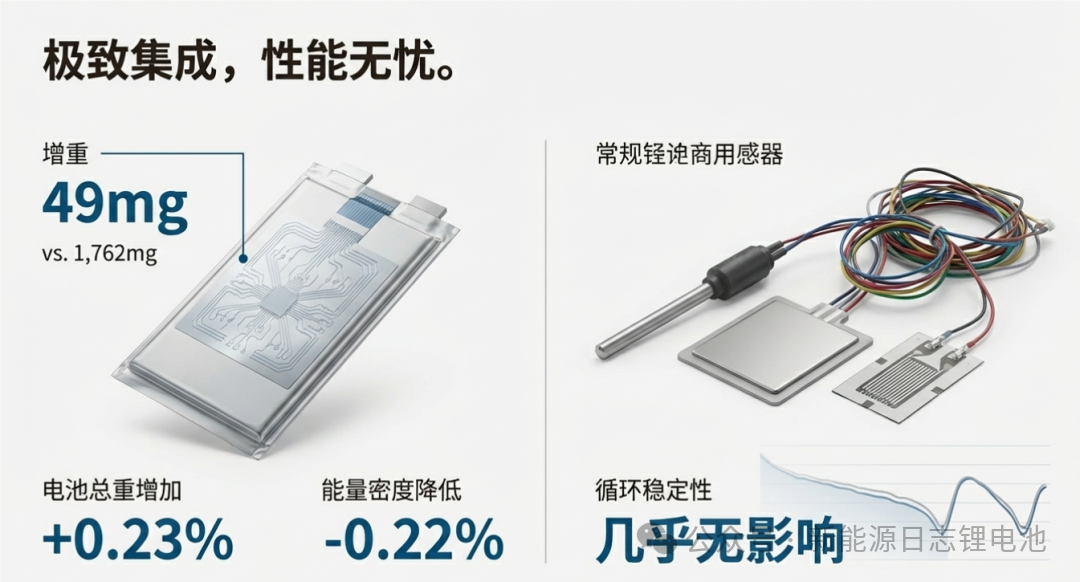
o Contribution 1: Developed a fully printable, ultra-thin, flexible multifunctional sensor array that can be non-destructively integrated into the battery packaging foil in a tattoo-like manner, with minimal impact on the battery’s weight (only an additional 49 grams) and energy density (only a 0.22% reduction).
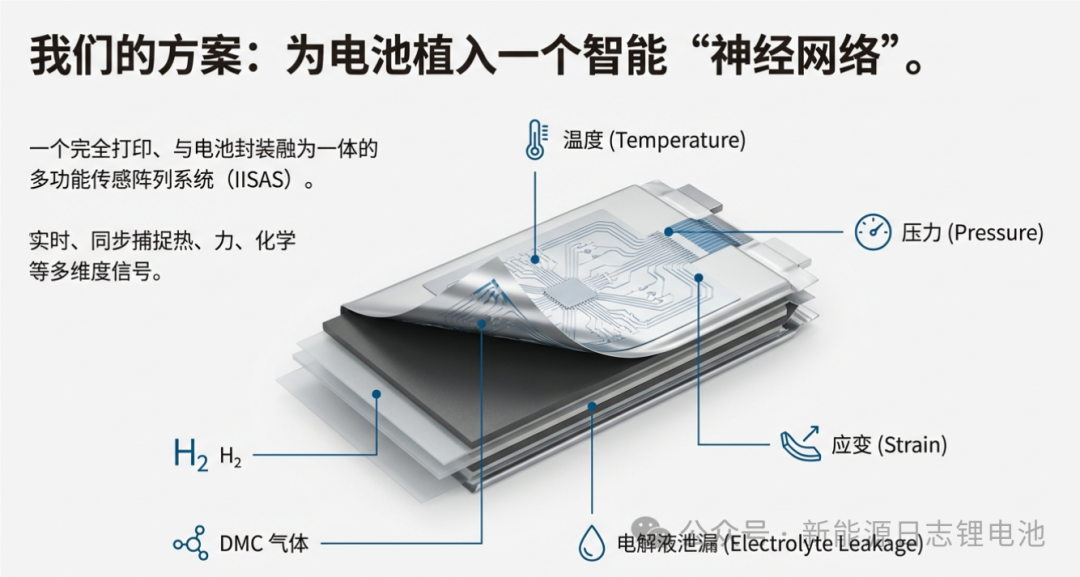
o Contribution 2: Achieved synchronous, in-situ monitoring of multiple key physical and chemical signals of the battery, including temperature, pressure, strain, electrolyte leakage, and flammable gases such as hydrogen and dimethyl carbonate (DMC).
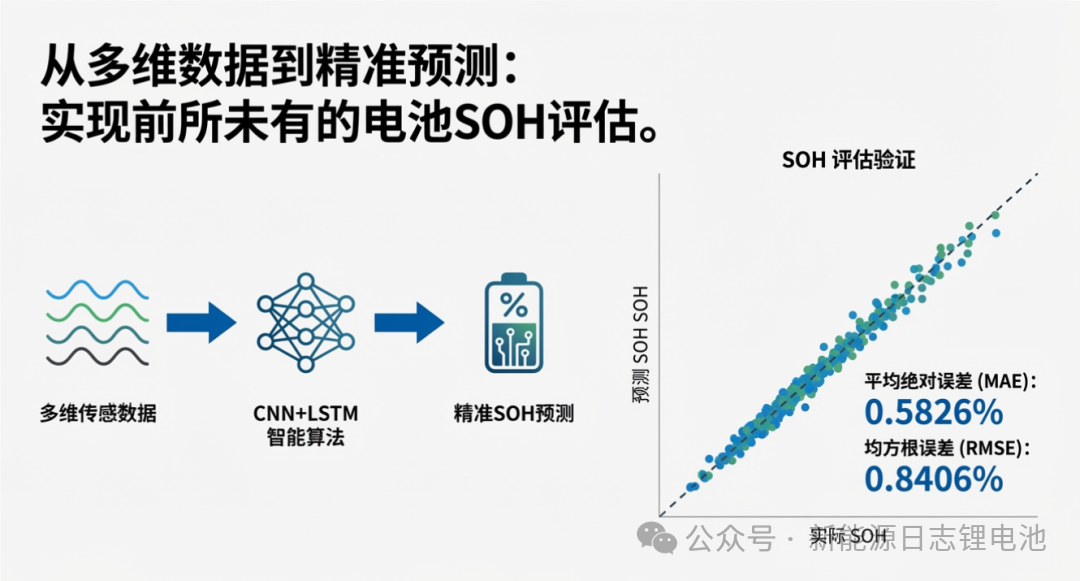
o Contribution 3: Combined with deep learning algorithms (CNN-LSTM model), established an Intelligent Integrated Sensor Array System (IISAS) that not only accurately predicts the battery’s state of health (SOH) but also accurately diagnoses various faults, achieving a tiered safety response from early warnings to emergency alarms.
Experimental Design
Experimental Subjects:
The experiment used commercially available NMC532||graphite pouch batteries (nominal capacity 1100mAh). The core of the sensor array consists of various functional inks, such as MXene/PEDOT:PSS composites for temperature sensing and nanomaterials for gas detection, which are printed on aluminum-plastic film packaging materials.
• Testing Conditions: All tests were conducted in a temperature-controlled chamber at 25°C. To validate the effectiveness of the sensing system, researchers simulated various battery abuse scenarios, including overcharging (charging to 4.8V), over-discharging (discharging to -3.0V), low-temperature lithium plating (10°C), internal short circuits, puncturing (using a non-conductive ceramic needle), and heating-induced thermal runaway.
Research Methods
Core Idea/Overall Framework:
By implanting an integrated multifunctional sensor array on the battery packaging foil, real-time capture of the physical and chemical signals of the internal state of the battery is achieved, followed by analysis of these multidimensional data using artificial intelligence models to enable precise assessment of battery health and intelligent fault diagnosis.
• Key Models/Theoretical Basis: A hybrid deep learning model combining Convolutional Neural Networks (CNN) and Long Short-Term Memory networks (LSTM) was employed. The principle is as follows: first, the CNN layer acts as a feature extractor, automatically capturing key local features from the high-density time-series data collected by the sensors (such as the local shape of voltage and temperature curves); then, the LSTM layer excels at processing time-series information, remembering the evolution patterns of these features over long time scales (for example, the slow changes in pressure curves during battery aging), thus making precise predictions about the long-term health status of the battery.
Results and Discussion
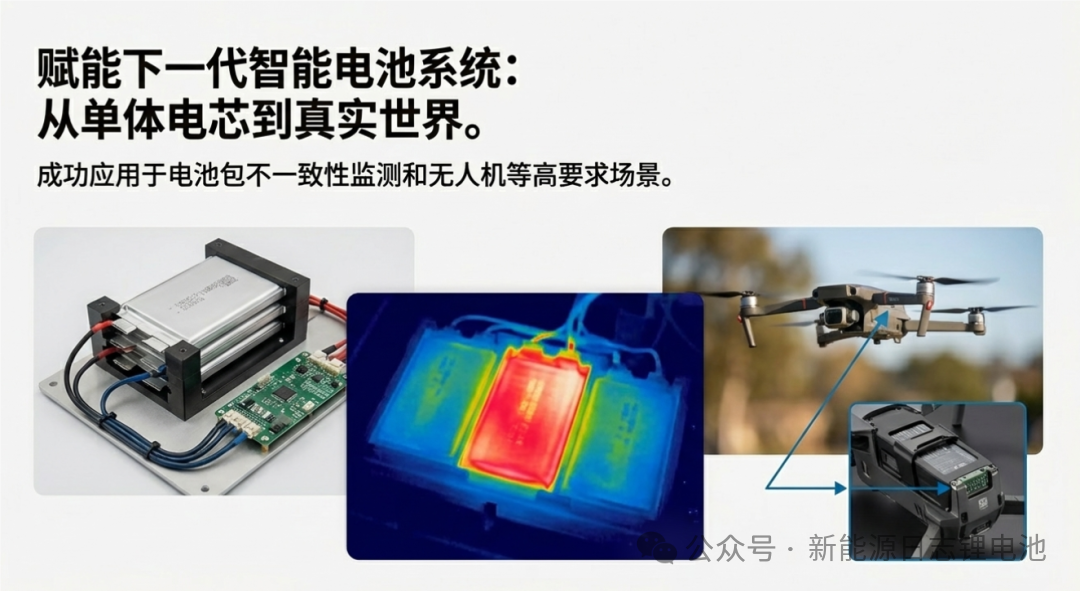
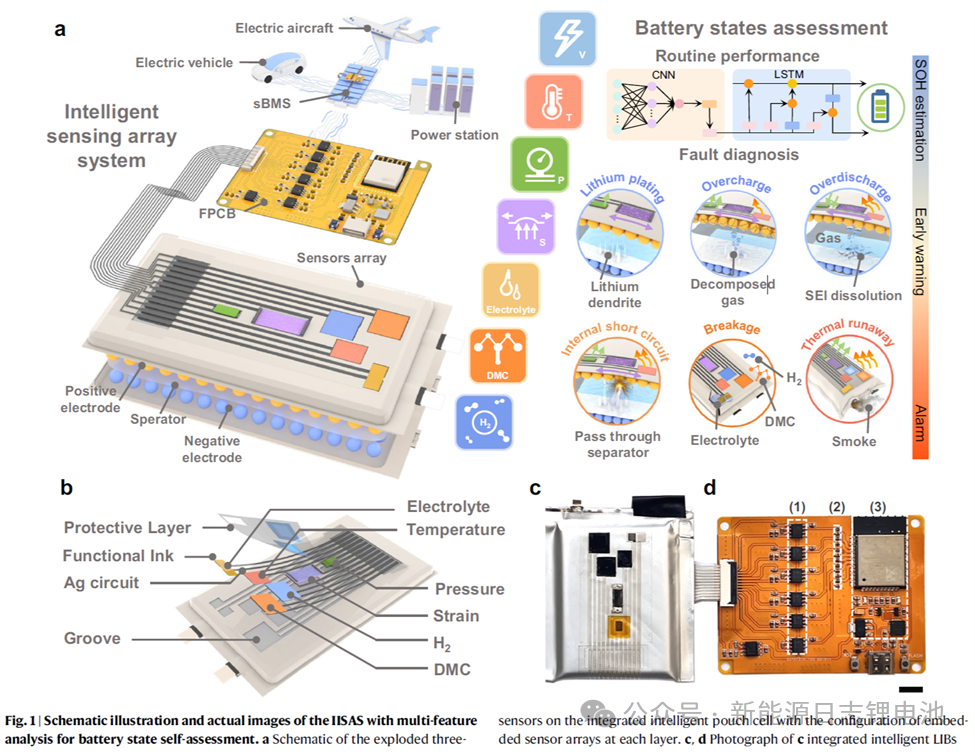 Figure 1: System Concept Diagram. This diagram illustrates the composition of the entire Intelligent Integrated Sensor Array System (IISAS), clearly depicting how the sensor array is attached to the pouch battery and connected to the data processing module. This image explains the overall design concept and application goals of the system..
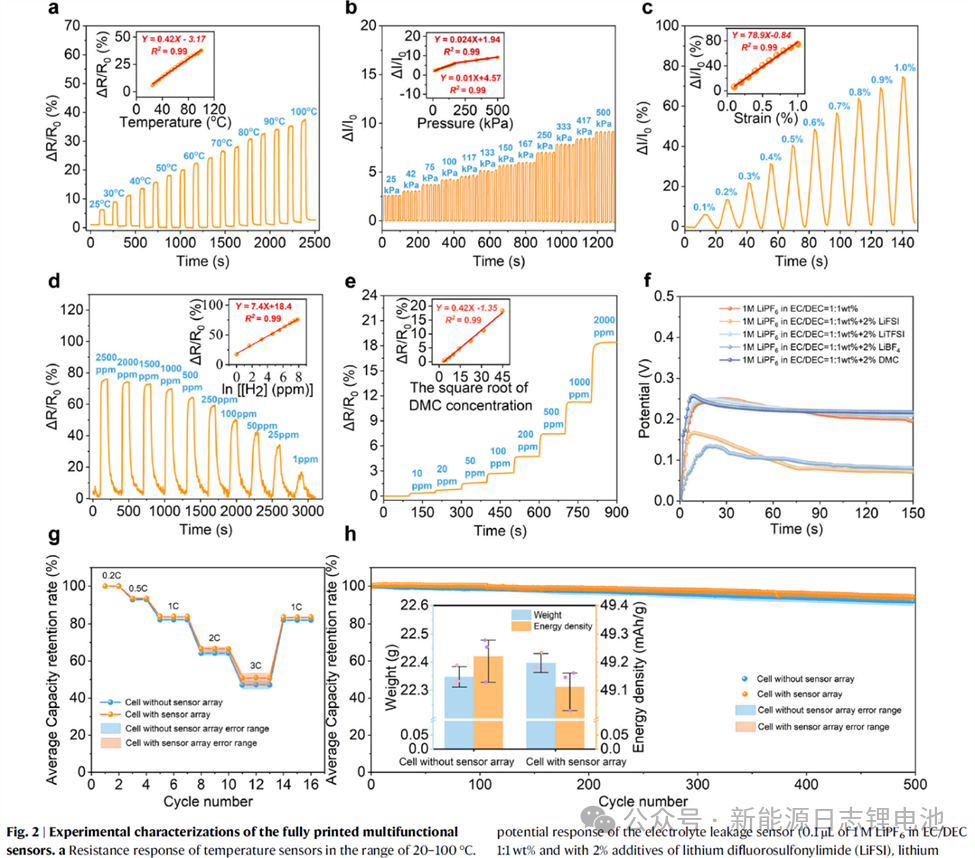 Figure 2: Sensor Performance Characterization Diagram. This diagram shows the sensitivity and response characteristics of the printed sensors for temperature, pressure, strain, gas, and leakage. This image demonstrates the reliability of the sensors and their good compatibility with the battery..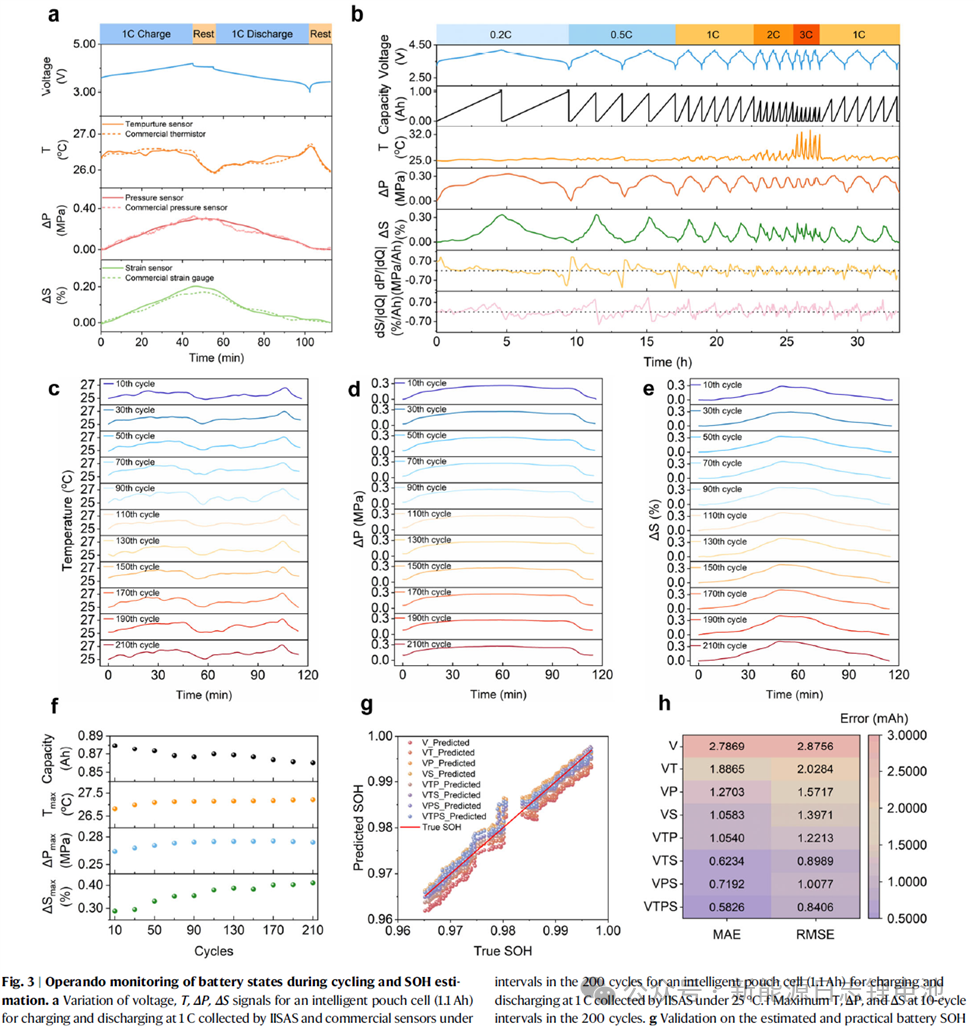
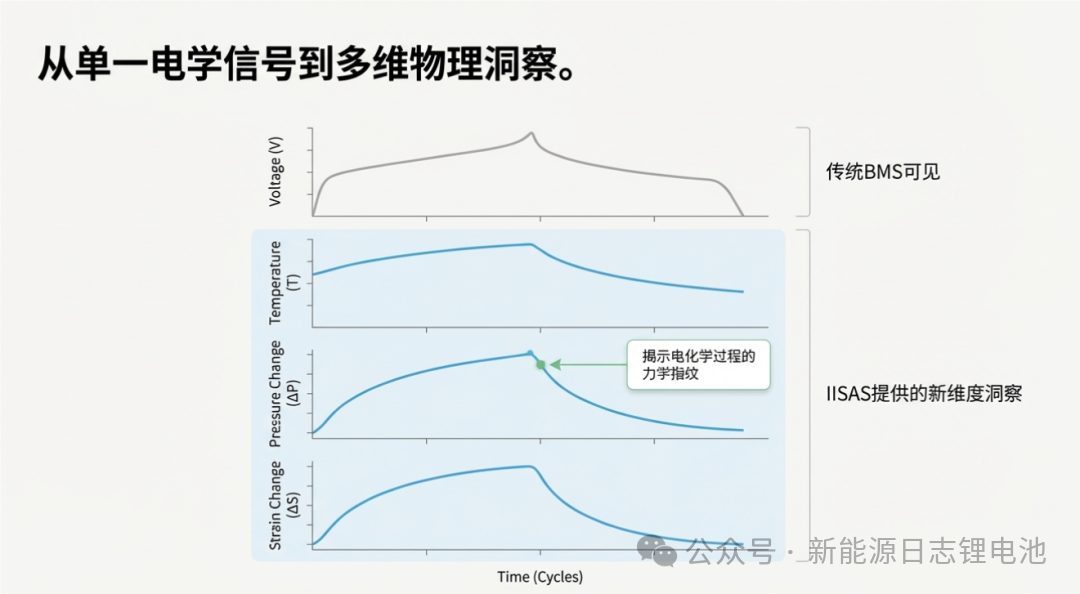
Figure 3: Online Monitoring and Prediction Results of Battery State of Health (SOH). This diagram shows the evolution patterns of the battery’s temperature, pressure, and strain signals over long-term cycling, and verifies that after combining these multidimensional data, the model’s prediction error for SOH is extremely low (average absolute error of only 0.5826%). This image illustrates the system’s powerful capability in accurately assessing the degree of battery aging.
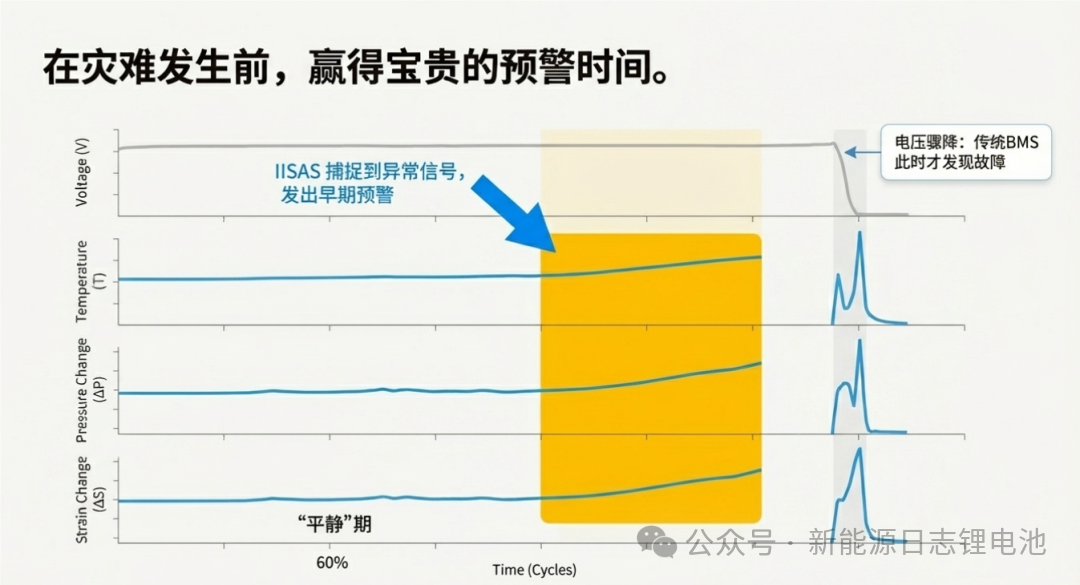
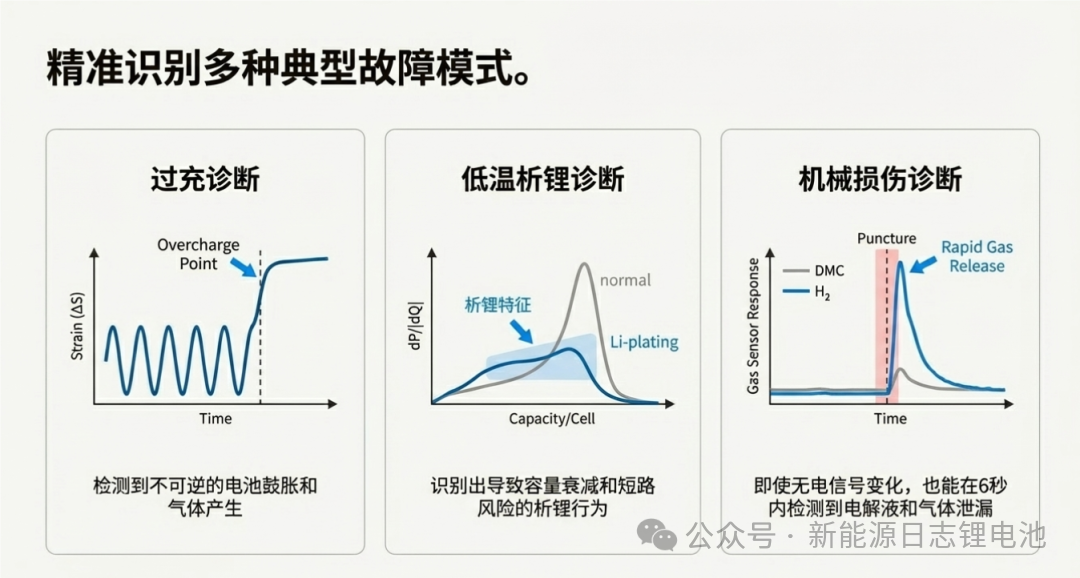
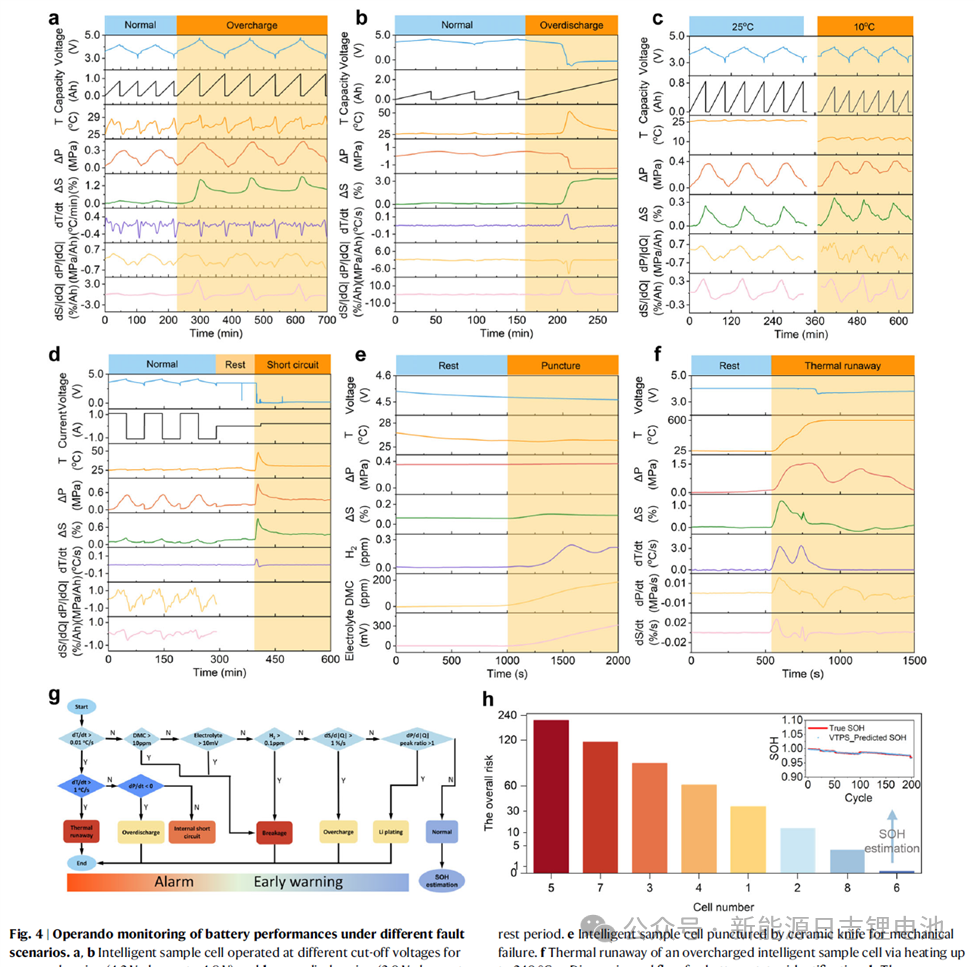 Figure 4: Battery Fault Diagnosis Results. This diagram shows the signal responses of the sensor array under different fault scenarios, with each fault presenting a unique signal fingerprint. This image demonstrates the system’s immense value in identifying specific fault types and providing early safety warnings that traditional BMS cannot achieve, especially in the case of covert faults such as punctures by non-conductive materials.
Main Findings:
o The sensor array is extremely lightweight, with negligible impact on the battery’s energy density and cycle life.
o By integrating multidimensional data from electrical, thermal, and mechanical sources, the accuracy of SOH predictions far exceeds traditional methods that rely solely on electrical signals.
o The system can successfully distinguish between different types of battery faults and can issue warnings before abnormalities in electrical signals such as voltage occur, particularly in cases of covert faults like punctures by non-conductive materials, where the advantages are particularly pronounced.
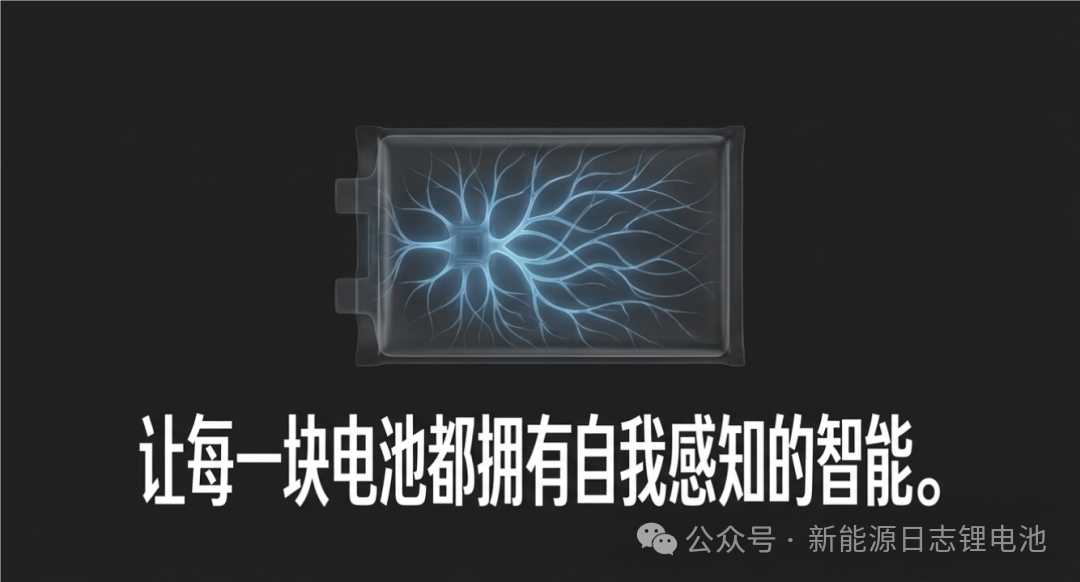
• Author’s Interpretation: The author believes that this work successfully bridges the gap between laboratory-level precision sensing technology and practical applications in batteries. By capturing and analyzing the rich physical and chemical information within the battery in real-time, the system (IISAS) provides an unprecedented window into understanding the complex dynamic degradation processes of batteries, promising to drive the emergence of the next generation of intrinsically intelligent batteries, fundamentally enhancing the safety and management efficiency of energy storage systems.
Conclusion
Core Conclusion:
This study successfully developed a fully printed, integrable multifunctional sensor array that can perform high-precision real-time state monitoring of lithium-ion batteries in a non-invasive, low-burden manner. The system achieves precise assessment of battery health and reliable diagnosis of various faults, providing critical technical support for ensuring the safe operation of large battery systems (such as electric vehicles and energy storage stations) throughout their lifecycle.
Outlook
Areas for Improvement:
The literature does not explicitly mention this. However, it can be inferred that the current sensor materials have limited stability at ultra-high temperatures (>150°C), which may affect their ability to capture complete reaction details during extreme events such as thermal runaway; future work could further enhance the heat resistance of the materials.
• Next Steps: The author believes that this technology platform is universal and can be promoted to different types and chemical systems of batteries in the future, with the potential for deployment in practical applications at the battery pack level, becoming a universal tool for achieving intelligent battery management.
Literature Information
• Original Title: Fully printable integrated multifunctional sensor arrays for intelligent lithium-ion batteries
• Publication Date: August 2025
• Journal/Source: Nature Communications
• DOI Link: https://doi.org/10.1038/s41467-025-62657-2
The content shared in this article is sourced from the internet. The copyright of the original work belongs to the original author, and it is shared solely for the purpose of disseminating quality content for learning and discussion, not for commercial profit. If there is any infringement, please contact for removal.
↓
Access Original Text