✅ Author Profile: A research enthusiast and Matlab simulation developer, skilled in data processing, modeling simulation, program design, complete code acquisition, paper reproduction, and scientific simulation.
🍎 Previous reviews, follow the personal homepage:Matlab Research Studio
🍊 Personal motto: Investigate to gain knowledge, complete Matlab code and simulation consultation available via private message.
🔥 Content Introduction
With the rapid development of artificial intelligence and automation technology, autonomous vehicles are gradually transitioning from science fiction to reality. Among the many core technologies of autonomous driving systems, Model Predictive Control (MPC) has shown great potential in vehicle trajectory tracking, path planning, and obstacle avoidance due to its ability to handle complex constraints and optimize future behavior. This article will delve into the theoretical foundations, core advantages, application challenges, and future development trends of Model Predictive Control in autonomous vehicles.
Introduction
Autonomous driving technology is hailed as another disruptive technology that may change the face of human society after computers and the internet. Its core lies in the collaborative action of three modules: perception, decision-making, and control, enabling vehicles to drive safely and efficiently without human intervention. In the control aspect, how to accurately control the vehicle to follow a preset path while considering driving safety, comfort, and energy consumption is key to the success of autonomous driving technology. Traditional methods such as PID control and LQR control often struggle to achieve ideal results in the face of complex road environments, dynamic obstacles, and stringent real-time requirements. As an advanced control strategy, Model Predictive Control provides new ideas and powerful tools for solving the control challenges of autonomous vehicles through its unique prediction and optimization mechanisms.
Theoretical Foundations of Model Predictive Control
Model Predictive Control is a model-based optimization control method, where the core idea is to predict the system behavior over a future time horizon based on the current state and vehicle dynamics model at each sampling moment. Then, by solving an open-loop optimization problem, an optimal control sequence is obtained, and only the first control action in the sequence is applied to the controlled object. At the next sampling moment, the system state is updated, and the process is repeated. This “rolling optimization” characteristic allows MPC to effectively cope with model uncertainties and external disturbances.
The key components of MPC include:
- Prediction Model: This is the foundation of MPC, used to predict the system’s response under future control actions. For autonomous vehicles, the prediction model is typically the vehicle’s kinematic or dynamic model, which can be nonlinear and reflect the vehicle’s motion characteristics at different speeds and steering angles. The accuracy of the model directly affects the control performance.
- Objective Function: The objective function defines the performance metrics that the control system needs to optimize, usually including tracking error, control input variation rate, energy consumption, etc. In autonomous driving, the objective function may comprehensively consider various factors such as path tracking accuracy, driving smoothness, obstacle avoidance distance, and passenger comfort.
- Constraints: MPC can explicitly handle system constraints, which is a significant advantage over traditional control methods. In autonomous driving scenarios, constraints include speed limits, steering angle limits, acceleration limits, tire friction limits, and safe distances from obstacles. Effectively managing these constraints is key to ensuring the safe operation of the vehicle.
- Optimization Algorithm: At each sampling moment, MPC needs to solve an optimization problem to obtain the optimal control sequence. This is typically a Quadratic Programming (QP) or Nonlinear Programming (NLP) problem. The computational efficiency of the algorithm is crucial for meeting the real-time requirements of autonomous driving systems.
Advantages of Model Predictive Control in Autonomous Driving
MPC exhibits several significant advantages in the control of autonomous vehicles:
- Ability to Handle Complex Constraints: Autonomous vehicles face various physical limitations and safety constraints during operation. MPC can explicitly incorporate these constraints into the optimization problem, achieving optimal control while ensuring the vehicle does not exceed safety boundaries. This is crucial for the safe operation of vehicles in complex traffic environments.
- Proactive and Predictive Capability: MPC predicts future system behavior based on the prediction model, allowing the controller to “foresee” future trajectory deviations or potential dangers and take corrective measures in advance. This proactive nature enables MPC to perform excellently in scenarios involving dynamic obstacles, complex curves, or lane changes.
- Multi-Objective Optimization: The control objectives of autonomous vehicles are often multidimensional, such as high-precision trajectory tracking, driving comfort, energy efficiency, and good driving experience. MPC can achieve optimal overall performance by carefully designing the objective function to balance these conflicting or interrelated goals.
- Adaptability and Robustness: Although MPC is model-based, its rolling optimization characteristic provides a certain level of robustness against model errors and external disturbances. When the actual system behavior deviates from the prediction model, MPC updates the state and re-optimizes at the next sampling moment to correct the deviation.
- Ease of Integration and Expansion: The MPC framework has good modularity, allowing easy integration with other upper-level decision modules (such as path planning) and lower-level execution modules. Additionally, when new control objectives or constraints need to be introduced, only the objective function or constraints need to be modified without significantly altering the overall structure of the controller.
Applications and Challenges of Model Predictive Control in Autonomous Driving
The applications of MPC in the field of autonomous driving mainly focus on the following aspects:
- Trajectory Tracking Control: MPC can achieve high-precision tracking of preset paths while considering the vehicle’s dynamic characteristics and various constraints.
- Lateral and Longitudinal Coupling Control: Traditional control methods often treat lateral (steering) and longitudinal (speed) control separately. MPC can naturally couple the two, achieving coordinated control of vehicle motion.
- Obstacle Avoidance and Path Planning: By incorporating obstacle information as constraints into the MPC optimization problem, MPC can achieve dynamic obstacle avoidance and real-time local path planning.
- Formation Control and Cooperative Driving: In the future vehicle networking environment, MPC can be extended to multi-vehicle cooperative control, achieving complex tasks such as vehicle formation driving and intersection coordination.
However, the application of MPC in autonomous driving also faces several challenges:
- Computational Complexity: Solving the optimization problem at each sampling moment, especially for nonlinear models and systems with many constraints, poses a significant computational burden. This is a severe challenge for the highly real-time requirements of autonomous driving systems.
- Model Accuracy and Uncertainty: The performance of MPC is highly dependent on the accuracy of the prediction model. Vehicle models are often nonlinear and complex, and are also affected by uncertainties such as road conditions and tire wear. Establishing high-precision models and effectively handling model uncertainties is key.
- Parameter Tuning: MPC involves many parameters that need to be tuned, such as weight coefficients, prediction horizons, and control horizons. The reasonable selection of these parameters directly affects control performance and robustness.
- Non-Convex Problems and Local Optima: For complex nonlinear systems, the optimization problem of MPC may be a non-convex problem, with the risk of falling into local optima. This may lead to decreased control performance or even instability.
- Sensor Noise and Delays: Autonomous driving systems rely on various sensors to obtain environmental information, and sensor noise and data transmission delays can affect the inputs to MPC, thereby impacting prediction accuracy.
Future Development Trends
To address the above challenges and further enhance the application level of MPC in autonomous driving, future research directions include:
- Fast Optimization Algorithms: Develop more efficient and robust real-time optimization algorithms to meet the stringent computational speed requirements of autonomous driving systems. For example, utilizing Graphics Processing Units (GPUs) for parallel computing or developing customized optimizers for specific problems.
- Integration of Machine Learning and MPC: Utilize machine learning methods, such as deep learning, to learn more accurate vehicle dynamics models or prediction models. Additionally, explore the combination of reinforcement learning and MPC for adaptive optimization of control strategies.
- Robust MPC and Adaptive MPC: Research how to enhance the robustness of MPC under model uncertainties, external disturbances, and sensor noise. Adaptive MPC can automatically adjust controller parameters based on environmental changes or model errors.
- Hierarchical and Distributed MPC: For complex autonomous driving systems, a hierarchical control architecture can be adopted, combining high-level decision-making with low-level execution. Additionally, in vehicle networking environments, explore distributed MPC for cooperative control among multiple vehicles.
- Safety and Interpretability: Ensure the safety and stability of MPC controllers under various extreme conditions and improve the interpretability of control decisions to enhance trust in autonomous driving systems.
Conclusion
As an advanced control strategy, Model Predictive Control, with its ability to handle complex constraints, predict future behavior, and optimize multiple objectives, shows great application prospects in the control of autonomous vehicles. Although challenges remain in computational efficiency and model accuracy, with deeper theoretical research and improved computational capabilities, MPC will undoubtedly become an indispensable core component for the commercial realization of future autonomous driving technology. We have reason to believe that empowered by advanced control technologies like MPC, autonomous vehicles will ultimately achieve safe, efficient, and comfortable driving, fundamentally changing human transportation.
⛳️ Operational Results
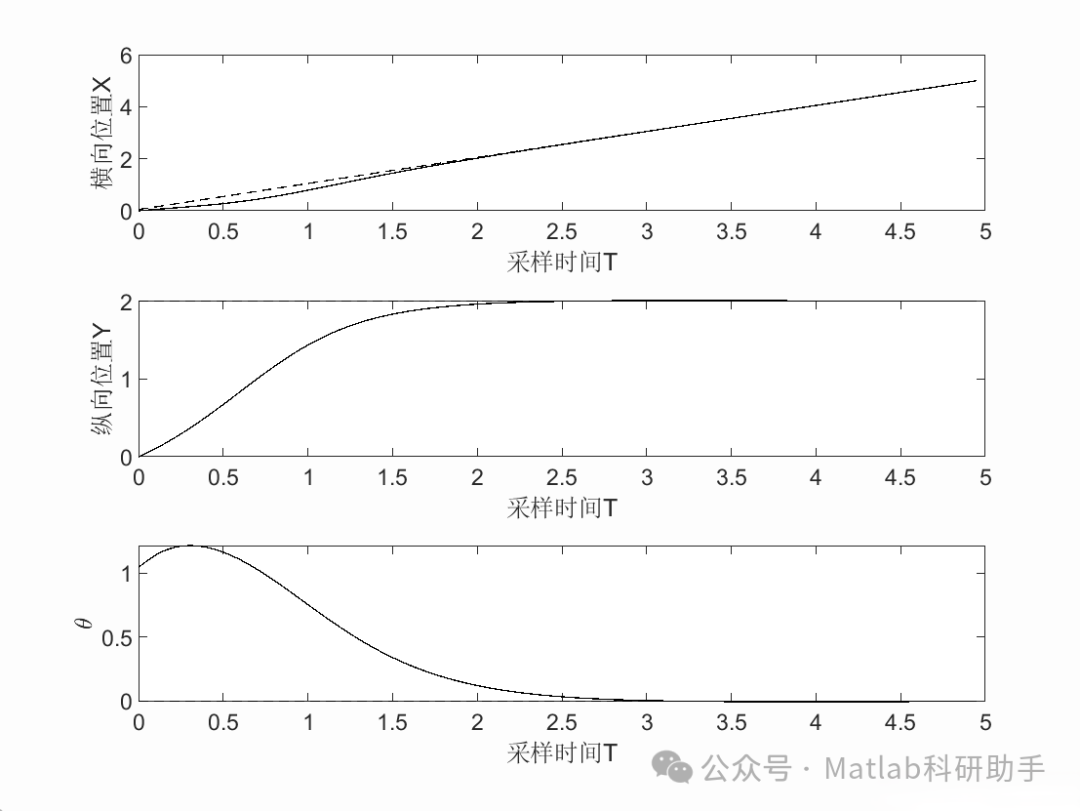
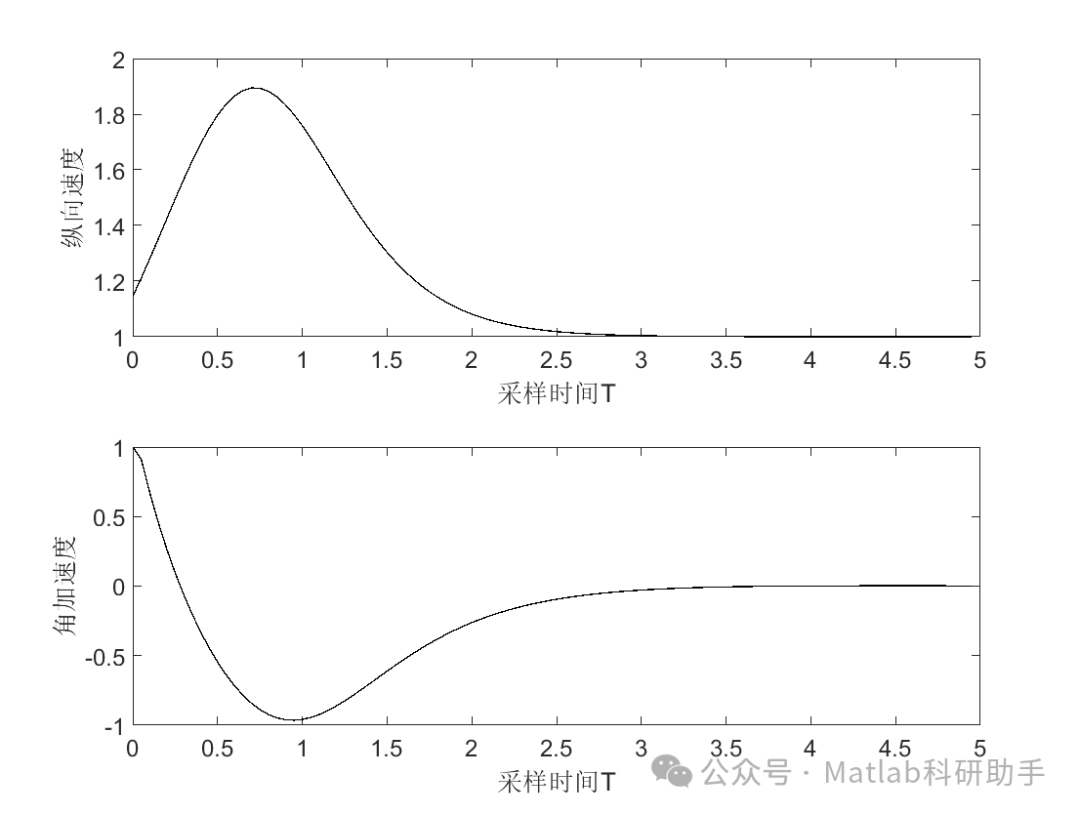
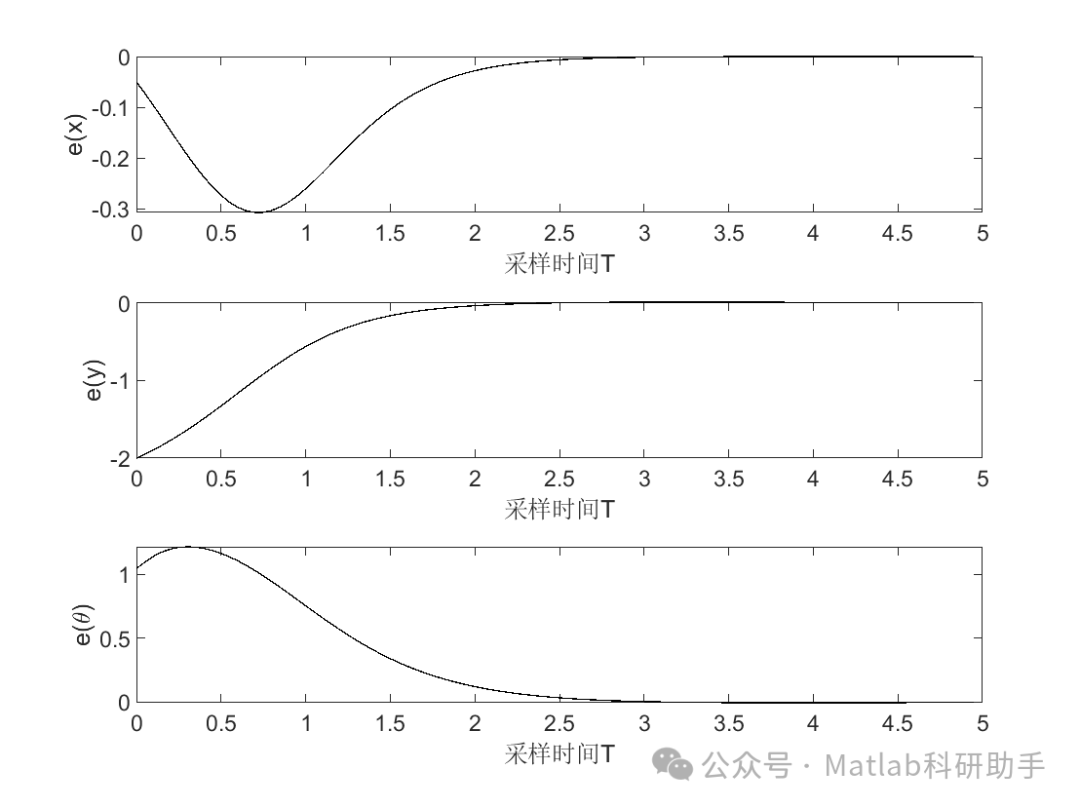
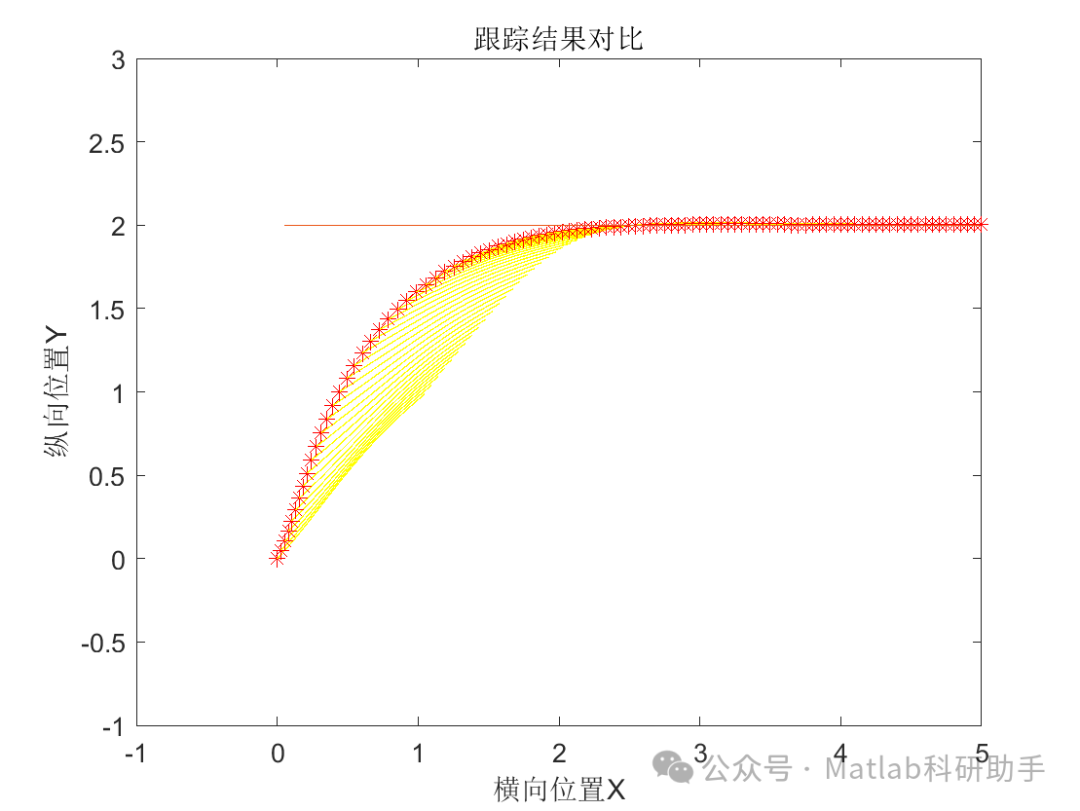
🔗 References
[1] Sun Yinjian. Research on Trajectory Tracking Control Algorithm for Autonomous Vehicles Based on Model Predictive Control [D]. Beijing Institute of Technology, 2015.
[2] Gong Jianwei, Liu Kai, Qi Jianyong. Model Predictive Control for Autonomous Vehicles [M]. Beijing Institute of Technology Press, 2020.
[3] Zhu Min, Chen Huiyan. Experimental Study on Longitudinal Speed Tracking Control of Autonomous Off-Road Vehicles [J]. Journal of Mechanical Engineering, 2018(24):7. DOI:10.3901/JME.2018.24.111.
📣 Partial Code
🎈 Some theoretical references are from online literature; please contact the author for removal if there is any infringement.
👇 Follow me to receive a wealth of Matlab e-books and mathematical modeling materials
🏆 Our team specializes in guiding customized Matlab simulations in various research fields, helping to realize research dreams:
🌈 Various intelligent optimization algorithm improvements and applications
Production scheduling, economic scheduling, assembly line scheduling, charging optimization, workshop scheduling, departure optimization, reservoir scheduling, three-dimensional packing, logistics site selection, cargo location optimization, bus scheduling optimization, charging pile layout optimization, workshop layout optimization, container ship loading optimization, pump combination optimization, medical resource allocation optimization, facility layout optimization, visual domain base station and drone site selection optimization, knapsack problem, wind farm layout, time slot allocation optimization, optimal distribution of distributed generation units, multi-stage pipeline maintenance, factory-center-demand point three-level site selection problem, emergency supply material distribution center site selection, base station site selection, road lamp column arrangement, hub node deployment, transmission line typhoon monitoring devices, container scheduling, unit optimization, investment portfolio optimization, cloud server combination optimization, antenna linear array distribution optimization, CVRP problem, VRPPD problem, multi-center VRP problem, multi-layer network VRP problem, multi-center multi-vehicle VRP problem, dynamic VRP problem, two-layer vehicle routing planning (2E-VRP), electric vehicle routing planning (EVRP), hybrid vehicle routing planning, mixed flow shop problem, order splitting scheduling problem, bus scheduling optimization problem, flight shuttle vehicle scheduling problem, site selection path planning problem, port scheduling, port bridge scheduling, parking space allocation, airport flight scheduling, leak source localization
🌈 Machine learning and deep learning time series, regression, classification, clustering, and dimensionality reduction
2.1 BP time series, regression prediction, and classification
2.2 ENS voice neural network time series, regression prediction, and classification
2.3 SVM/CNN-SVM/LSSVM/RVM support vector machine series time series, regression prediction, and classification
2.4 CNN|TCN|GCN convolutional neural network series time series, regression prediction, and classification
2.5 ELM/KELM/RELM/DELM extreme learning machine series time series, regression prediction, and classification
2.6 GRU/Bi-GRU/CNN-GRU/CNN-BiGRU gated neural network time series, regression prediction, and classification
2.7 Elman recurrent neural network time series, regression prediction, and classification
2.8 LSTM/BiLSTM/CNN-LSTM/CNN-BiLSTM long short-term memory neural network series time series, regression prediction, and classification
2.9 RBF radial basis function neural network time series, regression prediction, and classification
2.10 DBN deep belief network time series, regression prediction, and classification
2.11 FNN fuzzy neural network time series, regression prediction
2.12 RF random forest time series, regression prediction, and classification
2.13 BLS broad learning system time series, regression prediction, and classification
2.14 PNN pulse neural network classification
2.15 Fuzzy wavelet neural network prediction and classification
2.16 Time series, regression prediction, and classification
2.17 Time series, regression prediction, and classification
2.18 XGBOOST ensemble learning time series, regression prediction, and classification
2.19 Transform various combinations of time series, regression prediction, and classification
Covering wind power prediction, photovoltaic prediction, battery life prediction, radiation source identification, traffic flow prediction, load forecasting, stock price prediction, PM2.5 concentration prediction, battery health status prediction, electricity consumption prediction, water body optical parameter inversion, NLOS signal identification, subway parking precision prediction, transformer fault diagnosis
🌈 Image processing aspects
Image recognition, image segmentation, image detection, image hiding, image registration, image stitching, image fusion, image enhancement, image compressed sensing
🌈 Path planning aspects
Traveling salesman problem (TSP), vehicle routing problem (VRP, MVRP, CVRP, VRPTW, etc.), drone three-dimensional path planning, drone cooperation, drone formation, robot path planning, grid map path planning, multimodal transport problems, electric vehicle routing planning (EVRP), two-layer vehicle routing planning (2E-VRP), hybrid vehicle routing planning, ship trajectory planning, full path planning, warehouse patrol
🌈 Drone application aspects
Drone path planning, drone control, drone formation, drone cooperation, drone task allocation, drone secure communication trajectory online optimization, vehicle cooperative drone path planning
🌈 Communication aspects
Sensor deployment optimization, communication protocol optimization, routing optimization, target localization optimization, Dv-Hop localization optimization, Leach protocol optimization, WSN coverage optimization, multicast optimization, RSSI localization optimization, underwater communication, communication upload and download allocation
🌈 Signal processing aspects
Signal recognition, signal encryption, signal denoising, signal enhancement, radar signal processing, signal watermark embedding and extraction, electromyography signals, electroencephalography signals, signal timing optimization, electrocardiogram signals, DOA estimation, encoding and decoding, variational mode decomposition, pipeline leakage, filters, digital signal processing + transmission + analysis + denoising, digital signal modulation, bit error rate, signal estimation, DTMF, signal detection
🌈 Power system aspects
Microgrid optimization, reactive power optimization, distribution network reconstruction, energy storage configuration, orderly charging, MPPT optimization, household electricity
🌈 Cellular automata aspects
Traffic flow, crowd evacuation, virus spread, crystal growth, metal corrosion
🌈 Radar aspects
Kalman filter tracking, track association, track fusion, SOC estimation, array optimization, NLOS identification
🌈 Workshop scheduling
Zero-wait flow shop scheduling problem (NWFSP), Permutation flow shop scheduling problem (PFSP), Hybrid flow shop scheduling problem (HFSP), zero idle flow shop scheduling problem (NIFSP), distributed permutation flow shop scheduling problem (DPFSP), blocking flow shop scheduling problem (BFSP)
👇