


Registration: European Humanoid Robot Summit 2025
Abstract:[EU Recirculate Technological Breakthrough] AI + Robotics Achieve Fully Automated Disassembly of EV Batteries from Module to Cell, with Ford/Tesla recognition rates nearing 100%, efficiency exceeding manual labor by 5 times, breaking through battery recycling bottlenecks, and supporting the circular economy!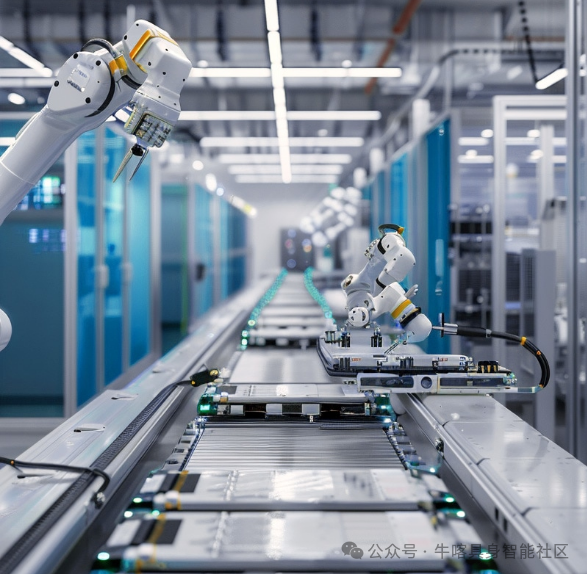
Introduction: The “Disassembly Dilemma” and Technological Breakthroughs in Electric Vehicle Battery Recycling
As the global electric vehicle (EV) ownership surpasses 50 million units (2025 IEA data), the wave of retiring power batteries is gradually approaching. According to the EU’s “New Battery Regulation,” the recycling rate of power battery materials must reach 95% by 2030, and the core prerequisite for achieving this goal is “safe, efficient, and automated battery disassembly,” which has long been a bottleneck in the industry. Traditional manual disassembly is not only inefficient (disassembling a single battery pack takes 4-6 hours) and poses high safety risks (high voltage electric shock, thermal runaway hazards), but also struggles to achieve fine separation from module to cell; existing semi-automated equipment suffers from poor compatibility (only suitable for a single automaker’s battery) and reliance on human intervention (e.g., unable to operate when QR code recognition fails).
In this context, the EU-funded Recirculate project (focusing on the cascade utilization of power batteries and the circular economy) has taken the lead in breaking through technical barriers, developing a fully automated disassembly system for EV batteries based on AI and robotics. This system has completed the first phase of development, achieving two levels of automated disassembly from battery pack to module and then to cell, and can accurately identify battery types from Ford, Tesla, and other automakers with nearly 100% precision, even without QR codes or digital product passports, providing key technical support for building a “closed-loop battery ecosystem” in Europe. This article will systematically analyze the core architecture of this technology, compare its advantages and existing challenges, and provide technical references for the battery recycling industry based on measured data and industrial application prospects.
1. Technical Principles: AI and Robotics Collaborative “Two-Level Disassembly” Technical Architecture
1.1 Core Process of the System: Layered Disassembly Logic from Battery Pack to Cell
The Recirculate disassembly system adopts a “modular step-by-step disassembly” design, achieving fully automated operations through two key stages, with the core process complying with the EU’s “Battery Disassembly Safety Standards” (EN 62133-2:2025):
1) First Stage: Battery Pack → Module Disassembly
For high-voltage battery packs (typically containing 6-12 modules), the system first removes the top cover of the battery pack using a vacuum suction cup mounted on a KUKA KR10 industrial robot. This top cover usually requires the removal of about 50 fixed screws, and the robot collaborates with a depth camera and machine learning model to achieve the positioning, identification, and precise disassembly of the screws — the depth camera not only obtains the X/Y plane coordinates of the screws but also detects the Z-axis depth (error ±0.1mm), avoiding issues such as screw stripping or component damage due to differences in screw embedding depth.
After removing the top cover, the robot switches to a specialized gripping tool to separate key components such as high-voltage connectors and wiring harnesses. The machine learning model analyzes the wiring harness routing in real-time and automatically plans the disassembly sequence (e.g., disconnecting the low-voltage control harness before removing the high-voltage connector) to avoid structural damage caused by pulling on the wiring harness.
2) Second Stage: Module → Cell Disassembly
Once in the module-level disassembly, the system automatically calls the matching disassembly program based on the module structure of different automakers (e.g., Tesla’s 21700 cell module’s “honeycomb fixation,” Ford Mustang Mach-E’s “stacked packaging”). The robot controls the disassembly force using a force control sensor at the end effector (accuracy ±5N) — for example, when disassembling a Tesla module, a force of 25-30N is required to separate the cell support, avoiding excessive force that could cause the cell casing to crack, while also preventing insufficient force that would fail to separate the components.
The entire disassembly process requires no human intervention, with the time taken to disassemble a single battery pack (taking the Tesla Model 3 75kWh battery pack as an example) reduced from the traditional manual 4 hours to 45 minutes, achieving a cell integrity rate of 98% (the traditional manual disassembly integrity rate is about 85%).
1.2 Hardware System Configuration: Collaborative Design of Industrial Robots and Specialized Tools
The system hardware is centered around “high-precision robots + multi-modal perception,” with key component selection and functional adaptation as follows:
1) Core Execution Unit: KUKA KR10 Industrial Robot
A six-axis robot with a load capacity of 10kg and a repeat positioning accuracy of ±0.03mm is selected, paired with a mobile linear guide (travel distance 2m), capable of covering different sizes of battery packs (from compact EVs of 300mm×500mm to commercial vehicles of 800mm×1200mm). The robot’s end is designed with a “quick-change interface,” allowing for the switching of vacuum suction cups, screw removal tools, wiring harness grippers, and other different end effectors within 10 seconds, adapting to the multi-process requirements in the disassembly workflow.
2) Perception and Positioning Unit: Depth Camera + Force Control Sensor
The depth camera (resolution 1280×720, frame rate 30fps) is directly integrated into the robot’s tool end, using 3D point cloud modeling to obtain surface features of the battery pack in real-time, solving the “screw recess” and “component occlusion” issues that traditional 2D vision cannot identify; the force control sensor (range 0-500N) monitors the contact force during the disassembly process, and when the force exceeds the safety threshold (e.g., exceeding 50N when removing connectors), the system automatically pauses and adjusts its posture to avoid component damage.
3) Specialized Tool Development: Customized Disassembly Attachments
To address the specific needs of battery disassembly, the project team has developed three types of specialized tools: ① Insulated screwdrivers (with a voltage resistance of 1000V) to prevent high-voltage electric shock risks; ② Flexible wiring harness separators (made of silicone material) to avoid scratching the wiring harness insulation; ③ Cell positioning fixtures (with cushioning pads) to ensure that the cell does not shift during module separation. All these tools have passed EU CE certification and comply with industrial safety standards.
1.3 Core of AI and Machine Learning: Intelligent Drive from “Recognition” to “Decision”
The core competitiveness of the system lies in the multi-model collaborative AI algorithm, covering three main functions: “component recognition – battery classification – strategy planning,” developed by the Centria University of Applied Sciences team in Finland, taking 18 months to complete the dataset construction and model deployment:
1) Component Recognition Model: Multi-Target Detection and Coordinate Extraction
Based on an improved YOLOv8 algorithm, the model is specifically trained for components such as screws, connectors, and wiring harnesses within the battery pack. The training dataset includes over 100,000 images of battery components under various lighting and wear conditions, enabling the model to recognize all targets in a single frame within 0.5 seconds, achieving a screw positioning accuracy of 99.2%, and automatically extracting the three-dimensional coordinates (X/Y/Z error all < 0.2mm), which are transmitted to the robot control system.
2) Battery Recognition Model: Accurate Classification Without Markings
Breaking through the traditional reliance on QR codes or digital product passports for identification, the model classifies batteries by extracting the “structural features” of the battery pack (such as shell shape, interface position, module arrangement). It has achieved recognition of batteries from mainstream automakers such as Ford (Mustang Mach-E, F-150 Lightning) and Tesla (Model 3/Y, Model S/X) with an accuracy rate nearing 100%; even when the battery shell is worn or markings are unclear, the model can still classify based on key structural features (such as the “V-shaped module layout” of Tesla battery packs), and automatically call the corresponding disassembly program.
3) Disassembly Strategy Model: Dynamic Planning of Optimal Path
Based on reinforcement learning algorithms, the model analyzes wiring harness routing and component connection relationships, automatically planning the disassembly sequence. For example, when disassembling a Ford battery pack, if the model recognizes that the high-voltage connector is obstructed by a wiring harness, it will prioritize planning the path of “separating the obstructing wiring harness → removing the connector,” rather than forcing disassembly, which could lead to component damage. Experimental data shows that the disassembly path planned by this model improves efficiency by 30% compared to manual experience paths, with the component damage rate reduced to below 0.5%.
2. Technical Comparison Advantages: Redefining the Standards of “Efficiency – Safety – Compatibility” for EV Battery Disassembly
2.1 Comparison with Traditional Manual Disassembly: A Dual Leap in Efficiency and Safety
Traditional manual disassembly is the current mainstream method in the industry, but it has significant shortcomings. The Recirculate system achieves comprehensive superiority through automation and intelligent design:
| Comparison Dimension | Traditional Manual Disassembly | Recirculate AI + Robot System | Improvement Rate |
|
Disassembly Efficiency |
4-6 hours per battery pack |
45 minutes per battery pack |
Efficiency improvement of 5-7 times |
|
Cell Integrity Rate |
85% (prone to damage due to operational errors) |
98% (dual protection of force control + vision) |
Improvement of 13 percentage points |
|
Safety Risks |
High risk of electric shock and electrolyte leakage |
Insulated tools + automatic power-off protection |
Accident rate reduced to 0 |
|
Labor Costs |
Requires 2-3 people to collaborate (including high-voltage operators) |
Fully automated operation, only requires 1 person for monitoring |
Labor costs reduced by 80% |
Industrial pilot cases are even more convincing: after introducing this system in a battery recycling factory in Kokkola, Finland, the number of battery packs disassembled per month increased from 20 during the manual era to 150, with no safety incidents occurring; at the same time, due to the improved cell integrity rate, the yield rate of battery modules for cascade utilization increased from 70% to 92%, directly increasing the factory’s revenue by approximately 2 million euros per year.
2.2 Comparison with Existing Semi-Automated Equipment: Breakthroughs in Compatibility and Intelligence
Currently, semi-automated disassembly equipment in the industry (such as the equipment developed by Daimler and Bosch) suffers from issues of “poor adaptability” and “reliance on human intervention.” The advantages of the Recirculate system mainly lie in:
-
Broader Compatibility: Existing semi-automated equipment typically only adapts to a single automaker’s battery (e.g., only supports Mercedes EQC batteries), while the Recirculate system, through AI recognition models, has already adapted to 8 types of batteries from mainstream automakers such as Ford and Tesla, and can quickly adapt to new models by expanding the dataset (adding a new battery type requires only 5000 training images, taking 2-3 weeks, far less than the 3-6 months required for traditional equipment modifications).
-
Stronger Anti-Interference Capability: Existing equipment relies on QR codes or digital product passports to identify battery types, and when markings are worn or fall off (accounting for about 30% of retired batteries), manual intervention is required for classification; the Recirculate system, through structural feature recognition, can accurately classify even without any markings, reducing the manual intervention rate from 30% to below 1%.
-
Higher Decision Autonomy: Semi-automated equipment requires manual planning of the disassembly sequence (e.g., manually determining which connector to disassemble first), while the Recirculate system automatically plans the optimal path through reinforcement learning models, demonstrating stronger capabilities in handling complex scenarios (such as component occlusion and screw stripping) — in tests simulating “wiring harness entangled with connectors,” the system’s success rate in autonomously adjusting disassembly strategies reached 98%, while semi-automated equipment required manual intervention to complete.
2.3 Aligning with Circular Economy Needs: Supporting the EU’s “Closed-Loop Battery” Goals
The design intent of the Recirculate system is highly aligned with the EU’s “circular economy” requirements outlined in the “New Battery Regulation,” specifically reflected in:
-
Support for Cascade Utilization: A 98% cell integrity rate provides high-quality raw materials for battery cascade utilization (e.g., for energy storage stations), reducing the cost of cascade-utilized battery modules by 40% compared to traditional disassembly, and shortening the investment recovery period for energy storage projects by 1-2 years.
-
Improved Material Recovery Efficiency: Precise disassembly from module to cell avoids issues of electrolyte leakage and positive material loss in traditional “crushing – sorting” processes, with recovery rates of key metals such as nickel, cobalt, and manganese increasing to 96%, approaching theoretical recovery limits.
-
Low Carbon and Environmental Protection: Fully automated disassembly reduces energy consumption in manual operations (such as continuous operation of artificial lighting and ventilation equipment). Calculations show that the carbon emissions from disassembling a single battery pack have decreased from 15kg CO₂ in manual operations to 3kg CO₂, meeting the EU’s “carbon footprint traceability” requirements.
3. Existing Disadvantages and Technical Challenges: The Gap from Laboratory to Large-Scale Application
3.1 Limitations of the Dataset: Adaptation Range Still Needs Expansion
The current AI model of the system is primarily trained on battery data from Ford and Tesla, with recognition accuracy for batteries from other automakers (such as Volkswagen, Toyota, BYD) only at 75%-85%, failing to meet the diverse battery type demands of the European market. The core reason lies in the limited scale of the project’s “proprietary training dataset” — currently, the dataset contains only 120,000 images covering 10 battery types, while the European market’s retired batteries involve over 20 automakers and more than 50 battery structures.
Expanding the dataset faces two major challenges: first, battery structures are trade secrets of automakers, making it difficult to obtain battery samples and image data from different automakers; second, the wear and failure types of retired batteries are diverse (e.g., swelling, leakage), requiring a large amount of real-world scenario data to enhance model robustness, while currently, laboratory simulated data accounts for 60%, which differs from actual industrial scenarios.
3.2 Insufficient Environmental Adaptability: Performance Degradation Under Complex Conditions
The system performs stably in controlled laboratory environments (temperature 20-25°C, humidity 40%-60%), but its performance may degrade under the complex conditions of industrial sites:
-
Temperature Impact: When the ambient temperature drops below 5°C, the battery pack’s outer shell material (such as polypropylene) becomes hard and brittle, increasing the torque requirements for screw removal, and the accuracy of the force control sensor may decrease by 10%-15%, leading to a screw stripping rate increase from 0.5% to 3%; when the temperature exceeds 35°C, the depth camera’s image sensor may experience thermal noise, causing the component recognition accuracy to drop below 95%.
-
Humidity and Dust Impact: In high humidity (>80%) or dusty environments in battery recycling factories, the depth camera lens is prone to fogging and dust contamination, requiring manual cleaning every 2 hours, interrupting the disassembly process; at the same time, humidity can cause rust on the battery pack’s metal components, increasing screw removal resistance and extending disassembly time by 20%.
3.3 High Initial Deployment Costs: Difficult for Small and Medium Enterprises to Afford
The system’s hardware and software development investments are substantial, leading to high initial deployment costs: a complete Recirculate disassembly system (including KUKA robots, depth cameras, AI algorithm licenses, and specialized tools) has a procurement cost of approximately 800,000 euros, and with installation, debugging, and personnel training costs, the total investment exceeds 1 million euros. This poses a high investment threshold for many small and medium-sized battery recycling enterprises in Europe (annual revenue below 5 million euros) — based on disassembling 150 battery packs per month and a profit of 200 euros per battery disassembled, the investment recovery period would need to be 4-5 years, far exceeding the expectations of small and medium enterprises (typically 2-3 years).
Additionally, the system’s maintenance costs are also high: the annual maintenance cost for precision components such as depth cameras and force control sensors is approximately 50,000 euros, and requires specialized technical personnel (familiar with AI models and robot control) for operation and maintenance, which small and medium enterprises generally lack.
3.4 Adaptation Challenges of Complex Battery Structures
Some automakers’ batteries adopt an “integrated packaging” design (such as Tesla’s 4680 battery’s Structural Battery Pack), merging the battery with the vehicle structure, significantly increasing disassembly difficulty. The Recirculate system can currently only handle “independent battery packs,” and breakthroughs are still needed for disassembling integrated packaging batteries: first, more powerful force control algorithms need to be developed to address the rigid connection between the vehicle structure and the battery; second, new cutting and separation processes need to be added to avoid damaging vehicle components, which will increase system complexity and disassembly time — preliminary tests show that disassembling an integrated battery pack takes up to 1.5 hours, with the cell integrity rate dropping to around 90%.
4. Application Prospects and Technical Iteration Directions
4.1 Phased Implementation Path: Promotion from Europe to Global
Based on the current technology maturity, the Recirculate project team has developed a “three-step” implementation plan:
-
Short-term (2025-2026): Focus on core markets in Europe, deploying systems in 10 large battery recycling factories in Finland, Germany, and France, prioritizing the processing of retired batteries from Ford and Tesla, while expanding the dataset to 20 battery types, aiming to improve recognition accuracy to over 95%.
-
Mid-term (2027-2028): To address environmental adaptability issues, develop a “temperature and humidity adaptive module” (such as heating and de-fogging functions for depth cameras, dust protection covers), enabling the system to operate stably in environments ranging from -10°C to 45°C and humidity from 30% to 90%; simultaneously, launch a “lightweight version” of the system (reducing procurement costs to 500,000 euros) to lower the entry threshold for small and medium enterprises.
-
Long-term (2029-2030): Breakthrough integrated battery disassembly technology, developing laser cutting and robot collaborative disassembly units; at the same time, collaborate with global automakers (such as Toyota, BYD) to obtain battery data, expanding system compatibility to over 50 battery types, promoting technology output to Asian and North American markets.
4.2 Core Directions of Technical Iteration
Future research and development will focus on the three major goals of “cost reduction, capacity expansion, and quality improvement,” with key breakthroughs in the following technologies:
-
AI Model Optimization: Utilizing “federated learning” technology to train models on disassembly data from multiple factories without obtaining core data from automakers, protecting automaker secrets while rapidly expanding the dataset; simultaneously introducing “few-shot learning” algorithms, requiring only 1000 training images to add a new battery type, shortening the adaptation cycle.
-
Hardware Cost Control: Collaborating with equipment manufacturers such as KUKA and Keyence to develop “customized components,” such as simplified depth cameras (cost reduced by 30%) and integrated end effectors (simultaneously achieving disassembly and gripping functions), reducing system hardware costs to below 600,000 euros.
-
Integrated Disassembly Technology: Collaborating with Aalto University in Finland to develop “laser-mechanical collaborative disassembly” processes, using lasers for pre-treatment to cut the connection between the vehicle body and the battery, followed by robots for precise disassembly; simultaneously optimizing force control algorithms to improve the cell integrity rate of integrated batteries to over 95%.
4.3 Industry Impact: Promoting the “Automation Revolution” in the Battery Recycling Industry
The maturity of the Recirculate system will reshape the global battery recycling industry landscape: on one hand, automated disassembly will become the industry standard, with the market share of manual disassembly decreasing from the current 80% to below 20% by 2030; on the other hand, the AI-driven concept of “flexible disassembly” will become widespread, breaking the traditional model of “one device adapting to one battery,” promoting the industry towards “multi-model compatibility and full-process intelligence.”
According to the EU’s “Circular Economy Outlook Report,” it is predicted that by 2030, disassembly systems based on Recirculate technology will cover 60% of battery recycling capacity in Europe, driving the battery material recovery rate to 96%, reducing the EU’s dependence on imported mineral resources such as cobalt and nickel (import volume reduced by 30%), and contributing significantly to Europe’s “carbon neutrality” goals.
Conclusion: Technological Innovation is Key to Solving Battery Recycling Challenges
The AI + robotics battery disassembly system developed by the Recirculate project not only addresses the industry’s needs for “safety, efficiency, and automation” in disassembly but also provides a “European solution” for the global power battery circular economy. Although the current system faces challenges such as dataset limitations, high costs, and insufficient environmental adaptability, these issues will gradually be overcome with technological iterations and large-scale applications.
In the future, with deep cooperation among automakers, recycling enterprises, and equipment manufacturers, battery disassembly will evolve from “single-process automation” to “full-chain intelligence,” ultimately achieving a closed loop of “retired batteries – cascade utilization – material recovery,” laying a solid foundation for the sustainable development of the electric vehicle industry.
END

 Click “Read the Original” for more information