1. Introduction
With the rapid development of global Industry 4.0 and smart manufacturing, Industrial Internet of Things (IoT) devices have become increasingly prevalent in various manufacturing and production environments. These devices enhance production efficiency, improve resource utilization, and strengthen monitoring and management through technologies such as sensing, communication, and intelligent processing. However, as the number and complexity of devices increase, Lifecycle Management and Predictive Maintenance have become significant challenges for enterprises in maintaining and operating these devices.
Lifecycle Management encompasses not only the procurement, installation, and commissioning of devices but also includes daily maintenance, fault handling, and ultimately, decommissioning and recycling. By formulating reasonable management strategies, enterprises can extend the lifespan of devices, reduce maintenance costs, and enhance production efficiency. Therefore, in this introduction, we will explore specific implementation solutions that combine Lifecycle Management and Predictive Maintenance.
The core of Predictive Maintenance lies in monitoring and predicting the health status of devices through real-time data analysis. By applying advanced technologies such as data acquisition sensors, edge computing, and cloud computing, various parameter data of devices during operation can be obtained, including temperature, vibration, pressure, etc. After analysis, these data can identify potential fault patterns, allowing for reasonable maintenance scheduling to prevent unexpected failures.
It is important to note that successful implementation of this solution requires consideration of the following key elements:
-
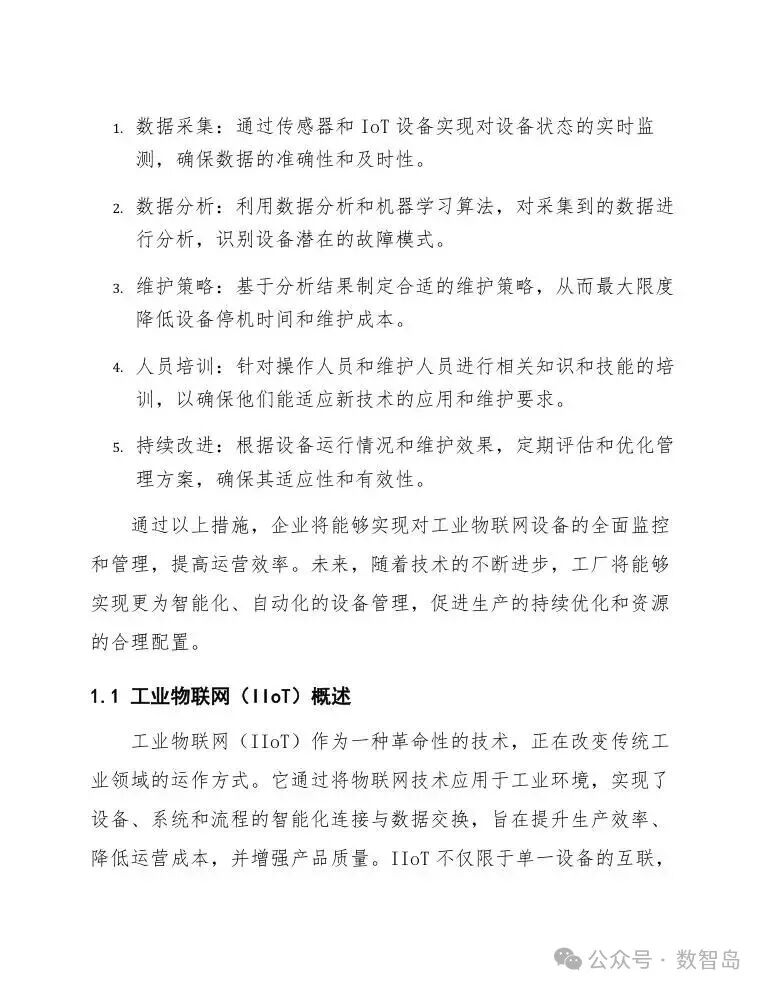
Data Acquisition: Real-time monitoring of device status through sensors and IoT devices to ensure data accuracy and timeliness.
-
Data Analysis: Utilizing data analysis and machine learning algorithms to analyze the collected data and identify potential fault patterns.
-
Maintenance Strategy: Formulating appropriate maintenance strategies based on analysis results to minimize device downtime and maintenance costs.
-
Personnel Training: Training for operators and maintenance personnel on relevant knowledge and skills to ensure they can adapt to the application and maintenance requirements of new technologies.
-
Continuous Improvement: Regularly evaluating and optimizing management plans based on device operating conditions and maintenance outcomes to ensure adaptability and effectiveness.
Through these measures, enterprises will be able to achieve comprehensive monitoring and management of Industrial IoT devices, improving operational efficiency. In the future, with continuous technological advancements, factories will be able to achieve smarter and more automated device management, promoting continuous optimization of production and rational allocation of resources.
1.1 Overview of Industrial Internet of Things (IIoT)
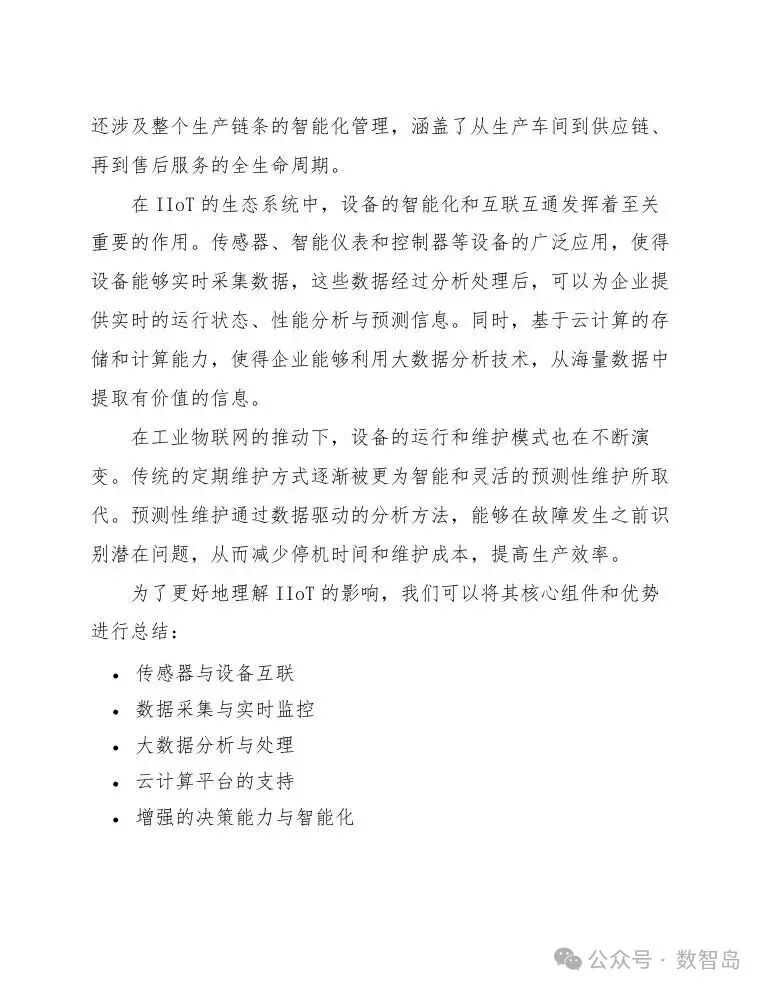
The Industrial Internet of Things (IIoT) is a revolutionary technology that is changing the way traditional industries operate. By applying IoT technology in industrial environments, it achieves intelligent connections and data exchanges between devices, systems, and processes, aiming to enhance production efficiency, reduce operational costs, and improve product quality. IIoT is not limited to the interconnection of individual devices but involves the intelligent management of the entire production chain, covering the full lifecycle from the production workshop to the supply chain and after-sales service.
In the IIoT ecosystem, the intelligence and interconnectivity of devices play a crucial role. The widespread use of sensors, smart instruments, and controllers enables devices to collect data in real-time. After analysis, this data can provide enterprises with real-time operational status, performance analysis, and predictive information. Additionally, the support of cloud computing for storage and computing capabilities allows enterprises to utilize big data analysis techniques to extract valuable information from massive datasets.
Driven by the Industrial Internet of Things, the operation and maintenance models of devices are also evolving. Traditional periodic maintenance methods are gradually being replaced by more intelligent and flexible predictive maintenance. Predictive maintenance, through data-driven analytical methods, can identify potential issues before failures occur, thereby reducing downtime and maintenance costs and improving production efficiency.
To better understand the impact of IIoT, we can summarize its core components and advantages:
- Sensor and Device Interconnectivity
- Data Acquisition and Real-time Monitoring
- Big Data Analysis and Processing
- Support from Cloud Computing Platforms
- Enhanced Decision-making Capabilities and Intelligence
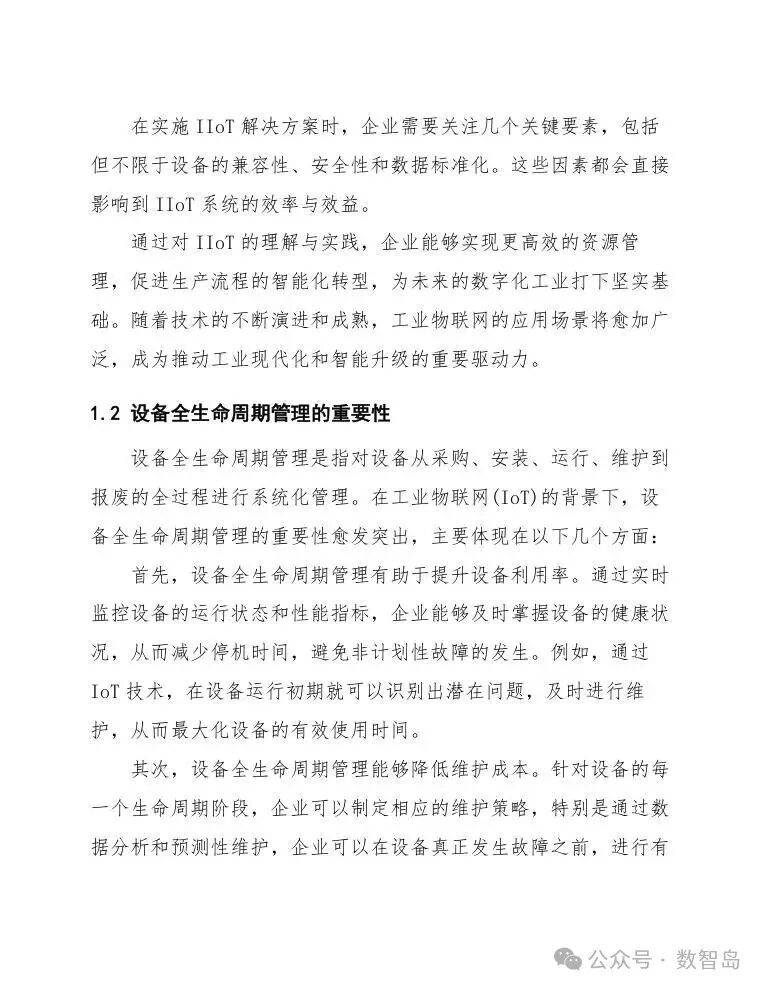
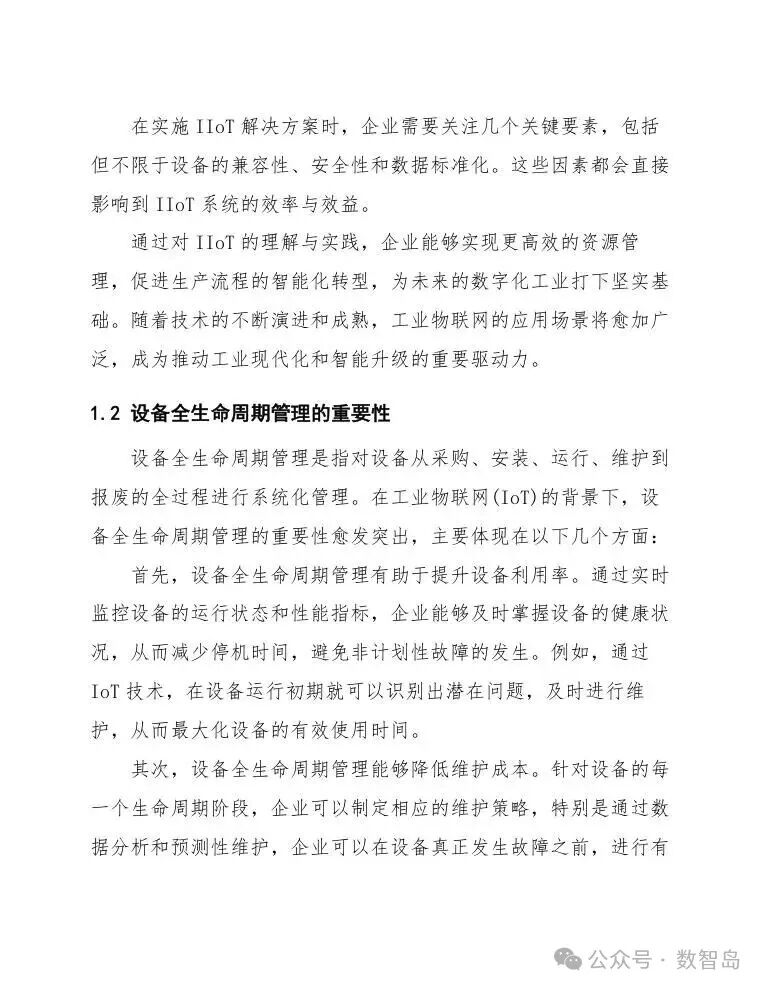
When implementing IIoT solutions, enterprises need to focus on several key factors, including but not limited to device compatibility, security, and data standardization. These factors directly affect the efficiency and effectiveness of IIoT systems.
By understanding and practicing IIoT, enterprises can achieve more efficient resource management, promote the intelligent transformation of production processes, and lay a solid foundation for the future of digital industry. As technology continues to evolve and mature, the application scenarios of Industrial Internet of Things will become increasingly widespread, becoming an important driving force for industrial modernization and intelligent upgrades.
1.2 Importance of Device Lifecycle Management
Device Lifecycle Management refers to the systematic management of devices throughout their entire lifecycle, from procurement, installation, operation, maintenance to decommissioning. In the context of the Industrial Internet of Things (IoT), the importance of Device Lifecycle Management is becoming increasingly prominent, mainly reflected in the following aspects:
First, Device Lifecycle Management helps improve device utilization. By monitoring the operational status and performance indicators of devices in real-time, enterprises can promptly grasp the health status of devices, thereby reducing downtime and avoiding unplanned failures. For example, through IoT technology, potential issues can be identified early in the device’s operation, allowing for timely maintenance and maximizing effective usage time.
Second, Device Lifecycle Management can reduce maintenance costs. For each lifecycle stage of the device, enterprises can formulate corresponding maintenance strategies, especially through data analysis and predictive maintenance, allowing for targeted maintenance and repairs before actual failures occur, significantly reducing the high repair costs and personnel costs associated with unexpected failures.
Third, Device Lifecycle Management helps improve production efficiency. By formulating scientific device management strategies, ensuring normal operation of devices, overall efficiency of production lines can be enhanced. Additionally, IoT technology can facilitate information sharing and collaboration between devices, improving inter-device connectivity and further optimizing production processes.
Fourth, Device Lifecycle Management supports decision optimization. At different stages of device operation, by collecting and analyzing operational data and maintenance records, enterprise managers can obtain a wealth of decision-support information, enabling more scientific decisions in device procurement, updates, and decommissioning, thereby reducing resource waste.
Finally, Device Lifecycle Management promotes sustainable development. Modern enterprises increasingly emphasize environmental protection, and considering the environmental impact of devices in lifecycle management allows for the implementation of environmentally friendly strategies at various stages, such as design, procurement, and decommissioning. For instance, more energy-efficient devices and technologies can be selected, and after the device’s use, priority can be given to recycling and reuse, reducing the environmental burden.
In summary, Device Lifecycle Management not only helps enterprises enhance the economic benefits and operational efficiency of devices but also contributes to achieving sustainable industrial development. By implementing effective lifecycle management strategies, enterprises can better respond to market competition and maintain innovation and development vitality.
1.3 Background and Significance of Predictive Maintenance
In today’s rapidly evolving industrial environment, the effective operation and maintenance of devices have become an important manifestation of enterprise competitiveness. With the rise of the Industrial Internet of Things (IIoT), the interconnectivity of production equipment has made real-time data collection and analysis possible. Predictive Maintenance (PdM), as an advanced maintenance strategy, utilizes data analysis and machine learning technologies to predict potential failures based on the operational status and historical data of devices, helping enterprises perform timely maintenance before equipment failures occur, thereby effectively reducing repair costs and downtime.
As the intelligence of devices increases, traditional time-driven maintenance and reactive repair methods are gradually unable to meet the demands of modern industry. Time-driven maintenance relies on fixed maintenance cycles, often leading to unnecessary maintenance work, thus increasing costs; while reactive repair not only incurs high repair costs but may also significantly impact production schedules, making both strategies limited.
Statistics show that Predictive Maintenance can reduce the Mean Time to Repair (MTTR) of devices by 30% to 50%, while improving Overall Equipment Effectiveness (OEE) to over 90%. This has led to the widespread application of PdM solutions across many industries, especially in manufacturing, energy, and transportation, where enterprises increasingly expect stability and reliability in equipment operation. Through data analysis, PdM makes maintenance decisions more scientific and precise.
Predictive Maintenance is not only a measure to improve equipment operational efficiency but also plays an important role in continuously reducing operational costs. By predicting and optimizing maintenance resource allocation, enterprises can ensure equipment reliability while achieving budget savings. Specifically, this can be reflected in the following aspects:
- Real-time Monitoring: Utilizing sensors to collect operational data in real-time, establishing a data-driven decision support mechanism.
- Data Analysis: Applying machine learning and artificial intelligence algorithms to conduct in-depth analysis of device data, identifying potential fault patterns.
- Enhanced Decision Support: Providing actionable maintenance recommendations, reducing human intervention, and improving the accuracy and timeliness of maintenance decisions.
- Cost-effectiveness Considerations: By reducing downtime losses and repair costs caused by unexpected failures, providing enterprises with a higher return on investment (ROI).
In the context of the Industrial Internet of Things, the implementation of Predictive Maintenance can utilize historical data and real-time monitoring information of devices to form a complete device lifecycle management system. Through coordinated data analysis, it can accurately grasp the health status of each device, ensuring that enterprises take preventive measures before equipment failures occur, providing strong support for enterprise development.
Based on the above background and significance, Predictive Maintenance is not only a technical means but also an important component of enterprise digital transformation and smart manufacturing. By constructing Predictive Maintenance solutions, enterprises can gain a competitive edge in an increasingly competitive market, achieving efficient, intelligent, and sustainable development.
2. Lifecycle Management of Industrial IoT Devices
The lifecycle management of Industrial IoT devices is aimed at ensuring efficient, safe, and economical operation of devices throughout their entire usage cycle. The lifecycle of a device typically includes six main stages: planning, procurement, installation, operation, maintenance, and decommissioning. Each stage should consider data collection, analysis, and feedback to achieve optimized management.
First, in the planning stage, enterprises need to clarify the usage requirements, environmental conditions, and expected goals of the devices. The key at this stage is to determine the functions, specifications, and performance indicators of the devices, and to conduct thorough research on available IoT devices in the market. Enterprises should strengthen communication with device suppliers to ensure that the selected devices can meet the intelligent needs of modern industrial production. Additionally, historical data analysis tools can be used to evaluate the performance of similar devices to guide device selection.
Second, in the procurement stage, enterprises should choose suppliers with a good reputation and after-sales service. After procuring the devices, enterprises need to establish a device ledger to record basic information about the devices, procurement dates, supplier information, etc. Transparency and standardization of information during the procurement process facilitate subsequent management.
Next is the installation stage, where the installation of devices should follow regulations and standards to ensure safe and stable operation. At the same time, enterprises need to set up testing and calibration procedures after installation to verify whether the functions and performance indicators of the devices meet the standards. It is recommended to conduct comprehensive training after device installation to ensure that operators are familiar with the operating procedures and daily maintenance precautions.
The operation stage is the most critical part of the device lifecycle. Enterprises need to monitor the operational status of devices in real-time through IoT technology, collecting data and facilitating communication. This not only helps to promptly identify abnormal device statuses but also allows for reasonable load distribution and energy management based on the operational conditions of the devices. The data from real-time monitoring can be used to generate trend analyses and performance reports, providing a basis for decision-making.
In the maintenance stage, predictive maintenance strategies should be implemented. By analyzing operational data of devices, potential faults can be proactively identified and preventive measures taken. Utilizing advanced machine learning and data analysis technologies, enterprises can build fault prediction models. These models can identify abnormal patterns in devices, alerting maintenance teams to address potential faults in a timely manner, thereby reducing downtime risks and repair costs.
In the decommissioning stage, enterprises need to carry out effective asset disposal. The lifecycle management of devices should also reflect on the decommissioning of devices, evaluating the lifecycle costs, performance, and environmental impact of devices, and formulating plans for recycling or reusing devices. By optimizing resource utilization and environmental responsibility, enterprises can enhance overall operational efficiency and corporate value.
In summary, the lifecycle management of Industrial IoT devices requires close coordination and information sharing between various stages. By implementing lifecycle management, enterprises can not only improve device availability and production efficiency but also reduce long-term operational costs and enhance competitiveness. To visually demonstrate the various stages of device lifecycle management, the following diagram can be used:
This lifecycle management model can effectively support enterprises in their development needs during the digital transformation process and ultimately achieve the sustainable development goals of the enterprise.
2.1 Lifecycle Stage Division
In the lifecycle management of Industrial IoT devices, the division of lifecycle stages is crucial, providing a foundation for subsequent management and maintenance strategies. Generally, the lifecycle of Industrial IoT devices can be divided into several key stages: design stage, production stage, usage stage, maintenance stage, and decommissioning stage. Each stage has its unique characteristics and management requirements throughout the lifecycle.
In the design stage, enterprises need to fully consider the functional requirements, performance indicators, applicable environments, and other factors to ensure that the designed devices can meet actual application needs. At the same time, the design stage should also consider the maintainability and scalability of devices for future upgrades or repairs. Design documents and related data records are particularly important at this stage, providing a basis for subsequent production and maintenance.
The production stage is the second stage of the lifecycle, involving the manufacturing and assembly of devices. During this stage, ensuring quality management of the production process is crucial. Enterprises should adopt advanced production management systems to monitor the operational status of production lines and store production data of devices, including material sources, manufacturing dates, and batch information.
The usage stage is when devices are actually put into operation, and effective monitoring and data collection of devices are very important. Through IoT technology, enterprises can collect operational status data of devices in real-time, such as temperature, pressure, energy consumption, etc. This data provides important evidence for subsequent fault prediction and maintenance decisions.
The maintenance stage involves a series of activities implemented to ensure that devices maintain optimal performance during use. These activities can be divided into planned maintenance and predictive maintenance based on the real-time status and usage of devices. Planned maintenance refers to regular inspections and maintenance of devices according to a predetermined schedule, while predictive maintenance uses actual operational data to predict potential faults through algorithms, allowing for targeted maintenance.
Finally, the decommissioning stage marks the end of the device lifecycle. In this stage, enterprises need to assess the remaining value of devices and handle decommissioned devices appropriately. The decommissioning of devices should follow principles of environmental protection and resource reuse, taking appropriate measures after thorough evaluation, such as recycling usable materials to minimize environmental impact.
By clarifying the various stages of the lifecycle, enterprises can effectively formulate corresponding management strategies, improve overall operational efficiency, and reduce the probability of faults, thereby achieving the optimal value of device usage.
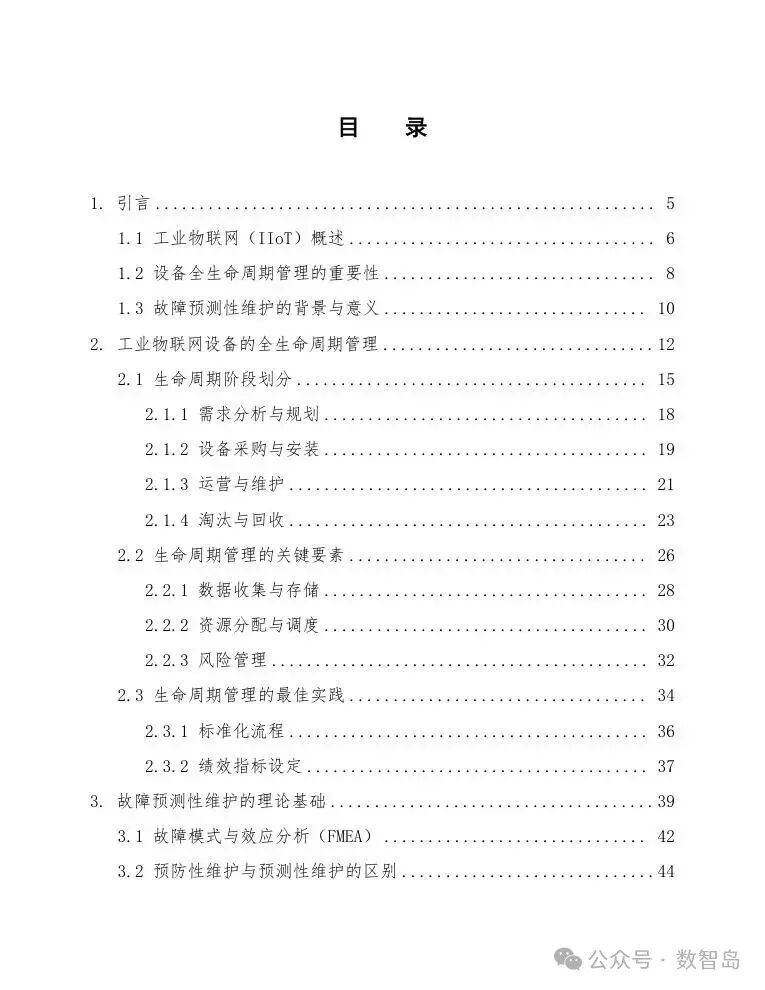
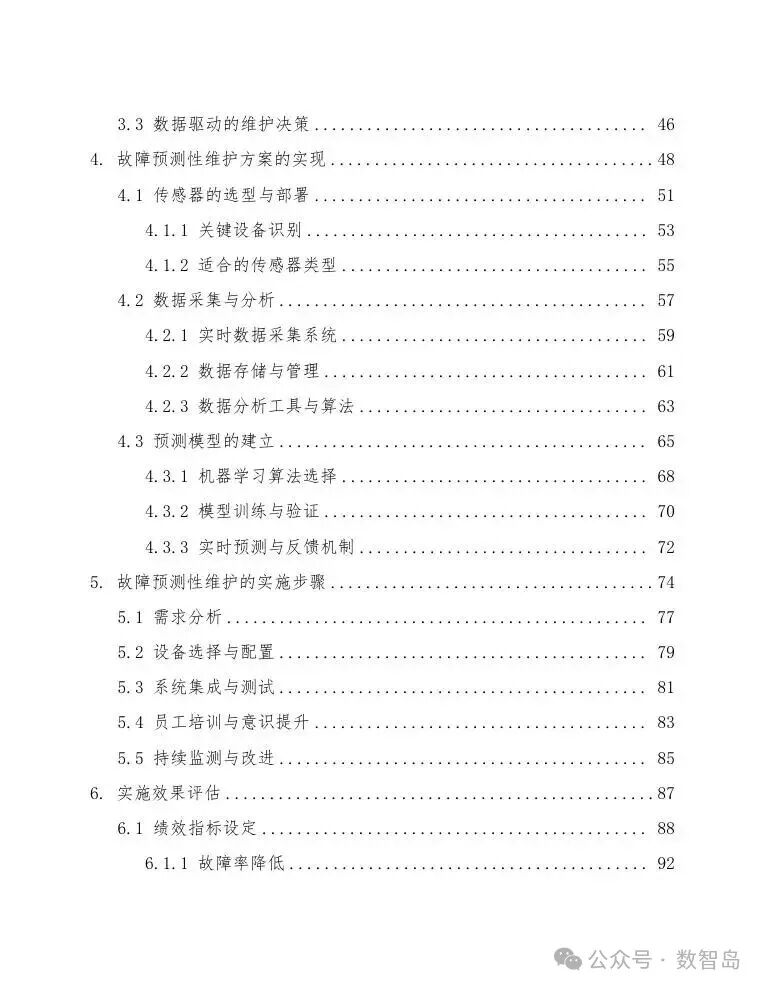
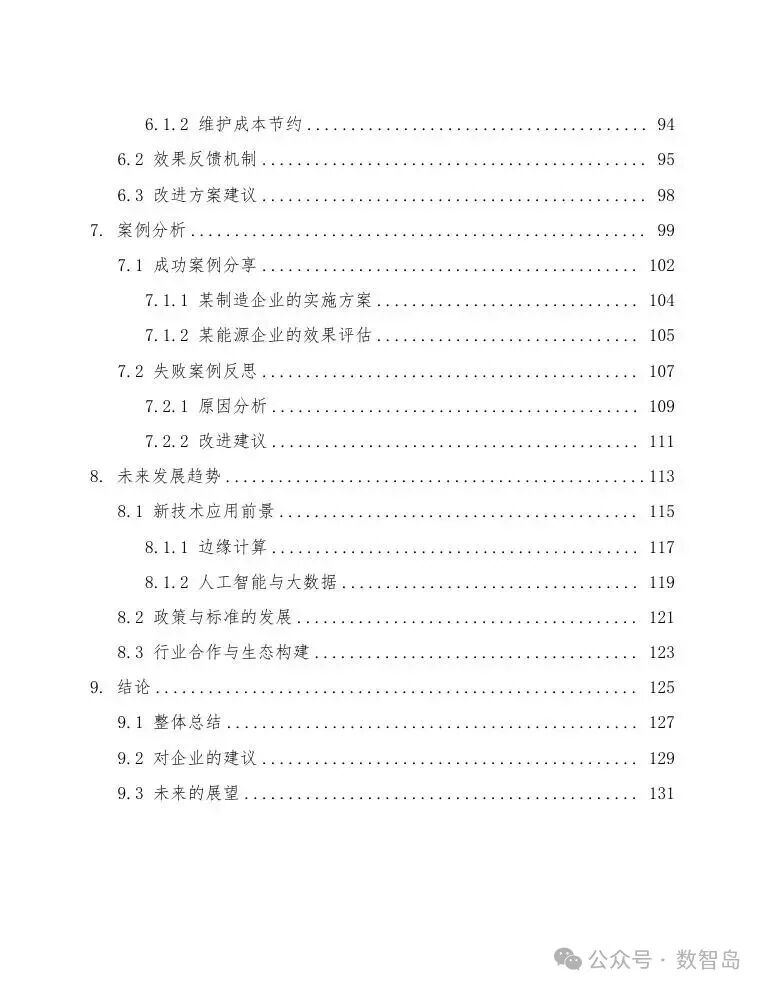
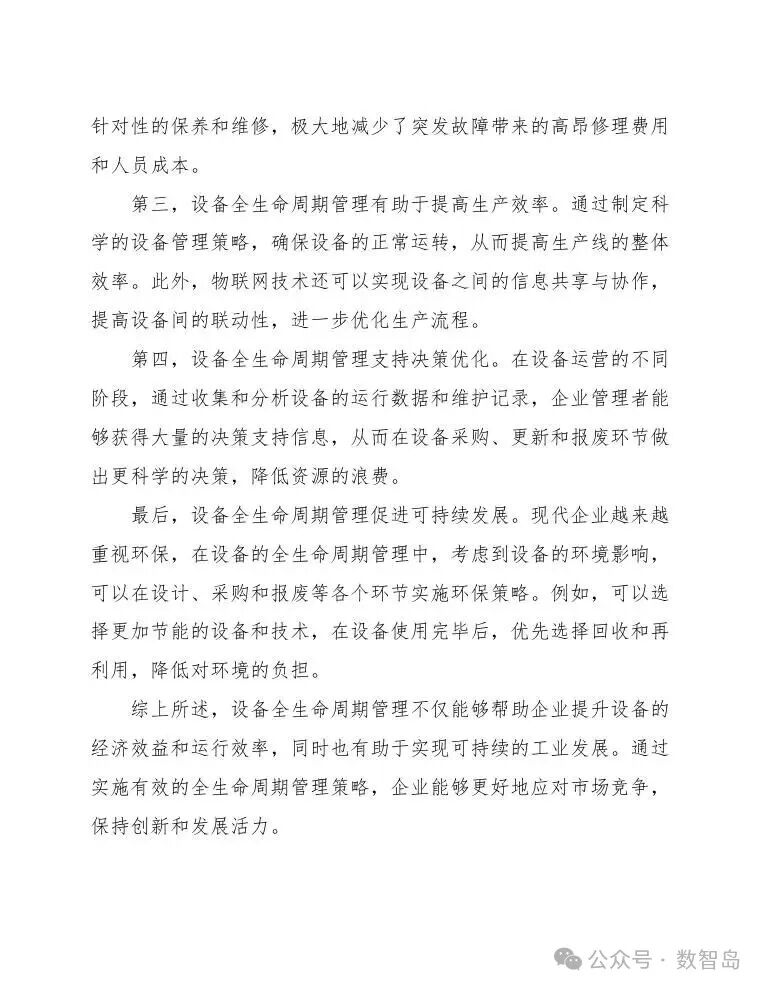
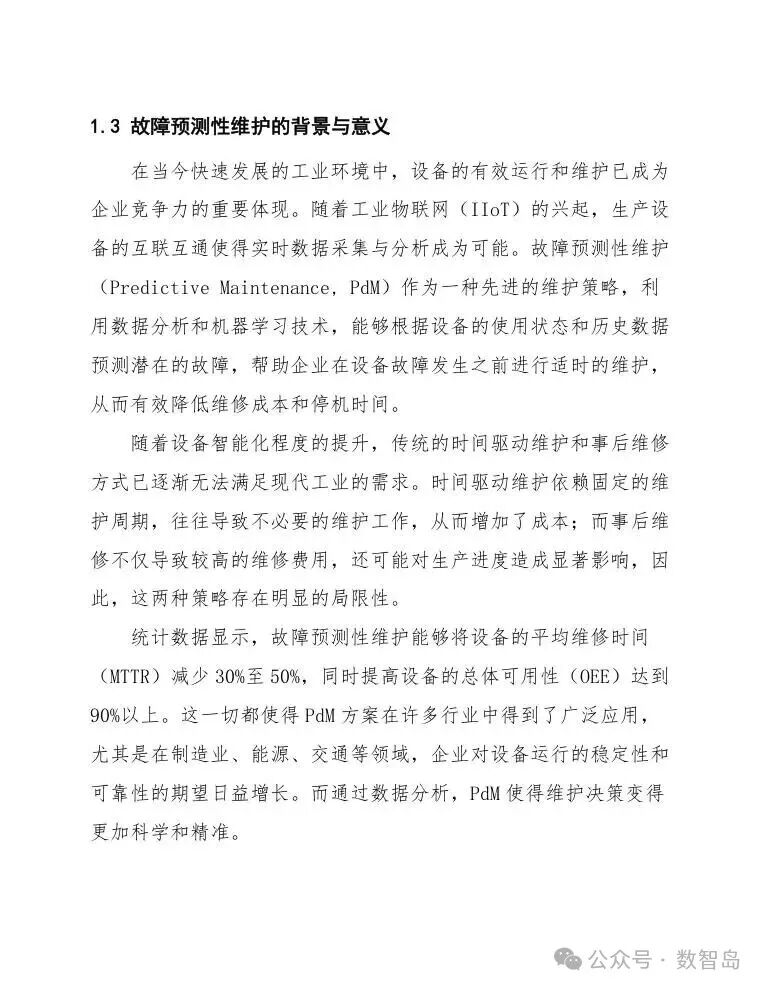
The following are screenshots of the original proposal, which can be joined in the knowledge community to access the complete document.
Welcome to join Smart Island knowledge community, where you can read and download all proposals after joining.