Hello everyone, I am the editor of open source project interpretations, sharing the most important open source projects every day.
Mainly sharing interesting, meaningful, and important projects on GitHub.
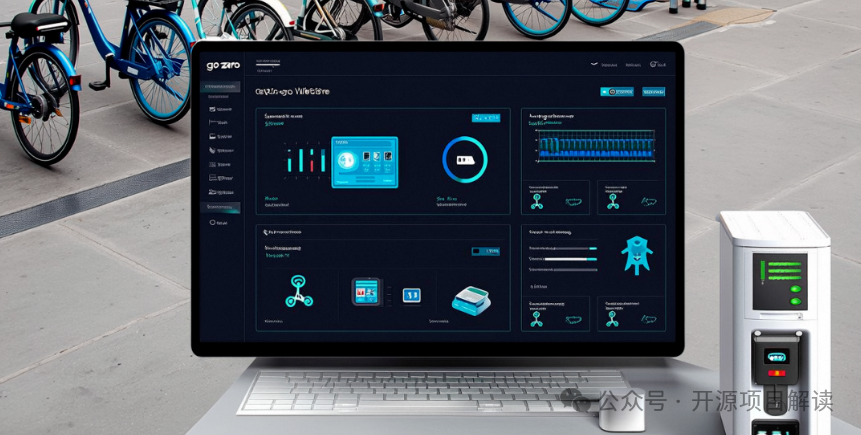
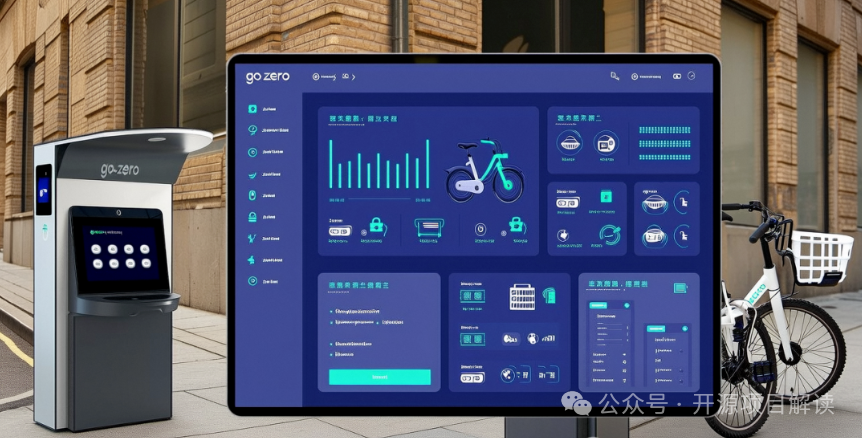
An IoT platform based on go-zero that can be used for shared bicycles, shared charging stations, delivery lockers, and other scenarios.
Source Code
http://www.gitpp.com/cicddemo/go-iot-platform
Project Detailed Analysis
1. Introduction to the go-zero Framework
go-zero is an open-source microservices framework based on the Go language, open-sourced by Tencent. It integrates various functions and tools required for building microservices, aiming to simplify the development process of distributed applications.
The core features of go-zero include:
- Simplicity and Ease of Use: go-zero provides a code generator called goctl, allowing developers to automatically generate corresponding code based on defined API specifications, including routing, processing logic, data models, etc., thus simplifying the server-side development process.
- High Performance: go-zero leverages the high concurrency features of the Go language and supports gRPC and HTTP/2 protocols, providing high-performance RPC calls and HTTP services. It is suitable for handling a large number of requests while maintaining system stability under high load.
- Load Balancing: go-zero has built-in load balancing algorithms that support various load balancing strategies, which can be configured according to actual needs to improve system scalability and fault tolerance.
- Service Governance: go-zero provides service governance features such as circuit breaking, rate limiting, and degradation, ensuring that the system can maintain stable operation under high load or abnormal conditions.
- Monitoring and Tracing: go-zero supports distributed tracing and monitoring, making it easier for developers to troubleshoot and optimize performance. By monitoring the operational status and performance metrics of the system, developers can promptly identify and resolve issues.
Additionally, go-zero offers a flexible middleware mechanism, comprehensive documentation and examples, and active community support, making it easier for developers to get help and solve problems.
2. IoT Platform Architecture Design
The architecture of an IoT platform typically includes device access layer, device management layer, data processing layer, business logic layer, and user interaction layer. These layers work together to realize the various functions of the IoT platform.
- Device Access Layer: Responsible for device connection and communication, supporting various communication protocols such as MQTT, CoAP, etc. This layer serves as the interface between the IoT platform and devices, ensuring that devices can smoothly connect to the platform and exchange data.
- Device Management Layer: Responsible for registering, authenticating, configuring, and managing devices. Through the device management layer, developers can comprehensively manage the devices connected to the platform, including monitoring device status and updating configurations.
- Data Processing Layer: Responsible for parsing, storing, and processing the data uploaded by devices. The data processing layer is one of the core parts of the IoT platform, responsible for processing and analyzing the data generated by devices, providing data support for the business logic layer.
- Business Logic Layer: Implements specific business functions such as order management and billing. The business logic layer processes business requirements based on the data provided by the data processing layer.
- User Interaction Layer: Provides user interfaces, supporting operations such as device management, status viewing, and historical record queries. The user interaction layer serves as the interface between the IoT platform and users, providing convenient device management and data query functions through a user-friendly interface and interaction methods.
3. Implementation of IoT Platform Based on go-zero
The implementation of the IoT platform based on the go-zero framework can fully utilize the microservices framework and toolset provided by go-zero to quickly build distributed and scalable IoT services. The following is a specific plan for implementing the IoT platform based on go-zero:
-
Device Access Layer:
- Use the HTTP/2 or gRPC services provided by go-zero to receive data uploaded by devices.
- Utilize go-zero’s middleware functionality to implement device authentication and authorization, ensuring that only legitimate devices can access the platform.
Device Management Layer:
- Use the API gateway and authentication services provided by go-zero for device registration, authentication, and configuration.
- Utilize go-zero’s JWT authentication mechanism for device identity verification, ensuring secure access and management of devices.
Data Processing Layer:
- Use go-zero’s caching and message queue services for real-time processing and analysis of data uploaded by devices.
- Utilize caching technologies like Redis to improve data read speeds, and use message queues like Kafka for asynchronous data processing and analysis.
Business Logic Layer:
- Use go-zero’s RPC calls and distributed transaction management features to implement specific business functions.
- Ensure stable operation of the business logic layer under high load through go-zero’s circuit breaking and rate limiting mechanisms.
User Interaction Layer:
- Use go-zero’s web services to build user interfaces.
- Combine front-end technologies like Vue.js or React.js to create a user-friendly interface, enabling device management, status viewing, historical record queries, and more.
4. Conclusion
The IoT platform implemented based on the go-zero framework features distributed, scalable, and high-performance characteristics, capable of meeting the needs of various scenarios such as shared bicycles, shared charging stations, and delivery lockers. Through reasonable architecture design and code implementation, the stability and reliability of the IoT platform can be ensured, providing strong support for the development of IoT applications. Additionally, the simplicity and high performance of the go-zero framework make the development of the IoT platform more convenient and efficient.
An IoT platform based on go-zero that can be used for shared bicycles, shared charging stations, delivery lockers, and other scenarios.
Source Code
http://www.gitpp.com/cicddemo/go-iot-platform
We have collected over 10,000 open source projects. Click to read the original text to learn more about open source projects.