Jessica from Vice Driver TempleSmart Car Reference | WeChat Official Account AI4Auto
Li Auto’s latest financial report shows that while the data is not as impressive as before, there are key signals everywhere.
In the second quarter, revenue decreased by 4.5% year-on-year, net profit growth hit the brakes, and even the delivery guidance for the third quarter was lowered…
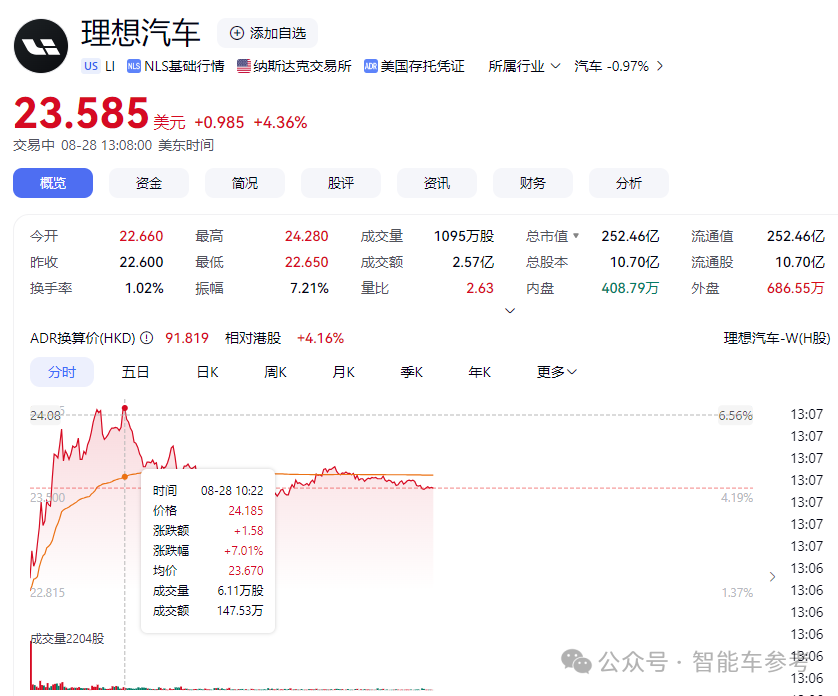
However, the capital market’s reaction is much more optimistic: after the financial report was released, Li Auto’s stock price surged by more than 7% at one point in the US stock market.
If we look at this financial report alongside Li Auto’s annual strategy, everything makes sense.
Li Auto’s Q2 Financial Performance
In the second quarter of 2025, Li Auto’s total delivery volume was 111,074 vehicles, a year-on-year increase of 2.3% and a quarter-on-quarter increase of 19.6%.
In the first half of the year, Li Auto’s cumulative deliveries reached 204,000 vehicles, a year-on-year increase of 7.9%, ranking second among new forces; at the same time, Li Auto’s market share in the new energy vehicle market reached 13.6%, still the sales champion among brands with over 200,000 vehicles.
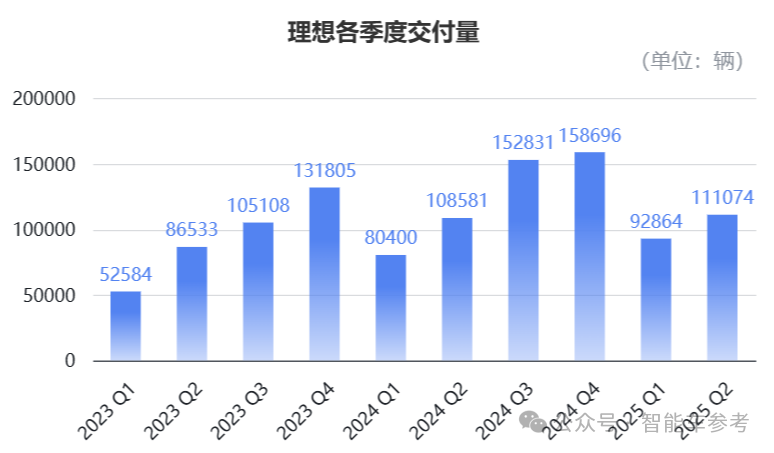
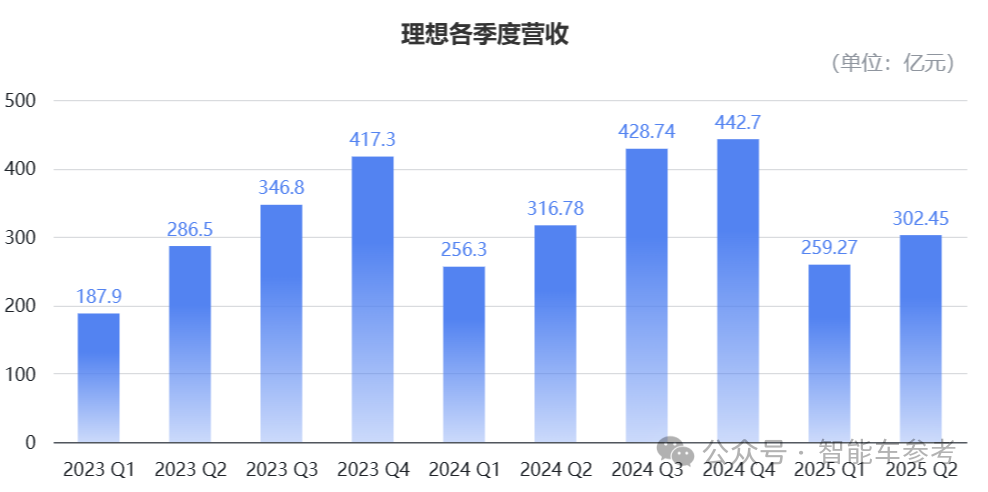
In the second quarter, Li Auto’s total revenue was 30.2 billion yuan, a year-on-year decrease of 4.5% and a quarter-on-quarter increase of 16.7%. Among them, the automobile sales revenue was 28.9 billion yuan, a year-on-year decrease of 4.7% and a quarter-on-quarter increase of 17.0%.
Calculating, Li Auto’s average selling price for cars this quarter was 260,000 yuan, a year-on-year decrease of 7%.
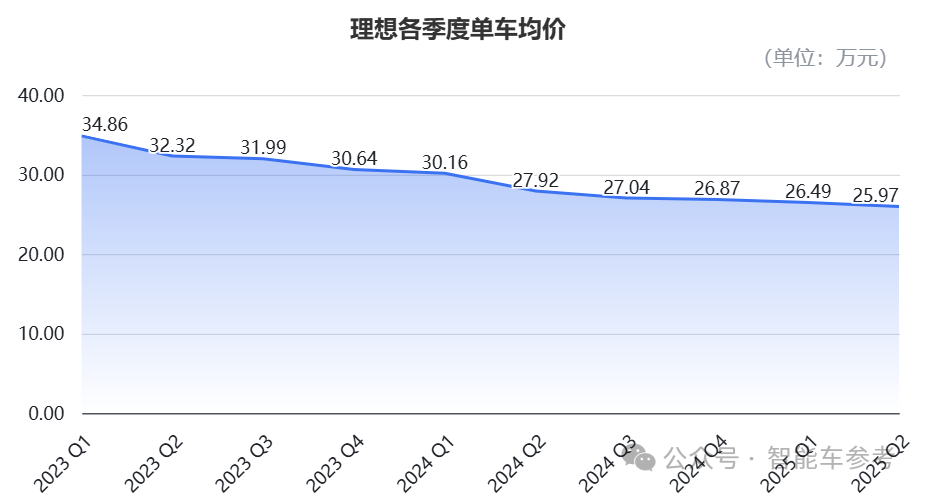
The decline in automobile revenue mainly comes from product mix differences, with the Li Auto L6 being relatively lower priced, while interest subsidies and sales incentive policies for car owners are also increasing.
However, the gross profit level remained relatively stable. In the second quarter, Li Auto’s gross profit was 6.1 billion yuan, a year-on-year decrease of 1.8% and a quarter-on-quarter increase of 14.1%; the comprehensive gross profit margin for the same period was 20.1%, a year-on-year increase of 0.6 percentage points, and a quarter-on-quarter decrease of 0.4 percentage points.
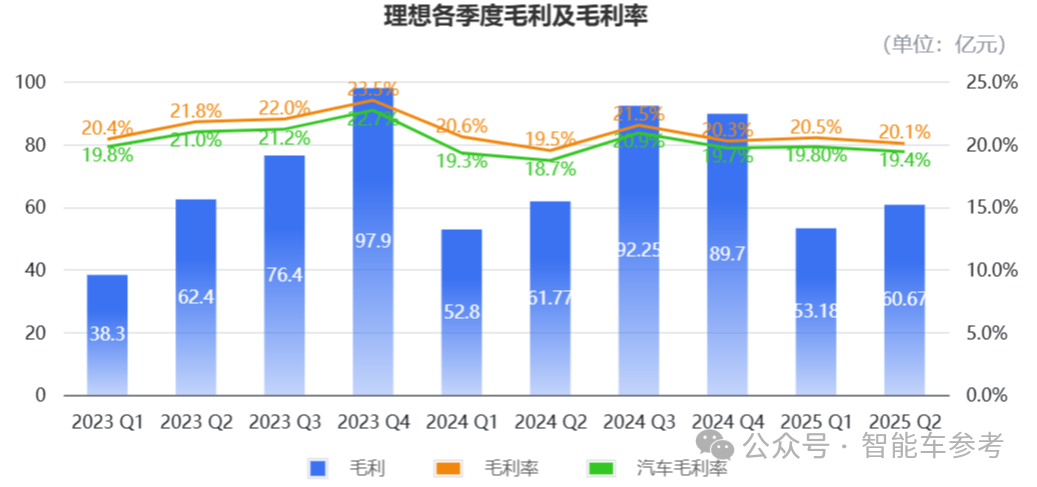
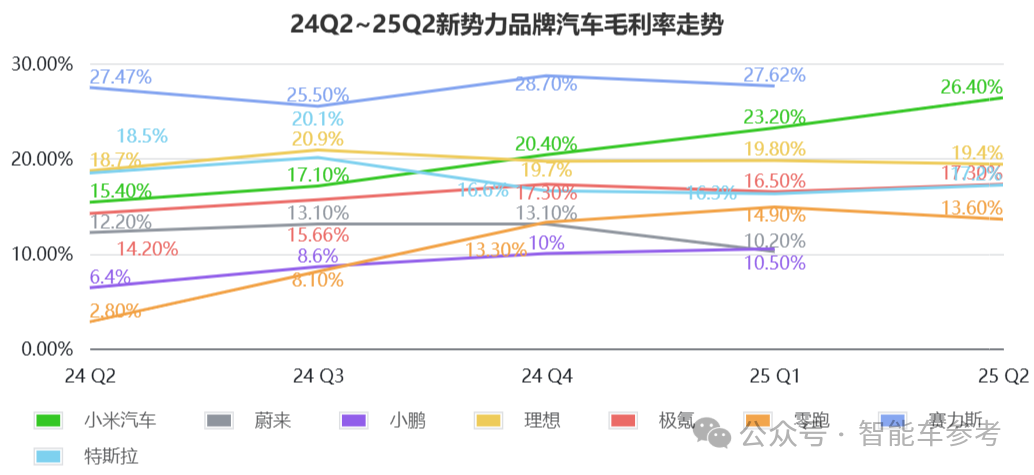
Li Auto’s automobile profit margin for this quarter was 19.4%, compared to 18.7% in Q2 2024 and 19.8% in Q1 2025; this year-on-year increase is mainly due to cost reductions and a decrease in average sales costs.
Li Auto’s automobile gross profit margin still leads most new force brands, stabilizing at third place among new forces, with the top two being Xiaomi Auto and Seres, both with gross profit margins above 20%.
In the second quarter, Li Auto’s operating expenses were 5.2 billion yuan, a year-on-year decrease of 8.2% and a quarter-on-quarter increase of 3.8%; R&D expenses for the second quarter were 2.8 billion yuan, a year-on-year decrease of 7.2% and a quarter-on-quarter increase of 11.8%.
The year-on-year decrease in R&D expenses is mainly due to reduced employee compensation; the quarter-on-quarter increase is mainly due to the impact of the speed of new car project advancement and increased expenses to support the expanding product mix and technology.
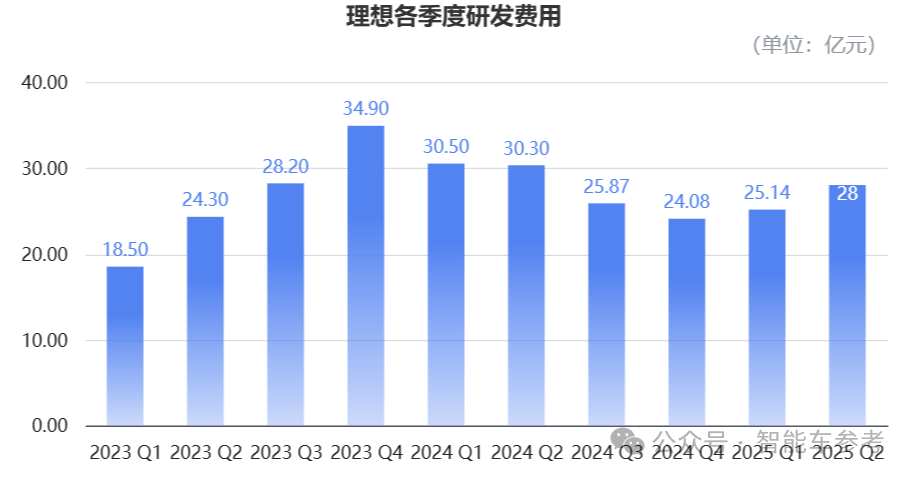
Li Auto expects to invest over 6 billion yuan in AI this year, mainly for infrastructure construction and product technology R&D, with total R&D expenses for the year reaching 12 billion yuan.
According to reports from late-night sources, Li Auto has a budget of several billion dollars for the self-developed chip project, and we will mention the latest progress on this part later.
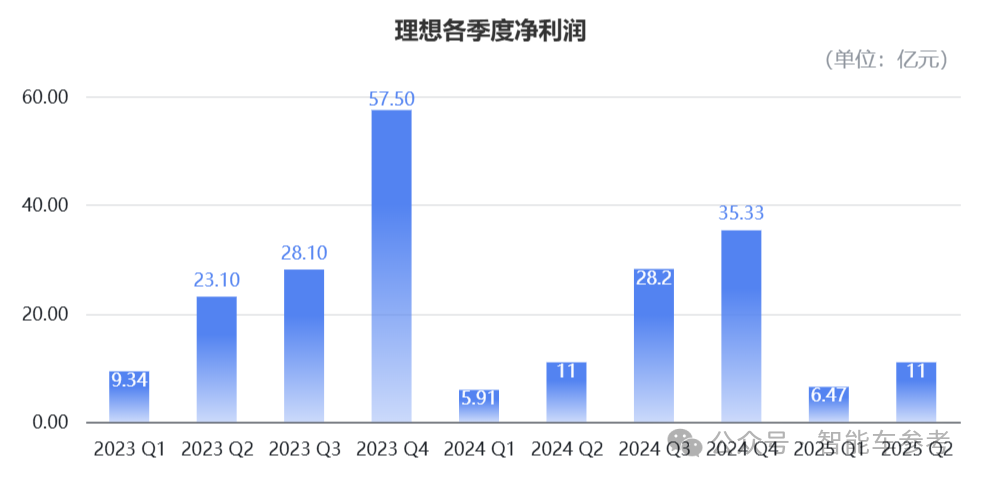
In the second quarter, the net profit was 1.1 billion yuan, basically flat year-on-year, and a quarter-on-quarter increase of 69.6%; adjusted net profit was 1.5 billion yuan, a slight decrease of 2.3% year-on-year and a quarter-on-quarter increase of 44.7%.
As of the end of the second quarter, Li Auto’s cash reserves were 106.9 billion yuan, providing ample cash ammunition.
For the third quarter of this year, Li Auto’s judgment remains cautious:
It is expected that Q3 delivery volume will be between 90,000 to 95,000 vehicles, a year-on-year decrease of 41.1% to 37.8%. Li Auto has already completed 30,000 deliveries in July, and with the upcoming deliveries of the i8 and i6 models, maintaining an average of over 30,000 units per month should not be too difficult.
It is expected that Q3 total revenue will be between 24.8 billion to 26.2 billion yuan, a year-on-year decrease of 42.1% to 38.8%, consistent with the year-on-year changes in deliveries.
Visually, Li Auto, which is striving to climb this year, has indeed “slowed down” in performance, but the market’s response has been quite positive, with US stock prices once surging over 7%.
The content of the earnings call explained the reasons behind this.
Turning Point: How is Li Auto Preparing to Move Forward?
2025 is particularly critical for Li Auto.
The development of Li Auto is divided into three stages:
Stage One began in early 2020, when Li Auto’s first product, the Li ONE, was delivered on a large scale, focusing mainly on the domestic market and range-extended products until 2024.
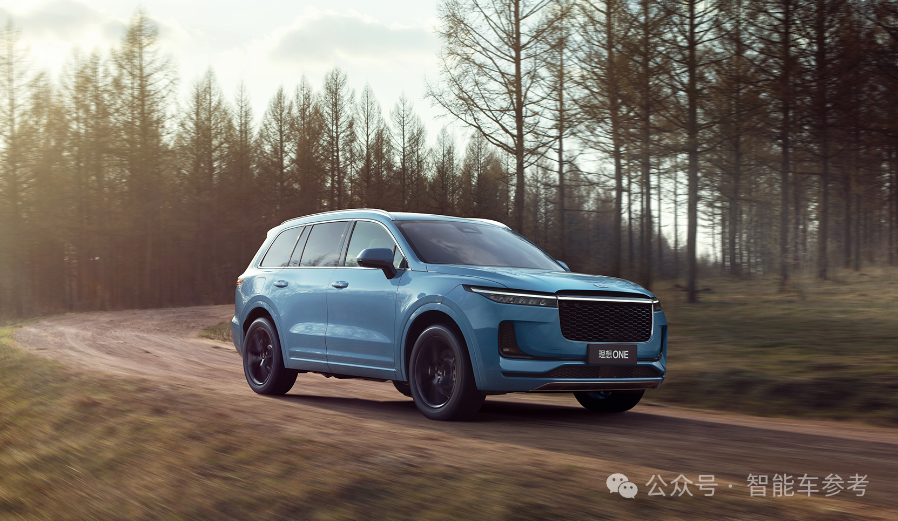
Stage Two is from 2025 to 2027, when the sales market will officially expand from domestic to domestic + overseas, and the focus of the product mix will officially shift to range-extended + pure electric.
Stage Three will be after 2027, when Li Auto will enter the stage of L4-level autonomous driving and more new forms of intelligent products.
Therefore, Li Auto has assigned two layers of meaning to this year: one is a major year for product transformation, and the other is the official year of going overseas.
The specific manifestation of product transformation is visually seen in Li Auto’s comprehensive renewal of the L series and MEGA, focusing on the new pure electric models i8 and i6 in the second half of the year.
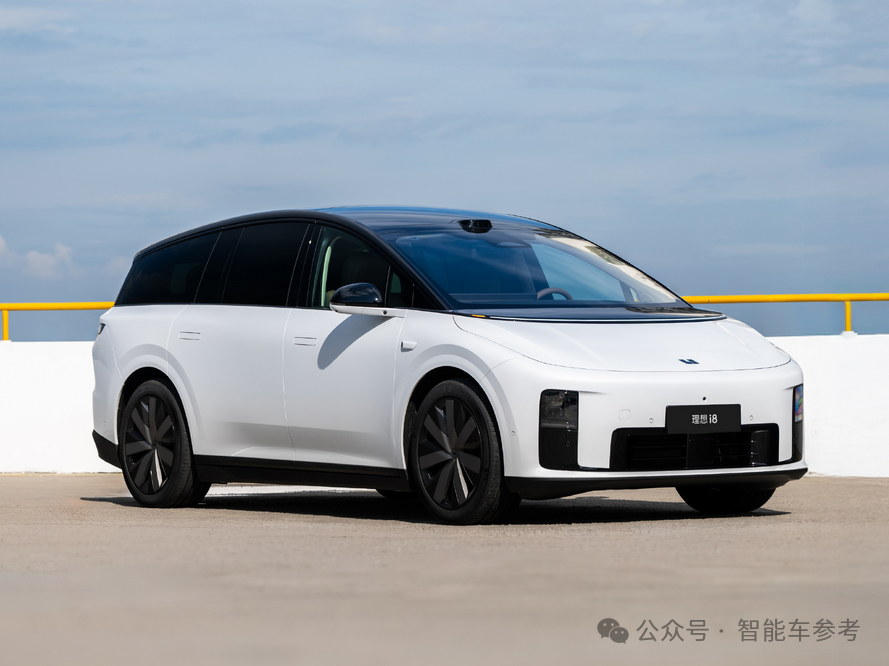
However, this also involves Li Auto’s rethinking and proactive adjustment of its internal structure.
Li Auto’s sales system was optimized half a month ago:
Headquarters directly manages 23 regions nationwide, with two new departments for sales operations and marketing, while the store site selection team has been reorganized, and the training academy and delivery team have been strengthened.
According to Li Auto’s co-founder, president, and head of the smart vehicle group, Ma Donghui, the structure has now been adjusted. Li Auto has returned to normal operations and has entered the initial acceptance stage.

He also stated that these actions may have some adjustments in the short term, but in the long term, they will enhance user experience and team combat effectiveness.
Strategically, Li Auto has also made more refined divisions:
In the northern region, focus on promoting range-extended models, emphasizing “stable winter range” and other aspects.
In the southern region, emphasize pure electric models, highlighting energy efficiency, intelligent space, and other features.
By laying a solid foundation for the entire sales system, Li Auto has also made plans for the upcoming sales increase.
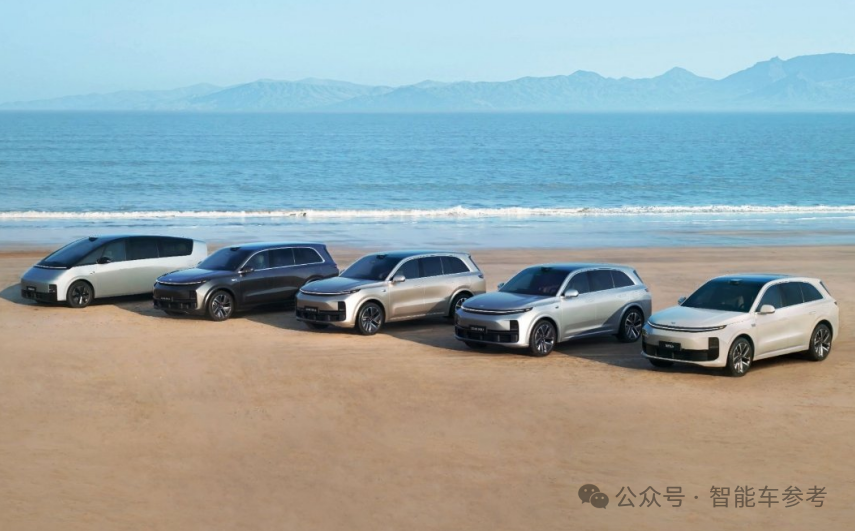
For range-extended models, Li Auto plans to stabilize the basic market with intelligence.
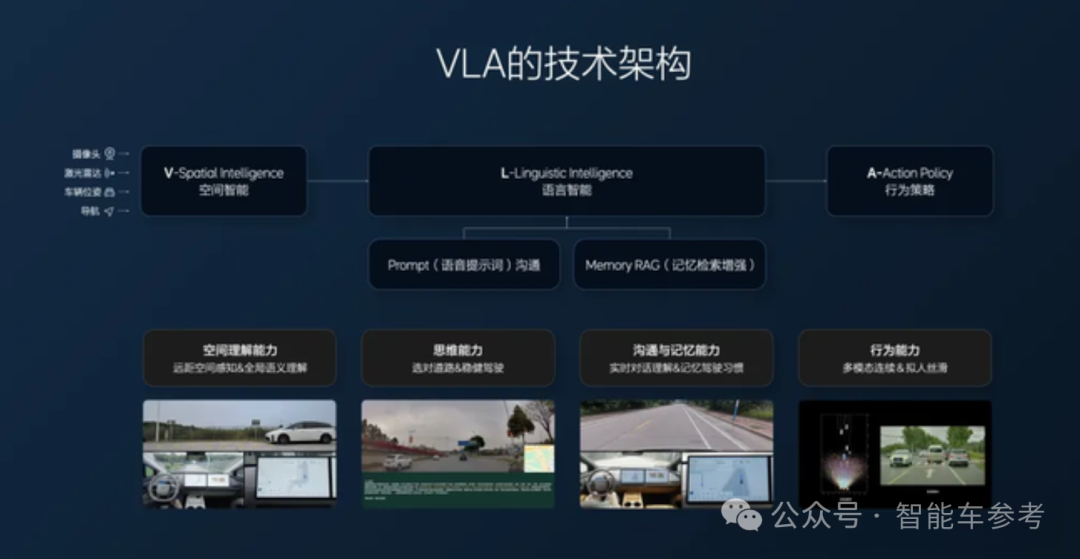
Li Auto’s latest VLA intelligent driving assistance will have a model parameter scale of 4 billion, more than 10 times the previous end-to-end model, equivalent to a significant increase in brain capacity.
Currently, VLA has been launched in the Li Auto i8, with significantly improved driving performance, and Li Auto compares it to “leaping from ChatGPT 3.5 to 4.0”; by September, VLA will also be available in the AD Max version of the entire range of Li Auto’s range-extended models.
On the driving side, the smoothness and comfort of Li Auto’s VLA have been significantly optimized, with owners reporting that it is difficult to distinguish between assisted driving and human driving.
On the parking side, VLA’s remote summon and automatic parking functions have also been recognized by owners, solving practical driving problems.
From an industry perspective, the VLA architecture aligns more closely with the logic of human intelligence evolution, and many car companies have also joined the VLA development camp this year.
Li Xiang believes that VLA has a clear path to L3, L4, and even L5-level autonomous driving, working in a way similar to humans, representing a true third-stage AGI intelligent agent.
Therefore, Li Auto expects that in the future, VLA will be 10 times or even 100 times stronger than human driving ability, and within about 2 years, it will achieve more than 10 times the safety of human driving.

On the pure electric vehicle side, Li Auto plans to make efforts in a tiered manner, specifically:
-
MEGA has stabilized monthly sales at over 3,000 units, securing the basic sales volume for Li Auto’s pure electric vehicles;
-
Li Auto i8 has received positive market feedback after test drives, and is currently ramping up production, aiming to reach 8,000 to 10,000 units in deliveries by the end of September;
-
Li Auto i6, which will be launched and delivered in September, is aimed at young users, and Li Auto expects it to become the main volume seller for pure electric vehicles.
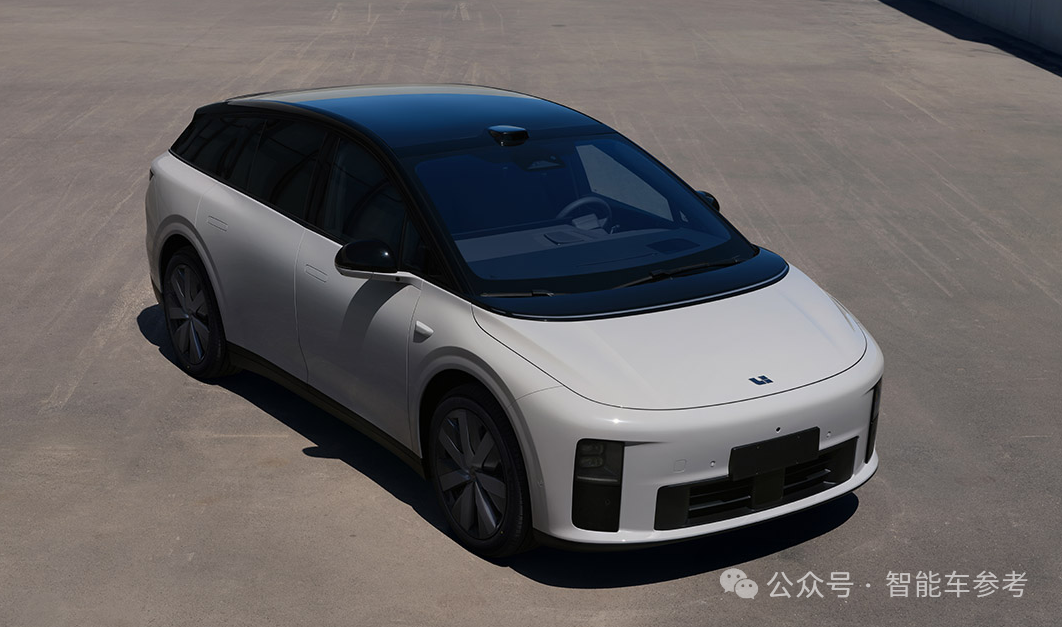
Li Xiang revealed that for the i6 model, the company plans to adopt a new communication method closer to car owners, making it easier for users to understand, and the training for sales, delivery, and service teams will be more thorough, as well as:
Li Auto i6 will seriously and comprehensively conduct a public opinion defense.
Listening to advice, Li Xiang also stated that the company’s future models will reduce the number of SKUs (which can be simply understood as different versions), returning to the era of Li ONE and L9—
to create one configuration for each car to the extreme, providing the strongest product power and cost performance.
At the same time, as a guarantee for pure electric vehicles, Li Auto is rapidly advancing in charging infrastructure.
In terms of charging network, Li Auto has over 3,100 supercharging stations, totaling 16,671 charging piles.
Among them, there are over 1,000 supercharging stations on highways, covering the national “nine horizontal and nine vertical” highways, with an average interval of 150 kilometers; urban supercharging stations exceed 2,100, covering 260 cities, with an average of one station every 3.5 kilometers in first and second-tier cities.
Li Auto expresses confidence in achieving the goal of 4,000 stations by the end of this year.
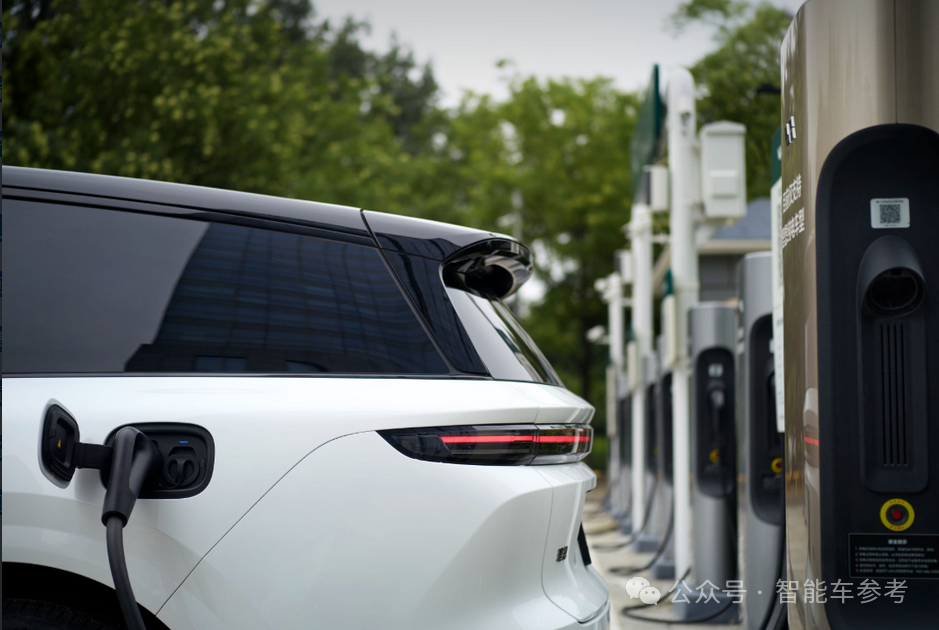
In terms of charging speed, Li Auto’s charging piles are all above 250 kilowatts, with 4C and 5C charging piles accounting for over 61%. All new charging stations will use 4C and 5C charging piles.
It is particularly noteworthy that the 5C battery has been self-developed by Li Auto, including the cell and management system, to ensure that charging from 0 to 80% maintains a high power of over 300 kilowatts.
Li Auto has also invested effort in the research and development of battery life; under supercharging mode, after 1,500 full charge and discharge cycles, the battery health can still be maintained at over 80%.
Additionally, this year holds special significance as it marks the official year of Li Auto’s overseas expansion.
On the R&D side, Li Auto has established research centers in Germany and the United States.
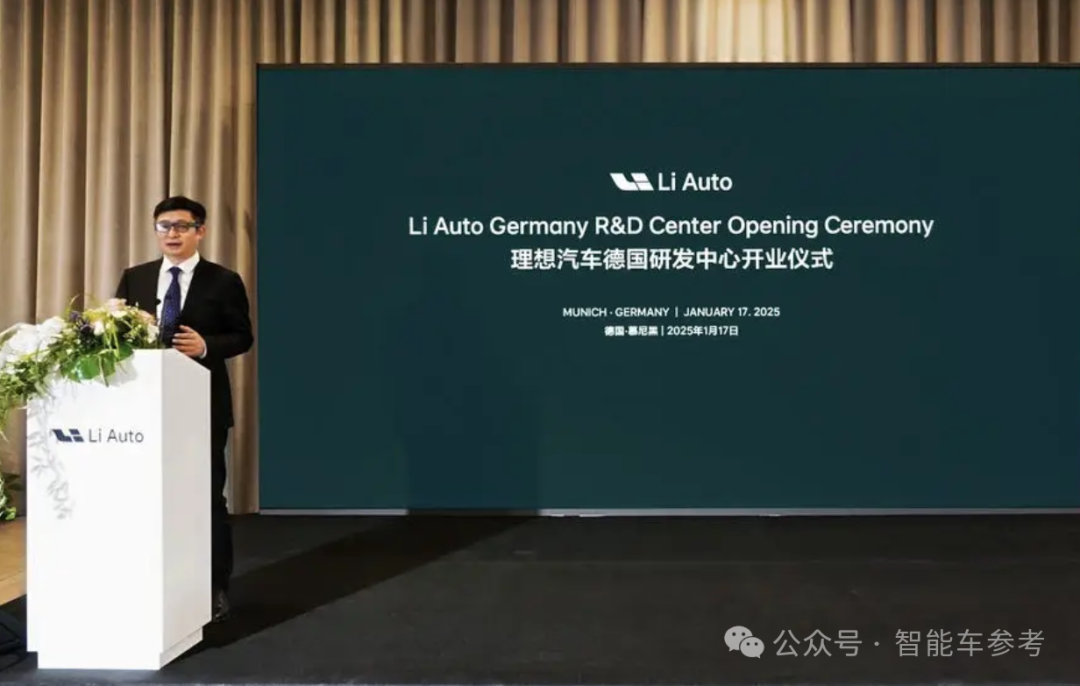
On the sales channel side, Li Auto has begun to formally build overseas sales and after-sales service systems and assemble overseas teams.
On the product side, Li Auto’s new products planned for 2026 are already considering overseas laws and regulations in advance.
Next, Li Auto has set the pace and scope for advancement, planning to focus on the Middle East, Central Asia, and European markets.
Finally, Li Auto mentioned a key milestone—self-developed chips.
According to Li Auto’s CTO, Xie Yan, the self-developed chips have successfully completed tape-out and have entered the in-vehicle testing phase.
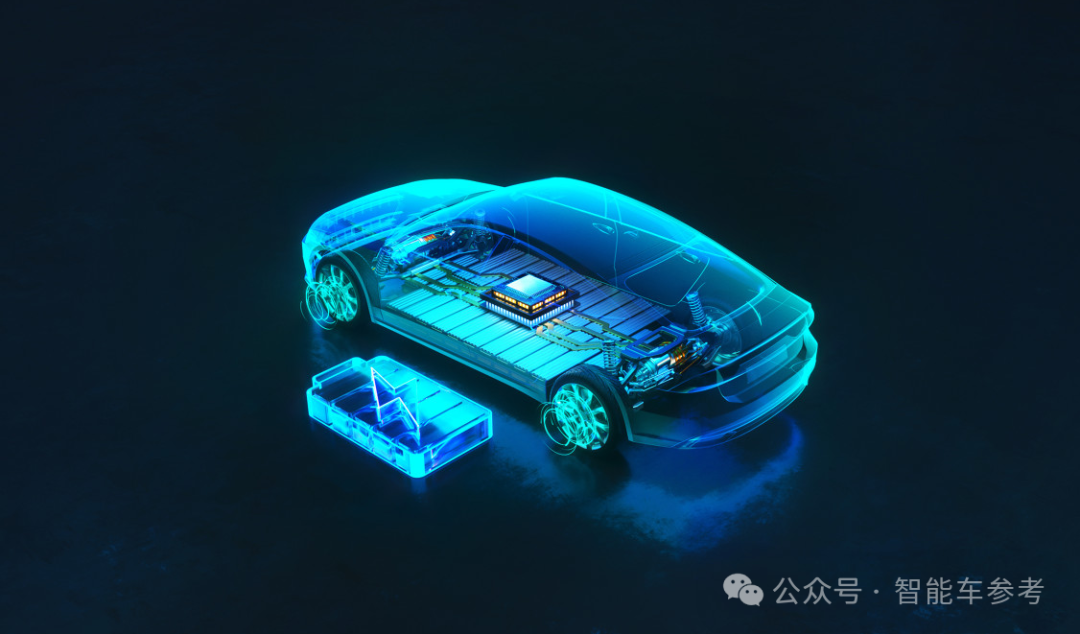
He stated that when running large language models (LLMs) like ChatGPT, the effective computing power of Li Auto’s self-developed chips is twice that of the strongest chip on the market—Nvidia Thor-U, and when running visual models (such as convolutional neural networks CNN), the effective computing power can even reach three times that of the latter.
It is expected that next year, Li Auto’s self-developed chips will be applied to some vehicle models.
Will Nvidia’s Chinese customers face a -1?
— Contactthe author —
— The End —
【Smart Car Reference】Original content, unauthorized reproduction is prohibited.
Click here👇 to follow me, remember to star, muah~