The industrial Internet of Things (IoT) and the related industrial sensor wireless connectivity requirements are constantly changing and evolving. However, the networking needs of industrial equipment and applications are vastly different from those in the consumer space, with reliability and security taking precedence in industrial IoT. This article mainly discusses some key network requirements that make industrial wireless sensor networks unique.
The emergence of low-power processors, intelligent wireless networks, low-power sensors, and “big data analytics” has sparked great interest in industrial IoT. In short, combining these technologies allows a large number of sensors to be placed anywhere: not just where communication and power infrastructure exists, but also in any location that can collect important information about the behavior, location, or content of objects. Equipping machines, pumps, pipelines, train cars, and other objects with sensors is not a new practice in the industry. A large number of dedicated sensors and networks have been deployed in various industrial environments ranging from refineries to production lines. In the past, such operational technology (OT) systems operated as standalone networks, maintaining very high standards of network reliability and security, which consumer technology simply could not meet. The technologies suitable for these high standards were filtered, ultimately selecting the most appropriate technologies for critical business industrial IoT applications. In particular, the way these sensors are networked determines whether they can be deployed safely, reliably, and cost-effectively in harsh industrial environments. This article explores some key requirements that make industrial wireless sensor networks (WSN) unique.
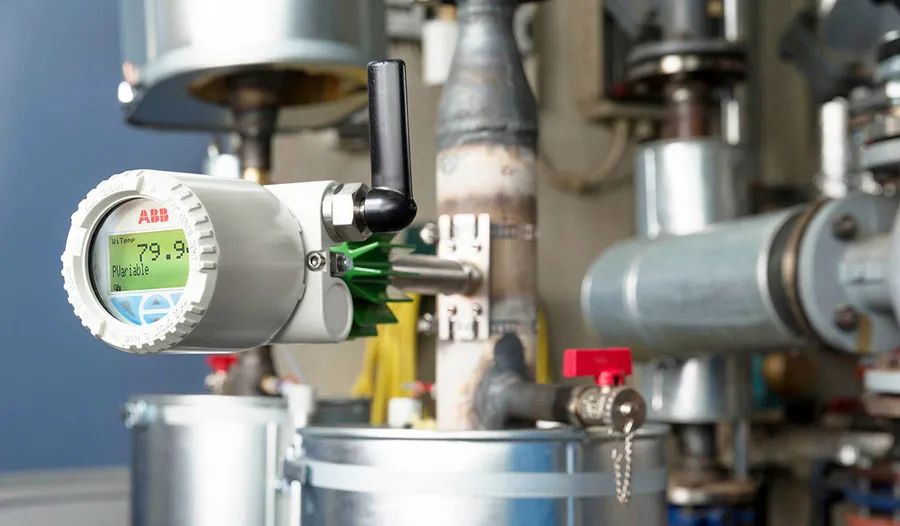
Figure 1. Sensors Are Everywhere. Low-power wireless sensor nodes powered by energy harvesting systems (like this wireless temperature sensor from ABB, driven by harvested thermal energy) can be placed in appropriate locations to gather more industrial environmental data.
Reliability and Security Are Paramount
For consumer applications, cost is often the most important consideration, while industrial applications generally prioritize reliability and security. According to a survey by ON World of global industrial WSN users, reliability and security are the two most important issues they mentioned. The profitability of a company, the quality and efficiency of the goods produced by workers, and the safety of workers’ lives often depend on these networks. This is why reliability and security are essential for industrial wireless sensor networks.
A common principle for improving network reliability is to provide redundancy, setting up fault recovery mechanisms for potential issues so that the system can recover without losing data. In wireless sensor networks, redundancy can be utilized in two ways. The first is the concept of spatial redundancy, meaning that each wireless node can communicate with at least two other nodes, and the routing mechanism allows data to be forwarded to either of the two nodes while still reaching the intended final destination. In a well-designed mesh network, each node can communicate with two or more neighboring nodes, and if the first path is unavailable, it automatically switches to another path to send data, making mesh networks more reliable than point-to-point networks. The second type of redundancy can be achieved by utilizing multiple available channels in the RF spectrum. The concept of channel hopping means that paired nodes can use different channels each time they transmit data, so that any temporary issues with a given channel in the constantly changing harsh RF environment faced by industrial applications do not affect data transmission. In the IEEE 802.15.4 2.4GHz standard, there are 15 spread spectrum channels available for hopping, giving channel hopping systems greater flexibility than non-hopping (single-channel) systems. Several wireless mesh network standards have adopted this dual redundancy of space and channel through time-slot channel hopping (TSCH) technology, including IEC62591 (WirelessHART) and the upcoming IETF 6TiSCH standard. These mesh network standards use wireless frequencies in the globally available unlicensed 2.4GHz spectrum, stemming from the work done by the ADI SmartMesh team, which first applied the TSCH protocol to low-power, resource-constrained devices starting with the SmartMesh product in 2002.
Although TSCH is a fundamental element in ensuring data reliability in harsh RF environments, the way mesh networks are established and maintained is also critical for achieving years of continuous, fault-free operation. Industrial wireless networks often need to operate for many years and will face various RF challenges and data transmission requirements throughout their lifetime. Therefore, to achieve reliability comparable to that of wired networks, they must also be equipped with intelligent network management software that can dynamically optimize network topology, continuously monitor link quality, respond to interference and RF environmental changes, and maximize throughput.
Security is another key characteristic of industrial wireless sensor networks. The main goals of implementing security in WSNs are:
Confidentiality: Data transmitted over the network cannot be read by anyone other than the intended recipient.
Integrity: Ensuring that any received information is exactly the same as the information sent, with no additions, deletions, or modifications.
Authenticity: Asserting that the information from a given source actually comes from that source. If time is part of the verification scheme, authenticity can also protect information from being recorded and replayed.
Key security technologies that must be incorporated into WSNs to meet the above goals include: robust encryption algorithms (e.g., AES128), reliable key and key management, cryptographic random number generators to prevent replay attacks, message integrity checks (MIC) for each piece of information, and access control lists (ACL) that explicitly allow or deny access to specific devices. These advanced wireless security technologies can be easily integrated into many devices used in today’s WSNs, but not all WSN products and protocols adopt all security technologies. Note that the connection between secure WSNs and unsecured gateways is another weak point that must be considered in system design for end-to-end security.
Industrial IoT Is Not Installed by Wireless Experts
Mature industries often add industrial IoT products and services based on traditional products, where both old and new equipment exist in the deployment environment. The intelligence embodied in industrial WSNs must make industrial IoT products easy to use, enabling a seamless transition that allows existing site personnel to easily use new industrial IoT products. The network should be able to self-establish quickly so that installers can deliver a stable operating network; when connections are weak or lost, it should avoid service interruptions through self-healing; when service interruptions occur, it should provide self-reporting and diagnostics; and after general deployment is completed, it should require little or no maintenance, thus avoiding the high costs associated with on-site maintenance. The success or failure of many applications partially depends on the ability to deploy in hard-to-reach or hazardous areas, so IoT devices must rely on battery power, generally needing to operate continuously for over five years.
Additionally, since industrial IoT, widely adopted by end-users, often spans the entire company, the system should be suitable for global deployment and achieve multi-site standardization. Fortunately, international industry wireless standards that understand and meet this requirement are already in place, including IEEE 802.15.4e TSCH.
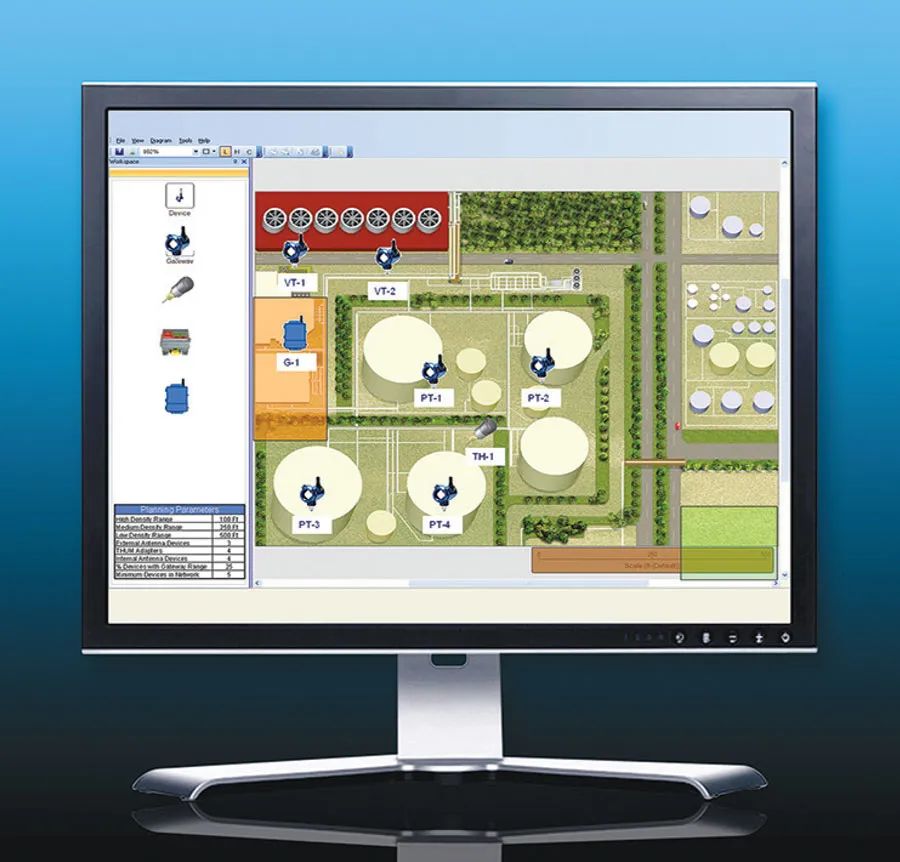
Figure 2. Network Visibility—Important information related to the health of the wireless network can be viewed through network management software, such as this SNAP-ON software tool from Emerson Process Management.
Sensors Are Everywhere
In terms of industrial IoT applications, accurately placing sensors or control points is crucial. Wireless technology promises wireless communication, but if wireless nodes need to be powered every few hours or months by plugging into a power outlet or recharging, the deployment costs become prohibitive, and such an approach is impractical. For example, equipping rotating equipment with sensors to monitor the operational status of the equipment cannot use wired connections, but customers can implement predictive maintenance on critical equipment by monitoring running devices to avoid unnecessary and costly downtime.
To ensure flexible and cost-effective deployment, each node in an industrial WSN should be able to operate on battery power for at least five years, providing users with great flexibility and expanding the coverage of industrial IoT applications. As an example of an industrial TSCH WSN, ADI’s SmartMesh products typically operate at currents far below 50µA, allowing them to run for many years on two AA batteries. If the surrounding environment has abundant harvested energy, wireless nodes can also achieve continuous operation through energy harvesting (see Figure 1).
Timing Is Critical
Industrial monitoring and control networks are critical business operations. These networks support systems that influence the basic costs of goods production, where the timeliness of data is crucial. Over the past decade, deterministic TSCH WSN systems have been field-tested in various monitoring and control applications. Such time-slot systems (like WirelessHART) provide time-stamped, time-critical data transmission. In these networks, nodes that require more data transmission opportunities will automatically configure more time slots, and by configuring multiple time slots on continuous paths in the network, low-latency transmission can be achieved. This data transmission coordination capability greatly enhances the ability to deploy dense networks that frequently transmit data. Without a schedule, the flood of unordered wireless traffic would cause non-TSCH wireless networks to collapse.
Moreover, each data packet in a TSCH network contains accurate timestamp information indicating the time of sending that packet, and every node can obtain a unified time across the entire network to coordinate control signals when needed in the WSN node network. Because timestamp data is provided, even if data is not received in order, it can still be correctly sorted, which is very helpful in diagnosing the exact causes and impacts in industrial applications that must coordinate information from multiple sensors.
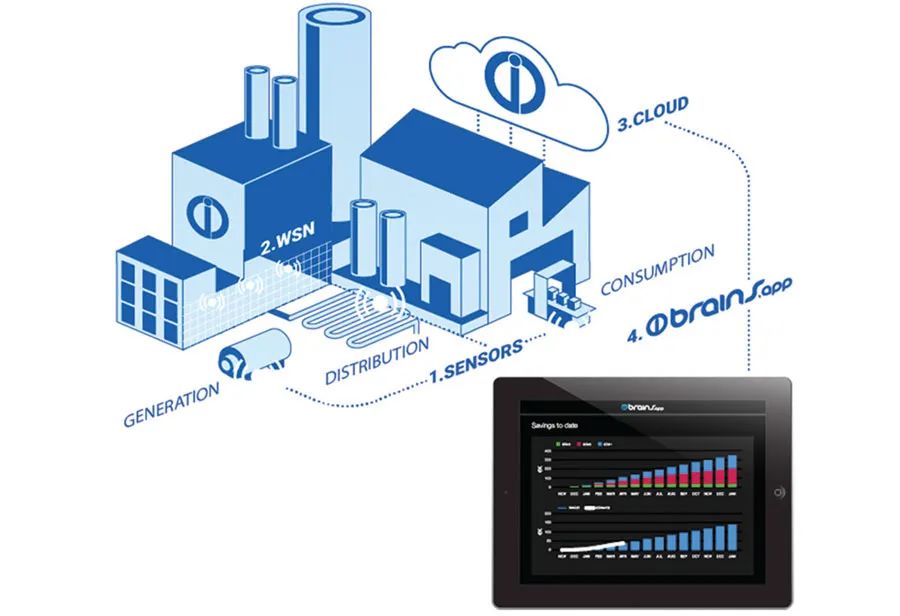
Figure 3. Driving Transformation—Software analytics, such as the Brains.App software from IntelliSense.io, utilize data from industrial wireless sensor networks to streamline factory operations, optimize output, and enhance safety.
Visibility into Network Operations Is Key
Industrial networks need to operate continuously for many years; however, no matter how robust a network is, issues can still arise. Even if a network operates well at installation, the quality of the network during its operational lifetime can still be affected by various environmental factors. It is important for any industrial network to issue appropriate alerts in advance for such issues, and the ability to quickly diagnose and resolve problems is also key to high-quality service. When it comes to providing visibility into network management metrics, not all wireless sensor networks have the same requirements. However, at a minimum, the management system for industrial wireless networks should provide visibility into the following:
-
Wireless link quality measured by signal strength (RSSI).
-
End-to-end packet delivery success rate.
-
Mesh quality, highlighting nodes without sufficient backup paths to maintain network reliability.
-
Node status and battery life (where applicable).
In optimized industrial applications that adopt intelligent networks, issues can be resolved by automatically re-sending data on alternate paths while continuously updating network topology to maximize connectivity (see Figure 2).
Smart “Things” Should Have Smart Networks
There is considerable interest in enhancing the intelligence of “things,” but the “intelligence” in industrial IoT applications is not limited to that. Industrial IoT networks should adopt intelligent endpoints and provide network and security management functions to showcase the technical advantages configured by the enterprise IT and operational technology departments. The network should be highly configurable to meet specific application needs. For instance, to meet the low-power requirements that extend battery life, it should have the ability to autonomously ascertain the available power in the network and employ intelligent routing to optimize power consumption across the network. Additionally, the network should automatically adapt to changes in the RF environment, and when such changes occur, dynamically altering the topology may prove more advantageous. ADI’s SmartMesh network manager not only enables network security, management, and routing optimization but also allows users to reset nodes via the wireless network when needed, providing a pathway for functional upgrades to adapt to future changes in customer demands.
The Internet of Things is largely an industrial phenomenon that can drive business growth and deliver excellent returns on investment. In these business-critical applications, industrial wireless sensor networks must meet high standards for intelligent, secure, and reliable wireless operation, supporting years of continuous operation. These stringent requirements can be achieved through existing and emerging wireless mesh network standards, which will become key building blocks for industrial IoT, helping industrial customers transform their businesses and services in the era of industrial IoT (see Figure 3).
 How Long Must One Live a Low-Carbon Life to Count as Planting a Tree?If you leave a “❤”, I’ll give gifts▽▽▽The editor will randomly select 5 lucky winners from the video’s like fans to receive small prizes from ADI.
 Check Previous Content↓↓↓