Previous Review
[Joint All-Domain Command] Data is the key for CJADC2 to operate effectively
[Joint All-Domain Command] The U.S. Department of Defense’s Chief Digital and Artificial Intelligence Office seeks to support allied joint all-domain command and control through a data integration layer
Introduction
In April 2023, the Naval Postgraduate School in the U.S. announced a research project titled “Opportunities for Joint All-Domain Command and Control,” focusing on the federated structure of Joint All-Domain Command and Control (JADC2) using heterogeneous sensor networks, exploring an innovative concept for a universal translation infrastructure. This universal translation infrastructure consists of embedded hardware and distributed software nodes, acting as an interface translator between federated network sensors and assets from all five branches of the U.S. Department of Defense, effectively addressing the challenges of integrating existing heterogeneous sensor networks. This article compiles relevant content on this topic.
(Translator’s note: Federated or federalized: not building a large, complex system, but allowing each military branch to develop its own necessary systems, then loosely coupling the capabilities of each branch together.)
1
Core Technical Challenge of JADC2 – Integrating Existing Sensor Networks
One of the core technical challenges of JADC2 is the integration of highly complex legacy sensor networks managed and operated by various military branches. Each branch possesses state-of-the-art intelligence, surveillance, and reconnaissance sensor networks, but these networks may not be interoperable with the tactical networks of other forces. The perception and integration capabilities required by JADC2 involve discovering, collecting, associating, aggregating, processing, and utilizing data from all domains and sources (friendly, adversarial, and neutral), sharing information for decision-making. To achieve this goal, effective integration of data must be considered from the early stages of data sharing and security, applying this principle across the operational domain to enable rapid data collection, fusion, and customization. Currently, the U.S. military has numerous technical solutions for integrating multiple heterogeneous tactical networks, but many are not optimal and have various flaws.
2
Technical Considerations for Sensor Network Integration Solutions
2.1 Key Considerations for System Features
When selecting the best technical solution for integrating sensor networks, the following two system features are crucial:
(1) Flexibility:
Flexibility is the ability of a system to respond timely and cost-effectively to various internal and external changes. Since the JADC2 sensor network needs to adjust interconnected networks promptly to meet new operational demands, flexibility is vital for JADC2.
As a Department of Defense project related to JADC2, DARPA’s “Mosaic Warfare” especially focuses on flexibility requirements and has been researching solutions that can respond quickly when situations and environments change or are rearranged.
(2) Complexity:
Increased architectural and technical solution complexity can make networks vulnerable, leading to errors and susceptibility to attacks. Therefore, it is necessary to control the complexity of technical solutions. Technical solutions should regularly address complexity management issues and integrate flexibility and the ability to reconfigure heterogeneous sensor networks when necessary.
2.2 Key Considerations for JADC2 Sensor Network Integration Solutions
When seeking the best technical solution for integrating sensor networks, JADC2 needs to consider several factors:
(1) Partitioning and federating complex networks to accommodate interoperable collaboration mechanisms between military branches;
(2) Providing firewalls for critical parts of the network when necessary, such as when specific military functions need to be separated from joint functions or when networks are under adversarial attack, to isolate these parts from the rest of the network and ensure multi-layered security protection;
(3) Ownership and management of integrated sensor networks: deciding whether to equally share ownership across all interconnected networks or allow each force to maintain primary ownership of its own network, sharing when necessary, such as within military branches, allies, and joint operations;
(4) Considering how to avoid the vulnerabilities of a single integrated network and whether to retain the heterogeneity of each network;
(5) Considering how to isolate adversarial sabotage activities, keeping their attacks on U.S. military networks outside the firewall and responding accordingly;
(6) Considering how to prevent and stop intentional or malicious data transmission within the network. Noise propagation may delay sensor data readings and their interpretation, affecting the efficiency of the decision-making process.
3
A Universal Translation Infrastructure for Federated Heterogeneous Sensor Networks
To create a technical solution that connects all military branch networks, a more resilient, flexible, and responsive system must be achieved, capable of providing more high-value information in various scenarios faced by the U.S. Department of Defense. However, over-connecting sensors and assets from all forces and branches may lead to significant issues, including but not limited to: 1) decreased sensor response speed and information transmission speed; 2) increased risk of errors and issues during data collection and transmission; 3) networks becoming more susceptible to attacks and difficult to isolate and contain quickly.
The innovative concept of a universal translation infrastructure is a viable tactical network integration technical solution. This universal translator consists of embedded hardware and distributed software nodes, serving as a translation interface between federated network sensors and assets from all five military branches and all Department of Defense agencies (as shown in Figure 1).
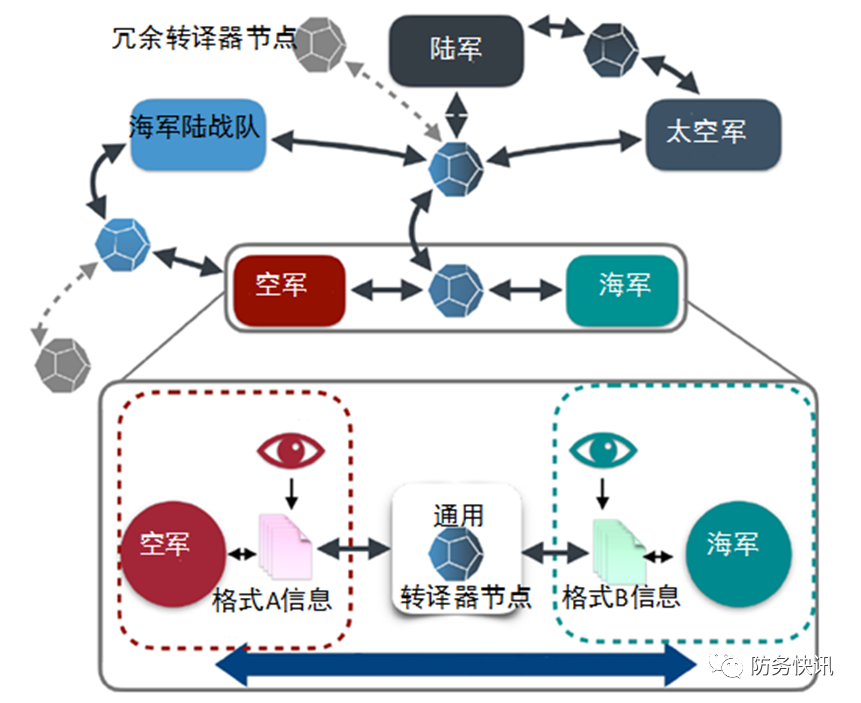
Figure 1 Conceptual Diagram of Universal Translation Infrastructure
The characteristics of the universal translation infrastructure are as follows:
-
Translation between different legacy systems occurs at certain physical hardware and software nodes located between two or more heterogeneous sensor networks belonging to different military branches.
-
Sensor assets from different branches do not need to use consistent frequencies and standards, saving investments. The universal translator provides translation between networks, allowing legacy systems to continue operating seamlessly.
-
The universal translator can consist of multiple nodes and redundant nodes that can operate in a segmented network form and can be easily expanded, modernized, and upgraded with the latest technologies as needed, creating new network functions and topologies. This concept will provide high flexibility, adaptability, and upgradability, offering an additional layer of security and protection for all assets and sensors of all branches.
-
The universal translator nodes will act as bottlenecks between two independent networks, serving as a firewall mechanism. If it is necessary to shut down or isolate an attacked sensor network, certain translator nodes can be turned off, restoring the original functionality of the isolated network.
-
The universal translator network can embed various security layers, providing additional protection for each branch’s network and possessing the capability for new network reorganization and protocols required for conducting “Mosaic Warfare.”
-
Each branch can still command its original assets (sensor networks) as the primary owner and share its data with other branches by granting permissions and activating the universal translator, achieving data sharing among different branches without having to share the specific architecture behind each network.
The adoption of the universal translation infrastructure can preserve the specific functions of military branches while seamlessly integrating with joint functions and operating independently of the rest of the network when under attack.
4
Initial Insights
Historically, each branch of the U.S. military has developed unique tactical command and control networks that operate independently and are incompatible with each other. Consequently, a series of issues such as slow transmission of time-sensitive data needed for decision-making, redundancy, and “stovepipe” organizational management have limited cross-branch capabilities to respond to threats and share information. To achieve JADC2, it has become a necessary condition for operational networks independently developed by each branch to interconnect at machine-to-machine speed, but it is also a significant challenge.
On a technical level, the universal translation infrastructure solution proposed by the Naval Postgraduate School avoids the risks of speed reduction and complexity arising from over-connecting sensors and assets from all branches, saves investments, is easy to upgrade, and leverages firewall security mechanisms, providing advantages of flexibility, adaptability, and security.
On a cultural level, the current operational methods of the U.S. military are branch-based, and units composed of different branches are reluctant to loosen control over their capabilities and are unwilling to transfer control of their assets to commanders from another domain. The universal translation infrastructure solution retains each branch’s primary ownership of its assets, sharing them only when necessary, which can alleviate the influence of branch-centric culture on joint operations to some extent.
Reply with the following keywords to view a series of articles:
|
Hot Topics:ABMS|Unmanned Autonomous Systems|Joint All-Domain Command|Urban Operations |
|
Strategic Planning:Development Planning|Regulations|Think Tank Reports |
|
Operational Concepts:Mosaic Warfare|Multi-Domain Operations|Distributed Lethality |
|
Emerging Technologies:Artificial Intelligence|Cloud Computing|Big Data|Internet of Things|Blockchain|5G |
|
System Equipment:Army|Navy|Air Force|Space Force|Cyber Space|NC3|Air Defense and Missile Defense|Logistics Support |
|
Aerial Traffic:NextGen|SESAR|Unmanned Aerial Vehicles |


For more information, long press the QR code to follow