The oscilloscope is undoubtedly one of the most important tools in research and development. To clearly observe what a signal looks like, an oscilloscope is essential!
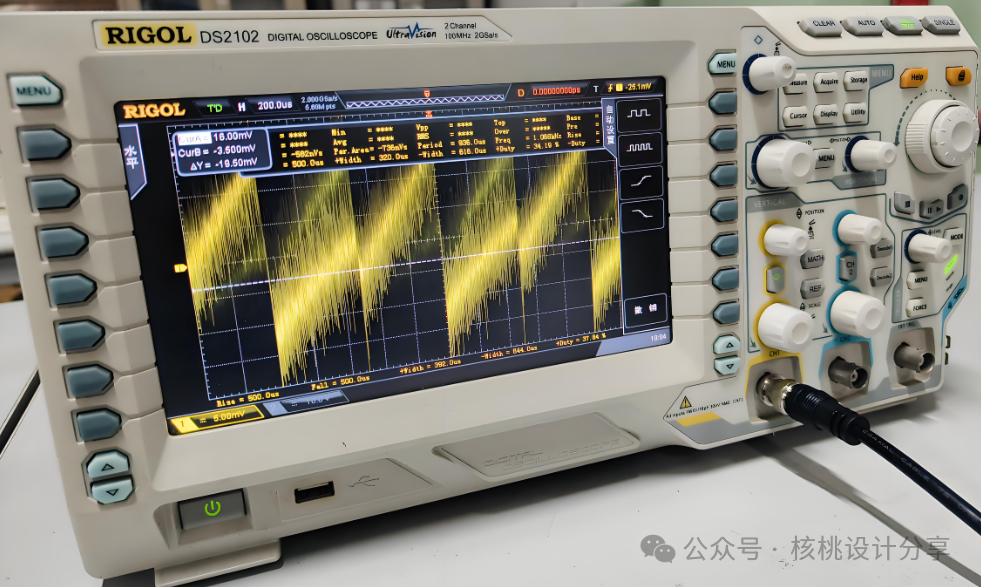
Here are some points to consider when selecting one:
① Sampling Rate
② Bandwidth
③ Storage Depth
First, let’s talk about the sampling rate.
1: Sampling Rate
How do we understand this sampling rate? Look at the diagram below:
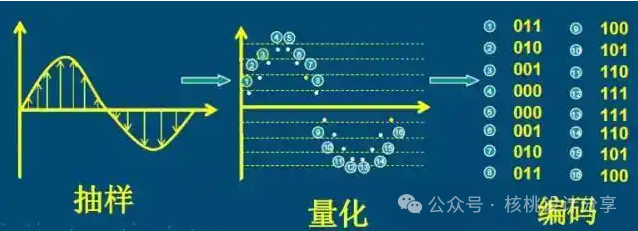
The oscilloscope, during the measurement of a signal, converts a continuous signal into a discrete signal. The sampling rate refers to the number of samples taken from the continuous signal per unit time.
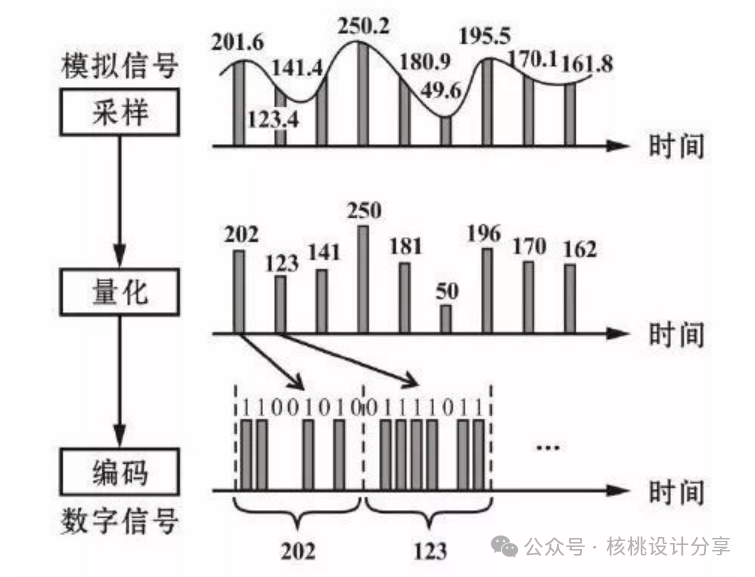
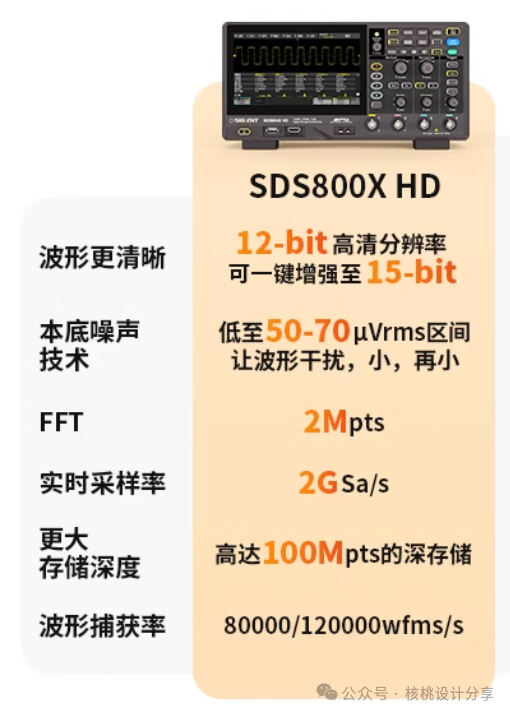
For example, the sampling rate written on the oscilloscope’s promotional page is 2Gsa/s.
Where:
sa: sample. 2G=2000MB=2000000KB, which is 2000000000 bytes. This means that this oscilloscope can sample 2 billion times per second (one byte at a time).
What are the benefits of a high sampling rate?
1: The signal restoration is closer to the original signal.
2: More accurate restoration of signal details.
3: Improved measurement accuracy.
4: More suitable for high-speed signal acquisition.
5: More suitable for long-duration signal capture.
Of course, the higher the sampling rate of the oscilloscope, the higher the price, so it should be chosen based on the specific usage scenario.
2: Bandwidth
The bandwidth of an oscilloscope simply refers to its ability to accurately measure and display the highest frequency of the signal being tested.
For example, in the image below, different models of oscilloscopes have bandwidths of 100MHz and 200MHz.
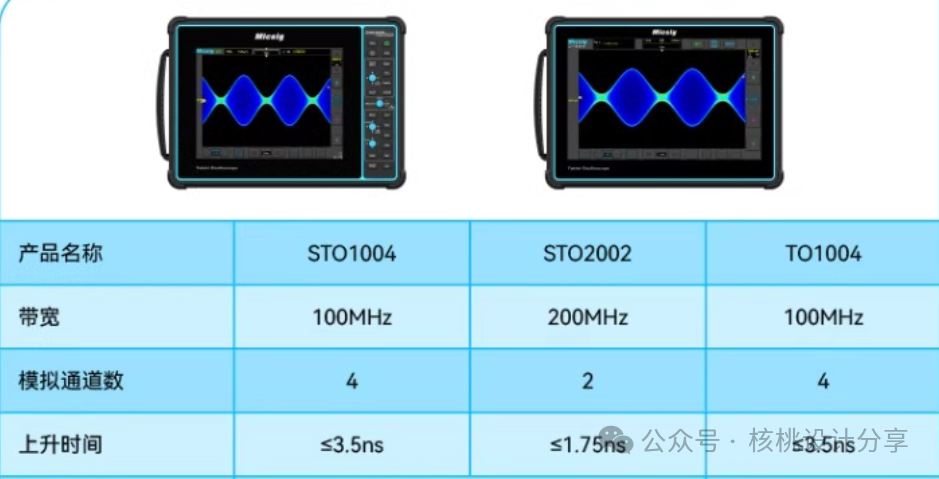
If the bandwidth of the oscilloscope is 100MHz, it can only measure and display signals below 100MHz, and similarly for 200MHz.
Typically, a 5x rule is used for selection during purchasing.
For example, if the frequency of the signal being measured is 20MHz, then according to the 5x margin, the oscilloscope’s bandwidth should be at least 100MHz.
3: Storage Depth
This is a parameter that many people may overlook. The storage depth of an oscilloscope refers to the number of waveform data points it can store. As shown in the diagram below:
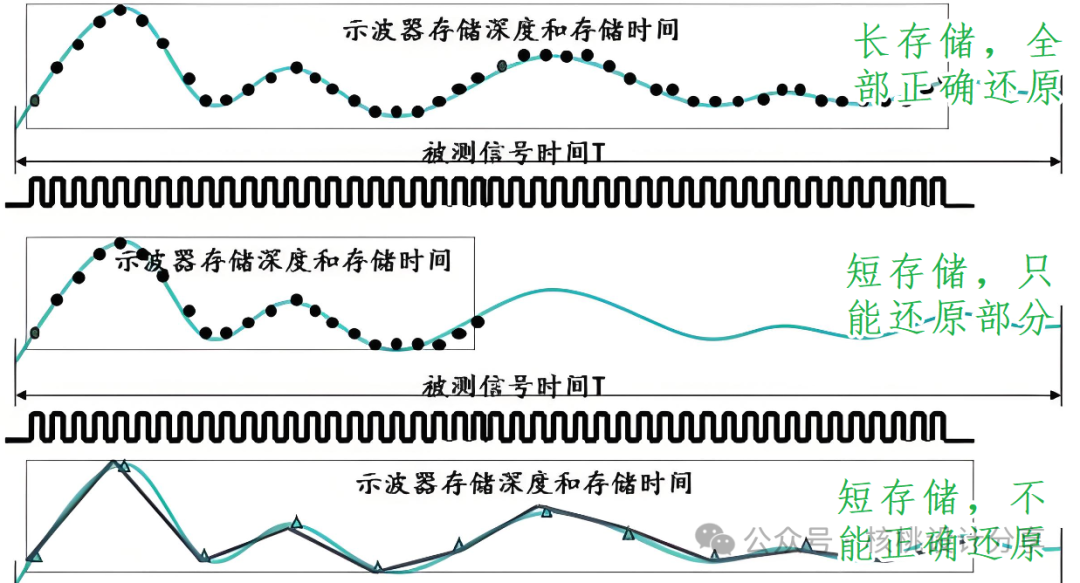
The storage depth of the oscilloscope, along with the sampling rate, determines the length of the signal that can be captured, as follows:
Capture Time = Storage Depth / Sampling Rate
For example, if the storage depth is 1M and the sampling rate is 100MS/s, then the capture time equals:
1000000/100000000=10ms (milliseconds)
Therefore, the storage depth of the oscilloscope is not necessarily better the larger it is; it is best to have an appropriate size.
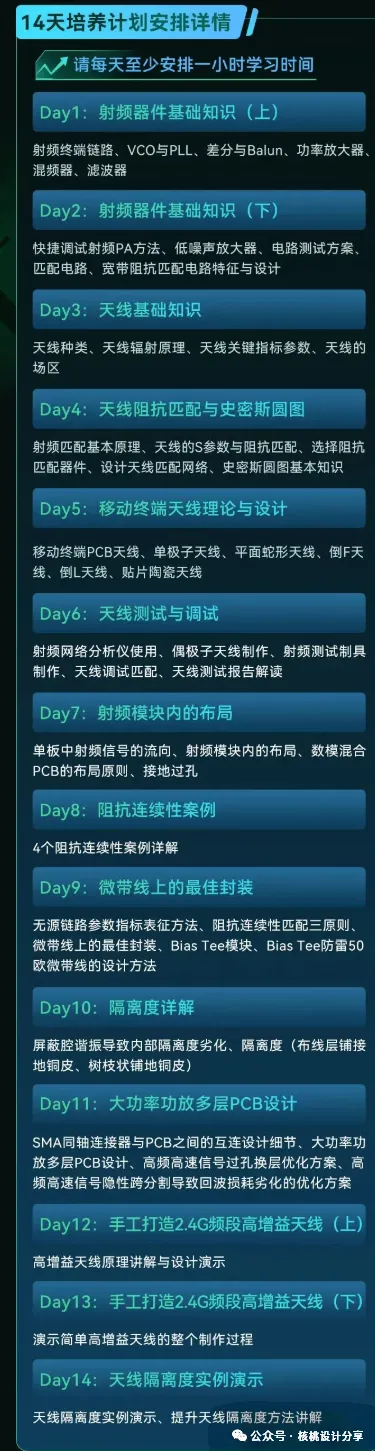
 That’s all for today’s content. If you want to systematically learn about RF-related knowledge, you can check out the course below. Interested friends can scan the code for consultation or directly message Walnut.