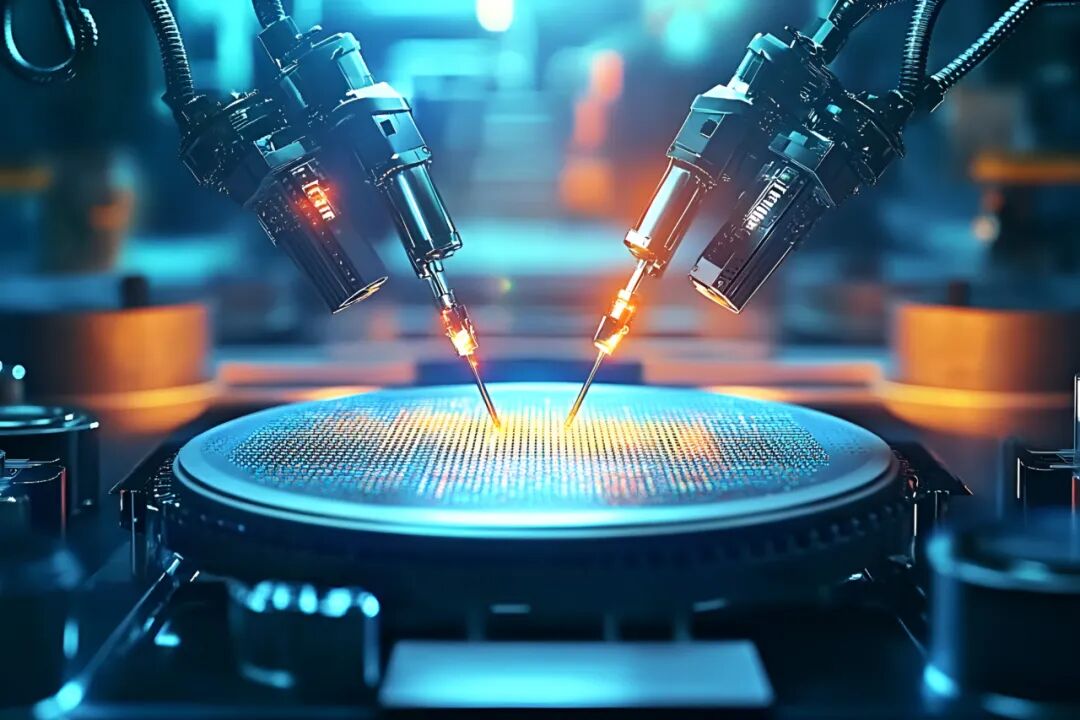
In today’s increasingly fierce global technological competition, the semiconductor industry has become a core benchmark for measuring a country’s scientific and technological strength. With the advancement of the “domestic substitution” wave, the semiconductor manufacturing industry is facing unprecedented opportunities and challenges. The 12-inch wafer fab, as a key player in the industry, has an extremely complex production process involving thousands of procedures and massive amounts of data. How to improve production efficiency, shorten production cycles, and enhance equipment utilization in such an extremely complex environment has become the key to determining the success or failure of enterprises. In this context, the core of industrial intelligent manufacturing—the Real-Time Dispatching (RTD) system—is playing an increasingly important role.
RTD System: The “Smart Brain” of Semiconductor Production Lines
The core of automation and intelligence in semiconductor production lines is the Manufacturing Execution System (MES) and Computer Integrated Manufacturing (CIM) systems. The RTD system is the “smart brain” within the CIM architecture. Its core task is to collect all data from the production site in real-time and then make optimal production decisions through complex algorithms within milliseconds or even microseconds: “Which equipment should process which batch of wafers next?“
An efficient RTD system can significantly reduce the waiting time of work-in-progress, avoid equipment idleness, and quickly respond to unexpected events on the production line (such as equipment failures or urgent orders), thereby maximizing throughput and capital return on investment.
Database: The “Performance Engine” Behind the RTD System
The decisions made by the RTD system are not generated out of thin air; they rely on the rapid reading, complex calculations, and reliable storage of massive real-time data. Therefore, the database supporting the RTD system has become the “invisible engine” that determines its performance limits. Traditional databases often become performance bottlenecks when facing the extreme demands of semiconductor manufacturing. Thus, the RTD system requires the database to possess the following core capabilities:
1. Extreme High-Performance Processing Capability: Every second on the production line generates massive amounts of data. The database needs to have extremely high throughput and very low data read/write latency to support the RTD system’s real-time capture and analysis of information across the entire production line.
2. Powerful Real-Time Computing Capability: Scheduling decisions involve complex rule calculations and logical judgments. The database needs to have strong built-in computing capabilities to perform calculations “in place” where the data is stored, avoiding frequent data migration between the database and application servers, thus compressing decision-making time from minutes to seconds or even microseconds.
3. Excellent Responsiveness and Stability: The production line operates 24/7 without interruption, and any downtime can result in millions of dollars in losses. The database must have high availability and reliability, and be able to quickly respond to new orders, equipment failures, and other unexpected situations, generating new scheduling plans in real-time.
Practical Implementation: Domestic Semiconductor Leaders’ Breakthroughs in Localization
Qcubic’s distributed in-memory database, with its high performance, high reliability, and independent innovation characteristics, collaborates closely with leading domestic CIM software developers. Through deep customization with the RTD system, the system has gained a powerful data processing and computing core. When the MES triggers a scheduler request, traditional disk databases must go through networks, SQL parsing, and B-Tree lookups, leading to increased latency in resource consumption; whereas Qcubic’s in-memory database is directly embedded in the RTD system, supporting over 5000 dimensions such as What/Where Next rules, machine constraints, Q-Time margins, and Recipe priorities, achieving microsecond-level scheduling through an efficient data foundation. This allows the RTD system to process every production event on the production line without delay, ensuring that the entire production line operates at “full speed.” At the same time, the full-stack localization design of the RTD system meets the requirements for supply chain security and technological independence. Currently, the RTD system based on Qcubic has been implemented in leading domestic semiconductor enterprises, achieving dual improvements in factory efficiency and quality.
Databases are gradually becoming the core computing engine driving production decisions and unleashing the potential of production lines. With the continuous evolution of technology, this deep integration of underlying software and upper-layer applications will continue to provide a steady stream of power for the rise of China’s “core”.
More Recommendations