TCP/IP: Transmission Control Protocol/Internet Protocol
TCP/IP (Transmission Control Protocol/Internet Protocol) is the fundamental protocol of the Internet and the foundation of the global interconnected network. It is not just a single protocol but a suite of protocols that includes multiple network protocols such as IP, ICMP, TCP, UDP, HTTP, FTP, SMTP, and others. These protocols collectively define how computer operating systems connect to the Internet and the standards for data transmission between them.
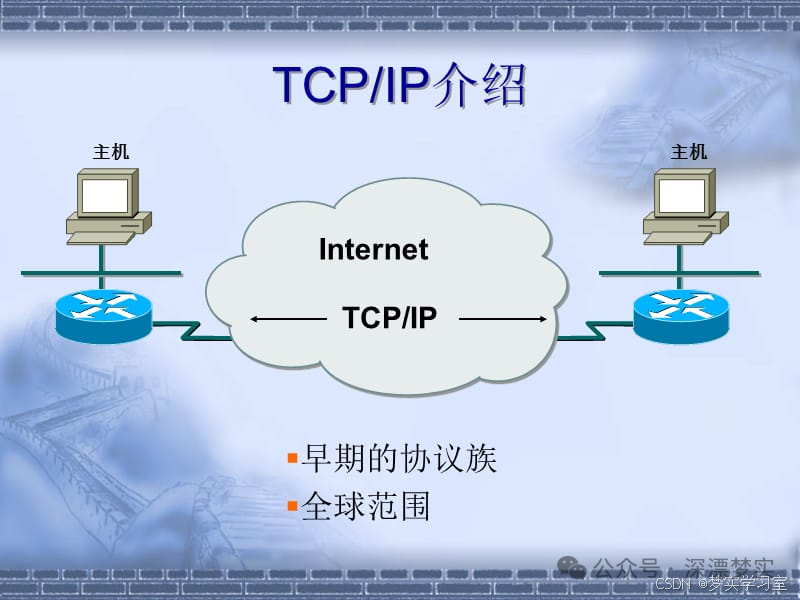
Main Protocols of the TCP/IP Protocol Suite
1. IP Protocol (Internet Protocol):
Defines a unique identifier (IP address) on the Internet and is responsible for the routing and forwarding of data packets.
It is a connectionless and unreliable packet delivery service protocol, functioning as a network layer communication protocol for point-to-point connections.
2. TCP Protocol (Transmission Control Protocol):
Provides reliable, connection-oriented data transmission.
Ensures that data arrives at the destination in the correct order and includes error detection and retransmission mechanisms.
Establishes a connection through a three-way handshake and must tear down the connection when communication is complete, applicable only for end-to-end communication.
3. UDP Protocol (User Datagram Protocol):
Provides connectionless and unreliable data transmission.
Suitable for certain real-time applications, such as audio and video streaming, as it does not require the ordering and flow control features of TCP.
4. ICMP Protocol (Internet Control Message Protocol):
Used for network fault diagnosis and error reporting.
Provides information about the path to the destination address, such as “Redirect” messages that inform hosts of more accurate paths to other systems, and “Unreachable” messages that indicate path issues.
5. Other Protocols:
HTTP (Hypertext Transfer Protocol): Used for transmitting hypertext documents on the web, forming the basis of the World Wide Web.
FTP (File Transfer Protocol): Used for file transfers.
SMTP (Simple Mail Transfer Protocol): Used for sending emails.
DNS (Domain Name System): Used for resolving domain names to IP addresses.
TCP/IP Protocol Hierarchy
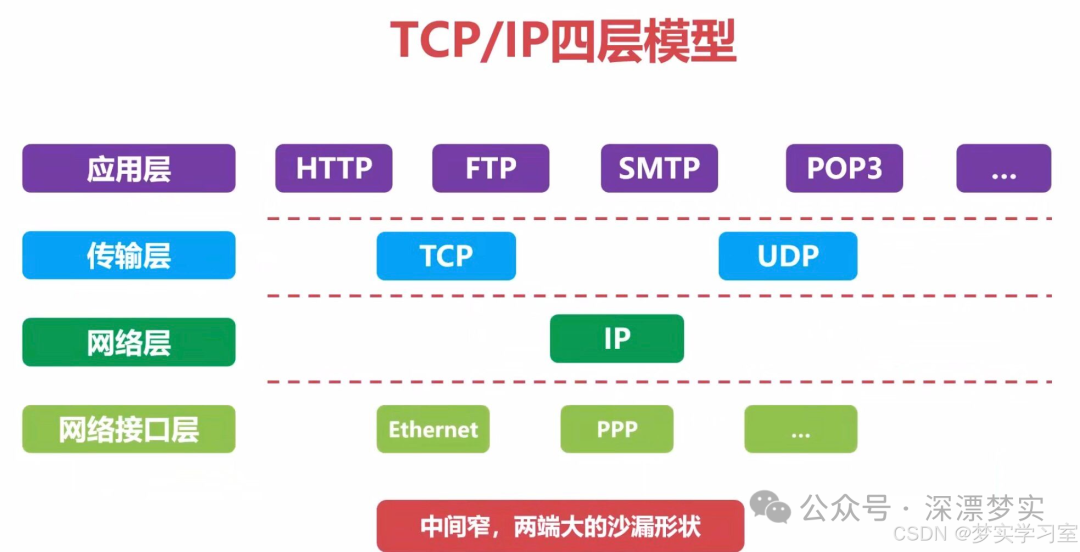
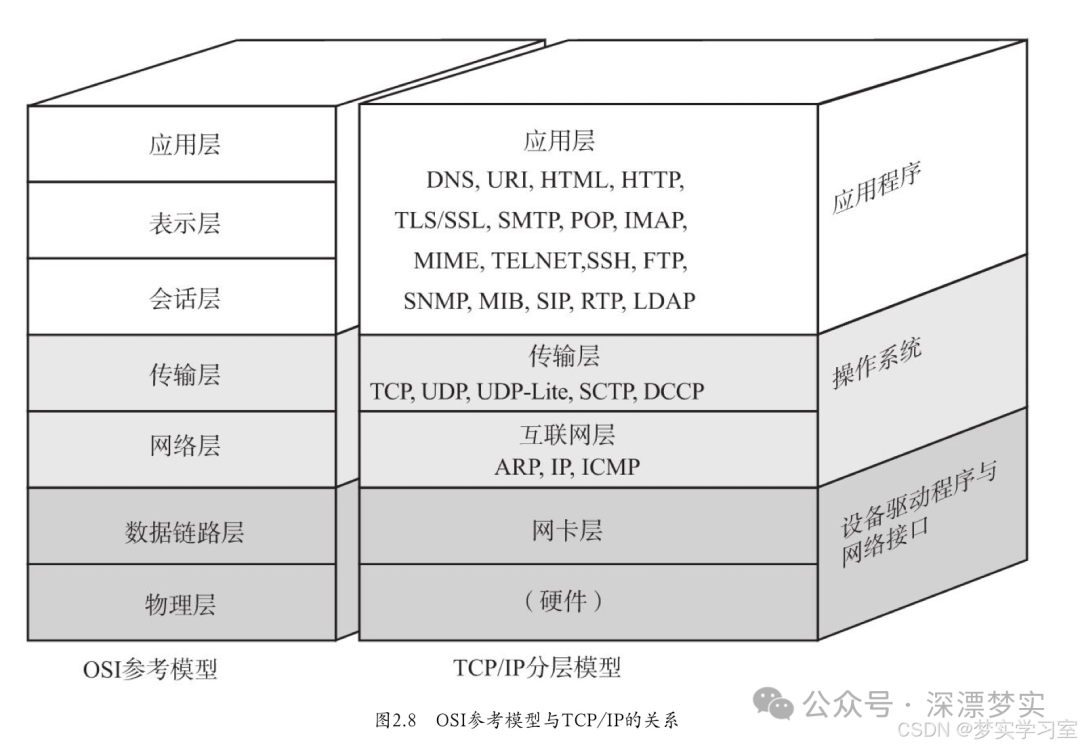
The TCP/IP protocol suite is divided into four layers from top to bottom: the Application Layer, Transport Layer, Network Layer, and Network Interface Layer (or Data Link Layer).
1. Application Layer:
Contains all high-level protocols, such as HTTP, FTP, SMTP, DNS, etc.
2. Transport Layer:
Includes TCP and UDP protocols, responsible for end-to-end data transmission.
3. Network Layer:
Mainly consists of the IP protocol, responsible for routing and forwarding data packets.
4. Network Interface Layer:
Responsible for receiving datagrams from the IP layer, sending them out through the network, or receiving physical frames from the network, extracting IP datagrams, and sending them to the IP layer.
Workflow of the TCP/IP Protocol
Taking the example of browsing a webpage, the workflow of the TCP/IP protocol layers is as follows:
1. Application Layer:
At the application layer, the browser composes HTTP data from the URL and other information and passes it to the transport layer.
2. Transport Layer:
The transport layer adds a TCP header to the data and marks the port as 80 (the default port for web servers), then passes this segment to the network layer.
3. Network Layer:
The network layer adds its own machine’s IP and the destination IP to this segment, which is then called an IP datagram, and passes this IP datagram to the data link layer.
4. Network Interface Layer:
The data link layer first adds its own machine’s MAC address and the destination MAC address to the IP datagram, and the data with MAC addresses is called a frame, which is then sent to the network as a bitstream through the physical network card.
Importance of the TCP/IP Protocol
The TCP/IP protocol is the foundation of the Internet, defining how electronic devices connect to the Internet and the standards for data transmission between them. Once computers from different systems adopt the same protocol, they can communicate with each other, establishing network connections and enabling resource sharing and network communication. The development and application of the TCP/IP protocol have greatly promoted the popularization and development of the Internet.
FollowWeChat Official Account: Deep Dream Reality for more valuable content sharing!