Since tech giants like Google and Amazon launched custom ASIC chips, attempting to challenge NVIDIA’s dominance in AI inference scenarios, the competition between “NVIDIA vs ASIC” has intensified. Many opinions suggest that as the industry focus shifts from model training to inference deployment, NVIDIA’s technology stack is not irreplaceable.
In the latest third-quarter earnings call, NVIDIA CEO Jensen Huang directly addressed this controversy, responding to questions about the ASIC strategies of tech giants and the potential for large-scale deployment. An analyst asked: “With the announcement of the Anthropic partnership and the continued expansion of your customer base, has your perception of the role of AI ASICs (custom application-specific integrated circuits) or dedicated XPUs in architecture deployment changed? You have previously asserted that some ASIC projects are difficult to implement; are you observing any new trends now?”
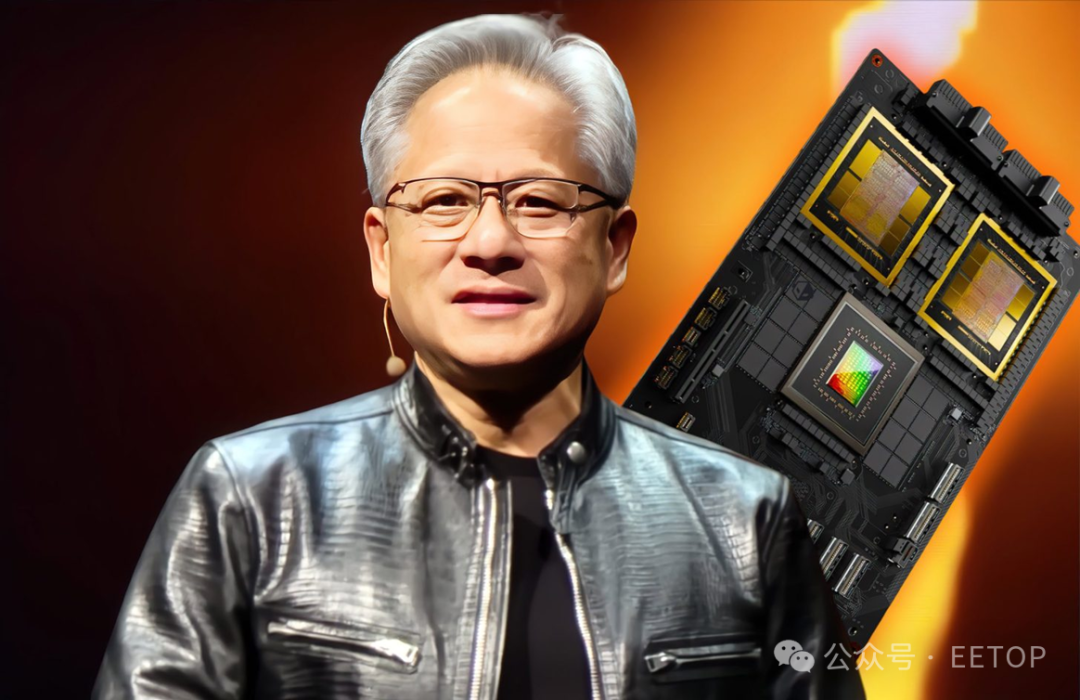
In response, Huang made it clear: “First, it is important to clarify that your real competitors are not specific companies, but rather the engineering teams on the other side. There are very few top teams globally capable of building such complex systems.”
Huang’s remarks are not unfounded — previously, Anthropic had partnered with NVIDIA to build infrastructure based on the Blackwell and Rubin systems, while also signing a procurement agreement for Google’s latest Ironwood series TPUs. This “dual-line cooperation” has sparked widespread discussion in the industry about whether ASICs can shake NVIDIA’s position. Huang’s response pointed to the core issue:The essence of ASIC competition is a contest of engineering team strength, not merely a technical route dispute.
He further added that for cloud service providers (CSPs), deploying “any random ASIC chip” in data centers is far less efficient than choosing NVIDIA’s technology stack, which is optimized for efficiency, supported by NVIDIA’s diverse product ecosystem. Even if some manufacturers can catch up in computational performance, NVIDIA’s CUDA software ecosystem remains an irreplaceable core barrier, which is a key factor attracting the entire industry’s focus.
The implication is clear: the custom ASIC chips from tech giants currently lack the engineering implementation capabilities to directly compete with NVIDIA; and the software moat built by CUDA is a gap that ASIC manufacturers find difficult to overcome in the short term. Huang emphasized that NVIDIA maintains a leading position in every aspect of the AI full process (pre-training, post-training optimization, inference deployment) and is committed to becoming an “irreplaceable” core player in the industry.
This statement further highlights NVIDIA’s confidence — in addition to hardware performance advantages, the technical accumulation of engineering teams and the network effect of the CUDA ecosystem remain the two key barriers against ASIC impacts.
Welcome to join the EETOP WeChat group
AMD Technology Summit Invitation Registration: FPGA/SoC + x86 Embedded