
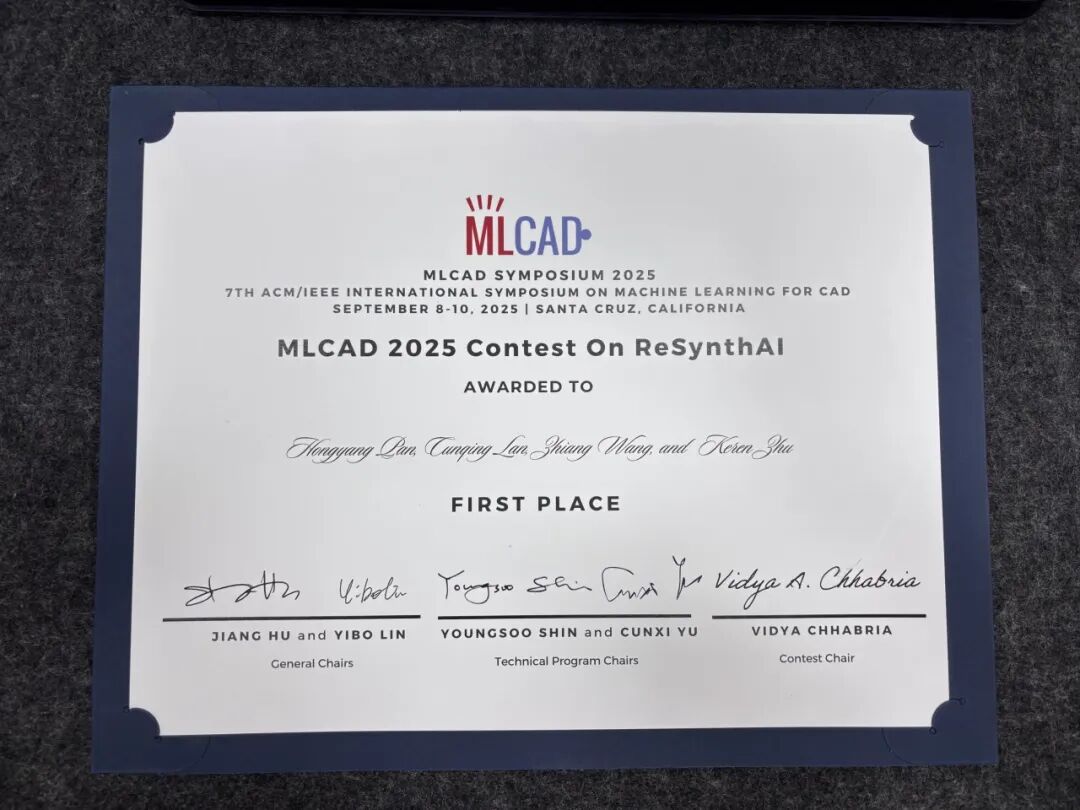
Award Certificate

Recently
the 2025 MLCAD Contest
jointly initiated by VDA Lab of Arizona State University and others
(a machine learning competition focused on electronic design automation)
came to a close
The team of PhD studentsPan Hongyang and Lan Cunqing
from the School of Integrated Circuits and Micro-Nano Electronics Innovation at Fudan University,
and the National Key Laboratory of Integrated Chips and Systems at Fudan University
achieved five first places among twelve industrial scenario design cases
and ultimatelywon the overall championship with the highest total score
EDA
(Note: Electronic Design Automation,
is a technology that uses computer-aided design software
to complete the entire process of very large scale integrated circuit design
covering functional design, simulation, verification, physical design, etc.
It automates the transformation of abstract specifications and algorithms
into manufacturable layouts while ensuring correctness and efficiency
and is known as the “mother of chips”.
MLCAD focuses on
machine learning × electronic design automation (EDA)
and is an ACM (Note: Association for Computing Machinery)/ IEEE
(Note: Institute of Electrical and Electronics Engineers) international academic conference
aimed at promoting innovative applications and industrialization of machine learning throughout the chip design process
and has garnered significant attention in the industry.
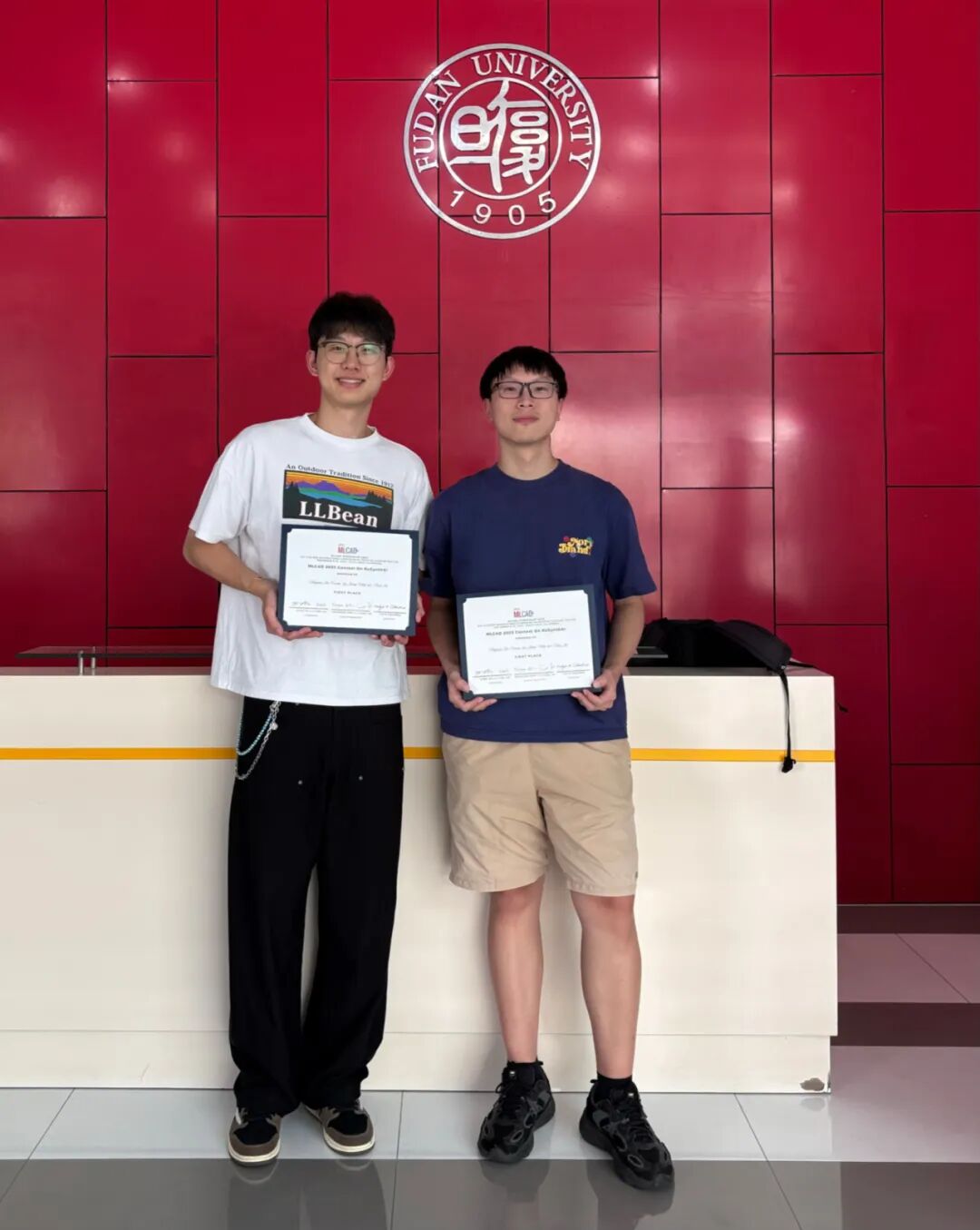
Pan Hongyang (left), Lan Cunqing (right)
The conference sets competition topics each year around core industry challenges
This year’s topic was
“ReSynthAI: Physical-Aware Logic Resynthesis
for Timing Optimization Using AI”
which focuses onusing artificial intelligence for physical-aware
logic resynthesis to optimize timing
addressing a long-standing bottleneck in the EDA field:
the lack of physical information in the logic synthesis stage
which significantly reduces optimization effectiveness.
The task focuses on
the critical position of “after logic synthesis, before layout”
directly addressing the unresolved key issue of “disconnection between front-end and back-end tools” in the EDA field
This is also an important challenge faced by the global EDA community.
“The EDA process is divided into front-end logic synthesis
and back-end physical implementation,
the front-end is like an ‘architect’, concerned with functional correctness;
the back-end is like a ‘construction team’,
which must consider physical constraints such as materials, wiring, and space limitations.”
Pan Hongyang explained
The task of the logic synthesis stage is
to convert circuit functionality into a standard logic gate netlist
but this process usually does not include physical information.
When the netlist undergoes physical design,
it is found that the optimal metrics estimated based on the front-end model
are suboptimal under real physical constraints,
leading to a need for extensive iterative modifications
which significantly increases R&D cycles and costs.
Andthe core task of this competition
is to explore effective paths to bridge the front-end and back-end processes
With the rise of advanced designs such as chiplets and 3D chips,
the front-end design stage urgently needs to incorporate back-end physical information.
“Ourcore idea is to introduce physical information at the beginning of the design stage
for front-end and back-end collaborative optimization.”
Pan Hongyang believes
this approach can also accommodate advanced processes for the next 15 years.
The challenge of the topic lies in
the need to make trade-offs in an extremely complex decision space
and to select the optimal combination and execution order from a series of operations.
Previous research often only isolatedly addressed one or a few aspects
while the competition requires considering multiple transformations simultaneously
which greatly increases the complexity of the problem.
“AI is not a universal formula; the key is to use the right method.”
Lan Cunqing stated that the competition requires completing all optimizations within 3 hours
using only one A100 GPU
This means that general large model solutions are not feasible due to the enormous computational costs.
Therefore, the team chose a more tailored
lightweight AI solution that fits the competition’s needs.
The team ultimatelyadopted reinforcement learning techniques
to build an AI agent
trained through a “scoring learning” mechanism
allowing the AI to autonomously explore among a vast array of operational combinations——
“We set a ‘score’ for the result of each operation
and the AI’s goal is
to find a sequence of operations that achieves the highest total score.”
In Pan Hongyang’s view,
this method not only solves the problem of excessive time consumption in manual exploration
but also uncovers optimization solutions that surpass traditional heuristic algorithms
achieving a balance between efficiency and effectiveness.
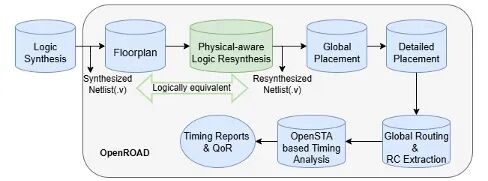
Competition Framework
Looking back at the entire competition journey,
the team admits that challenges and opportunities coexisted.
From receiving the competition topic to final submission,
the two months of preparation time saw
one month spent just on building processes and environments,
leaving only one month for algorithm optimization.
“At that time, our strategy was not to pursue a ‘perfect solution’,
but to first iterate out a basic version and then gradually optimize.”
Pan Hongyang recalled
that everyone worked overtime almost every day
and were particularly tense during the final submission phase.
During the preparation process,
the two also had to deal with directional dilemmas.
“At that time, we were wavering between fine-grained optimization and coarse-grained optimization,
wanting to do top-level algorithms
while also optimizing every small detail.”
At a critical moment,
the advice from mentors Zhu Keren and Wang Zhianghelped them clarify their thoughts.
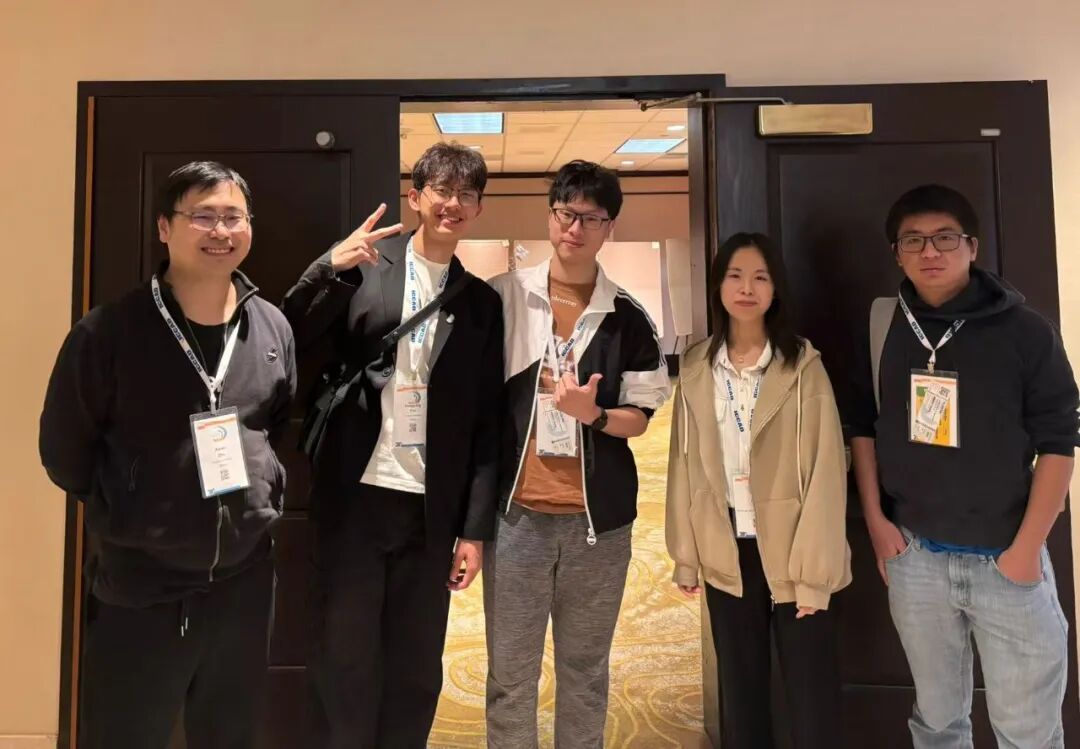
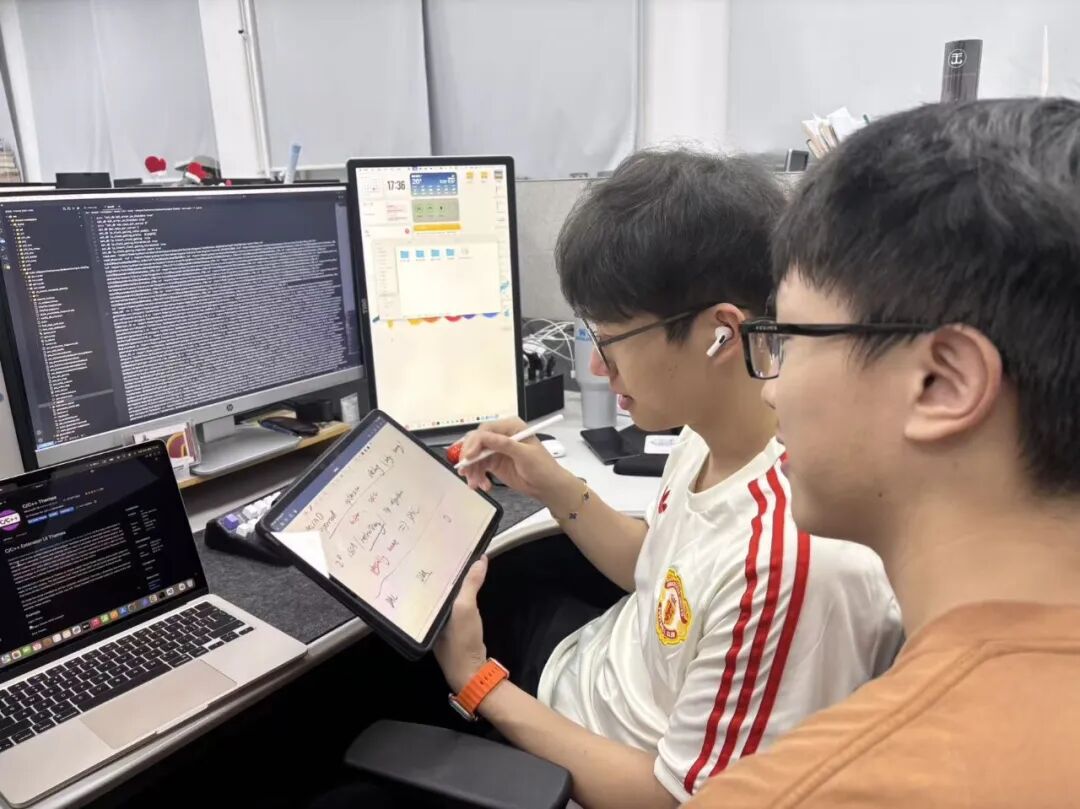
Zhu Keren (left), Wang Zhiang (right), Pan Hongyang (second from left), Lan Cunqing (third from left)
“The teachers advised us to first conduct a simple evaluation,
using data to determine which method is superior,
to avoid wasting time.”
To ensure the smooth progress of the competition,
the mentors held regular weekly meetings
to synchronize progress and resolve confusions
and provided efficient evaluations and suggestions for key milestones.
This year’s competition participants
covered universities and companies from North America, Europe, and Asia,
and to stand out among many teams,
Pan Hongyang and Lan Cunqing believe
accurate judgment and proactive trade-offs are key.
The MLCAD competition not only requires
completing optimization tasks in a short time
but also involves numerous optimization variables,
making it difficult to cover all aspects.
Faced with this challenge,
the team did not pursue perfection in all goals
but actively clarified optimization objectives through sorting and judgment,
which played a decisive role in the final results.
“We focused more on key objectives,
investing in the more critical parts,
which ensured the optimization effect of key links,
and this was really important.”
Lan Cunqing stated
this approach also inspired everyone:
“In a relatively short time,
to find the more critical parts,
and do more exploration.”
Congratulations to the students of Fudan University for shining on the world stage with their outstanding innovative capabilities.
We look forward to more Fudan youth
achieving excellent results in international competitions.



Source
School of Integrated Circuits and Micro-Nano Electronics Innovation
Compiled by
Campus Media Center
Text
Ding Chaoyi
Photography
Provided by interviewees
Editor
Zhang Peilin

Recommended Reading

How did Fudan students win the “National Natural Science” award as undergraduates?
Fudan students achieve outstanding results in 12 national competitions!

Another world-class competition medal! Congratulations to Fudan student Xiao Jiaruixuan!
▼ For more Fudan news, please pay attention to the official Fudan University channels.