Is it the partners that make Kunpeng more open, or is it the openness of Kunpeng that attracts more partners? The answer lies not in a binary choice but in a symbiotic relationship of mutual growth.
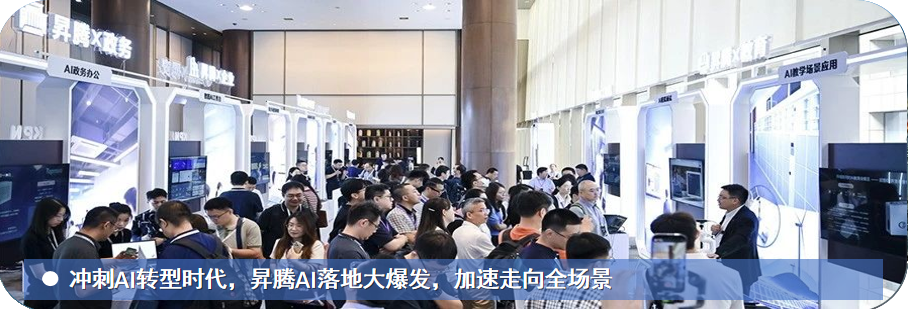
At the recent “2025 Huawei Computing Power Scenario Release Conference and Beijing xPN Partner Conference“, Huawei’s President of Commercial Sales Zhang Haiping stated that in 2024, Huawei’s operations are stable, with a year-on-year growth of 25% in the government and enterprise business in China, and an 80% growth in the computing industry for government and enterprise, with the Kunpeng and Ascend platforms playing a key role in various fields and accelerating the implementation of AI technology.
As we enter 2025, one significant change for Kunpeng is its increased openness. Zhang Haiping introduced that Huawei’s computing products have been fully upgraded, further opening up the Kunpeng computing modules, Ascend intelligent boards, and other product forms. Among them, Kunpeng’s products range from smaller modules to highly integrated system architectures, from motherboard openness to module openness, supporting partners in better meeting the diverse computing power needs in edge computing, industrial control, data centers, and other scenarios.
At the same time, based on the open-source LLaMA operating system, open suites, and application enablement suites, Kunpeng has upgraded the entire toolchain and performance acceleration engine, enabling customers and partners to develop products more conveniently. More KPN partners have created differentiated product hardware based on the modules, enriching the Kunpeng ecosystem.
Kunpeng will be ubiquitous,
The new choice of unified computing is a given fact.
“Kunpeng is everywhere; this is an ongoing state. The new choice of unified computing is something we believe is already a fact,” said Liu Yunqiang, Vice President of Huawei Kunpeng Computing.
IDC research indicates that multi-core applications are driving the growth of non-x86, especially ARM computing platforms. In the next five years, the global growth rate of ARM architecture servers will exceed 30%, while traditional x86 servers will only grow by 3%. The growth rate of ARM is ten times that of x86.

As the market share of ARM architecture servers continues to grow, the software ecosystem based on ARM architecture will also achieve systematic improvement. Taking the collaborative development of the domestic openEuler architecture and ARM architecture as an example, on one hand, the increasingly mature software ecosystem will significantly enhance the overall performance and compatibility of the system; on the other hand, the optimized software environment will promote the market penetration of ARM architecture, thus driving the spiral development of the entire industrial ecosystem.
Currently, the growth rate of ARM servers in the Chinese market far exceeds that of the global market. IDC believes that in the next five years, the growth rate of ARM servers in the Chinese market will approach 55%, and by 2029, ARM servers will account for more than one-third of the overall server market, becoming the mainstream architecture.
Returning to Kunpeng itself, since 2019, after six years of development, Kunpeng has become the first choice in autonomous innovative computing power, as well as the first choice in China besides x86.
In various differentiated scenarios across thousands of industries, especially outside the computing power of general server data centers, the Kunpeng ecosystem has already perfected the OS protocol station, drivers, and upper-layer user applications. The Kunpeng pipeline supports a set of code across multiple versions, from upper to lower layers, from core technology to components, and the entire Kunpeng industrial chain has become increasingly mature.
Thus, when using Kunpeng across various industries, the ecological promotion, peripheral component adaptation, and related application performance tuning will be simpler compared to other platforms.
Discussing the advantages of the Kunpeng ecosystem, Liu Yunqiang stated, “The first is a fast cycle, the second is a rich product series, and the third is our full-stack autonomous innovation capability, which can help partners create more differentiated competitive advantages and also allow for joint innovation and development with partners, rather than being followers on other platforms.”
Taking Beijing Leyan Technology Co., Ltd. and Aerospace Lianzhizhi Technology Co., Ltd. as representatives, the former is a leading enterprise in network security hardware platforms, while the latter focuses on large-scale DPI and network security scenarios. The mutual efforts of Kunpeng and ecosystem partners illustrate the path of Kunpeng computing power supporting innovation in unified computing scenarios.
Leyan X Kunpeng:
Network Security “Core” Dynamics
Since its establishment in 2006, Leyan Technology has focused on the research and construction of the underlying hardware platform for network security, during which it has obtained national-level specialized and innovative “little giant” enterprise qualifications. Whether for traditional network security platforms or independently innovated network platforms, a complete product system has been established. Currently, it has formed a hardware foundation system covering four major fields: traditional network security, independently innovated network security, industrial network security, and special network security.
Kunpeng presents a new opportunity for Leyan. Leveraging the openness and high-performance advantages of the Kunpeng architecture, Leyan is expected to accelerate innovation in the field of independent innovation, enhance the performance and adaptability of network security hardware platforms, and launch solutions that better meet current computing power demands.

Zhang Shuai, Deputy General Manager and Product Director of the R&D Center of Beijing Leyan Technology Co., Ltd., stated that the company is focusing on Kunpeng product development. In less than two years, it has launched multiple network security hardware platforms based on Kunpeng, advancing the Kunpeng technology roadmap in three phases:
The first phase (2024-2025) has completed the layout of mid-to-high-end products; the second phase (2025-2026) will align with the planning of Kunpeng processors, focusing on the layout of mid-to-low-end network security products; the third phase (after 2026), with the full series of processors covered, will achieve full adaptation of hardware platforms.
As a hardware foundation supplier for network security vendors, Leyan connects upstream (CPU, operating systems, and core components) and downstream (network security device vendors), playing a key linking role. For Kunpeng, Leyan is not only an important ecological partner but also a crucial carrier for promoting its computing platform in the field of network security.
The collaboration between the two expands their respective imaginative spaces. Through deep adaptation and optimization, Leyan helps Kunpeng architecture leverage its advantages in high-performance and high-security scenarios, jointly building a more robust and reliable hardware foundation for network security.
For example, Leyan Technology’s standard network security gateway platform features a multi-interface design (10 Gigabit Ethernet ports, 8 Gigabit optical ports, 16 10 Gigabit optical ports, 4 40G and 2 100G interfaces), serving as a high-performance hardware foundation platform. It also supports different configurations of the 920/920S module products.
The high interface density platform has more advantages in 10 Gigabit interfaces (10 Gigabit Ethernet ports, 28 10 Gigabit interfaces, and 4 40G and 2 100G interfaces), covering all scenarios up to 160G.
In contrast to interface-stacked products, the highly flexible network security platform retains only dual Gigabit Ethernet ports and optional 100G interfaces, with all other interfaces achieved through PCIe expansion. This is particularly suitable for computing power-prioritized products (such as CAD/application delivery devices), fully leveraging the computational performance advantages of Kunpeng processors.
“Kunpeng is committed to establishing the preferred technology route in the field of network security,” Liu Yunqiang stated. The 8-core and 12-core products to be launched in the second half of the year will completely fill the gap in Kunpeng’s computing power for network security, achieving comprehensive coverage of Kunpeng’s network security technology route from low-end to high-end.
He also mentioned that Kunpeng is confident in building a full series of technology routes, which not only stems from the CPU integrating 100G network cards but also benefits from independent innovations in the network field, including full-stack independent R&D capabilities for software and DPDK. These technical strengths enable Kunpeng to achieve full-stack optimization, thereby better serving ISVs and customers.
Additionally, Kunpeng modules not only support general firewalls but can also directly construct orthogonal architecture products, significantly reducing related costs. At the same time, the encryption machine supports TE and Transform technologies, jointly promoting Kunpeng to become the preferred technology route in the field of network security.
Aerospace Lianzhizhi X Kunpeng:
Establishing the Preferred Route for DPI
The DPI field is developing towards “integration” and “intelligence,” maximizing efficiency through heterogeneous computing architectures (CPU+GPU+DPU), achieving intelligent insights and control of complex networks through AI empowerment, and addressing evolving application scenarios and security challenges through software-hardware collaboration and ecological co-construction. Kunpeng undoubtedly plays a foundational role.

Aerospace Lianzhizhi is a national high-tech enterprise and specialized innovative enterprise with 24 years of deep technical accumulation and market experience, focusing on the R&D of high-performance secure computing products and providing industry application solutions. Kunpeng clearly aims to be the preferred choice in network security and DPI scenarios, aligning perfectly with Aerospace Lianzhizhi’s goals.
It is reported that Kunpeng has made significant investments in the DPI (Deep Packet Inspection) field, starting to layout the DPI industry since the year before last. Last year, it completed compatibility testing of related products with partners in Beijing and other regions, and this year these products have entered the selection and testing phase of the DPI projects of the three major telecom operators.
Ma Chenglong, Deputy General Manager of the Product Line at Aerospace Lianzhizhi Technology Co., Ltd., introduced two core products. The first is the Z2551-M0, a self-developed high-performance integrated device designed specifically for large-scale DPI scenarios, equipped with the Kunpeng KP920 module, featuring a modular design and full-stack optimization, with highlights of independent innovation, applicable in information security services and other fields; the second is the Z2651-M0, a multi-node modular computing platform targeting the network security market, developed based on the Kunpeng KPN group, with various node specifications and flexible single-node configurations, capable of providing computing solutions for multiple fields, showcasing the brand’s technical height and market competitiveness.
Why does Kunpeng have the opportunity to become the preferred route in the network security and DPI market?
First, Kunpeng modules integrate 100G networks (both Smart and MAX versions are equipped with dual 100G interfaces); second, the DPI market has certain requirements for network capabilities and upper-layer protocol tuning, while Kunpeng possesses end-to-end full-stack device tuning capabilities, including DKI, algorithm libraries, etc., which can help partners enhance their competitiveness in the DPI market.
At the same time, considering the variability in computing power demands in DPI scenarios, Kunpeng modules support “one board, multiple cores”—the three types of modules from MAX to Smart to Life can be flexibly replaced on the same board without redesigning the single board. This design can significantly reduce R&D costs and improve efficiency, especially suitable for products with smaller shipment volumes.
Finally, the DPI market has a large demand for overseas deployment, and Kunpeng modules are unrestricted, adaptable to all-in-one machines and global deployments of DPI partners.
Conclusion
The Kunpeng ecosystem is also the ecosystem of future unified computing power.
It is understood that looking towards more computing power scenarios in the future, Kunpeng will collaborate with partners to enhance product and ecosystem competitiveness, empower partner product development, and continue to invest in ecological construction. At the same time, Huawei will open up more product forms to match partner advantages, maximizing ecological value, enriching industry scenarios, and popularizing advanced computing power, providing full lifecycle support for product introduction, development, launch, and sales.
Kunpeng lowers technical barriers with an open architecture, while partners use diverse industry practices to feed back into the ecosystem. When the underlying computing power and upper-layer applications collaborate as precisely as gears meshing, openness is no longer a one-way gift but the soil for mutual growth, which should be the best annotation for ecological prosperity.
Source: TechForWhat


 Your every “view” is visible to me!