The Intel Panther Lake processor, which has not yet been officially announced, has already seen engineering samples surface ahead of time. This chip, likely belonging to the Core Ultra3 series, conceals a 10-core architecture and a burst power potential of 160W, revealing many new details compared to the first models set to be released at CES next year.

From the exposed information, this ES chip features a very unique core combination: 2 high-performance cores, 4 balanced power mid-cores, and 4 energy-efficient small cores, totaling 10 cores. This tri-layer core design has never been seen in previous Panther Lake models and is likely prepared for specific device scenarios.
In terms of cache, it offers a substantial 11MB of L2 cache along with 12MB of L3 cache, allowing for smoother data processing during multitasking. However, the current tested frequency is not very high, with a base frequency of 3.0GHz and a maximum boost up to 3.2GHz. Some netizens speculate that the “final version should be able to push a bit higher.”
The graphics section integrates 4 Xe3 cores, operating through a 2.5GT/s PCIe link, which should handle daily office tasks and light entertainment without issues. However, what is truly exciting is the memory support. Although the current test uses 7467MT/s LPDDR5X, the final version is said to support speeds exceeding 9600MT/s, with internal tests by manufacturers even surpassing 10GT/s.

“With increased memory speed, whether running multiple software or processing large files, everything will be much faster,” some tech bloggers have already begun to anticipate the practical experience brought by this enhancement. Moreover, the testing platform is also compatible with LPCAMM2 memory, ensuring future upgrade flexibility.
Power consumption control is another major highlight of this chip. During normal use, it maintains a base power consumption of 25W, suitable for lightweight laptops that require long battery life; when faced with heavy tasks, it can briefly spike to 65W PL2 power, and if there are urgent tasks, it can even unleash 160W of burst performance, making this flexible adjustment very practical.
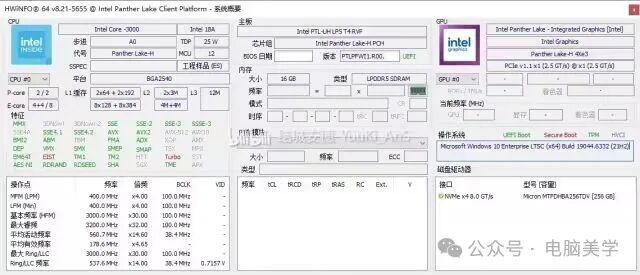
However, it is currently not on the disclosed Panther Lake list and is not one of the first models to be released at CES next year. Some speculate that it may only be for Intel’s internal testing, and it may not go into mass production until the second half of next year, with the highest likelihood of being classified under the Ultra3 series, while only a few cases might fall under Ultra5.
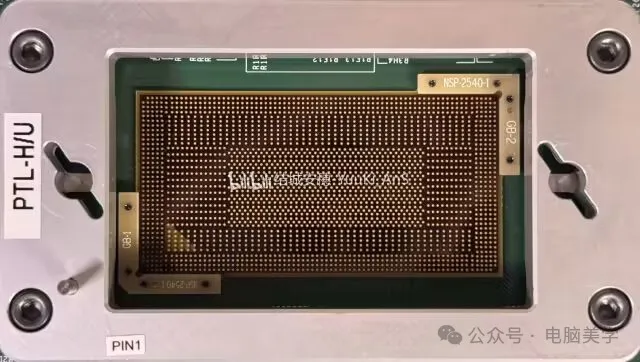
In terms of packaging, it uses a BGA2540 package, which contains four functional modules and one filler module, with a device ID of “000C06C0”. During testing, it was paired with the Intel RVP reference platform—this platform has already been demonstrated at Intel TechTour this year, with verified stability and compatibility.
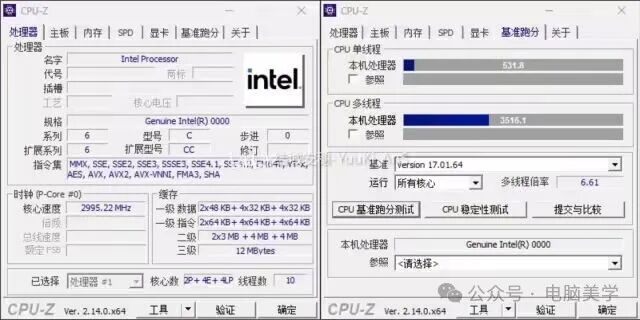
The emergence of this ES chip actually reveals an important direction for the Panther Lake series: no longer focusing solely on high-end models, but beginning to layout in the mid-to-low-end market. If the Ultra3 series can offer 10 cores and high memory support, it will be a good choice for users with limited budgets who need multi-core performance.
Some netizens have already begun to envision its application scenarios: “Installing this chip in a lightweight laptop can ensure battery life, and occasionally editing a video won’t lag, how great is that?” Others are focusing on its low-power cores: “The 4 small cores can save a lot of power during standby, and when going out with a laptop, I no longer have to constantly worry about charging.”
Compared to current processors, its tri-layer core architecture is a small innovation. Previously, many chips either focused on performance or energy efficiency; this design that balances all three may better adapt to different usage scenarios, such as using small cores for office work, large cores for gaming, and all cores together for multitasking.
However, it is still in the ES stage, and many parameters may still be adjusted. For example, boost frequency, memory compatibility, and even power control strategies may be optimized in the final version. But from the current test data, the overall framework is already quite mature, and subsequent adjustments should not be too significant.
For ordinary users, there is no need to rush to wait for this chip. After all, it is either for internal testing or has a later market release time. If you want to buy a Panther Lake processor in the first half of next year, you still need to look at the first models released at CES. However, its emergence has certainly raised expectations for the Ultra3 series.
In the long run, the technological downscaling of such mid-to-low-end models is a good thing for the entire industry. More and more devices will be able to use multi-core, high-memory-supported processors, enhancing the experience for both daily use and light creative work. Perhaps it won’t be long before 10-core processors become standard in mainstream devices.
What everyone is most concerned about now is how the actual performance will be once the final version is released. After all, no matter how good the data of engineering samples is, it still needs to be tested in the market. If it can find a good balance between power consumption and performance, it may become a “hot-selling” model in the Panther Lake series.
For more exciting content, follow us!