Samsung is heavily investing in the future of 2nm chips, planning to increase its monthly wafer production capacity from 8,000 to 21,000 within two years, more than doubling its output, clearly aiming to compete with TSMC. More importantly, the first 2nm chip, the Exynos 2600, has already been benchmarked, achieving scores that can rival Apple’s chips, and new devices featuring this chip, including the first tri-fold phone, are on the way.
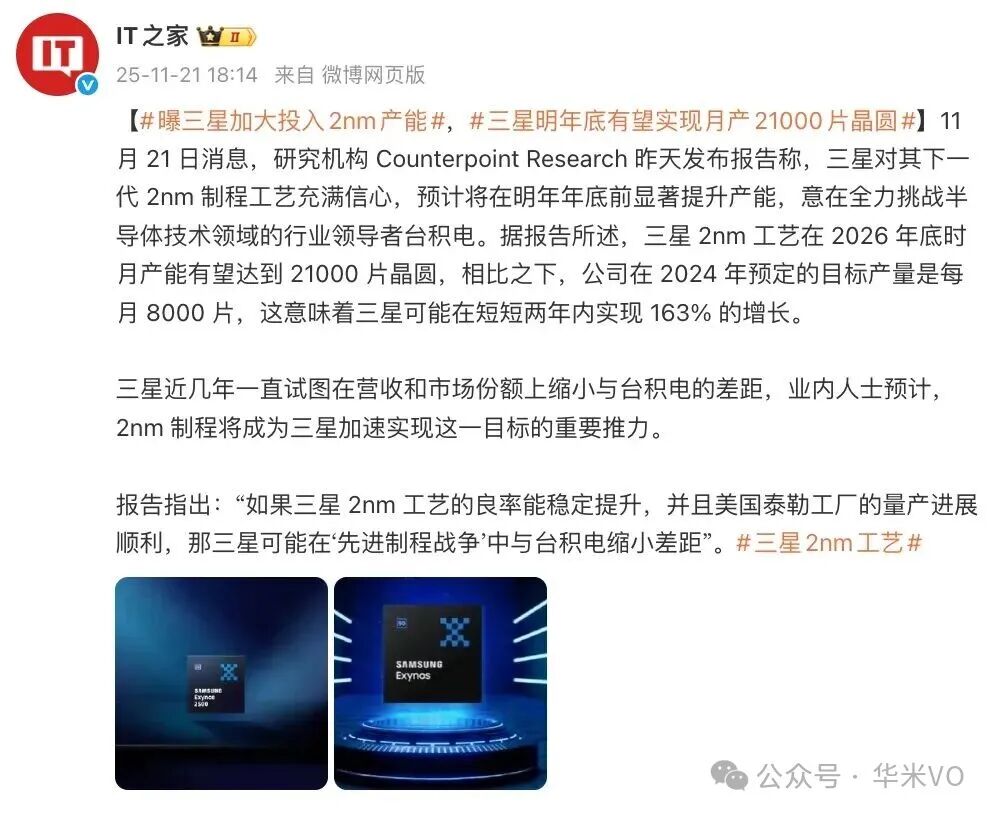
This capacity battle is fundamentally a competition of hard power. Samsung’s 2nm process utilizes GAA (Gate-All-Around) technology, which improves performance by 5%, enhances energy efficiency by 8%, and reduces chip area by 5%. However, netizens are quite perceptive: “With increased capacity, can the yield keep up?” Currently, Samsung’s yield is only around 50%-60%, while TSMC has stabilized at about 80%, which is the key factor for success.
The performance of the Exynos 2600 provides strong support for Samsung. The latest leaked benchmark scores show a single-core score of 4217 and a multi-core score of 13482, surpassing even Qualcomm’s high-end models, with single-core performance able to compete with Apple’s M5. It’s worth noting that the previous generation chip only achieved a single-core score of just over 2300 and a multi-core score of just over 8000, making this upgrade significant, which explains why Samsung is confident in using it in next year’s S26 series.
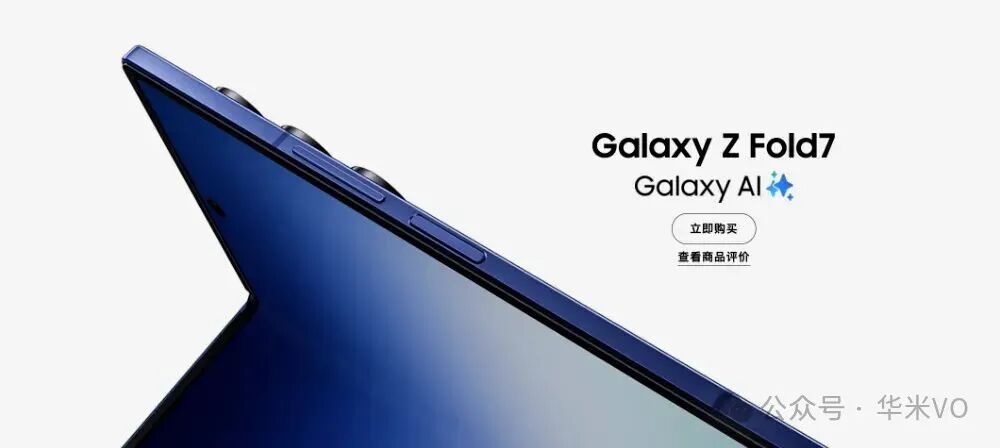
However, the chip arrangement for the S26 series is quite interesting. The base and Plus versions will use the Exynos 2600, saving $20-30 per chip compared to using Qualcomm chips, while the Ultra version and models for the U.S. market will still use Snapdragon. Some netizens joked: “This is a way to practice their own chips while fearing that high-end users won’t accept it.” Moreover, the previously rumored Pro version has been scrapped, and the Edge model may also be cut, leaving only the Plus version, indicating that Samsung wants to simplify its product line.
Even more intriguing than the S26 is Samsung’s first tri-fold phone, the TriFold, which is set to be released next month and is already available for pre-order offline. This phone features a 6.5-inch outer screen with a brightness of up to 2600 nits, ensuring clarity even in outdoor conditions, and unfolds into a 10-inch tablet, wider than the current ZFold7, making it ideal for document viewing and streaming.

Its structural design contains many details, with the thickness of the three folding segments measuring 3.9mm, 4.0mm, and 4.2mm, totaling 14mm when folded, making it thinner than some other foldable devices. The standout feature is its 5600mAh battery, the largest in Samsung’s foldable lineup, supporting 45W fast charging, alleviating battery anxiety for large-screen devices, and the hinge can withstand 600,000 folds.

The price has also been revealed, approximately 21,000 RMB, and it will only be sold in select markets such as Asia and the U.S. Reactions from netizens are mixed; some say, “This price can buy a tablet and a phone,” while others believe, “The tri-fold form factor is so novel that wealthy consumers will definitely want to try it.” The imaging configuration has not been compromised, featuring a 200-megapixel main camera similar to the S25 Ultra, ensuring good low-light photography capabilities.
Looking further ahead to 2026, Samsung’s foldable lineup will expand with the ZFlip8 and ZFold8, likely incorporating some of the mature technologies from the TriFold. Additionally, aside from the differentiation in chips, the Ultra version of the S26 series may also upgrade to a variable aperture and periscope telephoto lens, continuing to focus on imaging, as this is one of the core competitive advantages of high-end devices.

Samsung is making bold moves, leveraging its 2nm chips to penetrate the foundry market while using the new tri-fold phone to attract high-end users. However, there are significant risks; if chip yields do not improve, it could hinder production capacity, and the high price and niche positioning of the tri-fold phone may lead to high praise but low sales. Moreover, TSMC has already gained a lead in the 2nm field, making it challenging for Samsung to catch up.
Nevertheless, competition is always beneficial for consumers. Improved chip performance means smoother phones, and innovative foldable designs can provide unique user experiences. If Samsung’s 2nm capacity can truly be realized, it might even force chip prices down. The upcoming tri-fold phone and next year’s S26 series will need to deliver impressive real-world performance to capture attention.
For more exciting content, follow us!