For those planning to buy a new smartphone next year, be aware that at least three models equipped with high-end chips are currently testing built-in fans, all supporting top-level waterproofing, with the fastest expected to be available in the first half of the year. This is not just an attempt by a single brand; reports indicate that three leading manufacturers are advancing related technologies, covering both mid-range and flagship models, suggesting that active cooling in smartphones may become a new trend.

Netizens have direct opinions on this matter, with some complaining, “Doesn’t adding a component that takes up space make the phone thicker?” However, the leaked information suggests that this may be an unavoidable choice for the industry—next year, chips will enter the 2nm era, and significant breakthroughs in manufacturing processes are unlikely. To enhance performance, the only option is to “find a way” through better cooling.

Let’s first look at the models that have already been launched to better understand this design change. Some models hide the fan within the camera module, using concealed air inlets, and the back of the phone is made of composite fiberglass material, ensuring heat dissipation without significantly affecting the feel. When the fan operates, the breathing light next to the lens lights up, and users can even customize the startup sound, adding a bit of ceremony to the practical function.
There are also models focused on gaming experience that have taken the cooling fan to new heights. Not only is the fan speed the fastest in the industry, but it also achieves IPX8 waterproofing, relying on nano-level airtight materials and independently designed airflow modules. These models do not solely depend on the fan; they also feature a composite cooling structure, effectively equipping the phone with a “cooling system” to handle high-load gaming more comfortably.
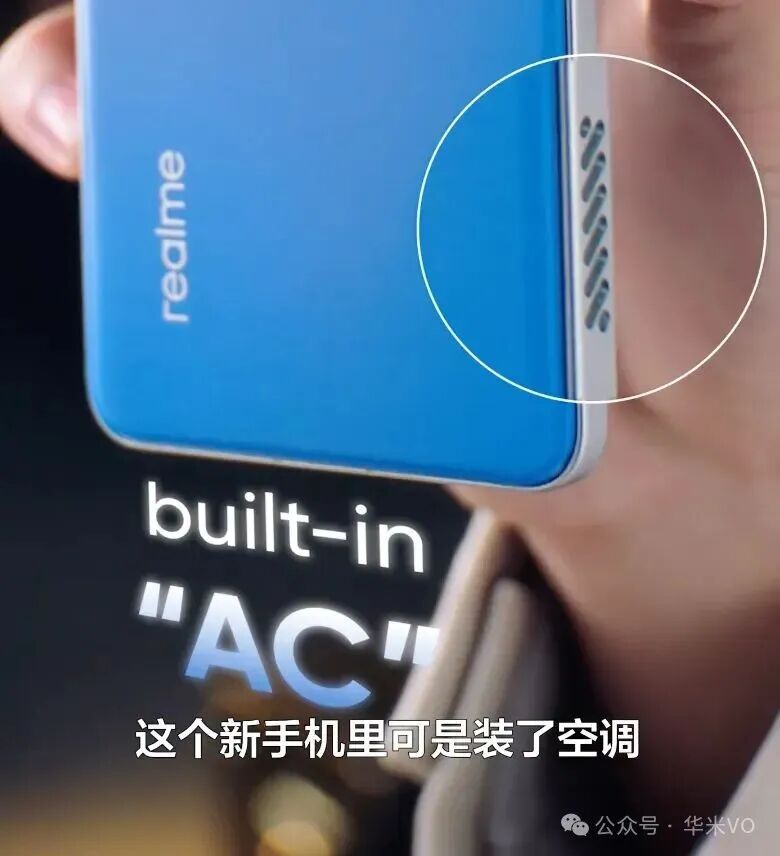
Interestingly, a certain brand showcased a “cooling air conditioning” technology, leaving dedicated air inlets on the lower left side of the phone. Tests showed it could extinguish a candle, spin a rubber duck in water, and even blow cat fur. The official claim is that it can lower the phone’s temperature by up to 6°C. This design makes “active cooling” more intuitive, allowing users to feel the airflow, as if a mini air conditioner is installed in the phone.
Looking at the upcoming models for testing, the configurations are more targeted. For instance, a prototype equipped with the Snapdragon 8 Gen 5 features a 6.78-inch 1.5K flat screen, with increased curvature at the screen corners for a more comfortable grip. The battery capacity is also being pushed from 7000mAh towards 8000mAh, clearly aiming to alleviate users’ battery anxiety while ensuring strong cooling.

In fact, as early as the first half of this year, there were reports that manufacturers were evaluating the option of built-in fans, mentioning that “the performance settings for devices in the second half of the year would be more aggressive.” It now appears that they are indeed progressing in this direction. Previously, many believed that active cooling was exclusive to gaming phones, but now mid-range models are also starting to follow suit, indicating that the industry generally sees this as a key direction to break through performance bottlenecks.
Of course, there are many questions. Some netizens worry, “Will the fan easily accumulate dust?” and “Will it make noise after prolonged use?” The current solution relies on waterproof designs to enhance dust resistance, and the fan module is independently sealed, but the actual durability in use will only be known after a large number of users have hands-on experience.
Others are concerned about whether sacrificing space for cooling is worth it, as components in smartphones are increasingly competing for space, including batteries, lenses, and chips. However, based on current models, manufacturers are already balancing this, such as integrating the fan with the camera module or optimizing internal structures to minimize impacts on thickness and weight. Future models may achieve even more discreet designs.
Following this trend, the new batch of models expected in the first half of next year may very well mark the beginning of the “active cooling popularization year.” With chip performance unlikely to see significant improvements, those who can manage cooling better will have an advantage in performance release, potentially changing the public’s perception of “high-performance smartphones”—in the future, when buying a phone, in addition to looking at the chip, one might also need to check if it has a built-in fan.

For ordinary users, there is no need to rush to follow the trend. If you usually just watch videos or chat on WeChat, a phone with standard cooling is completely sufficient; however, if you often play large games or need to use your phone for complex tasks for extended periods, models with built-in fans may provide a more stable experience. It might be worth waiting for the new models to be released next year and paying close attention to actual test data.
For more exciting content, follow us!