FollowBaocai Bureau and pin the official account
Hot comments analyze business, seeing through the essence of new business
Business history, deep thinking about the future of the industry
━━━━━━Click the headphone icon 🎧 below the title to listen to the full content
Source|Baocai Bureau
Author|First Secretary
2025 is referred to as the “Year of Mass Production” for humanoid robots.
As robots move into factories and daily life, a component that was once only found in laboratories and research papers has suddenly become the hottest track for capital and industry—sensors.
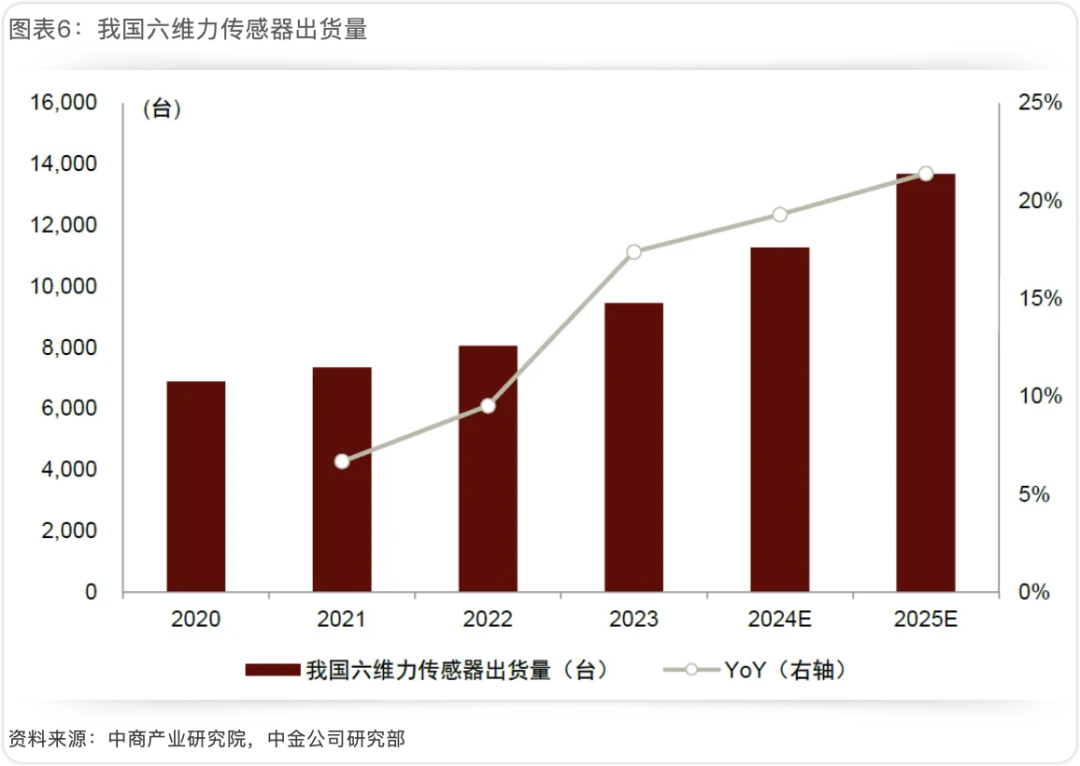
The phenomenon is straightforward:Prices have plummeted while demand has surged by 11 times. For example, six-dimensional force sensors have seen domestic prices drop by 40% compared to imports; tactile sensors have dropped from the hundred-thousand level to just hundreds of yuan; the shipment volume of six-dimensional force sensors has skyrocketed by 1100%.
If sensors were once considered “unattainable research equipment,” they are now flooding into the joints and “skin” of humanoid robots at rock-bottom prices.
However, behind this apparent prosperity lie three core contradictions:Can demand be sustained? Can technology break through? Can the industry keep up?

Scale Leap
The domino effect of the “year of mass production” has first hit the sensors.
2025 is recognized by the industry as the starting point for mass production of humanoid robots. Tesla’s Optimus, Unitree Technology, Xiaomi’s CyberOne, all enter large-scale delivery this year.
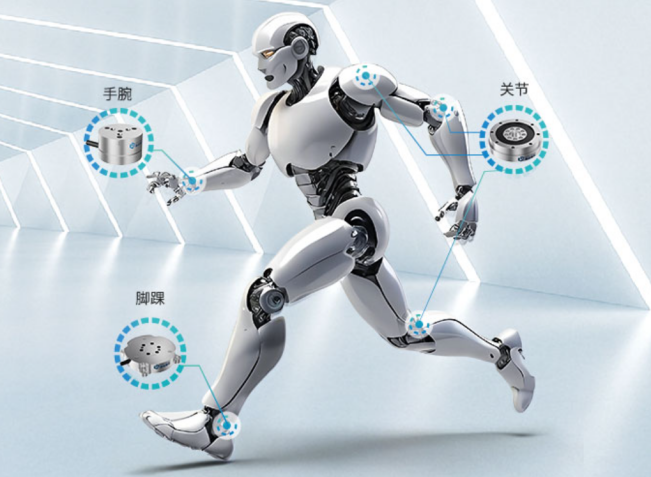
Mass production means a surge in order volume. A laboratory prototype that once required only 10 sensors now has an average configuration of over 40 sensors: including 4 six-dimensional force sensors + 28 joint torque sensors + 10 tactile sensors.
The number of units multiplied by the mass production base results in an instant steep demand curve. Shipments of six-dimensional force sensors are expected to grow by 1100% in Q2 2025, and the price of tactile sensors has dropped from the hundred-thousand level “research standard” to hundreds of yuan as “mass consumer goods”.
This is not the action of a single manufacturer, but rather the industry’s overall “forced mass production.” When Tesla’s supply chain pressures prices, Xiaomi, UBTECH, and BYD robots must follow suit, and the price war combined with surging demand has pushed sensors into a new cycle.
Scenario expansion is the second accelerator.
In the past, humanoid robots mainly appeared in industrial manufacturing, typically in precision assembly: sensors needed to detect a pressure of 0.1 Newton to avoid assembly damage.
Now, commercial and household scenarios are rapidly expanding. Navigation, delivery, companionship, and household chores all present new requirements for “sensing accuracy + controllable costs”.
At the Chengdu Auto Show, the welcoming robots displayed by car companies must rely on vision + lidar + torque sensors to achieve 720° obstacle avoidance; while service robots piloted in shopping malls must handle interactions with hundreds of visitors, making tactile sensors a standard feature.
Once scenarios spill over, demand shifts from “dozens of industrial machines” to “thousands of commercial machines,” instantly expanding the market space for sensor manufacturers.
Capital and policy are becoming the third driving force.
Hefei, Shenzhen, and other places have established hundred-billion-level robot industry funds, clearly naming “high-end sensors” as a key support direction. Local governments are using a combination of subsidies + land + order support to help local manufacturers shorten R&D cycles.
On the capital side, large companies are also increasing their investments.JD.com invests in PAXIN, Xiaomi acquires Weitai, and ByteDance and BYD are also in contact with several tactile and torque sensor companies. The reason is simple: whoever can lock in key components early can gain an advantage in the mass production cycle.
For sensor companies, this is an unprecedented “double dividend”: explosive orders from whole machine manufacturers due to mass production, along with resource tilt from government capital.

Cost Plummeting
2025 is called the year of mass production for humanoid robots, and the sensor track is experiencing a price plunge. The once high-priced six-dimensional force sensors monopolized by international giants are now being “rolled over” by domestic manufacturers, with products priced in the hundreds starting to be shipped in bulk.
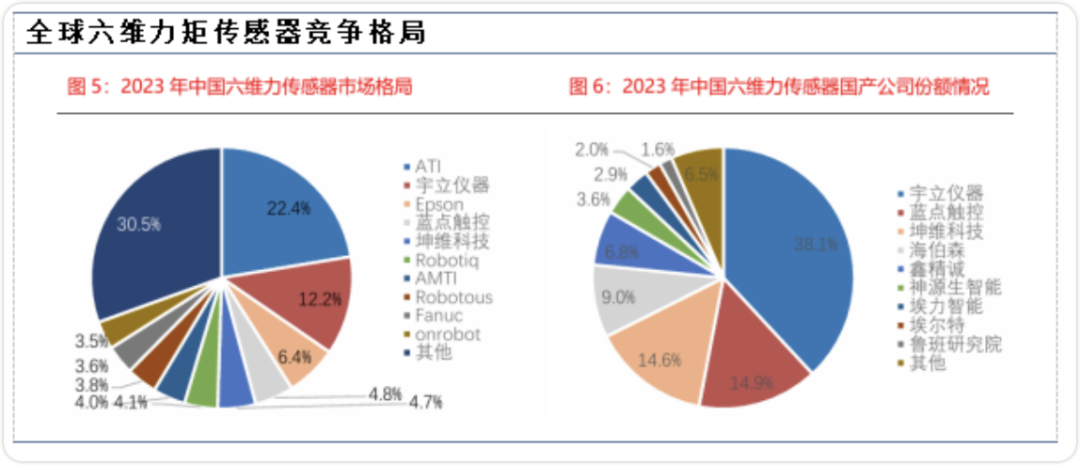
Domestic replacements have first sparked a price war. Six-dimensional force sensors were previously dominated by the American company ATI, priced at $5000, with a six-month wait for delivery, forcing domestic robot manufacturers to “grit their teeth and buy.”
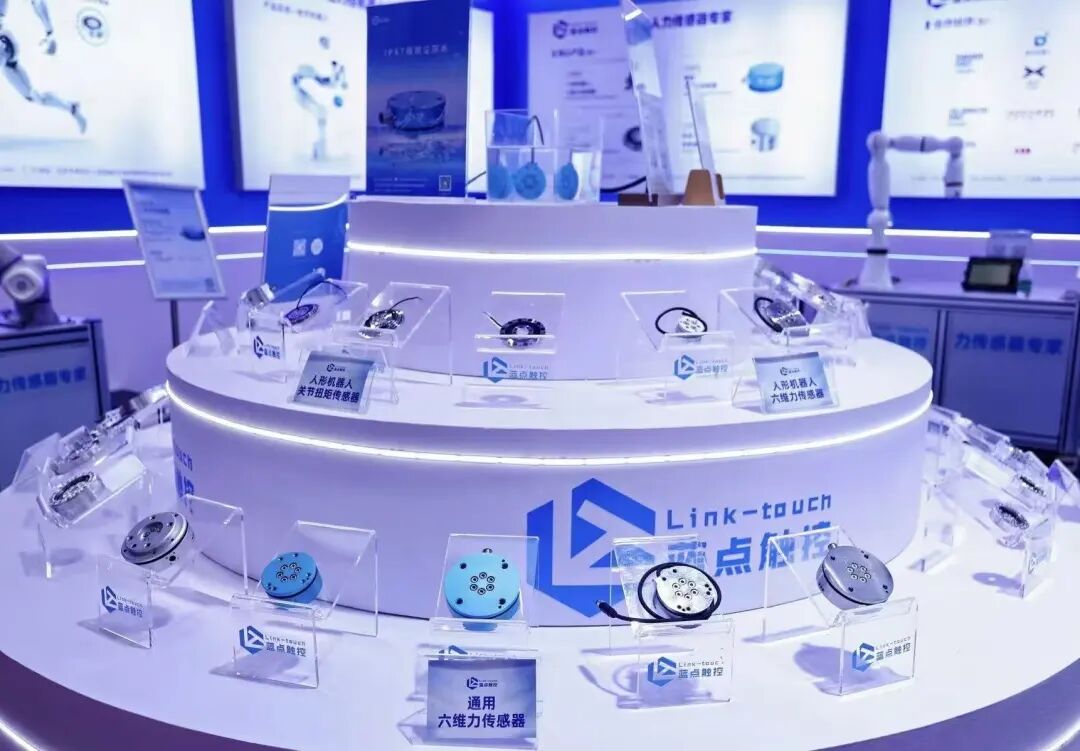
Products from Landpoint Touch and Kunwei Technology have caught up, with repeat accuracy of 0.01mm and crosstalk below 2%, completely matching ATI, with prices slashed to 15,000 yuan, only 60% of the import price.
Process optimization has further driven down costs. With the popularization of MEMS technology, mass production costs have significantly decreased. Saiwei Electronics has improved the packaging yield of IMU chips from 60% to 85%, reducing the cost per unit from 300 yuan to below 200 yuan. Keli Sensor has introduced automatic testing equipment for six-dimensional force sensors, tripling production capacity, and further reducing unit costs by 15%. Manual calibration of one unit used to take 2 hours, now it can be done in 10 minutes with even more stable accuracy.
Technological iterations are playing a role in cost reduction. Traditional resistive tactile sensors are both expensive and not resistant to interference, while vision tactile sensors are directly replacing them, with a combination of “camera + elastic materials” reducing costs by 50% and adapting to oily and dusty industrial environments. Daimeng Robotics has already replaced imported products with domestic vision tactile sensors in precision assembly scenarios, reducing the unit price from 2000 yuan to under 1000 yuan. Electronic skin is even more dramatic, using a flexible PDMS substrate + carbon nanotubes to replace imported silicon materials, with mass production costs dropping from the thousand-yuan level to the hundred-yuan level, with PAXIN products costing less than 10 yuan per square centimeter, making full-body coverage affordable.
However, behind the excitement, there are still hidden concerns. Domestic electronic skin lacks durability, with a pass rate of less than 60% in 100,000 bending tests, and there are concerns about failures in industrial scenarios. The integration of multiple sensors still has synchronization issues, with millisecond-level deviations potentially causing robots to “fumble.” Under low-price competition, some manufacturers cut corners, misrepresenting accuracy, ultimately harming the whole machine manufacturers.
Cost reduction is a temporary victory, not the end. Domestic manufacturers must shift from price wars to technology wars, addressing durability and stability shortcomings. If sensors fail, no one will dare to use them, regardless of how cheap they are.

Surge Effect
In 2025, the humanoid robot sensor track will usher in a trend of low-priced mass production, with upstream materials, midstream manufacturing, and downstream whole machines all working together to reduce costs, transforming once high-priced luxury items into affordable necessities.
Domestic replacements, large-scale production, and customized binding are three forces that have reshaped the cost structure.
Upstream materials have first fought the battle of domestic replacement. The elastic materials for six-dimensional force sensors previously relied on imported steel, and the domestic rate of flexible PDMS substrates was only 30%, with material costs accounting for as much as 55%. Now, aluminum alloys have replaced imported steel, and the domestic rate of PDMS has surged to 70%, reducing the material cost of electronic skin to 40%.
Carbon nanotube conductive materials have also achieved localization, with prices 60% lower than imports, directly helping midstream manufacturing shed the “raw material cost burden.”
Midstream manufacturing relies on scale to dilute costs. Landpoint Touch’s six-dimensional force sensor production line operates at full capacity 24 hours a day, with shipments expected to exceed 10,000 units in 2025, more than doubling from 4,500 units in 2024. PAXIN’s tactile sensors have expanded monthly production capacity from 100,000 units to 300,000 units, with unit prices dropping from 600 yuan to 510 yuan. Keli Sensor has introduced automated calibration equipment, tripling production capacity and further cutting unit costs by 10%, maximizing scale advantages.
Downstream whole machines rely on binding development to close the loop. Sensor companies no longer work in isolation but collaborate deeply with robot manufacturers. Gan Party Robotics customized multi-modal tactile sensors for the Zhiyuan A2-p, reducing the design-to-mass production time to just 3 months, half the industry average cycle. Daimeng Robotics collaborates with Lenovo’s smart manufacturing team to co-develop vision tactile sensors, directly embedding them into the assembly line, achieving seamless integration from custom development to rapid mass production. The binding model allows sensors to precisely match demand while securing orders in advance, reducing capacity waste.
However, behind the cost reduction celebration, there are still concerns.
The electronic skin’s pass rate in 100,000 bending tests is less than 60%, and industrial-grade durability has not yet met standards. The synchronization of multiple sensors has millisecond-level deviations, which may cause robots to stutter in their movements. Under low-price competition, some manufacturers cut corners and misrepresent accuracy, ultimately harming whole machine manufacturers.
The price plunge and surging demand are the result of a resonance between upstream domestic cost reductions, midstream efficiency improvements, and downstream binding releases.
The industry is transitioning from high-priced niche products to affordable mass-market products, but to go further, it must address shortcomings: breakthroughs in electronic skin durability, synchronization issues with multiple sensors, establishing unified testing standards, and clarifying bending counts and accuracy error ranges.
Only in this way can affordable sensors support the mass production of humanoid robots.
·End·
 Exclusive group for entrepreneurs, executives, and investors is open!Limited time 0 yuan to join the groupUnlock efficient tools, resources, business opportunities, and high-end connections Quickly find Uncle Motong to grab a spot!
 Produced by Baocai BureauOrganizer:First Secretary Cooperation, reprint: 🤳 kinseyho16©️ All rights reserved, unauthorized reproduction is prohibited, and will be regarded as plagiarism.Images in the text are not for commercial purposes, and copyright belongs to the copyright owner.If the copyright holder believes that their work should not be browsed or used free of charge, please contact us for deletion.