As humanoid robots gradually enter practical scenarios, the demand for six-dimensional force sensors has increased significantly.
Author | Jin Wang
Column | New Era of Robotics
In 2019, the cumulative installation of industrial robots in China reached783,000 units.
Even Milton Guerry, then President of the International Federation of Robotics (IFR), had to marvel,“China is currently the largest and fastest-growing robot market in the world.”
In this vast market, Liu Wuyue found that most robots at the time still operated on machine tool logic, executing tasks by moving along preset trajectories.
According to Liu Wuyue’s estimates, robots based on this logic could only complete5%-10% of human tasks, withover 90% of tasks being unachievable by robots following this logic. The root cause lies in the lack of hand-eye coordination and online adjustment capabilities in these robots.
At that time, there was a strong market demand for robots equipped with tactile control technology, but this technology was initially monopolized by a few foreign brands, making it difficult for domestic teams to establish a commercial logic.
Faced with this opportunity and challenge, Liu Wuyue, who had years of experience in aerospace force sensing, resolutely decided to form a team that year to enter this blue ocean market, aiming to develop a truly useful domestic force sensor for robots.
 From Machine Tool Logic to Human-like Thinking
By 2019, relying solely on programmatic trajectory planning to control robots for task execution was far from meeting the demands of intelligent manufacturing, lacking feedback mechanisms, which became a major bottleneck for the evolution of most industrial robots at that time.
Liu Wuyue and his Blue Dot Touch were established against this backdrop, beginning to bring aerospace force sensor technology into the industrial field.
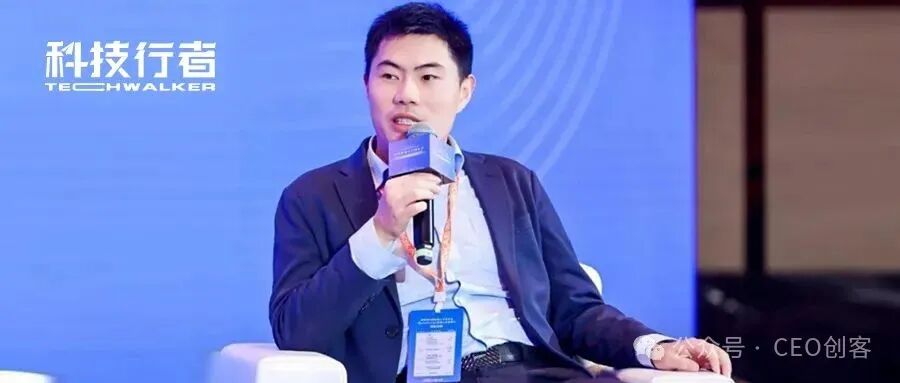
We met Liu Wuyue, the founder of Blue Dot Touch, at WRC 2025. Reflecting on the state of the industrial robot industry at that time, Liu Wuyue told us, “In the placement phase of factory handling scenarios, especially the placement of items in contact scenarios, was a significant challenge at that time.”
For example, in the Foxconn mobile phone assembly line, when a robot inserts a connector into a phone, if the gap between the axis and the hole is0.05mm, traditional machine tool thinking requires the robot to position with extreme precision to0.05mm, which poses significant challenges to the cost and long-term operational stability of the robot program.
Often, even slight wear or collision would render the robot unusable.
In contrast, human hand operations do not rely on high-precision positioning but rather on visual approximation, followed by “tactile feedback” to insert the connector into the phone. If robots could be designed with such human-like thinking, it would not only lower precision requirements but also reduce structural costs, enabling long-term stable high-precision operations.
This is the core logic behind Liu Wuyue’s development of force sensors at Blue Dot Touch, enhancing the hand-eye coordination of robots and allowing them to evolve from machine tool logic to human-like thinking.
However, when Liu Wuyue entered this market, he discovered that the domestic force sensor market, especially the higher-end six-dimensional force sensor market, had long been monopolized by foreign brands. Compared to these foreign brands, Chinese startup teams generally faced two major challenges:
First, how to develop force sensors that achieve performance comparable to these foreign brands;
Second, how to establish their own brand credibility to break the long-standing monopoly of foreign brands.
Thus, Liu Wuyue began by focusing on product performance, starting the development of the first six-dimensional force sensor.
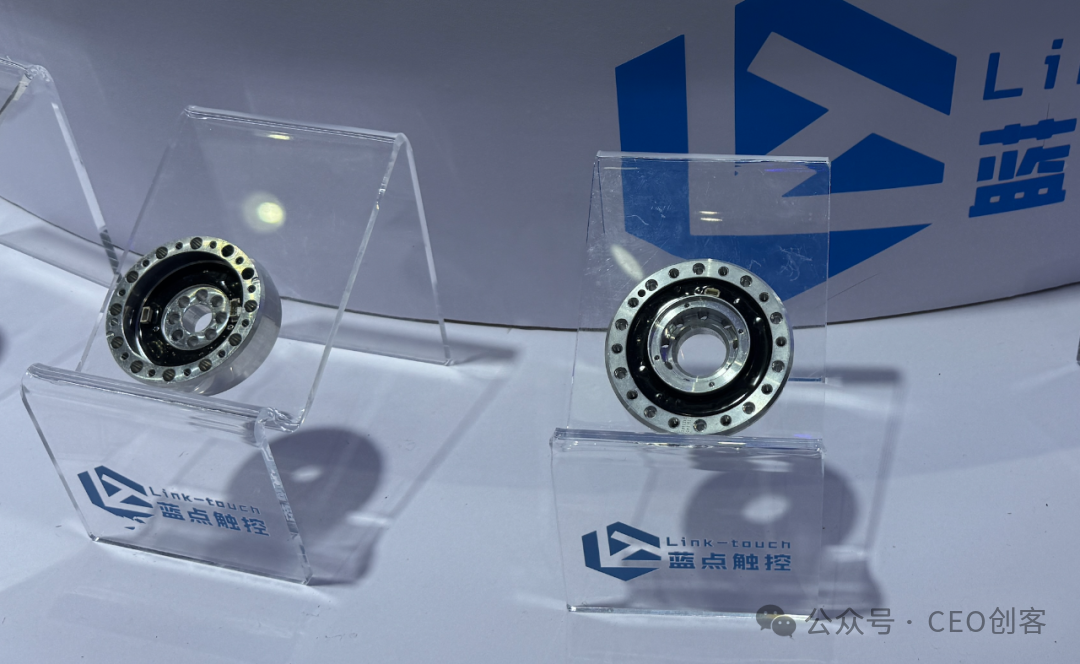
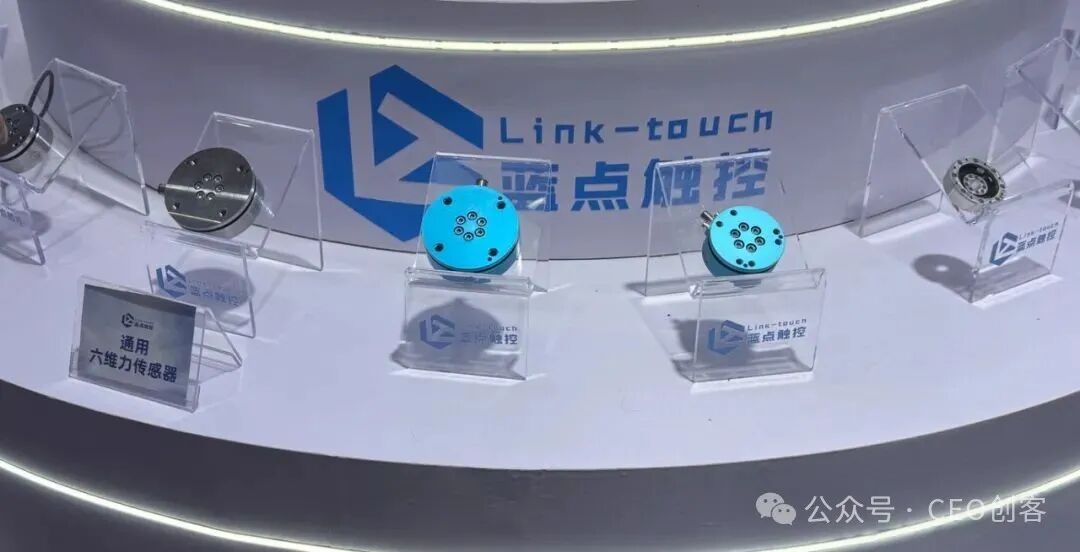
The six-dimensional force sensor has a complex structure and high development difficulty, but it offers more measurement dimensions, allowing it to measure all force conditions of an object in three-dimensional space.
During the development of this product, the key for the Blue Dot Touch team was to overcome four core technical points: high-performance elastomer iterative design, embedded hardware circuit design, decoupling algorithms for deep learning, and six-dimensional synchronous calibration technology.
Recalling the technical challenges faced during the development of this product, Liu Wuyue told us,“In fact, our country has decades of technical accumulation in force sensing in the aerospace field, and our team is essentially standing on the shoulders of giants to accomplish this task.”
In fact, the first LB series six-dimensional force sensor from Blue Dot Touch was also used by clients from the aerospace field.
In 2019, the Tsinghua University School of Aerospace used Blue Dot Touch’s first six-dimensional force sensor during a simulated space mission to capture a satellite.
Previously, this project had originally selected a six-dimensional force sensor from a leading overseas brand, but due to the inability of the product to measure force conditions, they later switched to using Blue Dot Touch’s product.
Thus, Blue Dot Touch took its first step on the path to commercialization.
 Large Models Elevate Robot Performance Demands
In 2022, the release of ChatGPT brought artificial intelligence technology into the paradigm of large models, with the Scaling Law of large models elevating the importance of data to unprecedented heights.
However, Liu Wuyue recognized the importance of data early on.
It is particularly noteworthy that six-dimensional force sensors play a crucial role in the working chain of industrial robots and collaborative robots:
Force sensors perceive changes in external forces through elastomers, converting force into strain values, i.e., changes in resistance values, which are then processed by a data acquisition system. Through decoupling algorithms, high-precision six-dimensional force signals are generated and input into the robot’s controller;
The robot controller, based on external force conditions, uses force control algorithms to reverse control the robot’s movements, achieving force control or drag-following actions.
Data is the key to optimizing this technical chain and continuously enhancing the performance of six-dimensional force sensors.
Liu Wuyue told us that whether it is traditional algorithms, small models, or large models, data is the core at the foundational level.
For this reason, over the past few years, Blue Dot Touch has built its technical barriers in three areas: hardware, algorithms, and data process accumulation.
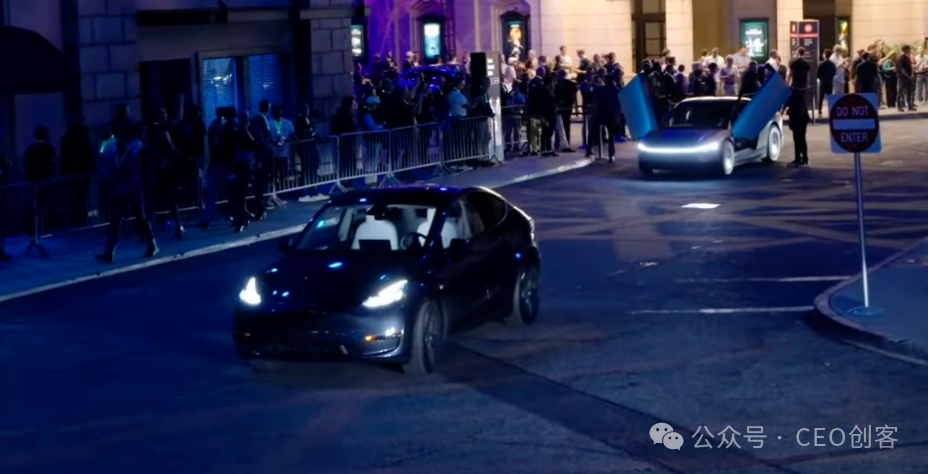
Liu Wuyue made a vivid analogy comparing these three aspects to Tesla—hardware is like the car, algorithms are like the autonomous driving system, and data is the biggest technical barrier behind the two.
Therefore, when Blue Dot Touch made in-depth layouts for downstream scenarios of force control algorithms in 2020, entering the niche market of robot polishing workstations, they particularly built a process algorithm model and a process database.
Another important reason for developing the robot polishing workstation was that after the six-dimensional force sensor product development system became relatively mature, considering the company’s commercialization path, Liu Wuyue set a “horizontal and multiple verticals” strategy for Blue Dot Touch—horizontal being the series of force sensor products, and vertical being the complete equipment for different niche scenarios.
The first shipment volume inflection point for Blue Dot Touch’s six-dimensional force sensors occurred in2022.
According to statistics from MIR DATABANK, in 2022, the shipment volume of collaborative robots in China exceeded19,000 units, setting a new historical record.
Liu Wuyue told us, “After three years of technical accumulation and deep customer engagement, Blue Dot Touch has gained a good reputation in the industry this year, especially with the growing demand for six-dimensional force sensors in the collaborative robot market, which has driven the first wave of shipments for Blue Dot Touch.”
2022 also became a key turning point for Blue Dot Touch’s commercialization.
At the same time, in 2022, the wave of large models emerged as an important variable in the robot market, beginning to brew a larger robot industry ecosystem.
Regarding the impact of embodied large models on robot components, Liu Wuyue shared this logic with us,“Embodied large models are driving the demand for complete robot hardware, which in turn influences the development of components. The enhancement of components will, in turn, improve the capabilities of embodied large models.”
At the core of this logic is the demand for high-quality data from embodied large models. Improved hardware performance leads to higher quality data, and enhanced data quality drives the capabilities of embodied large models, which in turn raises the requirements for hardware. This is an iterative cycle.
Meanwhile, large models are giving rise to a more attractive robot market, particularly the humanoid robot market.
 We Are All Looking Forward to the Turning Point of Humanoid Robots
According to statistics from IDC, the commercial sales shipment volume of humanoid robots in China is expected to be around2,000 units in2024, and is projected to reach60,000 units by2030.
Regarding the current development trend of the humanoid robot market, Liu Wuyue believes,“Doubling growth each year is not a big issue, but the key is whether we can achieve exponential growth.”
If we consider the trend of doubling growth each year, even by 2030, the domestic humanoid robot market size would only be in the tens of thousands of units, far from meeting the expectations for humanoid robots to enter factories and even households in large numbers.
The entire robot industry, and even the embodied intelligence industry, is looking forward to the “ChatGPT moment” for humanoid robots.
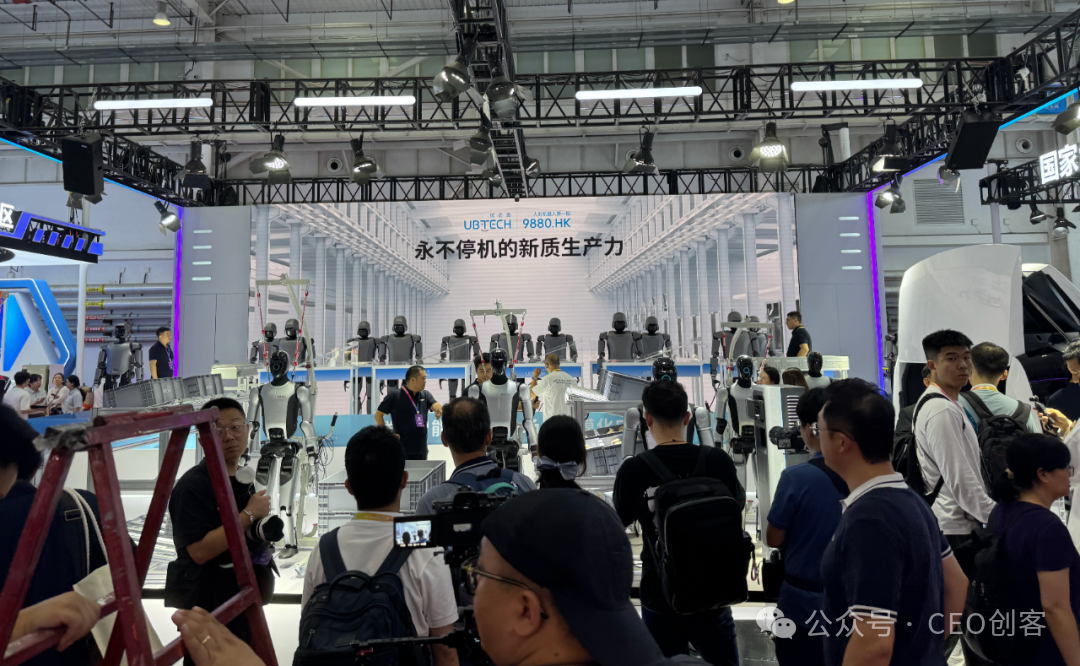
However, this year, Liu Wuyue also sensed a significant change in the humanoid robot market. As humanoid robots gradually enter practical scenarios, the demand for six-dimensional force sensors has increased significantly.
As a director of Blue Dot Touch and one of its investors, Professor Wang Tianmiao, honorary director of the Robotics Institute at Beihang University, organized a dinner for industry exchanges in 2023, attended by many founders of well-known domestic robot companies.
At that time, during the exchange, it was generally believed that to promote the development of humanoid robots, it was necessary to continue improving visual accuracy, and there was no urgent need for tactile perception.
However, as we entered the second half of 2024, Liu Wuyue found that when everyone’s humanoid robots completed development and began entering scenarios for data training, they discovered that even simple operations like placing a cup on a table could not be performed well.
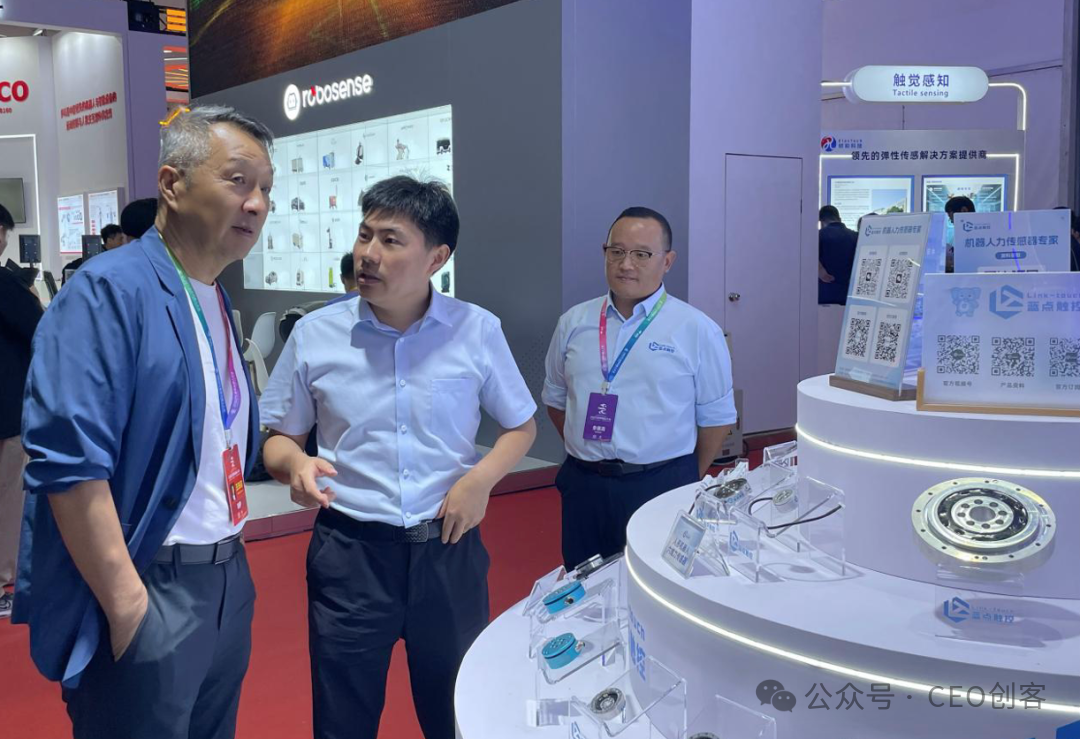
The reason for this is that the visual positioning accuracy is generally within2-10mm, which does not meet the requirements of scene applications. To satisfy such demands, hand-eye coordination capabilities are needed, and the tactile feedback provided by six-dimensional force sensors is the most critical feedback capability.
For this reason, Blue Dot Touch’s six-dimensional force sensors are expected to experience a second wave of rapid business growth in the humanoid robot market in the second half of 2024.
Liu Wuyue revealed that leading humanoid robot companies, including Zhi Yuan, Youbixuan, Xiaomi, Zhongqing, and Qianxun Intelligent, have already become clients of Blue Dot Touch.
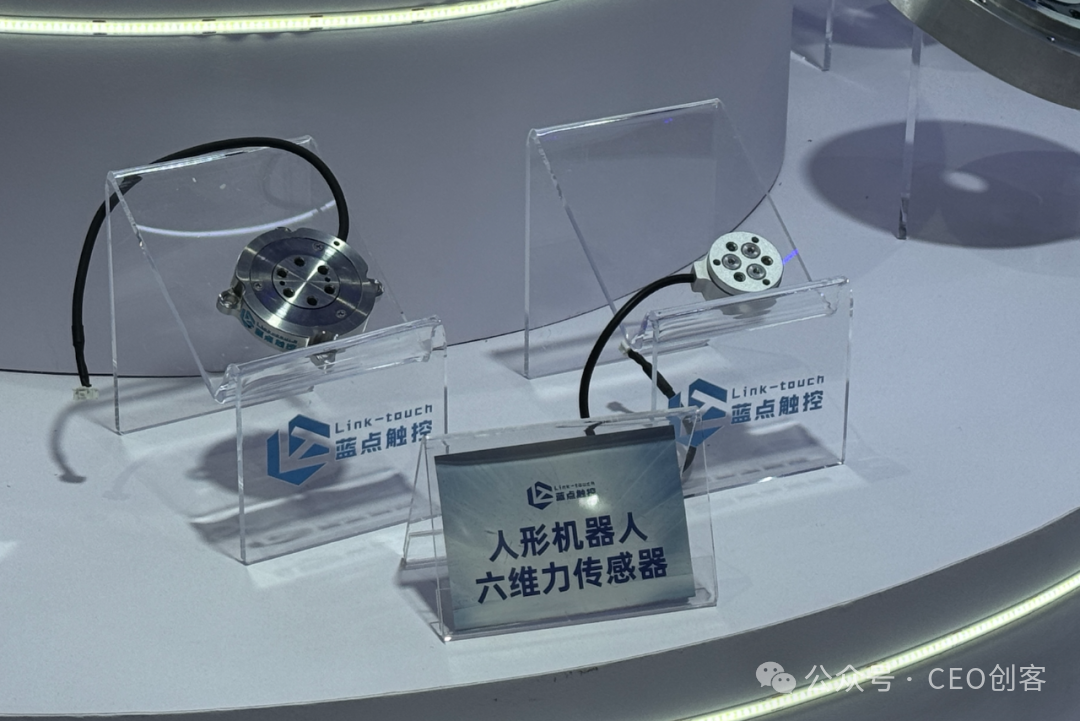
Liu Wuyue told us,“Humanoid robots typically require28 joint force sensors and4 end six-dimensional force sensors, accounting for about15% of the total machine cost.
“Compared to collaborative robots, humanoid robots have higher requirements for six-dimensional force sensors in terms ofsmall size, high precision, and strong overload capacity, and the difficulty in product development lies in how to maintain performance stability while meeting these demands.”
It is reported that the six-dimensional force sensors developed by Blue Dot Touch for humanoid robots now achieve0.3%FS accuracy, with a maximum response frequency of10kHz.
Meanwhile, humanoid robots have become one of Blue Dot Touch’s core strategic businesses.
Additionally, Liu Wuyue revealed to us,“Our next-generation force sensors designed for humanoid robots will be smaller, more precise, and have stronger overload capabilities, deeply integrated with the overall structure, enabling truly seamless installation of robots while possessing enhanced perception capabilities to meet the flexible operation needs of humanoid robots in complex scenarios.”