
Edge Intelligence
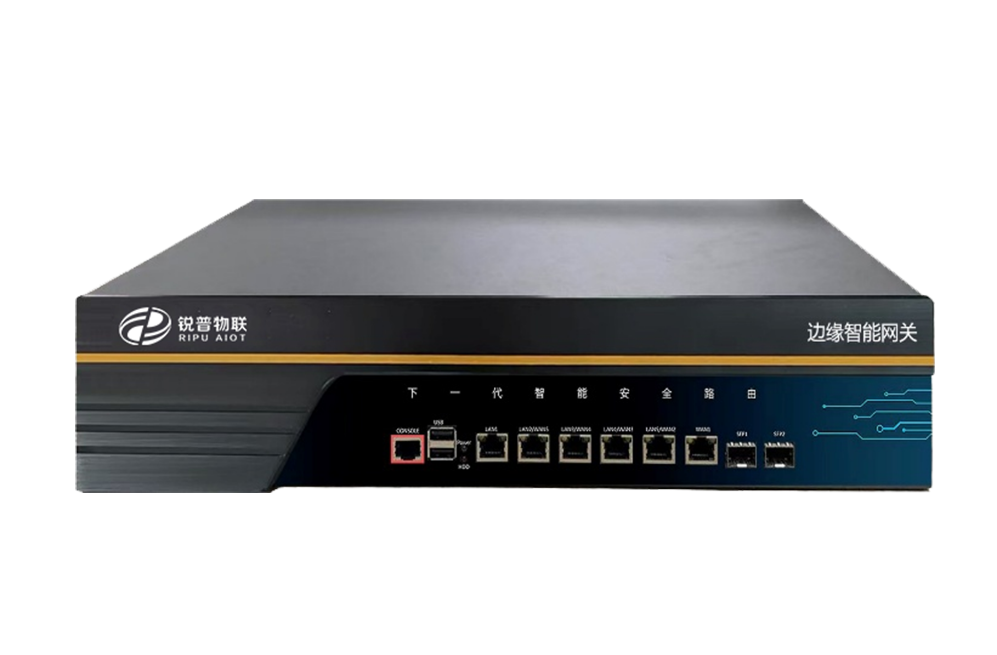
In the industrial sector, IoT technology is rapidly developing, injecting strong momentum into industrial upgrades and intelligent transformation. In this transformation, smart edge gateways serve as a critical bridge connecting industrial devices and networks, gradually becoming the ‘nervous system’ of industrial IoT, playing a vital role in industrial systems.
The Key Link of Industrial IoT
The core of industrial IoT lies in achieving interconnectivity and data exchange between devices, and with a wide variety of devices and complex protocols, a powerful ‘link’ is needed to integrate them. Smart edge gateways precisely fulfill this role.
On one end, they connect various industrial devices, such as sensors, controllers, and robots, which generate massive amounts of real-time data; on the other end, they connect to industrial networks and cloud platforms, transmitting data to the cloud for deep analysis and processing.
Smart edge gateways ensure that device data can be transmitted and exchanged efficiently and accurately through functions such as protocol conversion, data collection, filtering, and preliminary processing, thus bridging the ‘last mile’ between industrial devices and networks.
The Core Driving Force of Smart Edge Gateways
Edge computing is one of the core capabilities of smart edge gateways and is key to making them the ‘nervous system’. Traditional industrial data processing mainly relies on centralized cloud computing, but this approach faces issues such as high latency and bandwidth pressure for data transmission. The emergence of edge computing has changed this situation.
(1) From Basic Data Aggregation to Local Intelligent Processing
Initially, the functions of edge computing were relatively basic, mainly aggregating data generated by devices. However, with technological advancements, edge gateways have gradually integrated localized intelligent processing capabilities. They can perform real-time analysis and processing of data on-site, thereby reducing the computational burden on the cloud and lowering data transmission latency.
For example, in a large factory’s production line, device sensors monitor real-time data such as temperature, pressure, and vibration during the production process. Through the local intelligent processing of the edge gateway, once abnormal data is detected, it can issue a warning signal within milliseconds, promptly notifying on-site operators to take action, ensuring the continuity of production.
(2) Autonomous Decision-Making Capability with Deep Collaboration with the Cloud
Today, edge computing has achieved deep collaboration with the cloud, possessing autonomous decision-making capabilities. Taking the factory production line as an example, smart edge gateways can integrate advanced machine learning algorithms to predict equipment failure trends by learning and analyzing historical production data.
When a potential failure of a device is predicted, the edge gateway automatically adjusts the production schedule, reallocating related tasks to other functioning devices while notifying maintenance personnel to service the faulty equipment.
Throughout this process, the edge gateway works closely with the cloud, which provides more complex analytical models and global data support, while the edge gateway responds quickly to on-site conditions.
From Perception Transmission to Real-Time Analysis
The continuous innovation of edge computing functions has profoundly transformed the role of smart edge gateways, pushing industrial IoT from simple ‘perception transmission’ to an era of ‘real-time analysis’ and ‘dynamic optimization’.
In traditional industrial IoT architectures, devices are merely sources of data generation, with data transmitted to the cloud for centralized processing, and the devices themselves rarely participate in data analysis and decision-making. The system primarily achieves perception of device status and data transmission. However, with the rise of smart edge gateways, the response efficiency at the device end has significantly improved.
This capability for ‘real-time analysis’ and ‘dynamic optimization’ makes industrial IoT systems more intelligent and efficient, enabling them to quickly adapt to complex and changing on-site environments, meeting diverse needs in different scenarios:
-
In smart cities, it connects security cameras, traffic sensors, and energy devices, making city operations more efficient and safe.
-
In smart manufacturing factories, it connects devices on the production line, achieving automated control and production optimization.
-
In the energy sector, it monitors power facilities, ensuring the stability of energy supply.
We hope this article provides a deeper understanding of the important role and development prospects of smart edge gateways in industrial IoT. We also look forward to more surprises from smart edge gateways in the future, helping industrial IoT achieve greater breakthroughs!

END

You can contact us through the following ways:
Phone: 13860472539
WeChat: ripusmart
Email: [email protected]
Website: http://www.ripuaiot.com/ (Click to read the original text)
↓ Long press to recognize the QR code to follow us ↓

Ripu IoT, Experts in Edge Intelligence Solutions