In meteorological monitoring, industrial control, and scientific research, temperature is a critical parameter. Traditional temperature sensors such as thermocouples, thermistors, and semiconductor temperature sensors, while widely used, have issues such as the need for analog-to-digital conversion, weak anti-interference capability, and poor compatibility with modern integrated circuit processes.
In recent years, resonant temperature sensors based on Micro-Electro-Mechanical Systems (MEMS) have gained widespread attention in academia and industry due to their frequency output, high precision, and ease of integration. This article will provide an in-depth introduction to a resonant MEMS temperature sensor based on double-layer cantilever beams, comprehensively analyzing its technical highlights and application prospects from working principles, structural design, simulation, to experimental verification.
(If you are interested in this article and want to learn more about the relevant technical details or need the original text, please contact the author for communication)
1. Limitations of Traditional Temperature Sensors and Advantages of Frequency Output Sensors
Technical Bottlenecks of Traditional Sensors
In the field of temperature measurement, several mainstream sensors each have insurmountable technical defects. Platinum resistance temperature sensors, while having good linearity and stability, are inconvenient for integrated manufacturing and cannot meet the miniaturization requirements of modern electronic devices. Semiconductor thermistors have issues with high temperature non-linearity and poor compatibility with integrated circuit processes. Thermocouples require a constant reference temperature environment, making their usage conditions harsh. Integrated temperature sensors based on thermistors or transistors, while compatible with IC processes, have a narrow temperature measurement range (-50 to 120°C), which cannot meet the temperature measurement needs in extreme environments.
Revolutionary Breakthrough of Frequency Output Sensors
The emergence of frequency output temperature sensors has brought revolutionary changes to temperature measurement technology. These sensors directly convert temperature signals into frequency signals, possessing inherent digital interface characteristics, allowing direct connection to digital systems without complex analog-to-digital conversion circuits. Frequency signals exhibit excellent anti-interference capability, making them particularly suitable for long-distance transmission and applications in complex electromagnetic environments. Furthermore, the measurement accuracy of frequency signals can reach high levels, with modern frequency detection technology achieving 1Hz resolution, laying the foundation for high-precision temperature measurement.
2. Working Principle and Structural Design of the Sensor
Core Principle: Ingenious Use of Thermal Mismatch Effect
The core innovation of this sensor lies in the ingenious use of thermal mismatch effect. The sensor employs a double-layer cantilever beam structure made of aluminum (Al) and silicon dioxide (SiO₂), which have the largest difference in thermal expansion coefficients in CMOS processes. The thermal expansion coefficient of aluminum is approximately 23×10⁻⁶/°C, while that of silicon dioxide is only 0.5×10⁻⁶/°C, providing a sufficient sensitivity basis for temperature measurement.
When the ambient temperature changes, due to the different thermal expansion of the two materials, thermal stress is generated within the cantilever beam, causing the entire structure to undergo micro-bending deformation. This deformation not only alters the static shape of the cantilever beam but, more importantly, changes its stiffness characteristics, thereby affecting its resonant frequency. By precisely detecting the shift in resonant frequency, the change in ambient temperature can be inferred.
This direct conversion mechanism of temperature to frequency avoids the common intermediate conversion steps found in traditional sensors, significantly improving measurement stability and reliability. Frequency signals, as a digital-friendly output form, greatly simplify the design difficulty of subsequent signal processing circuits.
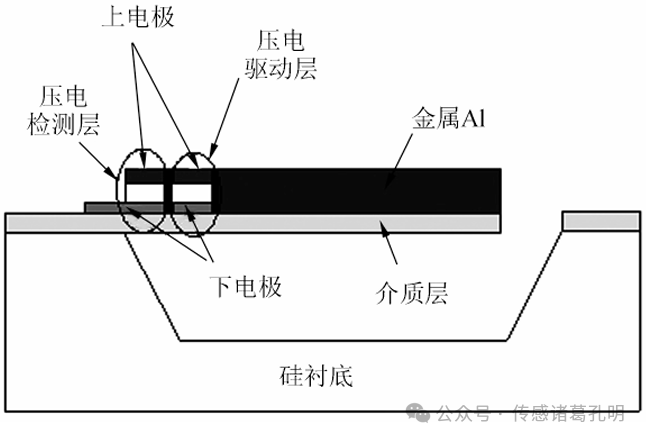
Figure 1: Schematic Diagram of Micro Temperature Sensor Structure
Innovative Design of Piezoelectric Drive and Detection
For the excitation and detection mechanism of the sensor, the research team chose the piezoelectric conversion technology route. Two pieces of zinc oxide (ZnO) piezoelectric material are placed near the root of the cantilever beam, used for exciting vibrations and detecting resonant frequency, respectively. This design achieves the integration of driving and detection, simplifying the sensor structure.
The working principle of piezoelectric drive is based on the inverse piezoelectric effect—when an alternating voltage is applied to the ZnO material, the material undergoes periodic deformation, thereby driving the cantilever beam to vibrate. When the cantilever beam is in a resonant state, the vibration amplitude is maximized, and the electrical signal detected by another ZnO material (based on the direct piezoelectric effect) is also the strongest. By scanning the driving frequency and monitoring the changes in the detection signal, the resonant frequency of the cantilever beam can be accurately determined.
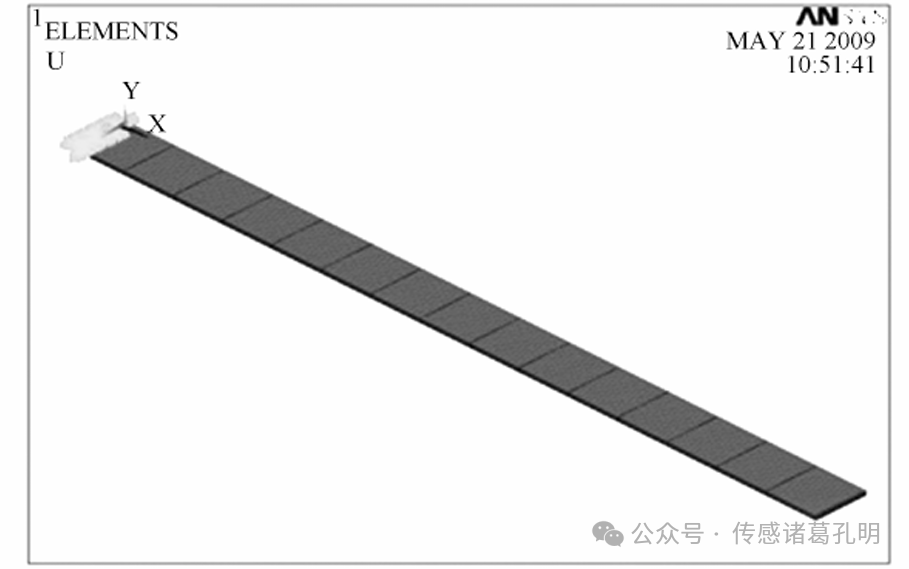
Figure 2: Finite Element Model of the Cantilever Beam
Process Optimization: Breakthrough in Frontside Etching Technology
In terms of manufacturing processes, this sensor adopts an innovative frontside etching technology, which has significant advantages over traditional processes. Traditional silicon-based MEMS cantilever beams often use backside wet etching, requiring KOH solution, but the metal ions in it are incompatible with CMOS processes, and the processing cycle is long and costly.
Frontside etching technology uses TMAH solution, avoiding errors in double-sided alignment photolithography, significantly shortening processing time and reducing manufacturing costs. Notably, TMAH solution has good selectivity for aluminum layers—having no corrosive effect on aluminum, which ensures effective protection of the aluminum electrode layer, improving process reliability and yield.
This process innovation not only solves compatibility issues with traditional CMOS processes but also lays the foundation for the mass production of sensors, making large-scale applications of low-cost, high-performance MEMS temperature sensors possible.
3. Simulation and Experiment: System Verification of Sensor Performance
Finite Element Analysis: In-Depth Understanding of Modal Characteristics and Temperature Sensitivity
To gain a deeper understanding of the vibration characteristics and temperature sensitivity of the sensor, the research team employed finite element analysis methods, using ANSYS software to perform multi-physical field coupling simulations on the cantilever beam. The simulation results clearly demonstrate the first five modal shapes of the cantilever beam (see Figure 3), providing a theoretical basis for selecting the working mode of the sensor.
Among these modes, the 1st, 2nd, and 4th bending modes are most suitable for piezoelectric driving and detection. These modes exhibit significant strain distribution near the fixed end of the cantilever beam, where the piezoelectric materials are precisely arranged, thus enabling effective energy conversion and signal detection.
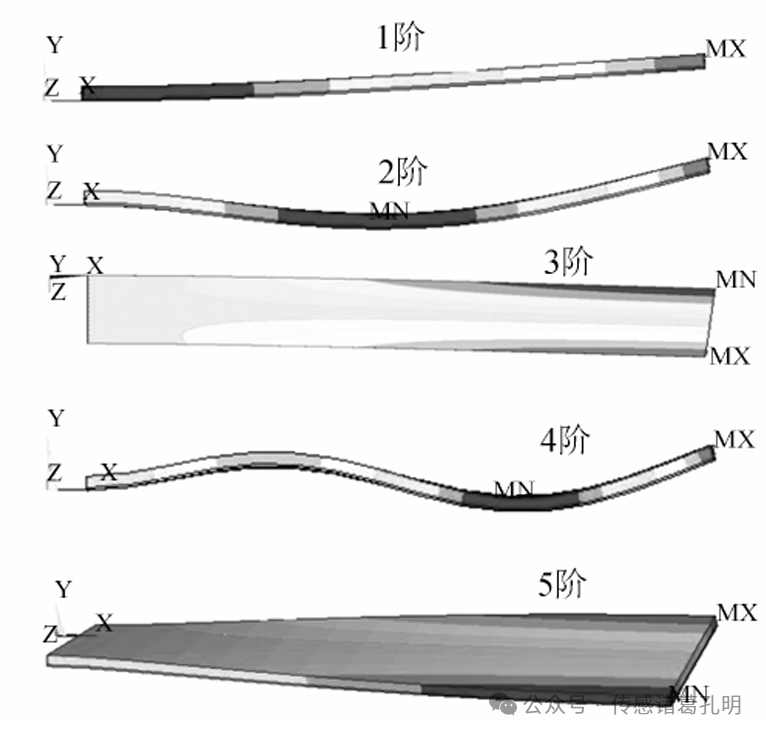
Figure 3: First Five Modal Shapes of the Double-Layer Cantilever Beam
Further analysis of the temperature-frequency characteristics reveals the response characteristics of different modes to temperature changes. As shown in Figure 4, higher-order modes (especially the 2nd bending mode) exhibit higher frequency shift sensitivity when temperature changes, and their linearity is significantly better than that of lower-order modes. This finding has important practical significance—by selecting the appropriate working mode, the performance indicators of the sensor can be significantly improved.
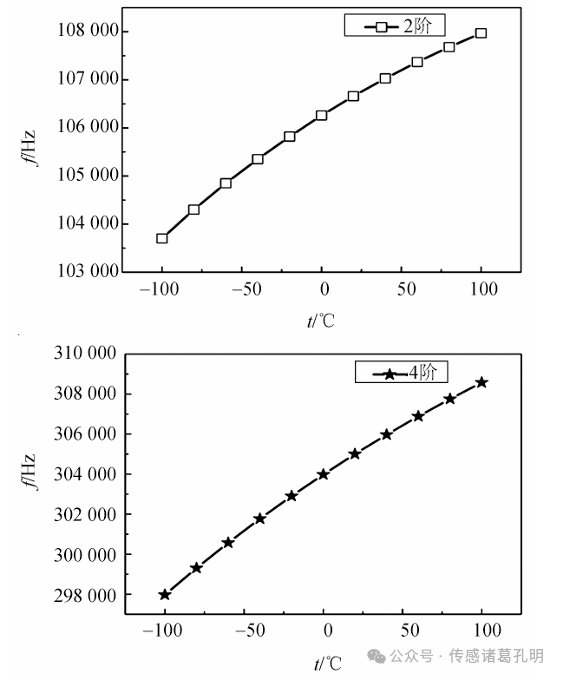
Figure 4: Temperature-Frequency Relationship of Different Modes
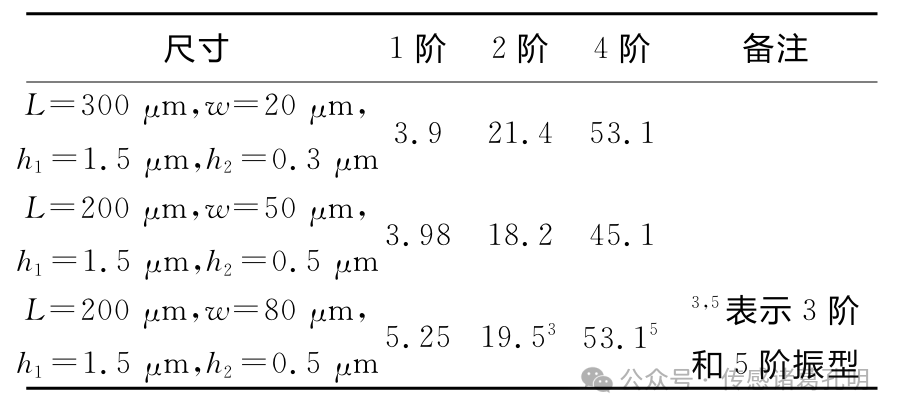
Table 1 lists the sensitivity data of cantilever beams of different sizes under various modes. Analyzing this data reveals that the sensitivity of the second-order bending mode can reach about 20 Hz/°C, far exceeding that of the first-order mode. This significant increase in sensitivity allows the sensor to detect smaller temperature changes, ensuring high-precision temperature measurement.
Table 1: Modal Shapes and Sensitivity of Cantilever Beams of Different Sizes
Experimental Verification: Accurate Measurement of Q Value and Frequency Characteristics
Theoretical analysis needs to be validated through experiments to transform into reliable technical solutions. The research team used a laser Doppler vibration testing system (Figure 5) to accurately measure the vibration characteristics of the cantilever beam. This non-contact measurement method avoids interference with the sensor structure, allowing for the acquisition of real and reliable vibration data.
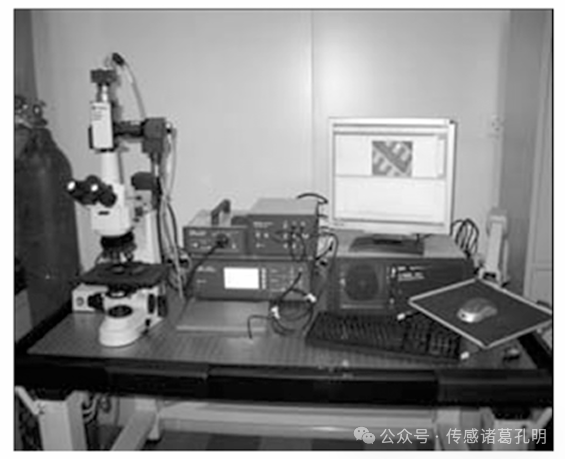
Figure 5: Laser Doppler Vibration Testing System
The test results (Figure 6) show that in an air environment, the Q value of the second-order bending mode is the highest, approaching 150, far exceeding that of the first and third modes. The Q value is a key indicator of the performance of resonant systems, reflecting the ratio of energy stored in the system to the energy dissipated per cycle. A high Q value means sharper resonance peaks, making it easier to accurately detect resonant frequencies, and also indicates stronger suppression of external interference by the sensor.
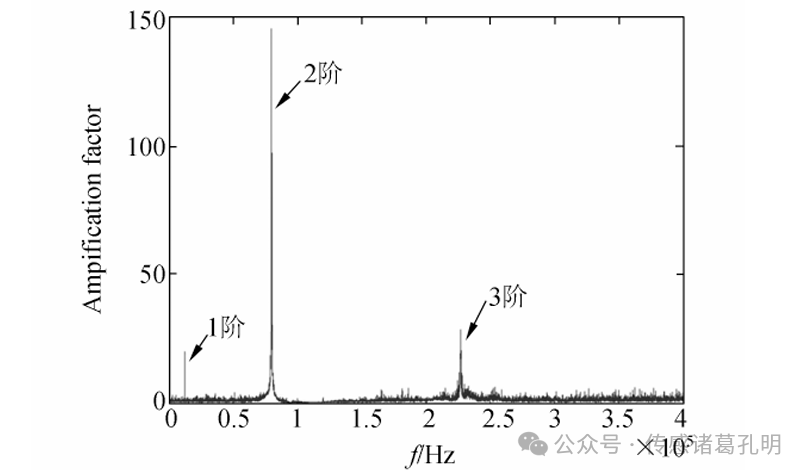
Figure 6: Bending Vibration Frequency Characteristics of the Cantilever Beam
The experiment also found that although the fourth-order bending mode has higher theoretical sensitivity in some cases, its Q value is relatively low, making it difficult to obtain stable output signals in practical applications. This finding emphasizes the need to consider both sensitivity and signal quality in actual sensor design, rather than simply pursuing a single performance indicator.
4. Performance Summary: Why Choose the Second-Order Bending Mode?
Based on comprehensive simulation and experimental results, this sensor exhibits the best overall performance under the second-order bending mode, specifically reflected in the following aspects:
High Q Value and Signal Stability
Q value of about 150 is considered high among MEMS sensors operating in air environments. The direct benefit of a high Q value is sharper resonance peaks, making frequency detection more precise and stable. In practical applications, this means the sensor can maintain reliable performance even in complex environmental noise, significantly reducing the requirements for subsequent signal processing circuits.
Excellent Sensitivity and Resolution
Sensitivity of about 20 Hz/°C combined with modern frequency detection technology achieving 1Hz resolution allows the sensor’s temperature resolution to reach 0.05°C. This indicator can meet the needs of most meteorological monitoring and industrial control applications, and even has competitiveness in certain high-precision measurement scenarios.
Outstanding Frequency Temperature Coefficient
Frequency temperature coefficient of 1.9×10⁻⁴/°C is far superior to conventional cantilever beam resonators and traditional CMOS temperature sensors using diodes or transistors as sensitive elements. This characteristic ensures that the sensor maintains stable sensitivity across the entire working temperature range, improving measurement consistency and reliability.
Simplified Detection Circuit Design
Using the second-order bending mode combined with ZnO piezoelectric materials, due to the high output signal amplitude and Q value, the design of the detection circuit becomes relatively simple. This not only reduces the overall complexity and cost of the system but also improves the reliability and stability of the product, making it particularly suitable for applications requiring large-scale deployment.
5. Conclusion and Outlook
Technological Breakthroughs and Innovative Value
This article presents a resonant MEMS temperature sensor based on Al/SiO₂ double-layer cantilever beams, achieving technological breakthroughs in several aspects. First, by ingeniously utilizing the thermal mismatch effect, it realizes direct conversion from temperature to frequency, avoiding the signal conversion steps found in traditional sensors; second, it adopts frontside etching technology, solving compatibility issues with traditional CMOS processes; finally, through systematic simulation and experimentation, the optimal working mode—second-order bending mode—was determined, achieving the best balance between sensitivity and signal quality.
Application Prospects and Development Directions
This sensor is particularly suitable for meteorological temperature monitoring, as its frequency output characteristics enable it to adapt to the requirements of long-distance transmission and complex electromagnetic environments. Additionally, it has broad application prospects in industrial process control, environmental monitoring, and medical devices.
With the rapid development of smart manufacturing and Internet of Things technologies, this MEMS temperature sensor, which possesses advantages such as frequency output, high sensitivity, and CMOS process compatibility, is bound to play an increasingly important role in various fields, bringing a new wave of innovation to temperature measurement technology.
Content of this article is organized from Design of Resonant MEMS Temperature Sensor[J]. Optical Precision Engineering, 2010, 18(9): 2022-2027.