
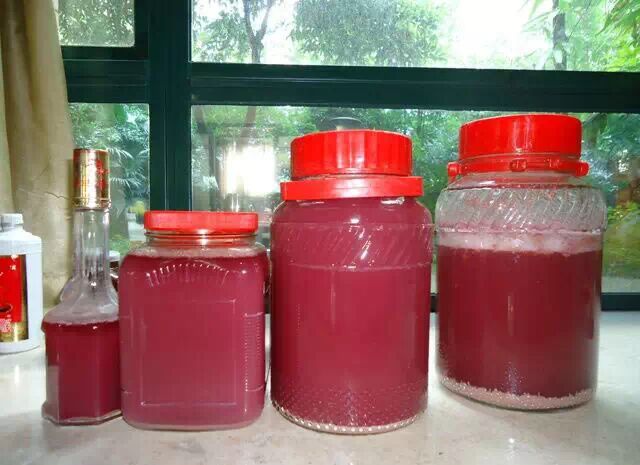
From familiar foods like pickles, cured meats, and medicinal wines to soy milk, yogurt, cookies, and the trendy homemade wines and fruit enzymes, fashionable homemade foods have entered people’s lives.
As the season brings a variety of ingredients, many homemade food enthusiasts are eager to try their hand again. But is homemade food really safe?
The Chinese Center for Disease Control and Prevention has released research data indicating that microbial food poisoning (poisoning caused by consuming food contaminated with pathogenic bacteria or toxins) ranks first in food poisoning causes.
When you are making homemade food, various “dangers” may be quietly approaching you.
Associate Professor Zhu Yi from the College of Food Science and Nutritional Engineering at China Agricultural University suggests that when making industrial foods like homemade wine, self-pressed oil, and fruit enzymes, there are potential hazards in ingredient selection, processing, and hygiene control. Some foods are not suitable for home production.
Less Craftsmanship: Toxins Generated in Homemade Foods Are Hard to Remove
After retiring, Ms. Guo became fascinated with homemade foods. In addition to a cup of self-pressed soy milk every day, she also made 20 kilograms of wine and 10 kilograms of fruit enzyme last year. In Ms. Guo’s “circle of friends”, there are many others who are equally enthusiastic about homemade foods.
Ms. Guo said the common practice is to mix 10 kilograms of grapes with 3 kilograms of white sugar, wash the grapes, and put them in a container with the sugar, “fermenting for 2 months before it can be consumed”.
Ms. Guo is very satisfied with her homemade wine and even took it out to entertain guests during the Spring Festival. However, she was unaware that while drinking homemade wine, some people ended up in the hospital.
In November 2008, Mr. Zhang from Ningbo, who had always enjoyed homemade wine, felt dizzy after drinking over 1 kilogram of wine, and later his vision became blurry. Doctors diagnosed him with toxic acute optic neuritis.
In 2013, a man in Chongqing experienced vomiting and diarrhea after drinking his wife’s homemade wine and was eventually hospitalized. The diagnosing doctor, Ren Xiaobao, deputy director of the emergency department at Southwest Hospital, explained that homemade wine has many nuances; otherwise, it can easily be toxic or have excessive bacterial counts. “The home brewing process does not eliminate methanol and fusel oil.”
Industry insiders indicate that methanol removal is a relatively mature process in industrial winemaking, but private brewing generally lacks this process and the corresponding detection methods and standards.
Researchers Lei Zhouxi and Xiao Fengxia from Guangzhou University of Chinese Medicine compared the methanol content in homemade wine with that in commercially available wine and found that 2 out of 10 homemade wines exceeded national standards for methanol content, while the methanol content in 3 commercially available wines did not exceed national standards and was significantly lower than that in the 10 homemade wines.
Self-pressed oil faces similar issues. He Dongping, an expert from the National Grain and Oil Standard Committee, believes that self-pressed oil does not produce toxins, but if the raw materials have excessive bacterial counts, such as aflatoxins, it is very difficult for households to eliminate them, while enterprises have the technology and processes to remove bacteria and impurities.
Lack of Quality Control: Excessive Bacterial Counts Are Common
Last year, when Ms. Guo made wine, she bought 30 kilograms of grapes and specifically chose the “Jufeng” variety to enhance the sweetness of the wine. Due to the large quantity of grapes, she did not have a sufficiently large ceramic container, so she bought a large blue plastic bucket instead.
During the fermentation process, Ms. Guo said, “As long as you cover it, you don’t need to pay special attention to it.” After nearly two months, she removed the floating fruit pulp from the bucket and, to avoid waste, she used a steaming cloth to squeeze out the remaining wine from the pulp.
However, in the view of Associate Professor Zhu Yi from the College of Food Science and Nutritional Engineering at China Agricultural University, the choice of container in food processing is very important. At home, with only iron pots and utensils, and plastic bottles that may be reused multiple times, this increases food safety risks. “The pH of fermented foods is acidic, which accelerates the corrosion of some containers; some containers are alcohol-soluble, like plastic, which is not suitable for storing wine.”
Additionally, Zhu Yi pointed out that the hygiene environment and cleanliness at home make it difficult to ensure complete sterilization of food, and the operational methods are relatively rough. “Homemade foods lack quality control and sampling inspection processes, and not all home conditions are compatible. Many fermented foods, such as wine and yogurt, are prone to produce mixed bacteria, and the bacterial counts are difficult to keep below standard, affecting food taste and health.”
Associate Professor Fan Zhihong from the College of Food Science at China Agricultural University also believes that many people have a misconception that their homemade food is particularly safe, without any harmful additives. However, if the production process is careless, it can be contaminated by highly toxic pathogenic bacteria, such as botulinum, which can lead to serious injuries or even fatalities.
No Standards: Misunderstandings About Consumption Need Professional Correction
Having heard that fruit enzymes have benefits for beauty, weight loss, and intestinal cleansing, Ms. Guo also made fruit enzymes using dragon fruit, lemon, and sugar. After drinking a small cup every day, she found that the fruit enzyme indeed had digestive benefits, but it did not improve her skin quality as much as she expected.
Zhu Yi pointed out that the so-called enzyme is actually a type of enzyme, and homemade enzyme drinks also contain cellulose and other substances. Cellulose can also aid digestion, and it is not necessarily the enzyme that plays a role. “It is currently unclear what enzymes are produced during the fermentation of vegetables and fruits and what substances they act on, so it is unscientific to infer the role of enzymes in enzyme drinks based on their general biological significance.”
In addition to lacking scientific understanding of the functions of homemade foods, many consumers also lack proper guidance during the production process.
Medicinal wine is one example. Medicinal wine has a long history in China, and many families have tried it. The most common medicinal ingredients for soaking wine include ginseng, deer antler, goji berries, and snakes. Medical evidence shows that some medicinal wines do indeed have health benefits, but if the herbal selections are inappropriate, it can lead to poisoning incidents, with severe cases resulting in fatalities.
Fan Zhihong suggests that families should first recognize that homemade foods are not necessarily safer than those available outside. Making homemade foods requires excellent life experience to ensure that the production process is controllable.
Zhu Yi also mentioned that homemade foods are not without benefits, but one must be aware of the potential risks and seek professional advice when necessary. “California in the United States has enacted a law regarding homemade foods, providing regulations and legal basis for selling homemade foods, while also establishing certain standards for homemade foods. I believe there is a need for similar laws and regulations regarding homemade foods in China.”
Be Cautious of Toxicity in Homemade Foods
● Homemade Wine: Methanol Poisoning Can Cause Blindness and Death
Media reports indicate that Mr. Zhang from Ningbo experienced dizziness and blurred vision after drinking 1 kilogram of homemade wine, and doctors diagnosed him with toxic acute optic neuritis, with his vision dropping to as low as 0.1.
Wang Xinghong, a researcher at the School of Life Sciences at Yunnan University, pointed out that during the fermentation of wine, the main metabolic product of yeast is ethanol, but methanol is also produced. While homemade wine is allowed in some countries, distilling wine to purify brandy is not permitted because improper distillation can easily concentrate harmful substances.
Methanol is highly toxic and is used industrially. Some “fake liquor” incidents that have caused blindness and death are often due to the presence of methanol in the alcohol.
Experts indicate that commercially available table grapes are often not suitable for winemaking because they have lower tannin content, which is an important substance in wine. For homemade wine, it is necessary to use relatively reliable glass or ceramic containers, and the fermentation temperature should not be too high.
● Homemade Yogurt: Mixed Bacteria Cause Diarrhea in Babies
On Baidu, a reporter saw a mother seeking help because her baby experienced diarrhea every time after drinking homemade yogurt.
Yan Xiaodong, director of the Public Nutritionist Training Office of the Jiangsu Nutrition Society, explained, “Homemade yogurt can be adjusted for sweetness according to individual preferences. However, the production process must be very careful to avoid contamination with mixed bacteria; otherwise, it will not only affect the taste of the yogurt but also harm the body.”
Yan Xiaodong stated that homemade yogurt should not use starter cultures because even if the starter culture itself is fine, it can produce mixed bacteria due to improper storage. “The best starter is fresh yogurt purchased from the supermarket, used all at once. If using yogurt made from previous batches, home operations cannot guarantee complete sterility, leading to an increase in mixed bacteria, which can be harmful to health.”
● Fruit Enzymes: Hospitalized After Drinking for Half a Month
Last year, a citizen from Yantai, Xiao Qiu, experienced vomiting and nausea after drinking homemade fruit enzyme beverages for half a month. The beverage he consumed was “fruit enzyme”, but the bacteria produced during fermentation are not necessarily all beneficial, and combined with unsatisfactory hygiene, it led to food poisoning.
Regarding the functions of fruit enzymes, Yun Wuxin and Zhu Yi both hold skeptical views.
The uncertainty of “fruit enzymes” is even greater. “Fruit enzymes” is actually a simple fermentation process: during bacterial metabolism, sugar is converted into alcohol, lactic acid, acetic acid, and various enzymes. “It is not unreasonable to call these enzymes ‘fruit enzymes’, but the problem is that under such ‘homemade’ simple conditions, it is impossible to select the types of bacteria or analyze the produced enzymes.” It is not a controllable task to produce enzymes that are beneficial for weight loss, beauty, and immunity through homemade fruit enzymes.
● Homemade Pastries: Excessive Additives and Sugar Intake Are Issues
Ma Zhiying, technical director of the Shanghai Food Research Institute, has stated that most pastries, such as cakes, bread, and cookies, require the addition of large amounts of oil, sugar, cheese, and butter during production; otherwise, the taste and flavor will be poor. For example, the bread and cookies sold in the market are fragrant because they contain a lot of butter and sugar, including trans fats, which can burden the body when consumed in excess.
Homemade pastries can control the amount of sugar and oil, but there is also the problem of excessive additives. Each ingredient may contain additives, and when combined, long-term consumption may lead to excessive intake of additives. Therefore, home DIY needs to ensure a balanced diet and not make the same food every day; occasionally eating traditional steamed buns made from mixed grains is also good.
Additionally, parents who frequently make bread, cakes, and cookies for their children should pay extra attention to the intake of additives and avoid giving them these foods every day.
● Homemade Medicinal Wine: Aconitine Poisoning, Heart Stopped 5 Times
Last year, a patient was admitted to the emergency department of Zhongda Hospital affiliated with Southeast University due to aconitine poisoning from drinking homemade medicinal wine, experiencing five cardiac arrests and nearly losing his life. Dr. Xu Changsheng from the emergency center of the hospital reminded citizens to be cautious when making medicinal wine with Chinese herbs and not to trust folk prescriptions.
Dr. Chu Xiaowu, director of the Traditional Chinese Medicine Department at Tsinghua University First Affiliated Hospital, suggested that the soaking process should be cautious with four types of Chinese herbs: first, “Maqianzi”; second, “Chuanwu” and “Caowu”; third, “Water leeches”; fourth, “Cang’erzi”. Some of these herbs are toxic and should not be used as medicinal slices for soaking wine.
Homemade medicinal wine should be made under the guidance of a physician when purchasing herbs and using medicinal wine recipes, and should be consumed in conjunction with one’s own health conditions.
Some experts also suggest that medicinal wine should be consumed in moderation during the summer, especially for those with a yin deficiency and yang excess constitution. Patients with liver and kidney diseases, digestive ulcers, hypertension, allergic diseases, and heart failure should avoid it.
● Homemade Oil: Aflatoxin is a Strong Carcinogen
Yun Wuxin, a PhD in Food Engineering from Purdue University, has stated that homemade “ground oil” poses various risks. During high-temperature processing, ground oil can form some benzo[a]pyrene, a carcinogen. Additionally, due to the high unsaturated fat content, plant oils are prone to oxidation and deterioration. Before visible changes or flavor alterations occur, they may have already exceeded national standards.
The greater risk of ground oil lies in aflatoxins. Whether peanuts, soybeans, or rapeseed, there is a possibility of aflatoxin contamination. During the refining process of oil, most aflatoxins are removed, so refined oil is less likely to exceed aflatoxin standards. However, homemade oil, which is not refined, has a high possibility of exceeding standards.
Public information indicates that aflatoxin is currently recognized as a strong carcinogen.
Of course, Yun Wuxin also acknowledges that some beneficial components, such as vitamin E and phytosterols, are present in plant oils, but some of these are also removed during refining. From a nutritional perspective, homemade oil has certain advantages over refined oil.
● Homemade Pickles: Be Cautious of Nitrites
Nitrites are a class of strong carcinogens that can easily appear in pickled foods. Reports indicate that whether pickles or salted vegetables, the nitrite content is highest during the first 1-3 days after pickling, with the content increasing during this period.
Generally, from the third day onwards, the oxygen in the pickling jar is consumed due to microbial proliferation, and the nitrate content in the vegetables gradually decreases due to oxidation, so the nitrite content in the pickles will gradually decrease and stabilize over a period of about 15 days. Renowned molecular microbiologist and academician Zhao Guoping stated in an interview that if properly pickled, the surface of the pickles should smell bad, indicating a high nitrite content.
When making pickles, it is best to choose ordinary earthenware jars, as the lactic acid bacteria in the air can better enter the jar to aid fermentation. When sealing the pickles, ensure that the total amount of vegetables and water occupies more than 80% of the container’s space.
● Homemade Fermented Soy Products: Botulinum is Very Scary
Last year, a woman working in Xinjiang experienced botulinum poisoning after eating homemade stinky tofu and required botulinum antitoxin serum to save her life. Her husband ran around various hospitals in the city without finding it, and it was ultimately the serum stored by a kind-hearted citizen that saved her life.
Doctors say that botulinum toxin is one of the most toxic substances known, with toxicity exceeding that of arsenic.
Homemade stinky tofu, fermented soybeans, and other fermented foods are prone to botulinum poisoning.
Fan Zhihong stated that soy products do not have particularly good effects on inhibiting mixed bacteria during fermentation, and if not made properly, the risk of contamination by mixed bacteria is very high. “Botulinum is one of them, and it is the most terrifying, with extremely high toxicity that can be fatal in excessive amounts.”
(Excerpt from the Beijing News, Authors: Guo Tie, Zhao Jixiang)
Intern丨Qin Shitao
Editor丨Tang Xiaorong
|
How WeChat Users Can Access and Share |
|
Click the upper right corner → Send to friends Click the upper right corner → Share to Moments or Tencent Weibo Click the upper right corner → Copy link to send to your computer for viewing |
|
How to Subscribe to People’s Daily WeChat |
|
Add friends → Search for WeChat public account: People’s Daily Add friends → Search for number: people_rmw Click the upper right corner → View public account → Add to follow |
↓↓↓ Click the “Read the original” link to read more content. If you like this article, please give it a thumbs up.