Recently, the high-end storage chip market has indeed been experiencing an exceptionally strong price surge, with some categories seeing astonishing price increases. The following summarizes several types of storage chips that have seen significant price hikes recently, allowing you to quickly understand: Storage chips have seen the following price increases: DDR5 memory has a monthly increase of 102%, for example, the price of 16Gb chips jumped from $7.68 at the end of September to $15.5. DDR4 memory has a monthly increase of over 90%. Due to squeezed production capacity and tight supply, its price increase even surpassed that of the more advanced DDR5. High Bandwidth Memory (HBM) prices have risen over 50%, primarily used in AI servers, such as the HBM4 supply agreement between SK Hynix and NVIDIA, with prices increasing over 50% compared to current products. Graphics card memory has increased by 20%-30% in the past three months due to tight supply of GDDR6X and GDDR7, driving up the prices of high-end gaming graphics cards and AI acceleration cards overall.
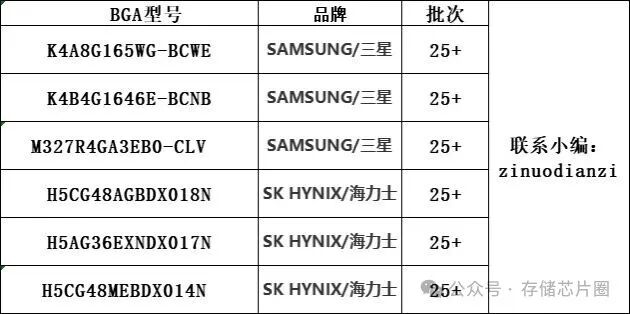
The core reasons behind the price increase: This price surge is not caused by a single factor but is driven by multiple structural changes: · Explosion of AI demand: This is the core driving force. Training and running large AI models require a significant number of AI servers, with the DRAM usage of a single AI server being eight times that of traditional servers, and NAND Flash usage being three times. This directly leads to massive demand. · Structural shift in production capacity: To meet the higher profits from AI demand, major chip manufacturers like Samsung, SK Hynix, and Micron have shifted a large portion of their production capacity to HBM and DDR5. This has severely squeezed the supply of older process products like DDR4 and LPDDR4 used in traditional consumer electronics (such as smartphones and computers), leading to a “planned sacrifice” and exacerbating supply tightness across the board. · Upstream costs and market expectations: The costs across the entire chip manufacturing chain, from wafers to packaging materials, are rising. At the same time, the “daily price changes” in the market environment have intensified panic among downstream manufacturers, who are stockpiling and placing excess orders to lock in costs, further driving up prices.
Impact on end products: The cost of storage chips will ultimately be passed on to the electronic products purchased by consumers: · Smartphones and computers facing price increases: Manufacturers such as Xiaomi, Lenovo, Dell, and HP have issued warnings that they may adjust product configurations or directly raise prices in response to rising costs. · Greater impact on the low-end market: For products like low-end smartphones, which already have narrow profit margins, the significant rise in storage chip costs will bring immense pressure, with some models potentially facing a situation where “the more produced, the more losses incurred.”
Future market outlook: Industry insiders generally believe that this round of high demand for storage chips driven by AI may last longer and be stronger than previous cycles. · Continued price increases: Multiple institutions and industry executives predict that the trend of tight supply and rising prices for storage chips will last at least until the first half of 2026. · Role of domestic manufacturers: Chinese storage companies like Yangtze Memory Technologies and ChangXin Memory Technologies are seen as key players in alleviating future supply tightness, and the market is closely watching their progress in ramping up production capacity for new products like DDR5. We hope the above information helps you gain a more comprehensive understanding of the current state of the storage chip market. If you are particularly interested in the future price trends of a specific category of chips (such as mobile memory or solid-state drives), please contact us for more specific analysis.