



Click the blue text above to get more exciting content!

 Abstract
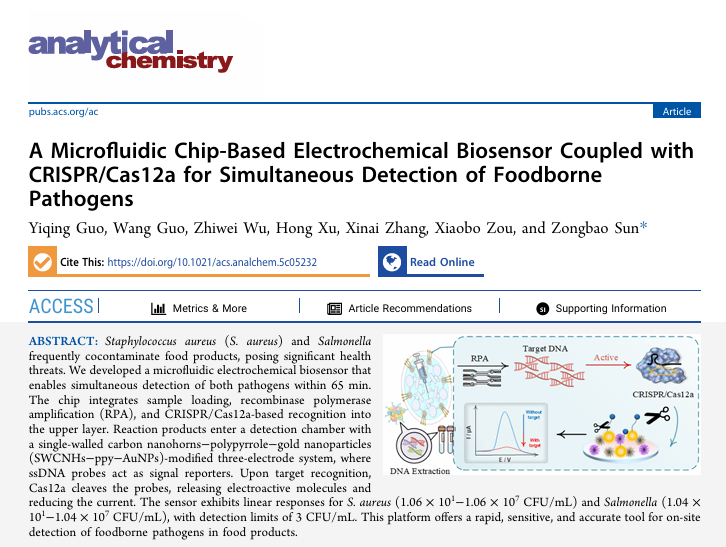
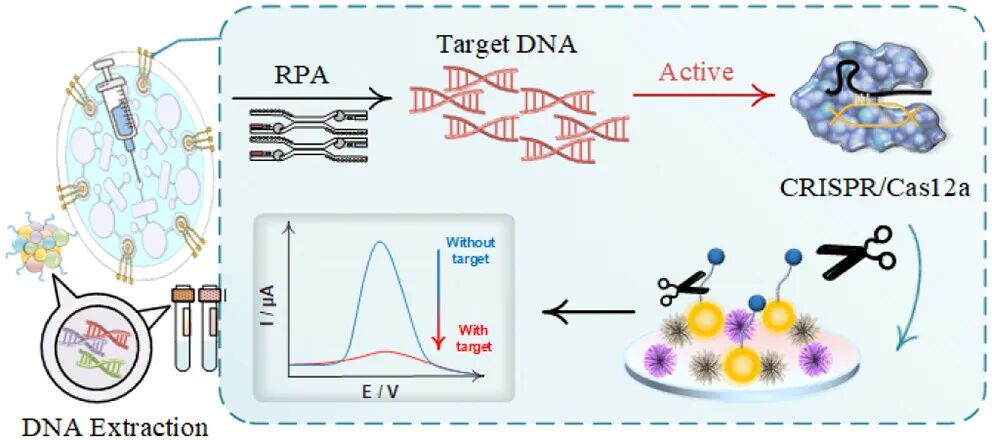
Staphylococcus aureus (S. aureus) and Salmonella frequently co-contaminate food, posing a significant health threat. We developed a microfluidic electrochemical biosensor capable of simultaneously detecting these two pathogens within 65 minutes. The chip integrates sample loading, recombinase polymerase amplification (RPA), and CRISPR/Cas12a-based recognition functions in its upper layer. The reaction products enter a detection chamber equipped with a three-electrode system modified with single-walled carbon nanohorns–polypyrrole–gold nanoparticles (SWCNHs–ppy–AuNPs), where single-stranded DNA probes act as signal reporting molecules. Upon target recognition, Cas12a cleaves the probes, releasing electroactive molecules and reducing the current. The sensor exhibits a linear response for S. aureus (1.06×10¹–1.06×10⁷ CFU/mL) and Salmonella (1.04×10¹–1.04×10⁷ CFU/mL), with a detection limit of 3 CFU/mL. This platform provides a rapid, sensitive, and accurate tool for on-site detection of foodborne pathogens.
 Introduction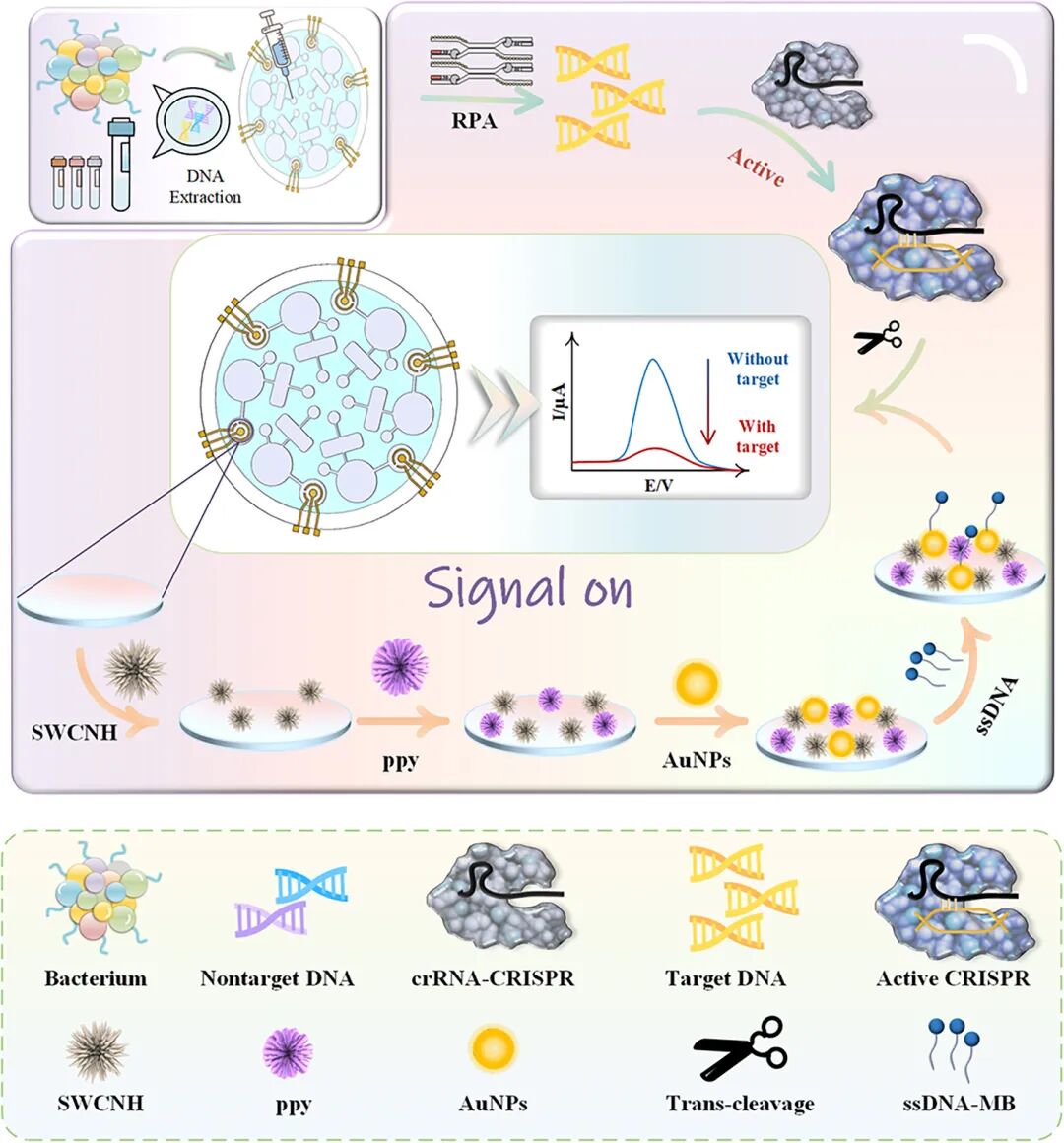
Schematic diagram of the portable electrochemical biosensor detecting target substances
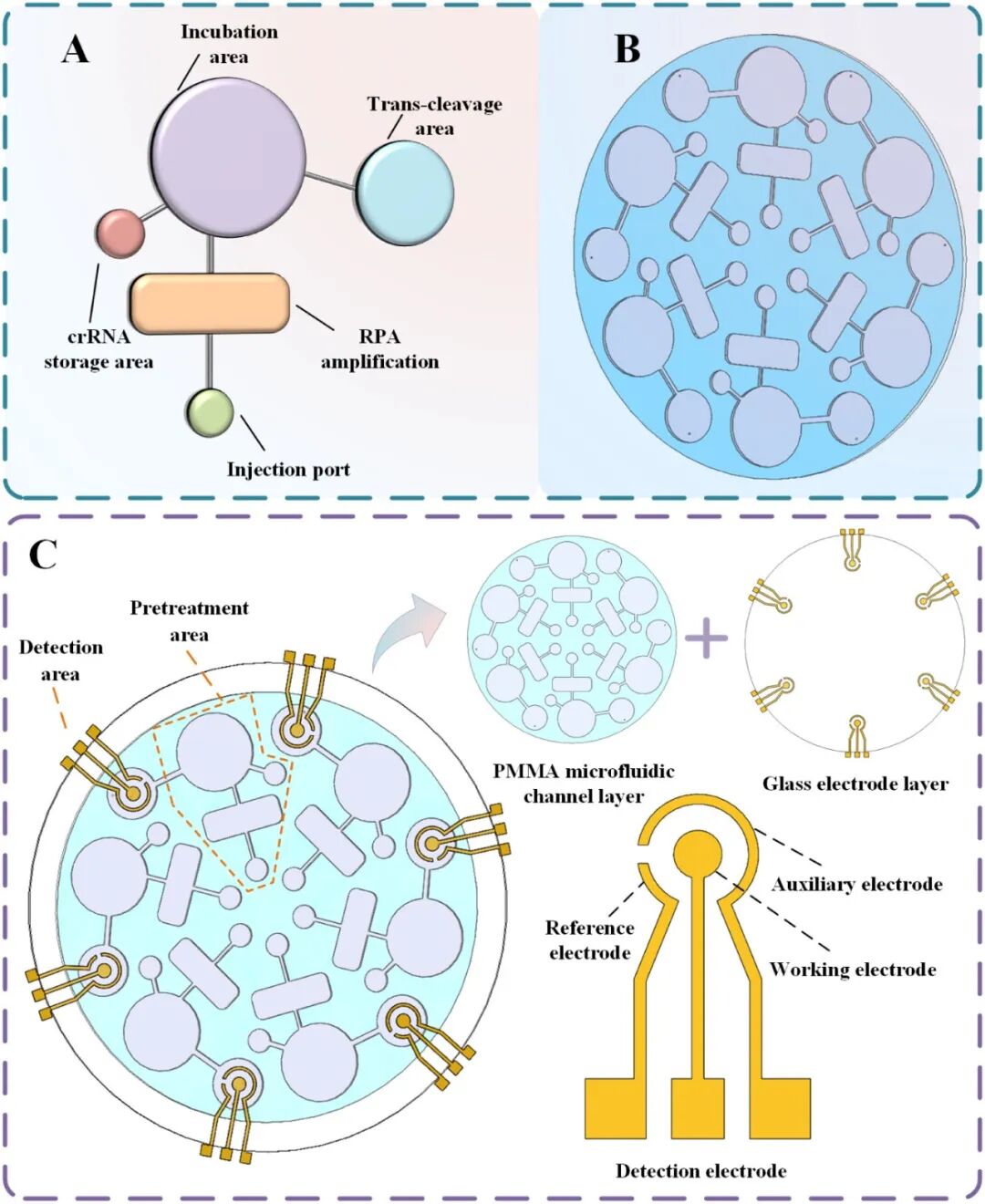
(A) Channel analysis; (B) Upper chip structure; (C) Overall chip comprehensive analysis.
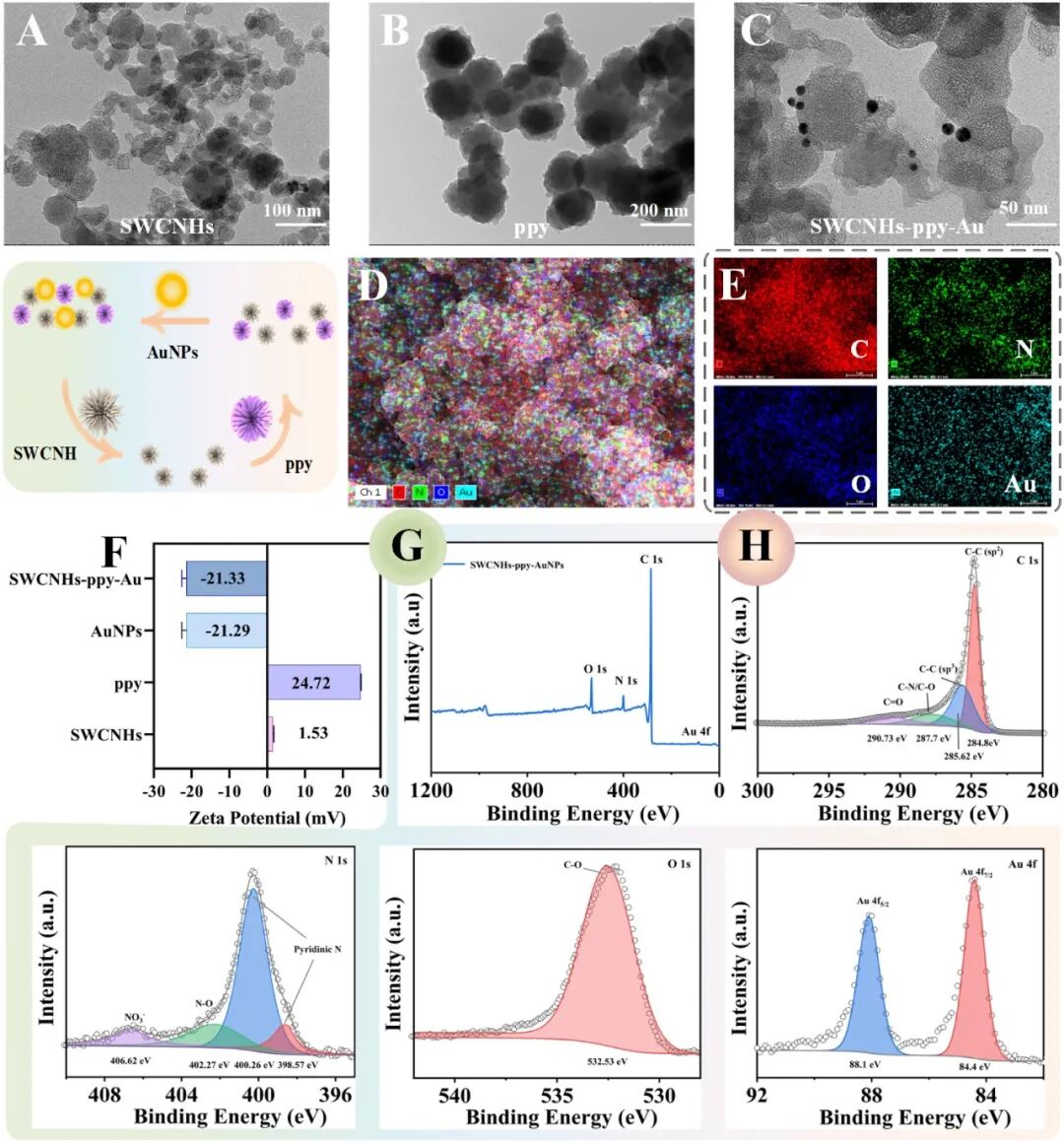
(A) Scanning electron microscope (SEM) images of single-walled carbon nanohorns (SWCNHs), (B) polypyrrole (ppy), and (C) single-walled carbon nanohorns-polypyrrole-gold (SWCNHs–ppy–Au). (D) Energy-dispersive X-ray spectroscopy (EDX) elemental distribution maps of carbon (C), nitrogen (N), oxygen (O), and gold (Au) in SWCNHs–ppy–Au. (E) Zeta potential graph of the stepwise synthesis of SWCNHs–ppy–Au. (F) X-ray photoelectron spectroscopy (XPS) curves of SWCNHs–ppy–Au. (G) XPS spectra of carbon 1s, nitrogen 1s, oxygen 1s, and gold 4f.
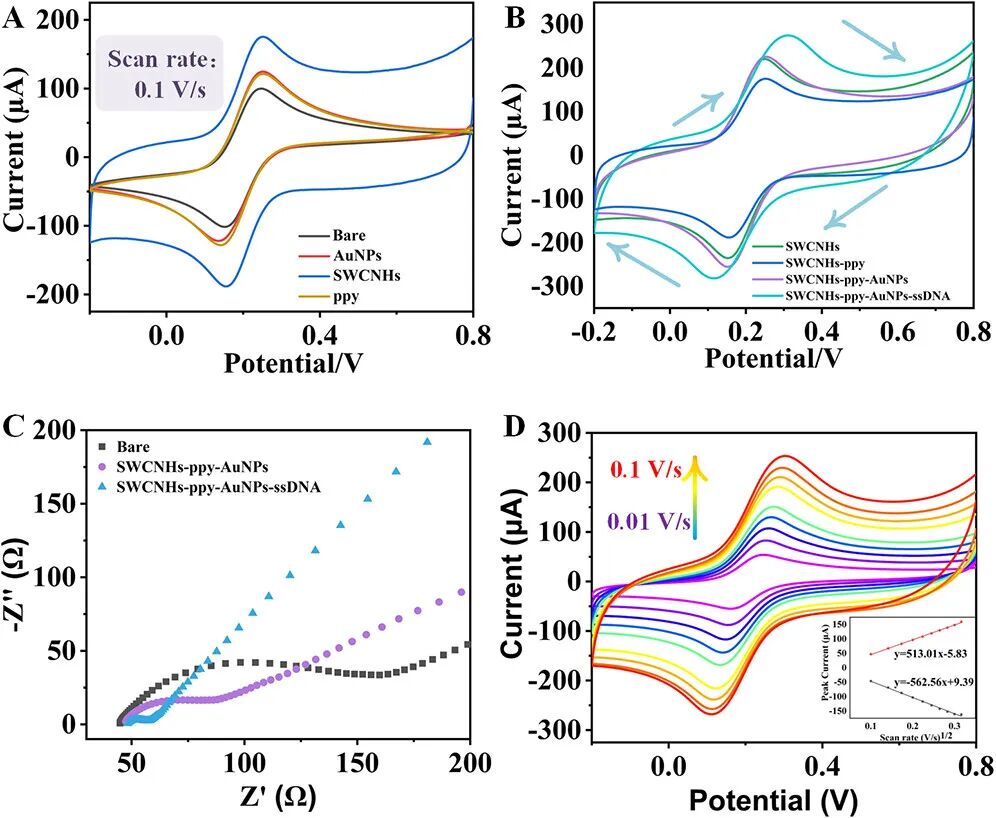
(A) Cyclic voltammetry curves of AuNPs, SWCNHs, and ppy. (B) Cyclic voltammetry curves of SWCNHs–ppy, SWCNHs–ppy–AuNPs, and SWCNHs–ppy–AuNPs–ssDNA. (C) Electrochemical impedance spectroscopy curves of SWCNHs–ppy–AuNPs and SWCNHs–ppy–AuNPs–ssDNA. (D) Linear relationship between cyclic voltammetry peaks of SWCNHs–ppy–AuNPs–ssDNA and the square root of the scan rate.
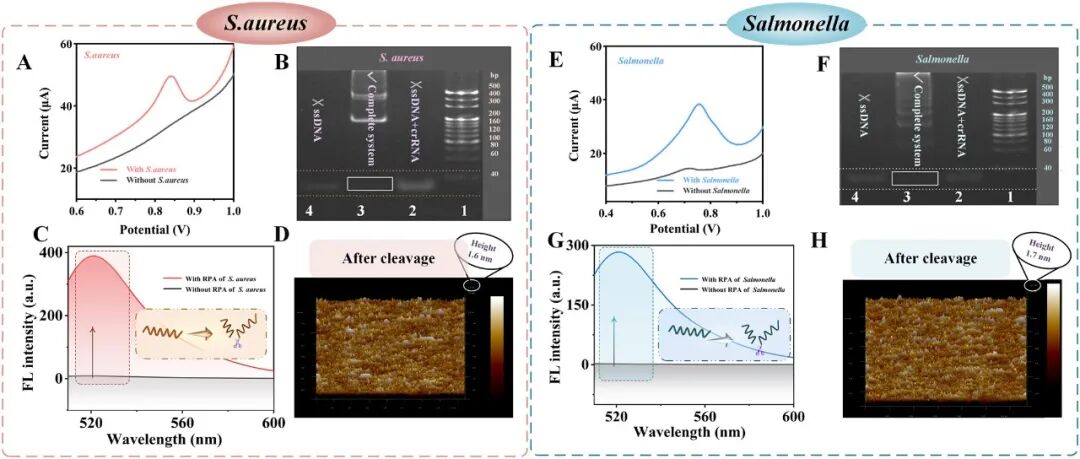
CRISPR recognition (A) electrochemical responses before and after detection of Staphylococcus aureus and (E) Salmonella. (B) PAGE characterization of CRISPR-mediated cleavage conditions for Staphylococcus aureus and (F) Salmonella. (C) Comparison of fluorescence responses of the CRISPR system for Staphylococcus aureus and (G) Salmonella with and without target DNA. (D) Fragmentation of ssDNA in CD spectra before and after CRISPR cleavage for Staphylococcus aureus and (H) Salmonella.
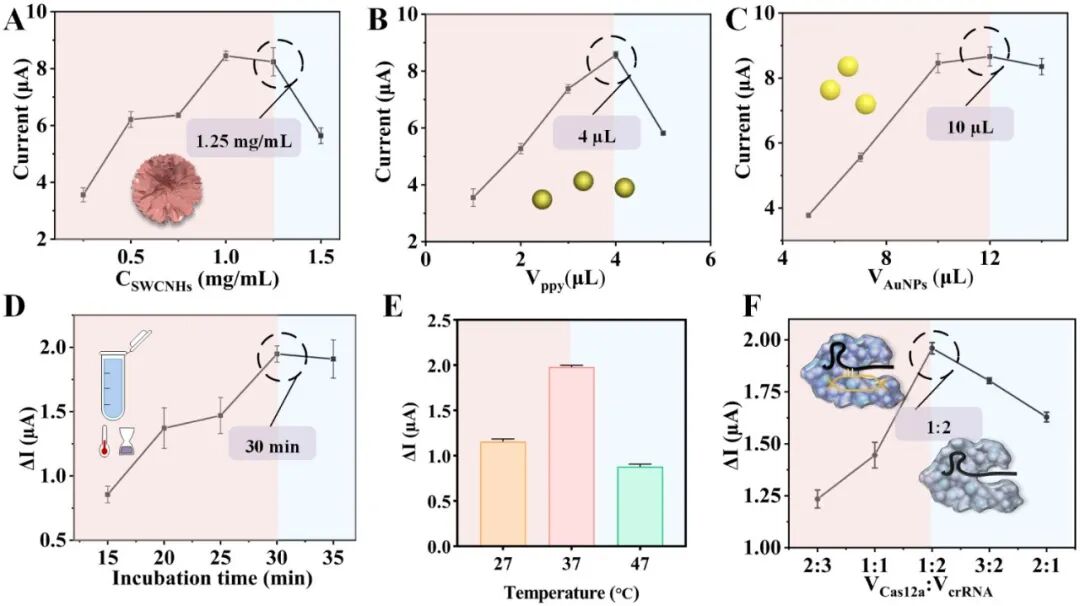
Optimization of (A) single-walled carbon nanohorn concentration, (B) polypyrrole volume, (C) gold nanoparticle volume, (D) incubation time, (E) temperature, and (F) the ratio of Cas12a to crRNA.
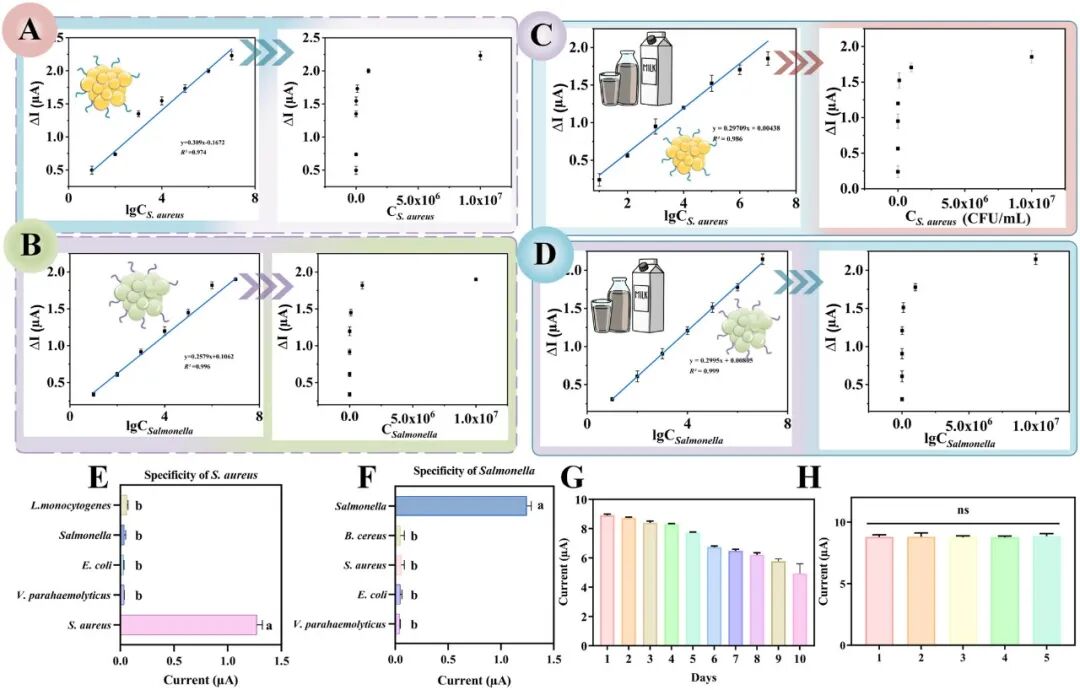
ΔI responses to different concentrations of (A) Staphylococcus aureus (1.06×10¹–1.06×10⁷ CFU/mL) and (B) Salmonella (1.04×10¹–1.04×10⁷ CFU/mL) in saline. ΔI responses to different concentrations of (C) Staphylococcus aureus (1.07×10¹ CFU/mL to 1.07×10⁷ CFU/mL) and (D) Salmonella (5.3×10¹ CFU/mL to 5.3×10⁷ CFU/mL) in milk. (E) Specificity of Staphylococcus aureus and (F) Salmonella. (G) Stability and (H) reproducibility of the prepared SWCNHs–ppy–Au–ssDNA composite materials. Statistical significance is as follows: different letters indicate significant differences, p < 0.0001; the same letters indicate no significant difference, p > 0.05; “ns” indicates no significant difference, p > 0.05.
Related results were published in the international academic journal Analytical Chemistry as “A Microfluidic Chip-Based Electrochemical Biosensor Coupled with CRISPR/Cas12a for Simultaneous Detection of Foodborne Pathogens”.
Literature link: Click to read the original text
https://doi.org/10.1021/acs.analchem.5c05232
Disclaimer:The original content represents only the original translation, which is limited in quality and is intended for academic exchange. This platform does not claim copyright of the original text. If there is any infringement, please contact us for removal.
If there are any omissions in the literature interpretation, we sincerely apologize. Please contact the author team promptly (WeChat ID: analytichemistry, email:chemanalytical@163.com), and we will make corrections or reissue the manuscript as soon as possible. Thank you for your understanding!


Note For submissions, recommendations, and collaborations, please contact us at:[email protected]
 Editor For communication and collaboration, please add the editor’s WeChat.