Artificial Intelligence (AI) refers to a new technological science that studies and develops theories, methods, technologies, and application systems used to simulate, extend, and enhance human intelligence. It is also known as “smart machines” or “machine intelligence,” which refers to the intelligence exhibited by machines (mechanics) created by humans. Generally, AI refers to technology that enables machines to achieve goals that require human wisdom through artificially created ordinary computer program software.
What Is Intelligent Drilling?
There are broad and narrow definitions of AI drilling in the industry. The broad definition of AI drilling refers not only to the AI application in drilling, logging, and completion operations themselves but also encompasses a wider range of operations, including everything up to finding oil reservoirs and maximizing production capacity. The narrow definition of AI drilling refers only to the AI application in drilling, logging, and completion operations themselves, commonly known as automated drilling. From the broad definition of AI drilling mentioned above, it is clear that AI drilling encompasses various fields such as petroleum geology, geophysical exploration, logging, drilling, oil extraction, reservoir engineering, as well as mechanics, automation, and computer science. These fields were previously independent, non-continuous processes, but after AI integration, they must work together online to form an organic whole and collaborate effectively. Therefore, AI drilling aims to automatically adjust the wellbore design trajectory based on downhole geological conditions and reservoir locations, enabling the automatic search and drilling into the best reservoir positions to achieve maximum production capacity.
The Intelligent Drilling Process
The first step provides geological reservoir characteristics, described by geological and geophysical departments, forming a specific AI drilling expert system. The second step involves real-time measurement and control during drilling, supported by advanced drilling measurement and control technologies, utilizing the relatively mature and developing 5W (MWD, LWD, SWD, PWD, and FEWD) as tools, combined with directional drilling and downhole closed-loop control technologies, to measure and control in real-time during drilling (such as while drilling logging, while drilling seismic), promptly collecting various geological, stratigraphic, environmental information, and drilling status around the wellbore and in front of the drill bit into the downhole computer. The third step is to accurately identify the target reservoir, where a powerful downhole AI drilling computer system intelligently judges based on the latest downhole data available, combined with pre-known geological exploration data, to discover the target oil and gas reservoir and precisely determine its location, size, shape, thickness, and orientation. The fourth step optimizes the best drilling process to maximize production capacity as the objective function, optimizing various process parameters to automatically drill and find the best trajectory through the oil and gas layers. The fifth step provides direct actual data, offering the closest first-hand information to actual conditions, such as reservoir description results and the actual wellbore trajectory and conditions of various wellbore segments, and based on this, proposes preliminary recommendations for the best oil extraction methods. However, each link in the above process requires the involvement and control of AI, hence the term broad AI drilling. Practice has shown that the drilling process in petroleum engineering is a highly complex and uncertain process. Not only is the information collected during drilling and the environmental conditions often imprecise, uncertain, and approximate qualitative non-numerical random fuzzy information, but also real-time rapid drilling control must be based on this random fuzzy information. Clearly, solving these challenges and achieving broad AI drilling will require further efforts in the future. Currently, the urgent task in developing AI drilling is to first develop automated drilling to realize narrow AI drilling.
Drilling Rig Operation System
The future AI drilling rig operation system located on the ground must be able to achieve the following advanced functions: Continuous drilling allows for the seamless connection of drill pipes during the drilling process without stopping drilling or pumping, thereby improving drilling efficiency. Continuous tripping allows for the automated completion of the tripping process without stopping to unthread the drill string, replacing traditional rig workers with AI robots that automatically unthread the drill string during tripping. As a result, the intelligent tripping speed has significantly increased, with research from Norway’s West Drilling Products showing that different drill string diameters can achieve tripping speeds of 3600m/h, 2700m/h, and 1800m/h, far exceeding the conventional rigs’ tripping speeds of 600-900m/h. Continuous casing and tubing completion allows for casing or tubing operations to proceed without stopping to make connections, with AI robots completing the threaded connections, thus increasing operational speed; during casing, speeds can reach 900m/h according to research from Norway’s West Drilling Products. Continuous circulation of drilling fluid enables uninterrupted circulation during tripping and drilling, as both processes are continuous, allowing for continuous circulation of drilling fluid. Clearly, continuous circulation of drilling fluid is beneficial for implementing pressure control drilling, enhancing operational safety. Dual-wall drill pipe drilling utilizes dual-wall drill pipes consisting of inner and outer walls, forming an annular space between the inner pipe and the outer wall. Under AI drilling rig control, the dual-wall drill pipe can achieve the following functions: Reverse circulation drilling pumps drilling fluid through the top drive and its rotating joint into the annular space between the inner and outer walls of the dual-wall drill pipe, then discharged from the drill bit’s nozzle, flowing upwards into the annular space between the bottom drill tool assembly and the well wall. Subsequently, when the fluid returns to the blowout preventer assembly, the rotating control head above the blowout preventer can seal the annular space between the inner wall of the dual-wall drill pipe and the well wall, thus allowing the returning drilling fluid and cuttings to only enter the inner pipe of the dual-wall drill pipe through the dual float valve near the well bottom, returning to the surface. This reverse circulation drilling implementation can eliminate the blockage of the cuttings bed and is beneficial for protecting oil and gas reserves. Power supply and information transmission: the inner wall of the dual-wall drill pipe, after insulation treatment, can serve as a coaxial cable to supply power downhole; it can also transmit electrical information bidirectionally, with a data transmission rate of up to 64,000 bits per second, thus enabling high-capacity data to be transmitted bidirectionally in real-time, which is very conducive to promoting AI. Dual-gradient drilling utilizes the different densities of drilling fluids in the dual-wall drill pipe and the lower density clean fluids (such as seawater) filling the annular space above the blowout preventer assembly, forming two pressure gradients, thus enabling dual-gradient drilling, which is crucial for protecting oil and gas reserves and preventing wellbore collapse, especially important in deep-water drilling. No riser drilling eliminates the need for a riser pipe in offshore drilling processes, which typically surrounds the drill string and serves to isolate seawater. Current offshore drilling processes connect the lower end of the riser pipe to the seabed wellhead device, allowing the returning drilling fluid from the well bottom to avoid mixing with seawater above the seabed. However, with the new type of dual-wall drill pipe, since the returning drilling fluid and cuttings have already entered the inner pipe of the dual-wall drill pipe through the dual float valve near the well bottom, they are isolated from seawater, making the use of a riser unnecessary, thus achieving no riser drilling, which is significant for reducing drilling costs and improving economic benefits. Wide drilling fluid density window drilling prevents wellbore collapse by ensuring that the upper limit of the pressure gradient formed by drilling fluid density does not exceed the rock’s fracture strength; preventing blowouts requires that the lower limit of the pressure gradient formed by drilling fluid density does not fall below the pore pressure of the oil and gas reservoir. The difference between this upper and lower limit pressure constitutes a so-called window, which means maintaining the pressure gradient of the drilling fluid within this upper and lower limit range for safe drilling.
Reverse Circulation Drilling Technology
Currently, Norway’s Reelwell company has launched a new dual-wall drill pipe and its reverse circulation drilling technology, suitable for deep-water drilling in the North Sea, expected to be implemented soon. The so-called “one-trip drilling” refers to completing all drilling tasks in one go without changing drill bits, achieving the drilling objective. Therefore, the implementation of “one-trip drilling” requires the collaboration of super long-life drill bits. With the newly developed super long-life drill bits, two “one-trip drills” can complete the task of drilling a well. The first “one-trip drill” is for the surface well section, completing the tasks of installing the surface casing and wellhead device. The second “one-trip drill” completes the remaining well section down to the target oil and gas layer. Clearly, achieving “one-trip drilling” can significantly reduce drilling costs, especially for horizontal well drilling, demonstrating its advantages. The so-called “one-trip logging” refers to completing all logging requirements during a single downhole process. This technology not only measures all necessary logging information during drilling but also takes downhole fluid and core samples, while also providing geological guidance and oil and gas reservoir descriptions during drilling. Evidently, the achievement of these tasks in “one-trip logging” will significantly reduce operational risks and improve the encounter rate and production of oil and gas reservoirs per well. If the aforementioned “one-trip drilling” can be realized, then “one-trip logging” can be conducted simultaneously without occupying additional logging operation time, further simplifying the operational process and effectively reducing logging operation costs. However, the realization of “one-trip logging” is not an easy task, as it still requires solving many challenges related to while-drilling logging technology, such as data transmission and storage issues. Ultra-high temperature and pressure drilling requires the implementation of AI ultra-high temperature and pressure drilling to cope with the high-temperature and high-pressure conditions downhole. The realization of this technology mainly involves developing downhole instruments, tools, and materials that can withstand ultra-high temperatures and pressures, such as Measurement While Drilling (MWD), Logging While Drilling (LWD), near-bit geological guidance instruments, directional tools, downhole batteries, drill bits, completion tools, and drilling fluids, cement, and materials for downhole tubulars. With continuous technological advancements, the issue of these tools’ resistance to ultra-high temperature and pressure is expected to be resolved in the not-too-distant future. For instance, MWD and LWD systems, rotary steerable drilling systems, and screw drilling tools have already achieved maximum temperature tolerances of 200°C, 200°C, and 230°C, respectively, while the maximum temperature tolerance of drilling fluids has reached 260°C, indicating that the realization of ultra-high temperature and pressure drilling is imminent. Currently, Norway’s West Drilling Products Company has developed an AI drilling rig operation system capable of achieving some of the aforementioned functions. However, the comprehensive realization of these functions still requires further development. The downhole AI real-time guiding safe drilling system can perform real-time measurement, control, and optimization of the downhole drill bit, aiming to optimize the drilling process for maximum production capacity, automatically seeking the best trajectory to accurately drill through oil and gas layers. At the same time, it must monitor real-time status and diagnose accidents during drilling, promptly and safely handling accidents to ensure safe drilling. To achieve these functions, this part consists of the following two expert systems.
AI Drilling Real-Time Control Expert System
This expert system’s task is to achieve automatic guidance of the drill bit, automatic selection of the best process parameters, and automatic search for the best wellbore trajectory. Thus, the core component of this system is a new type of intelligent drill bit. This drill bit consists of four parts: sensor measurement, computer data processing and storage, power supply, and communication control. The sensor measurement part is responsible for collecting real-time monitoring data obtained during drilling, such as direction, weight on bit, and rotation speed. The computer data processing and storage part stores geological and geophysical department-provided geological conditions and reservoir characteristics information; it can apply neural network methods to establish drilling process parameter optimization models (such as weight on bit, rotation speed, etc.) with the goal of maximizing oil and gas production, comparing calculated optimal process parameters with real-time data obtained during drilling, and issuing instructions for process parameter adjustments to achieve automatic optimization of drilling. The power supply part provides power through high-speed transmission cables installed within the new intelligent drill pipe (such as the aforementioned dual-wall drill pipe), which also allows the drill bit to transmit information to surface personnel; the communication control part communicates directly with the surface through transmission cables installed within the drill pipe, enabling remote control.
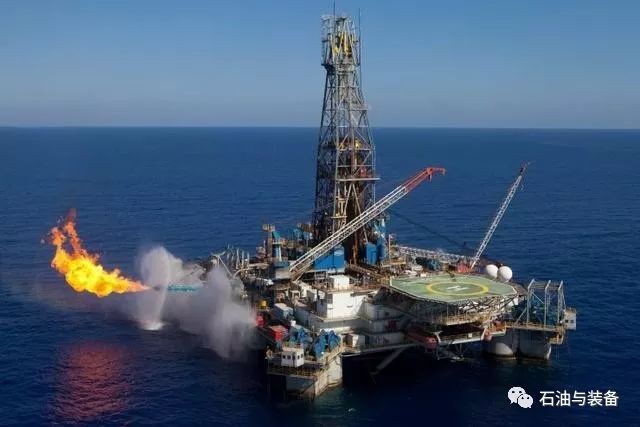
Currently, foreign Apache Petroleum Technology Company has developed an intelligent drill bit that can autonomously consider and communicate directly with surface equipment to control drilling speed and direction. The new intelligent drill pipe developed by foreign oil service companies, equipped with high-speed data transmission cables, meets the needs of intelligent drill bits.
AI Drilling Real-Time Monitoring and Fault Handling Expert System
This system aims to ensure the safety of drilling operations. Existing technologies for diagnosing and handling drilling accidents and complex situations do not meet actual field needs, often making it difficult to avoid unforeseen drilling anomalies. This newly created expert system employs neural network methods to establish a model using Bayesian networks, covering various event types and their associated probabilities. This probability model can utilize past and present data trends along with AI methods to predict drilling process accidents and equipment or sensor failures; its network layout can be used for real-time detection of various accidents related to well control and hydraulics, such as drill string leaks, pump failures, liquid losses, and packer failures. Additionally, this model can evaluate predicted trends, improving prediction accuracy through self-learning and self-calibration, adjusting for distorted sensor data and model uncertainties to ensure precise predictions without false alarms. For example, to prevent blowout accidents, foreign companies have developed an AI blowout preventer liquid control device that employs advanced PLC and touch screens, along with highly reliable PROFIBUS bus systems, to predict and issue timely alarms. Furthermore, to detect potential drill string leaks and pump failures and initiate alarms, foreign companies have developed a new method that uses real-time monitoring data of drilling fluid flow rate trends, simulated pump pressure and flow rate correlations, and other parameters to jointly describe equipment status for assessment; under extreme conditions, it can issue real-time alarms. The first phase of the alarm can determine the risk and potential occurrence time of leaks or pump failures; subsequently, it can accurately identify the type of fault represented by the alarm by treating leaks and pump failures as a whole rather than identifying them separately. This downhole AI real-time guiding safe drilling system has been used on an offshore drilling platform in North America. During a drilling operation on the platform, the system issued six alarms before a drill string leak occurred. Based on this, the operators took timely remedial actions, eliminating catastrophic operational failures and preventing larger-scale economic losses. Moreover, due to the system’s early event detection and rapid problem resolution, it significantly reduced non-productive time.
Drilling Site AI Control Console Utilizing Advanced Integrated AI Technology
This technology integrates comprehensive control over all aspects of pattern recognition, parameter optimization, system optimization, and effect prediction in oil and gas well drilling engineering. Its remote control method is through electrical signals, connected via multi-core cables, with fast response times, capable of real-time reflecting the position of valve handles, with speed and precision superior to traditional pneumatic control methods. The main function of the drilling site AI control console is to “liberate the driller,” meaning it replaces the driller to complete all control tasks, freeing the driller from complex and tense operations, allowing them to be present only for specific situations.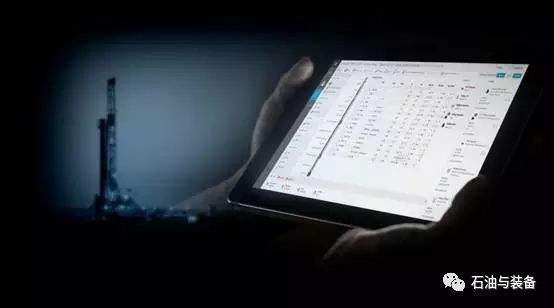 A drilling site AI control console consists of: a rack, explosion-proof plugs, explosion-proof touch computers, explosion-proof buzzers, explosion-proof buttons, and explosion-proof knob switches. The upper part of the rack is equipped with an explosion-proof box containing an explosion-proof touch-type industrial computer, which runs real-time guiding control drilling and real-time monitoring and fault handling system software, such as well shut-in system software. The touch screen includes switch interfaces for each individual blowout preventer in the blowout preventer assembly, valve switch interfaces for the choke manifold, parameter control interfaces, one-click shut-in interfaces, custom combinations of BOP and choke manifold interfaces, and data curves and control record interfaces, etc. On the left side of the lower end of the touch screen is a main control button for starting the computer program, and on the right side is an explosion-proof knob switch; at the bottom of the explosion-proof box, there is an explosion-proof plug and an explosion-proof buzzer, with the explosion-proof plug connected to the input and output terminals of the explosion-proof industrial computer, and the other end connected to the existing blowout preventer control system PLC via multi-core cables. The switch interface for each individual blowout preventer in the blowout preventer assembly visually displays the arrangement of blowout preventers and allows for customization of their arrangement; the valve switch interface for the choke manifold visually displays the arrangement of choke manifold components and allows for customization of their arrangement; both interfaces can be customized based on actual conditions to meet the needs of different wellheads and control systems. The one-click shut-in interface can be customized based on the actual conditions of the wellhead, during which the one-click shut-in program can display the shut-in steps and guide the next steps through indications. The explosion-proof industrial computer and the blowout preventer control system PLC connect via multi-core cables for real-time pressure data transmission, alarm signal transmission, and control valve switching, enabling real-time collection and recording of pressure data for review. To illustrate the implementation process, let’s take well shut-in control as an example. When the explosion-proof industrial computer installs the shut-in system software, simply clicking on the touch screen will allow the explosion-proof touch industrial computer to convert the touch screen signal into a communication signal, sending it to the blowout preventer control system PLC via cables, which will then analyze the signal and convert it into an electrical signal to control the solenoid valves on the choke manifold and other functions. Meanwhile, the touch screen will display the PLC’s returned electrical signal, showing the valve’s switch position and pressure data in real-time. If there is an abnormal pressure at the wellhead requiring an emergency shut-in, simply clicking the start button on the one-click shut-in interface on the touch screen will automatically execute the shut-in procedure and guide manual shut-in steps through prompts. It can also record all shut-in steps, pressure data, etc., for future reference. Clearly, such automation of the shut-in procedure significantly shortens shut-in time, reduces human error, and improves economic benefits.Remote AI Control Center The distribution of oil and gas wells in oil fields, whether on land or offshore, is generally very dispersed and vast. To ensure the normal operation of numerous oil and gas well drilling tasks and achieve AI integration, it is necessary to transmit various images, drilling and completion processes, logging data, and equipment operation and maintenance statuses in real-time to the oil field management department, enabling accurate grasp of reliable first-hand intelligence, timely decision-making and command scheduling, and real-time remote feedback to each oil and gas well, which requires establishing a remote AI control center. Typically, the structure of an AI drilling remote control center includes: Core devices, primarily consisting of data servers and dedicated lines. The server is installed with operating system software, database software, monitoring system software, etc. These software have multiple functions such as active inquiry, data display, data storage, data querying, alarm display, generating current, voltage, and torque curve graphs, etc. Communication platforms can typically utilize wireless local area networks, data transmission radios, GPRS, etc. Utilizing digital network wireless transmission technology for data communication has advantages such as quick installation and opening, convenient maintenance and migration, low cost, and centralized management, especially when using the GPRS method, which can further reduce the number of personnel at the well site and enable remote joint control of various oil and gas well drilling rigs. Earth satellite communications (GPRS) include: data analysis server clusters and deep learning server clusters. The former is used to analyze real-time data during the drilling control process of various oil and gas wells sent by the controlled system, obtaining different types of real-time analysis data and sending it to the deep learning server clusters; the latter is used to combine real-time analysis data with historical analysis data for machine learning to obtain optimization data, then send it to the identified data analysis server clusters; the identified data analysis server clusters can then base their optimization commands on the identified optimization data, sending them to the controlled system. Monitoring devices in the remote AI control center mainly include: remote measurement and control terminals for oil and gas wells, signal/data acquisition devices for well operating parameters, on-site power modules, on-site data display and operation terminals, and sealed explosion-proof electrical boxes, etc. The remote measurement and control terminal consists of a remote control terminal, power supply, and front-end sensors with protective boxes; the remote control terminal includes data acquisition I/O, power supply modules, communication modules/interfaces, antennas, etc.; the protective box is designed to protect the measurement and control system from rain, sun, and dust. The on-site data display and operation terminals in the control center are equipped with LCD screens for display, and panels with operation buttons to configure and display the status of on-site equipment. The metering devices include tension transducers, angular displacement transducers, current and voltage transformers, etc. Currently, in China, the Phoenix Technology Revenue Fund Company has developed a remote drilling system utilizing satellite information transmission; the Weikong Technology Company has developed an oil well remote monitoring system centered around remote measurement and control terminals (RTU), creating favorable conditions for the establishment of an AI drilling remote control center. Globally, foreign oil service companies and technology companies have gradually launched some products related to AI drilling, expected to enter the initial stage of AI drilling by 2025, ushering in a new era of AI drilling, and the vision of “unmanned drilling (no personnel required at the drilling site)” will also be realized in the near future. Thus, AI drilling represents a comprehensive and profound revolution in current drilling technology, which will have a far-reaching impact on the drilling industry and its practitioners, significantly enhancing drilling efficiency, quality, safety, reliability, and economic and social benefits. Therefore, it is evident that China must catch up and vigorously carry out research and development of AI drilling, with a spirit of seizing the day to transition from “following” to “leading” in a short time, fully entering the new era of AI drilling.
Information from Petroleum and Equipment

Exploration Engineering Technology Information
Scan to Follow Us
China Geological Society Exploration Engineering Professional Committee