In the factory in Huizhou, precision circuit boards flow quietly in a dust-free workshop, while hot money from the capital market is pouring into this once-obscure electronic component manufacturer at an unprecedented speed.
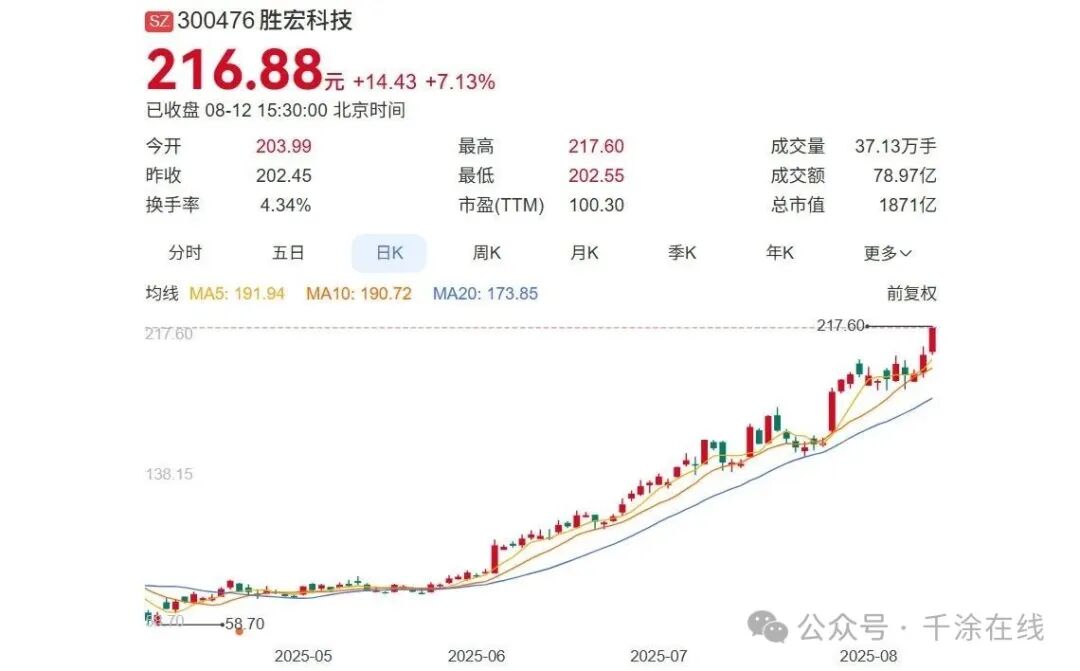
On August 11, 2025, at 3 PM, as the closing bell rang on the A-shares, Shenghong Technology’s stock price settled at202.45 yuan, up 5.24% for the day, reaching a historic high. This PCB (Printed Circuit Board) company based in Huizhou, Guangdong, saw its total market value exceed174.651 billion yuan, with a market value increase of nearly 130 billion yuan in just four months.
Behind this capital frenzy is the investors’ fervent expectation of Shenghong Technology’s deep integration into NVIDIA’s supply chain. Although the company has always maintained a low profile regarding specific customer relationships, an official response stating “we have deeply participated in the new product research and development of international leading customers” has been interpreted by the market as aclear signal of riding on NVIDIA’s fast track.
01 Capital Frenzy: The Soaring Market Value of the Leading Electronic Component Company
In August 2025, Shenghong Technology became one of the brightest stars in the Chinese stock market. Its stock price has increased by545.16% over the past year, far exceeding the 23.74% increase of the CSI 300 index. On August 11, the company’s trading volume reached7.062 billion yuan, with a net inflow of 692 million yuan from major funds.
The market’s enthusiasm has driven up the company’s valuation. On that day, Shenghong Technology’s rolling price-to-earnings ratio reached93.62 times, far exceeding the median price-to-earnings ratio of 60.82 times in the electronic component industry. Among the 108 stocks priced over 100 yuan in the A-shares, the electronics industry occupies 31 seats, with Shenghong Technology leading at a price of 202 yuan.
Institutional investors have long been positioned. By the end of the first quarter,467 institutions held shares in Shenghong Technology, including 462 funds and 5 brokerages, collectively holding 148 million shares, with a market value close to 20 billion yuan.
Supporting the high valuation is an impressive quarterly report: in the first quarter of 2025, the company’s net profit surged339.22% year-on-year, with a gross profit margin jumping to33.37%, achieving a qualitative leap from the 10.7% net profit margin for the entire year of 2024.
02 Secret Cooperation: A Key Piece in NVIDIA’s Supply Chain
On the investor interaction platform on August 11, a straightforward question drew attention: “Is the company involved in supplying NVIDIA’s GB300?”
Shenghong Technology’s response was meticulous: “Due to commercial policy restrictions, the company is not convenient to discuss specific customer names and business situations without permission.” However, the company immediately emphasized that, relying onthree major advantages: R&D technology, manufacturing technology, and quality technology, it has deeply participated in the new product research and development of international leading customers, “tracking customer service throughout the entire process from product planning to technical capability enhancement and expansion plans.”
The market read key information from this cautious statement. This was during the intensive release period of NVIDIA’s new generation AI products—on August 12, NVIDIA launched theRTX Pro 6000 Blackwell GPU, claiming an 18-fold improvement in energy efficiency compared to pure CPU systems.
Industry analysts quickly made connections: the NVIDIA GB200 server has a single GPU value of394 dollars for HDI (High-Density Interconnect) boards, an increase of 298.7% compared to the previous generation H100. As Shenghong Technology holdsthe largest global market share in AI server PCBs, it naturally becomes an indispensable partner for NVIDIA.
03 Technical Barriers: A Moat of Three-Layer Arbitrary Interconnection
Behind the capital market’s frenzied pursuit is the technical moat that Shenghong Technology has built over ten years.
In the high-end PCB field, the company has achievedmass production capabilities for 28-layer eight-stage HDI boards and 14-layer arbitrary interconnection boards, leading domestic peers by 2-3 years. Its breakthrough in PTFE high-frequency material application technology perfectly meets the high-speed transmission needs of AI chips from NVIDIA, AMD, and others.
These technical terms translate into commercial advantages: high-end HDI boards are in short supply due to technical barriers, with global HDI output value expected to grow by 18.8% year-on-year in 2024. Consulting firm Prismark predicts that the compound annual growth rate of AI server HDI will reach16.3% from 2023 to 2028, becoming the fastest-growing category in the PCB industry.
Orders confirm technical strength. In the first quarter of 2025, Shenghong Technology’s contract liabilities skyrocketed from 3.8 million yuan in the same period last year to40.03 million yuan, a tenfold increase, indicating an explosive future performance.
Table: Core Technical Advantages and Market Value of Shenghong Technology
|
Technical Indicators |
Performance Level |
Industry Position |
Commercial Value |
|
Layers and Stages |
28-layer eight-stage HDI board |
Globally Leading |
Meets high-speed transmission for AI servers |
|
Material Breakthrough |
PTFE high-frequency material application |
Internationally Advanced |
Compatible with NVIDIA/AMD chips |
|
Arbitrary Interconnection |
14-layer arbitrary interconnection |
Leading the industry by 2-3 years |
Increases wiring density by over 30% |
|
Manufacturing Process |
HDI with more than 10 layers |
Global Market Leader |
Single GPU value of 394 dollars |
04 Performance Explosion: From Gross Margin Surge to Capacity Expansion
Technical advantages are translating into tangible performance. In the first quarter of 2025, Shenghong Technology achieved revenue of4.312 billion yuan, a year-on-year increase of 80.31%; net profit reached921 million yuan, a staggering year-on-year increase of 339.22%. The net profit for a single quarter is already close to 80% of the total net profit of 1.15 billion yuan for the entire year of 2024.
The core logic behind the performance explosion is the qualitative change in product structure. As the company shifts from traditional PCBs to high-end HDI boards for AI servers, its net profit margin has surged from 10.7% in 2024 to33.37% in the first quarter of 2025, more than doubling.
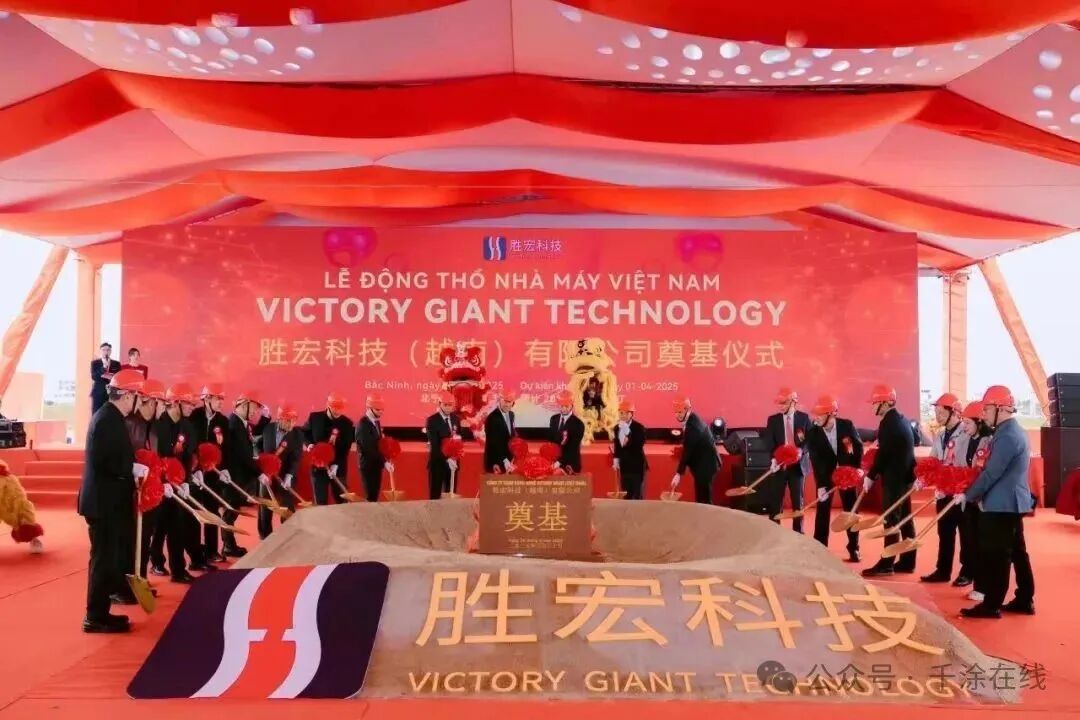
In response to the surging demand, Shenghong Technology has initiated a major capacity expansion. The company is investing3.768 billion yuan to establish production bases in Vietnam and Thailand, adding high-end HDI capacity of 150,000 square meters per year, accounting for 23% of existing capacity.
The global layout goes beyond new factories. In 2023, Shenghong Technology acquired Malaysia’s MFS Group to enter the flexible circuit board market, with this subsidiary’s net profit expected to grow by114% in 2024, becoming a new growth point. This layout is timely—NVIDIA and AMD have agreed to pay 15% of their chip sales revenue in China for U.S. export licenses, making Southeast Asian capacity a key to avoiding geopolitical risks.
05 Trillion Ambition: The Stars and Sea of High-End Manufacturing
As its market value surpasses 170 billion yuan, Shenghong Technology has set its sights on an even grander goal—reaching a trillion yuan market value by 2030.
The calculations supporting this ambition are clear: if the company achieves revenue of 19.4-20.1 billion yuan and net profit of 4.5-5 billion yuan in 2025, while maintaining26% annual compound growth rate, by 2030, net profit will exceed 15 billion yuan. With a 65 times PE valuation (lower than AI chip leaders but higher than the industry average), the market value could reach975 billion yuan, approaching the trillion yuan mark.
Table: Growth Path to a Trillion Yuan Market Value for Shenghong Technology
|
Performance Indicators |
2024 Actual |
2025 Forecast |
2030 Target |
|
Revenue |
10.73 billion yuan |
19.4-20.1 billion yuan |
≥80 billion yuan |
|
Net Profit |
1.15 billion yuan |
4.5-5 billion yuan |
≥15 billion yuan |
|
Net Profit Margin |
10.7% |
22%-25% |
25%+ |
|
Market Value Support |
– |
174.651 billion yuan |
nearly 1 trillion yuan |
On the path to realization, the company has formed a three-tier growth engine:
- Short-term: Volume production of AI server HDI, maintaining a net profit margin of over 25%
- Mid-term: Automotive electronics relay, with PCB usage in new energy vehicles increasing from 1 square meter to 5 square meters, and the automotive PCB market expected to reach12 billion dollars
- Long-term: Recovery of consumer electronics, with global smartphone shipments expected to increase to1.4 billion units in 2025, leading to rigid demand for HDI.
06 Hidden Reefs: The Industrial Game Behind the Frenzy
The trillion yuan journey is not without its challenges. Behind the stock price frenzy of Shenghong Technology, several risks loom:
Risk of Technological Iteration is paramount. As chip giants like TSMC shift towards advanced packaging technologies, traditional HDI board demand may weaken. NVIDIA’s newly released Blackwell architecture servers emphasize energy efficiency improvements and system integration, posing new challenges for supporting PCBs.
Uncertainty in Capacity Digestion is equally severe. The Vietnam and Thailand projects are expected to reach production capacity by 2028, at which point they will need to match the continuously growing orders. Currently, although NVIDIA has resumed sales of H20 chips to China, it must pay15% of sales revenue to the U.S. government, which may pass cost pressures along the supply chain.
Shareholder Reduction also touches investors’ nerves. In 2025, the controlling shareholder reduced holdings to cash out1.7 billion yuan, which, while a normal capital operation, still raises market concerns about valuation bubbles.
Industry analysts warn: when NVIDIA was questioned about potential “backdoor security risks” with the H20 chip and was interviewed by the Cyberspace Administration, the entire supply chain faced geopolitical shadows. Shenghong Technology’s international capacity layout is a precaution against such uncertainties.
In Huizhou’s Huiyang District, in Shenghong Technology’s newly launched smart workshop, robotic arms precisely mount circuit components. Outside the factory, a long line of research vehicles from investment institutions is lined up. An electronic industry analyst with twenty years of experience wrote in a recent report: “When NVIDIA’s GB200 server performance improves by 18 times, behind it isthe HDI circuit board worth 394 dollars—that is the ticket to entry earned by Shenghong Technology through ten years of technical accumulation.”
In a private equity fund’s trading room in Shanghai, the investment director gazes at the K-line chart on the screen and sighs: “A 130 billion yuan increase in market value in four months is just a normal return of value for Chinese manufacturing in the era of AI computing power.” At this moment, NVIDIA CEO Jensen Huang is showcasing new physical AI layouts at the World Robot Conference in Beijing, while thousands of miles away, servers equipped with Shenghong Technology’s circuit boards are lighting up data centers around the globe.
The goal of a trillion yuan market value remains distant, but the story of China’s high-end manufacturing has just begun a new chapter.