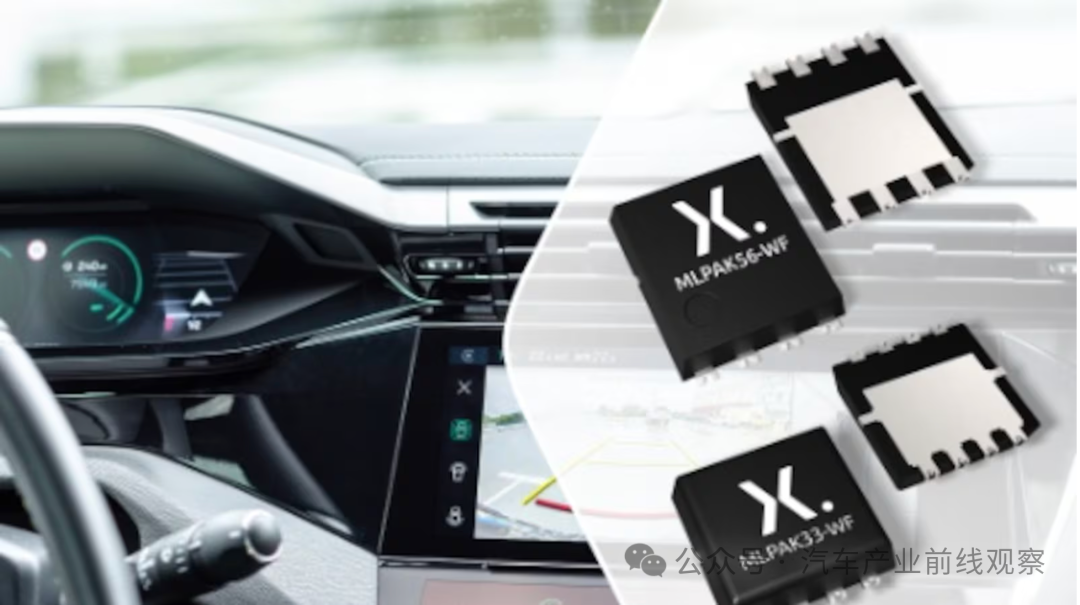
NXP Semiconductors’ China branch stated in a social media announcement: “We have proactively initiated multiple emergency plans and are accelerating the qualification certification process for new wafer supply sources.” The chips produced by NXP are widely used in various components, from automotive brake systems to electric windows.
November 24, 2025, 4:17 AMDongguan, China – In Dongguan, a major industrial city in southern China, a factory next to a weedy vacant lot has now become a critical bottleneck in the global automotive chip supply. Just a few years ago, the automotive industry vowed never to be caught off guard by supply chain disruptions again, yet it has been severely impacted once more.
The COVID-19 pandemic in 2020 led to a sharp decline in semiconductor production, and a fire at a factory in Japan a year later exacerbated the chip shortage. Since then, automakers have expressed intentions to strengthen their supply chain construction. However, the crisis faced by Dutch chip company NXP Semiconductors has exposed a significant blind spot in the industry: the entire sector had never considered that such low-end chips could become a countermeasure for China against the West.
Ambrose Conroy, CEO of Six Wings Angel Consulting, which provides consulting services to automotive manufacturers, candidly stated: “No one was prepared for supply chain disruptions caused by geopolitical issues, and we are still unprepared today.”
In September of this year, the Dutch government took control of NXP Semiconductors’ headquarters in the Netherlands, citing technology or flows to its Chinese parent company, Wingtech Technology. In retaliation, the Chinese government immediately suspended the export of finished chips packaged at the company’s factory in the Pearl River Delta region.
Currently, the Netherlands has revoked its decision to take over NXP Semiconductors, indicating that a breakthrough in this crisis may be on the horizon.
NXP Semiconductors’ Dongguan factory is responsible for supplying chips externally, which are widely used in automotive brakes, electric windows, and other devices. Although the price of a single chip is less than 1 cent, the chip shortage has forced Nissan and Honda to reduce production, while also causing German parts supplier Bosch Group to shorten factory hours.
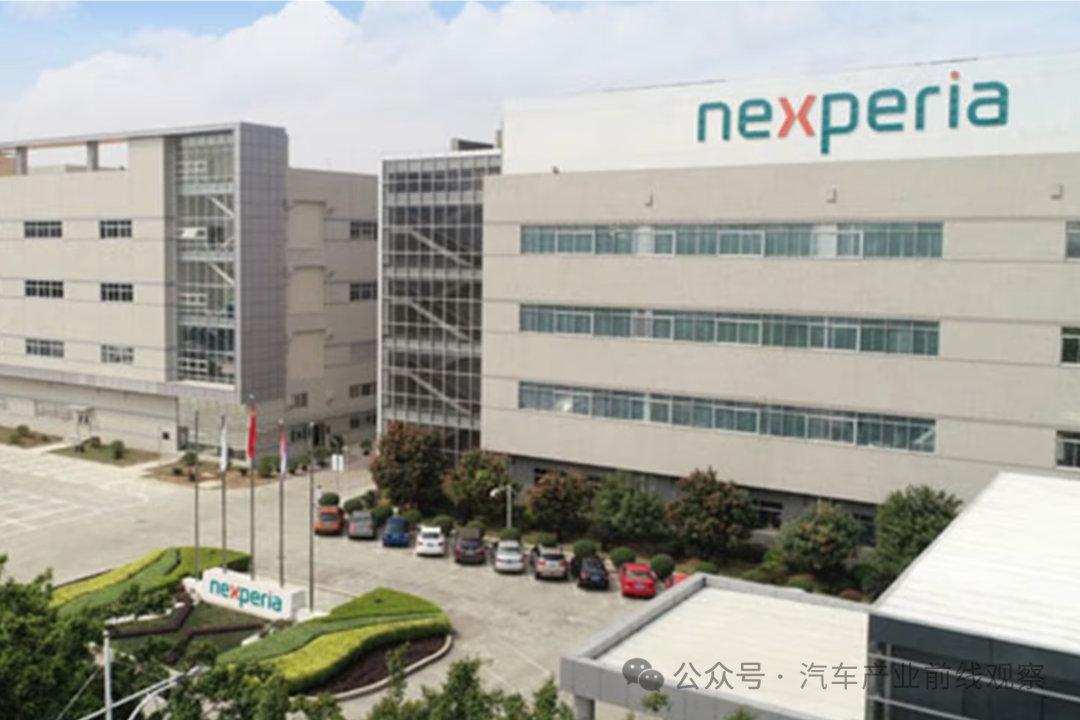
According to information on NXP Semiconductors’ official website, its Dongguan factory has an annual production capacity of over 50 billion chips.
This article reports on the various measures the automotive industry is taking to respond to this sudden crisis, based on interviews with 12 industry insiders, including executives from automotive companies, parts suppliers, and chip distributors. Respondents indicated that the just-in-time inventory management model and insufficient supply chain diversification have left automakers with very weak resilience in the face of geopolitical shocks.

China’s Industrial Advantages Span High and Low-End Fields
This report finds that China’s industrial advantages are not only reflected in cutting-edge technology and rare earths but also dominate in seemingly ordinary yet crucial basic component fields, allowing China to leverage this advantage to control global production. Some details previously undisclosed include Bosch Group’s reliance on NXP chips and the numerous challenges faced by many companies due to the need to switch to RMB settlement.
Although the Dutch government took control of NXP Semiconductors’ headquarters in Nijmegen, the company’s production operations in China are still controlled by its Chinese parent company.
Li Xing, a professor of international relations at the Guangdong International Strategic Research Institute, pointed out: “The Netherlands thought it had control over NXP Semiconductors, but in reality, it only took over an office building.” This research institute is a professional think tank.
He further stated: “This incident fully demonstrates that even in the low-end sector, they still cannot do without China. As long as China wants to impose restrictions, it can do so, and the other side is completely defenseless.”
A spokesperson for Wingtech Technology stated that after acquiring NXP Semiconductors, the company has grown into an industry leader. The spokesperson emphasized: “The current crisis indicates that splitting multinational companies can severely damage global supply chain stability and put key industries at risk.”
The Chinese Ministry of Commerce has not yet responded to requests for comments on this matter.
A spokesperson for NXP Semiconductors stated that the global supply chain layout of the semiconductor industry is extremely complex, and the impacts brought by geopolitical issues are indeed difficult to predict.
A Typical Case of Geopolitical Risk
An insider from a European automotive company revealed that due to the low price and stable supply of NXP chips, the company had previously not prepared alternative supply channels. The anonymous respondent stated that these chips “belong to the category of inexpensive ordinary electronic components.” Most respondents involved in sensitive information requested anonymity during the interviews.
Alfredo Montefalco-Elu, general manager of the Beijing office of Anke Consulting, pointed out that the NXP Semiconductors crisis event indicates that manufacturers face strategic risks not only in high-end component fields.
According to informed sources, Bosch Group purchases NXP Semiconductors products worth up to 200 million euros (approximately 231 million dollars) annually, yet even so, the group was unable to find sufficient alternative sources in a timely manner at the onset of the crisis. Bosch Group declined to comment on this matter.
By the end of October, NXP Semiconductors resumed supply to some domestic distributors but required payments to be settled in RMB rather than the foreign currency previously used. Reuters pointed out that this adjustment in settlement methods is clearly aimed at allowing Chinese operations to operate more independently from the control of the Dutch headquarters. Two informed sources revealed that the Dongguan factory struggled to handle a large volume of RMB settlement transactions, leading to a backlog of chips awaiting shipment. However, they also indicated that the situation has since improved.
A spokesperson for Wingtech Technology denied the existence of chip backlogs and RMB settlement system failures but did not provide further details.
China has resumed some chip export operations for NXP Semiconductors this month. Informed sources stated that this move comes at a critical time, as several suppliers, including Bosch, Omron, ZF Group, and Hella, were just days away from halting production.
Bosch, Omron, and ZF Group all declined to comment. A spokesperson for Hella Group stated that the company’s supply chain remains stable.
Recently, Reuters reporters visited the Dongguan factory on a weekday and observed that some of the factory’s blinds were closed, and trucks were occasionally entering and exiting the loading area, with dozens of electric vehicles parked outside the factory.
Other informed sources revealed that Austrian company Melexis and Apple supplier Jabil Group have successfully procured chips from NXP Semiconductors. Both companies conducted transactions through entities within China, allowing them to use RMB for settlement.
A spokesperson for Melexis declined to comment, while Jabil Group did not respond to multiple interview requests.
Automakers Have Not Learned from Past Lessons
Julie Butte, an automotive industry analyst at London-based Pelham Smithers Consulting, pointed out that this chip shortage event indicates that automakers have not learned from past supply chain crises. She stated: “Everyone thought that automakers would stockpile enough chips to maintain production for several months, especially after they promised to do so following the last crisis.”
Guillaume Cartier, Chief Performance Officer of Nissan, stated that changing a fragile supply chain takes time. In an interview with Reuters last month, he said: “I know everyone will blame us, saying, ‘You still haven’t learned from the past.’ That said, who can completely change all their supply chains in just three years?”
Reuters previously reported that due to the shortage of NXP chips, Nissan has reduced production of its popular Patrol SUV, and this issue will continue to pose a threat to production throughout the year.
Consultant Conroy advised clients to stockpile critical component inventories in product demand areas. However, for the automotive industry, which relies on just-in-time inventory management to minimize costs, such adjustments will undoubtedly significantly increase costs.
How Toyota Avoided the Chip Crisis
Not all automakers have been affected by this crisis.
Reuters learned that after the 2011 Great East Japan Earthquake, Toyota established a business continuity assurance plan that explicitly required suppliers to stockpile enough chips to maintain production for several months.
A spokesperson for Toyota stated that there are still potential risks that could affect automotive production, and the company will continue to closely monitor the situation.
The integration of chips with automotive components has also posed additional obstacles to the supply chain. Nori Qiu, investment director at White Oak Capital Partners, pointed out that NXP Semiconductors’ chips are widely used in power modules and other control components, often fixed directly to the components through soldering, meaning these chips cannot be easily replaced with other models.
Qiu further explained that any new automotive components must undergo rigorous testing, which extends the timeline for finding alternative chips by several months. A spokesperson for NXP Semiconductors also stated that chip replacement is not something that can be done “overnight”; even chips that appear identical may have performance differences when applied in vehicles.
Industry insiders revealed that Bosch Group is seeking alternative suppliers for NXP chips, but the related testing and qualification certification processes could take up to a year, far exceeding initial expectations.
A spokesperson for Bosch Group stated that the company is “doing everything possible to activate certified alternative suppliers” to ensure supply chain stability.
Alfredo Montefalco-Elu of Anke Consulting stated that preventing chip supply bottlenecks is not only extremely challenging but also requires significant investment.
He said: “In the future, everyone will be discussing building supply chain resilience and diversifying supply chains, but they will soon realize how costly it is to achieve these goals.”