This account has repeatedly expressed concerns: Western countries led by the United States will accelerate the intelligent upgrade of the semiconductor industry to target the current confidentiality policies implemented within the domestic semiconductor industry (even between corporate departments). Whether this policy truly confuses the adversary is currently unassessable (after all, foreign equipment still dominates), but in fact, it has exacerbated the data isolation across the entire industry, thereby hindering the progress of intelligent upgrades in the domestic semiconductor sector.Hopefully, this is just an overreaction.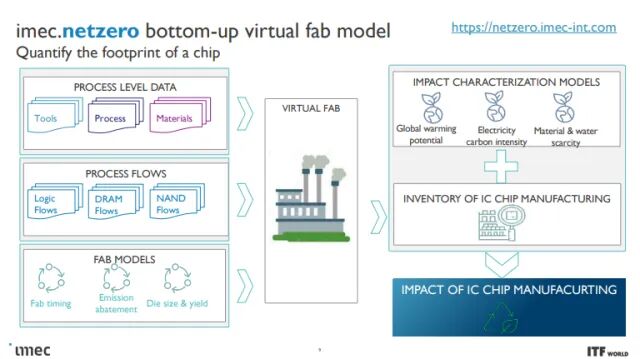 IMEC’s Virtual Fab ModelIn 2023, I believe that AI 3.0 is likely to become a tool for the Chinese semiconductor industry to turn the tables against the US blockade; unfortunately, the world’s first large language model for semiconductors was born in another country in 2024.So let’s learn how our competitors are doing it and see if it can provide us with insights.
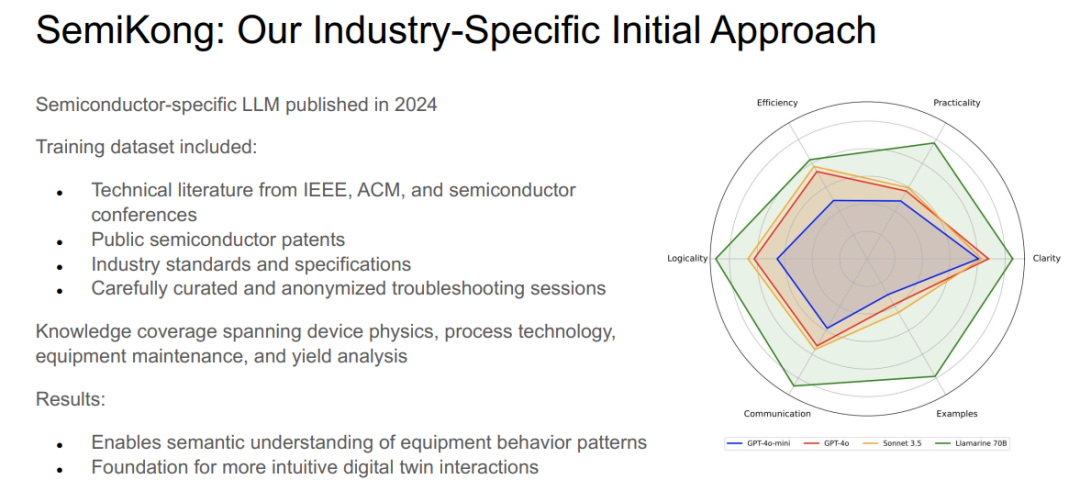 The World’s First Semiconductor Large Model: SemiKongFirst, starting from digital twins,
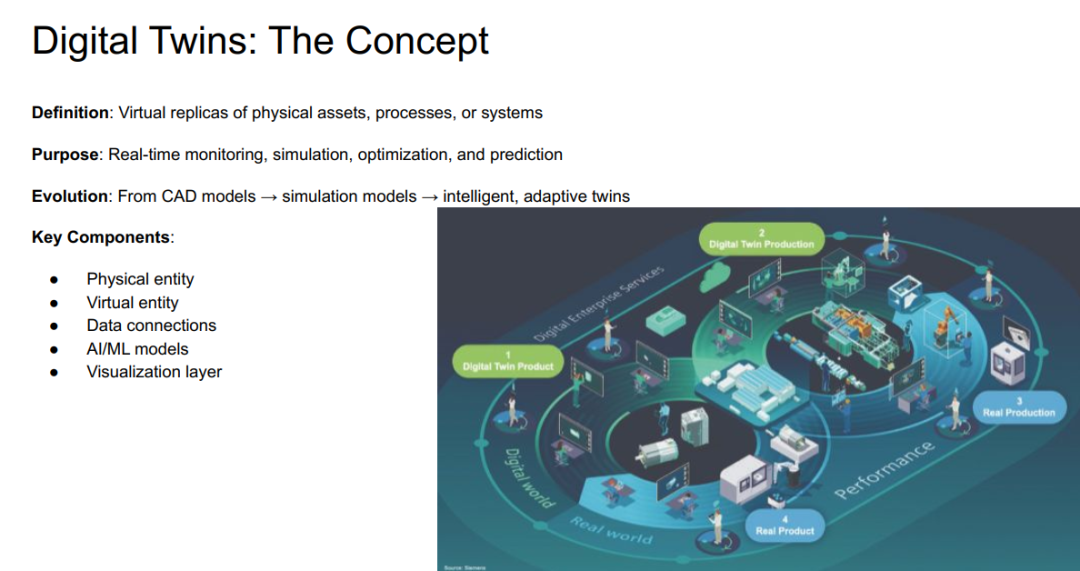 What is the reason?
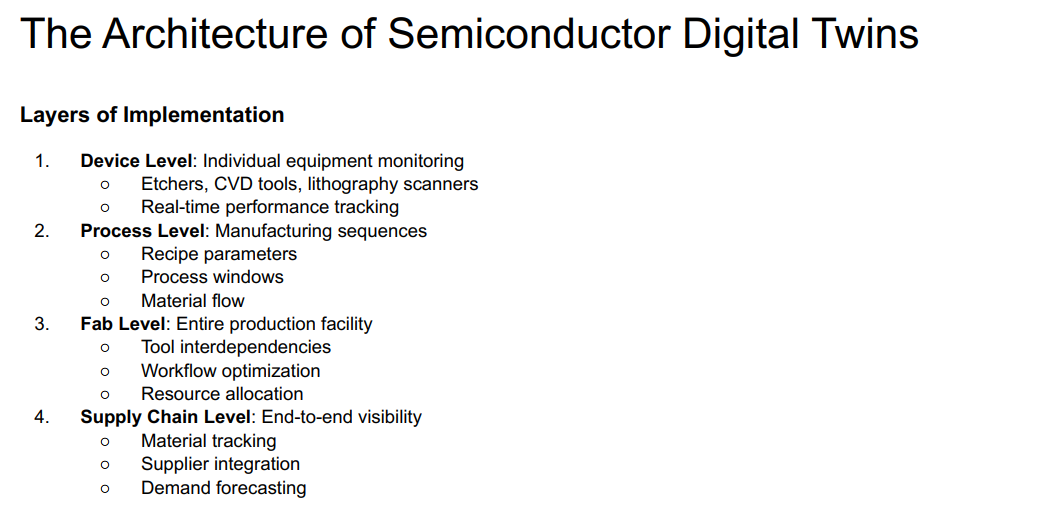
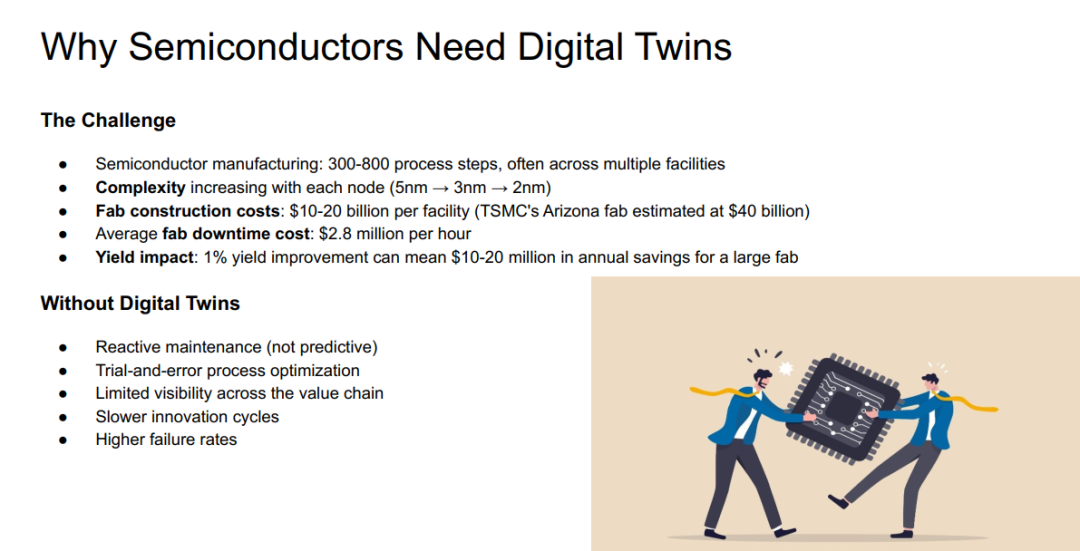 What is its architecture like?
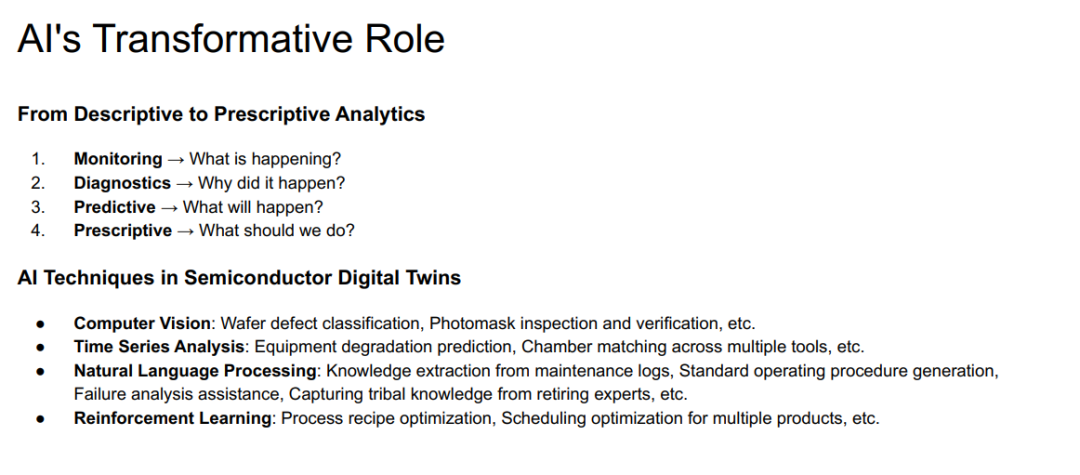
 What kind of transformation will AI bring to the semiconductor industry?
 What are the reference cases?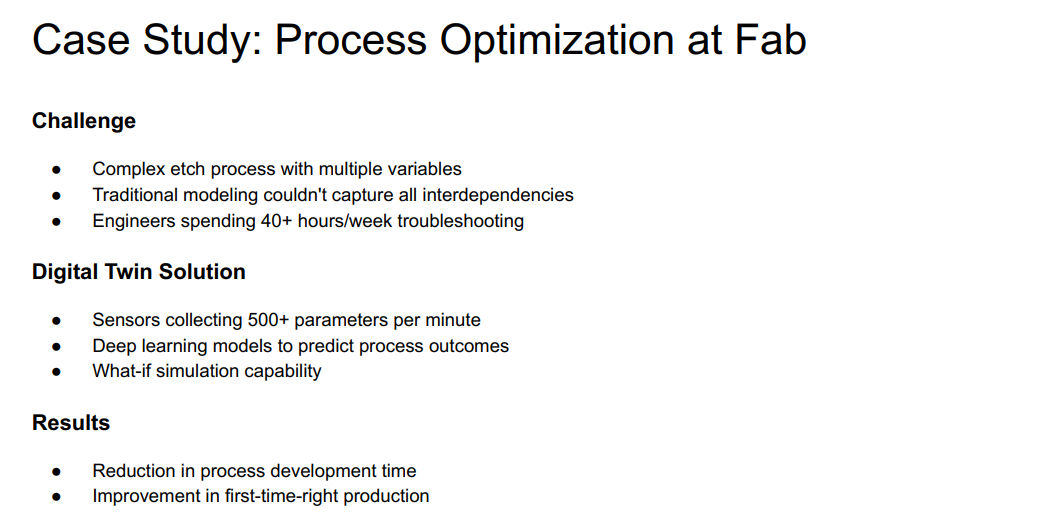
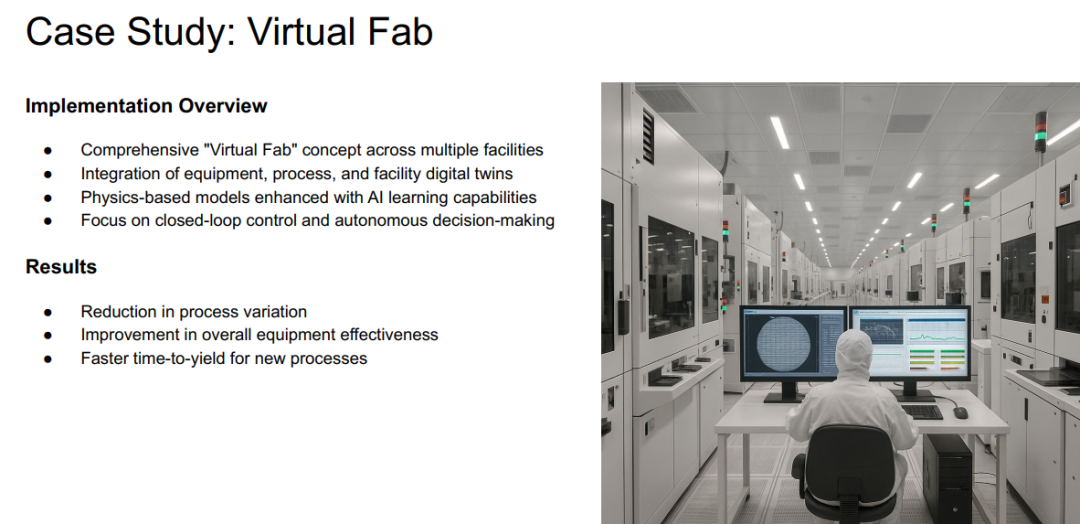 How is the implementation of the virtual fab?What other challenges exist? Are the challenges faced abroad also challenges for us domestically?
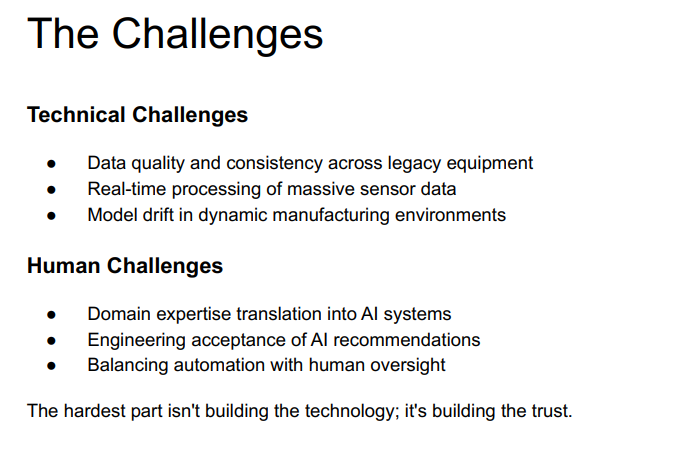 The national policy-driven wave of AI+ implementation faces difficulties mainly in human factors (this account has just started to gain some readership; will it be resented, labeled, or attacked? It’s hard to say).Future outlook of Western competitors,
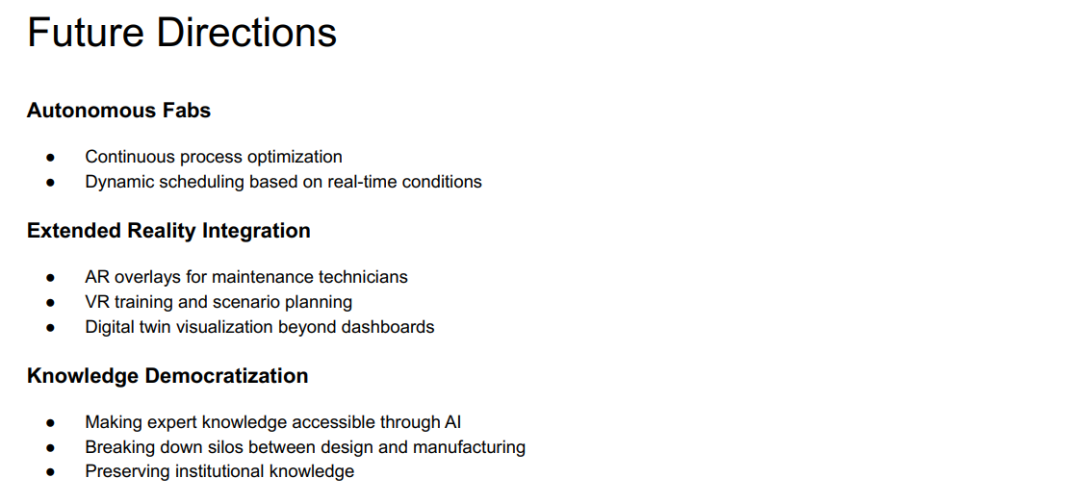 My outlook is that I hope this article survives for another day and is seen by one more person in the country, so that we can pay attention to it sooner.It is reported that only the high-fidelity digital twin model has been in development for over 20 years by American Applied Materials and Lam Research, and they place more emphasis on it than on hardware development. I wonder how this gap can be bridged, whether it can be skipped? Can shouting slogans and targeting suspected traitors at the gates of semiconductor companies help solve the problem and speed things up?