Background of the Event
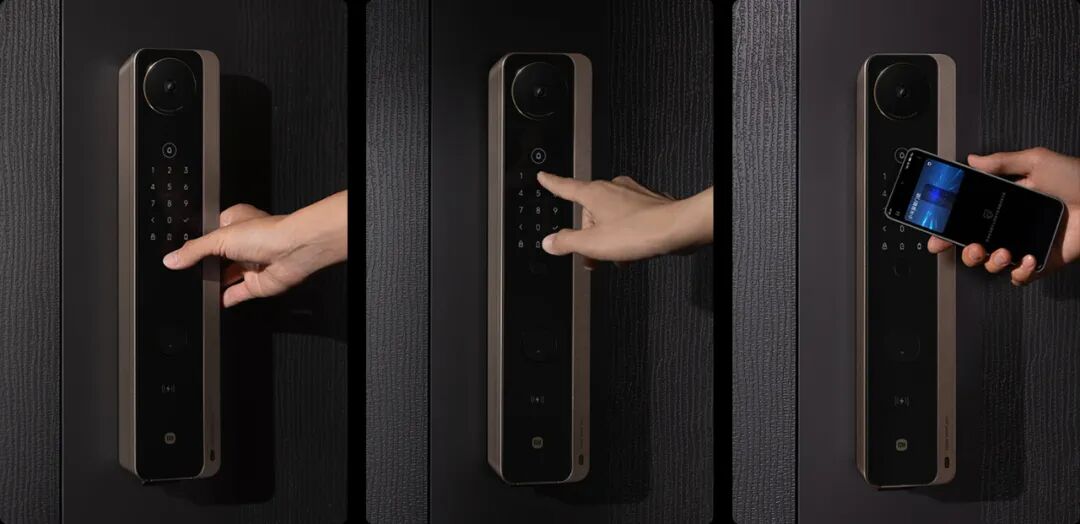
The client manufactures electronic locks, and the Bluetooth module inside is purchased from a supplier that has already certified the Bluetooth module with an FCC-ID certificate. Now, the client wants to export the complete product, a Bluetooth electronic lock, to the United States. Is it necessary to apply for a separate FCC-ID certificate for the complete device?

1. Core Requirements of FCC Certification
Based on the client’s description, whether the Bluetooth electronic lock requires a separate FCC-ID certification for export to the United States needs to be comprehensively judged according to the FCC’s rules on modular device certification. The following is a specific analysis:

1. Scope of FCC-ID Application
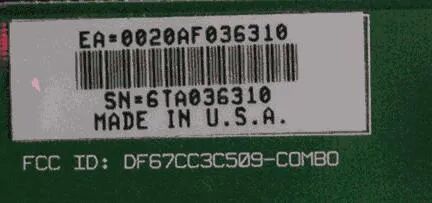
Any electronic device with wireless transmission capabilities (such as Bluetooth, WiFi, ZigBee, etc.) sold in the U.S. market must apply for FCC-ID certification, and the complete device must display a unique FCC identifier.
2. Special Rules for Modular Devices:
If the Bluetooth module has passed FCC-ID certification and meets the conditions for FCC Modular Approval, the complete device may not require re-certification;
If the module certification does not meet the “Modular Approval” requirements, or if the design of the complete device affects RF performance, a new FCC-ID application for the complete device is required.
3. Key Judgement Criteria
Condition 1:Does the Bluetooth module meet the FCC Modular Approval requirements?
According to the FCC KDB 996369 guidelines, the module must meet all of the following conditions to be integrated into the complete device without additional certification:
-
The module must have an independent RF shielding layer to prevent interference from external circuits;
-
The module must be equipped with a fixed antenna or standardized antenna interface (such as U.FL/IPEX), and the complete device must not change the antenna parameters;
-
The module’s power supply circuit must have a voltage regulation design to avoid voltage fluctuations affecting RF performance;
-
The module must pass all FCC tests (including transmission power, frequency offset, spurious emissions, etc.);
-
At the time of module certification, it must declare support for “Modular Approval” (the Grantee must sign a “Modular Approval Declaration”).
If the Bluetooth module provided by the supplier does not fully meet the above conditions, the complete device must reapply for FCC-ID certification.
Condition 2: Does the design of the complete device change the RF parameters of the module?
Even if the module has passed modular certification, the following situations may still require re-certification of the complete device:
-
Antenna changes: changing the type of antenna, adjusting the antenna routing or gain;
-
Circuit interference: other circuits in the complete device (such as motors, displays) generate electromagnetic interference that affects the Bluetooth frequency band;
-
Structural obstruction: a metal shell or internal layout causes RF signal attenuation beyond the original certification range of the module.

4. Specific Operational Recommendations
Scenario 1
The module meets the FCC Modular Approval requirements, and the design of the complete device has not changed the RF parameters
No need to apply for a complete FCC-ID:
You can directly use the module’s FCC-ID, but must meet:
-
The complete device label must indicate the module’s FCC-ID (format: FCC ID: XXXXXXXXX);
-
The user manual must state: “This device contains a compliant RF module with FCC ID: XXXXXXXXX”;
-
The complete device must pass FCC Part 15B testing (EMC testing) and apply for FCC SDoC certification (compliance declaration for the non-wireless part).
Scenario 2
The module does not meet the Modular Approval requirements, or the design of the complete device affects RF performance
Must apply for a complete FCC-ID:
Re-test the Bluetooth RF parameters (Part 15C) and EMC (Part 15B) for the complete device, the process is as follows:
-
Submit an application to a TCB (Telecommunication Certification Body) in the U.S.;
-
Provide the original FCC-ID certificate and test report of the module (to reduce some testing items);
-
Complete RF and EMC testing for the complete device;
-
Obtain a dedicated FCC-ID for the complete device and label it on the product.
5. Compliance Risk Alerts
Alert 1
Risk of Incorrectly Referencing Module FCC-ID:
If the complete device does not meet the Modular Approval conditions and directly uses the module’s FCC-ID, it may be detained by customs or face FCC penalties (up to $21,928 per day).
Alert 2
Labeling and Documentation Requirements:
Even if exempt from complete FCC-ID certification, ensure that labels and manuals comply with FCC rules, otherwise it may be deemed non-compliant.

| Key Factors | Does the complete device need FCC-ID? | Operational Requirements |
| The module meets FCC Modular Approval requirements | No | Label the module FCC-ID + apply for FCC SDoC (Part 15B) |
| The module does not meet Modular Approval requirements | Yes | Re-test the complete device (Part 15B+15C) and apply for a dedicated FCC-ID |
| The design of the complete device affects RF performance | Yes | Re-test the complete device (Part 15B+15C) and apply for a dedicated FCC-ID |
Testing and Certification Scope:
China: CCC, SRRC, E-commerce quality inspection report;
Europe: CE (LVD, EMC, RED), RoHS, REACH, CB, E/e-Mark certifications;
North America: UL report, ETL, FCC-ID, FCC, CSA, FDA, EPA, IC certifications;
Batteries: UN38.3, EN/IEC62133, MSDS, etc.;
Taiwan: BSMI certification, NCC certification, etc.;
Asia: PSE mark, MIC, VCCI, KC mark;
Australia: RCM mark & C-tick, SAA, GEMS energy efficiency certification;
Middle East: Saudi SASO certification, Kuwait KUCAS certification, Kenya PVOC certification, Nigeria SONCAP certification, and other COC customs clearance certifications.

Contact Information

Leave the certification to me, I will handle it for you, providing you with a 360° all-around service.

Welcome to consult 186 2749 8037 Liu R