
Click the blue text above to follow us
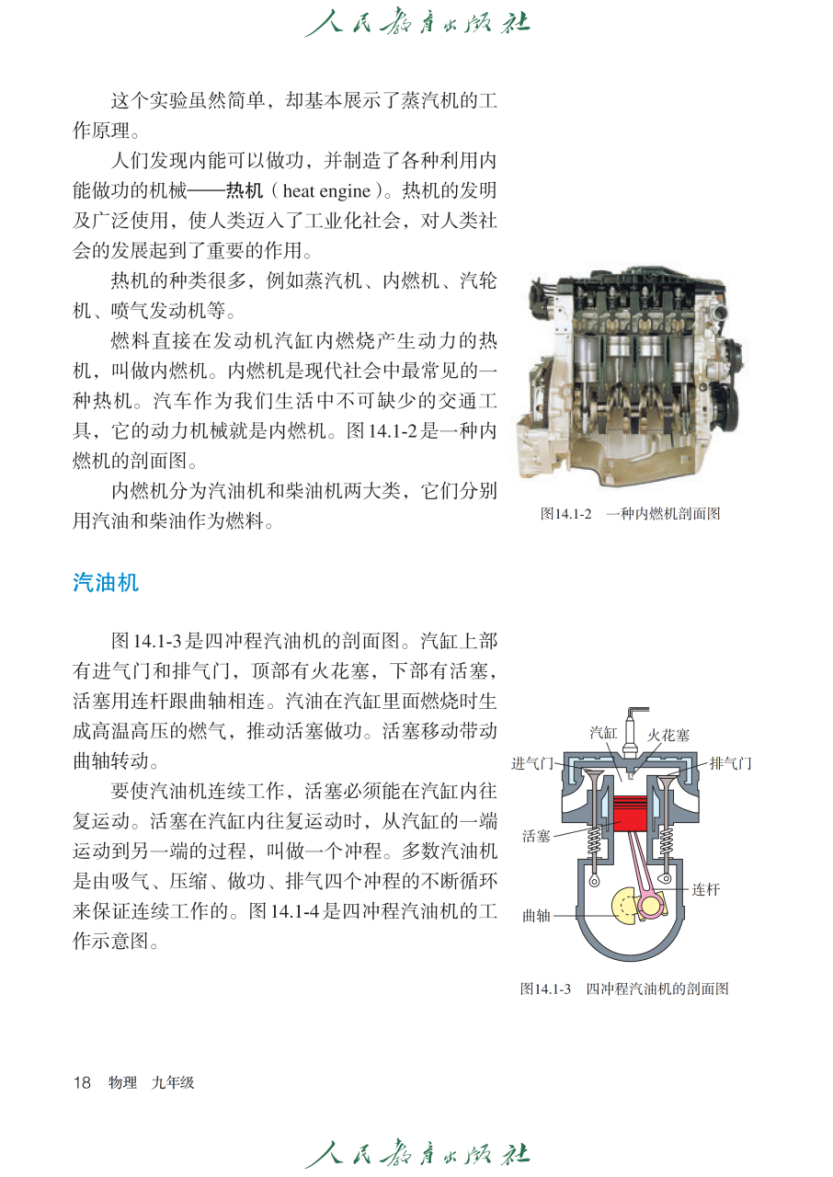
People’s Education Edition 2012 Grade 9 Volume 1 – Chapter 14 Utilization of Internal Energy – Section 1 Heat Engines – Demonstration: Figure 14.1-1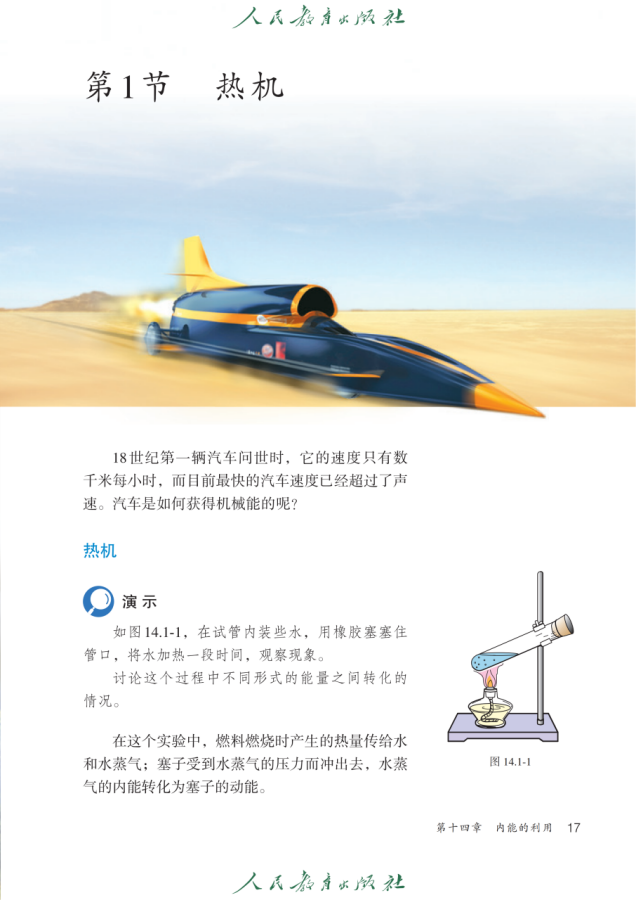
01Experiment Objective
The experiment on energy conversion during fuel combustion to heat water is an important experiment in middle school physics and chemistry. Through this experiment, one can intuitively observe and understand the basic principles of energy conversion.
 Experiment Instruments02
Experimental Chemicals: Water, Alcohol.
Common Experimental Instruments: Iron frame, Alcohol lamp, Large test tube, Rubber stopper. Digital Experimental Instruments: GD Wireless Pressure Sensor, Computer with data acquisition software.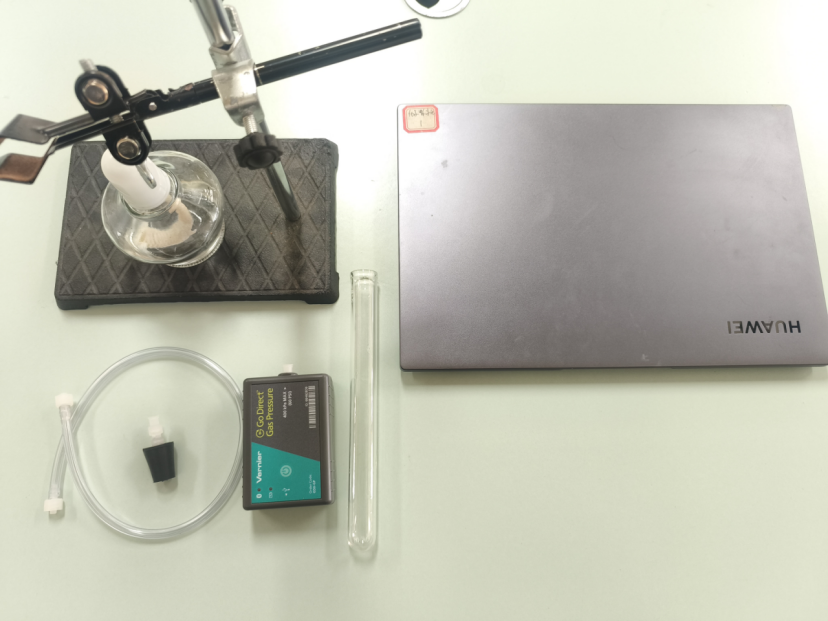
 03Experimental Setup
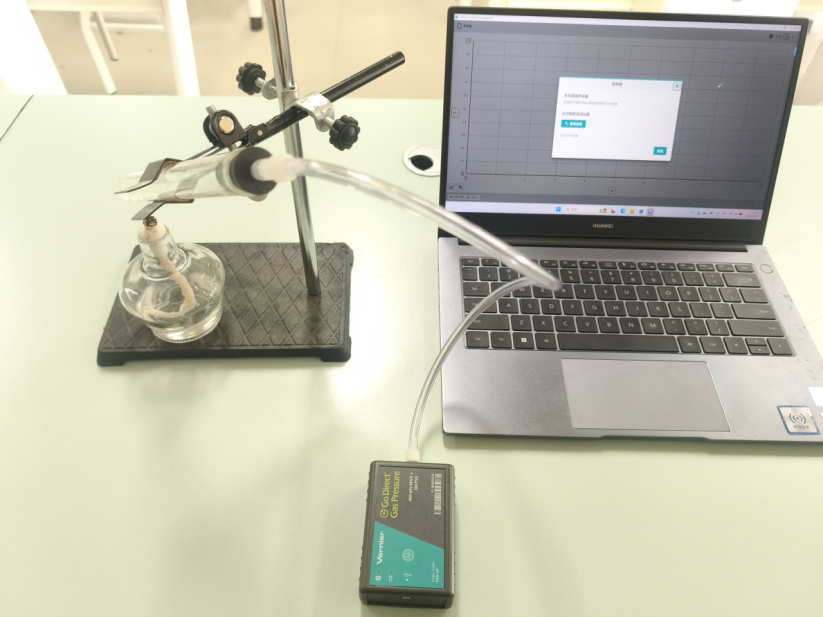
 Experimental Procedure04
1. Connect the GD Wireless Pressure Sensor to the computer software Vernier Graphical Analysis.
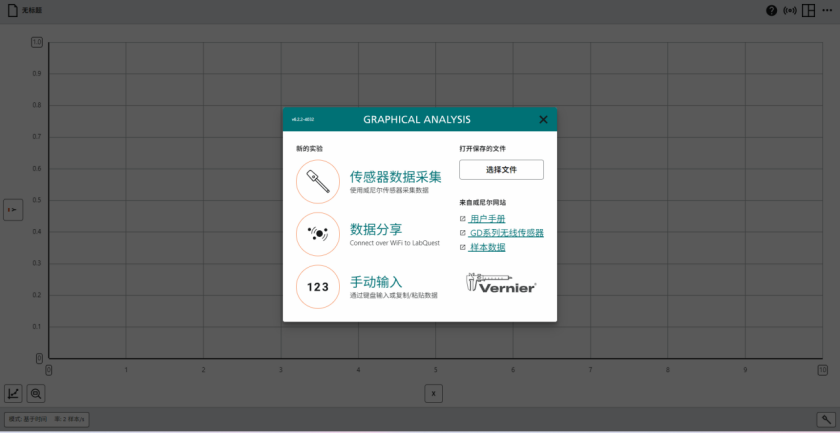
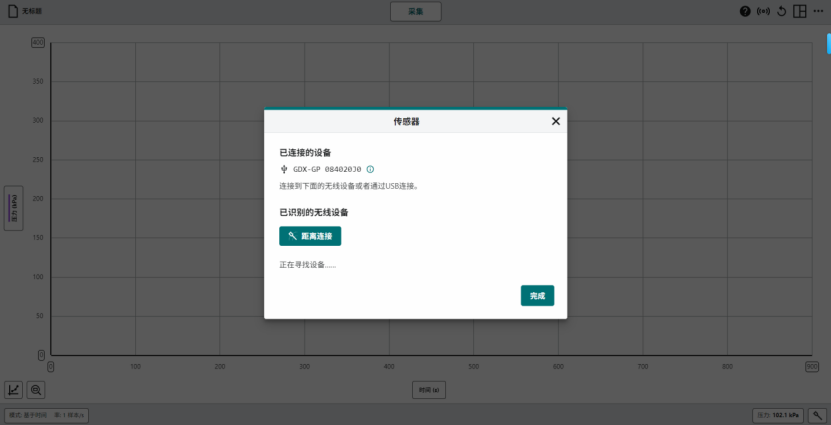

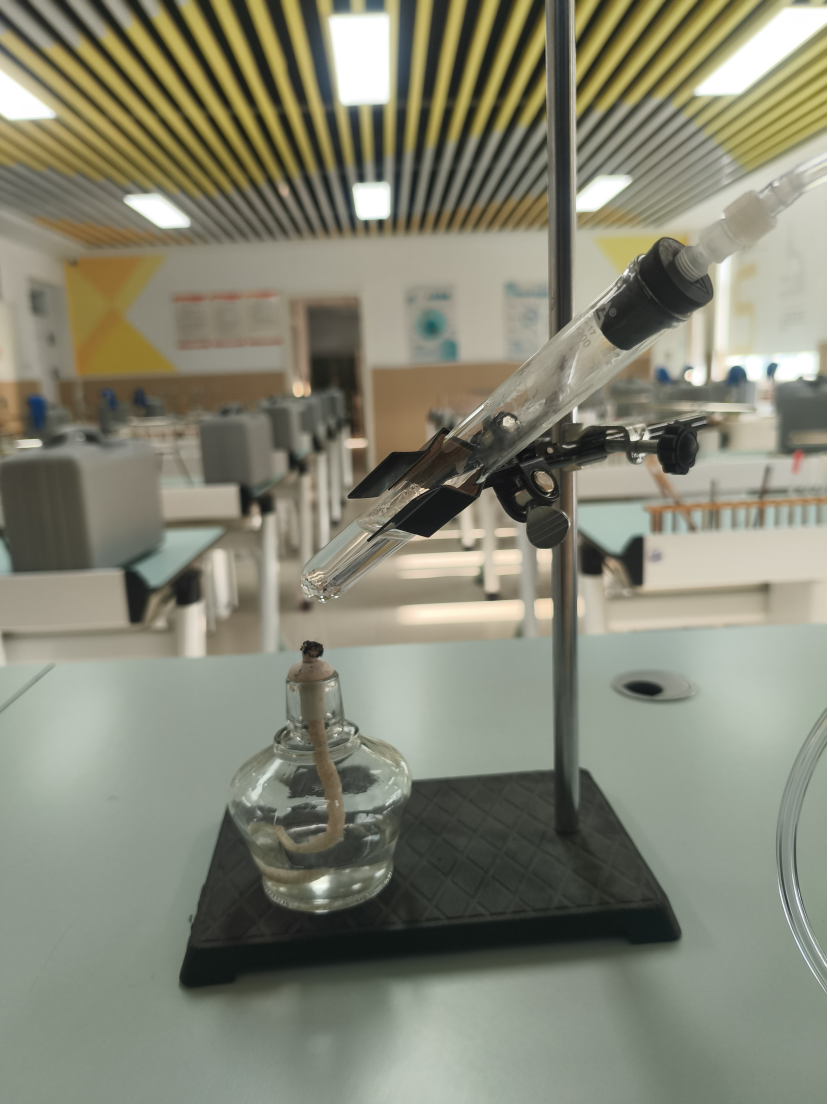
2. Fill the large test tube with water, seal it with a rubber stopper, and connect the sensor, tilting it on the iron frame. At this point, the water is not heated and is cool, with no condensation on the test tube wall.
3. Ignite the alcohol lamp to heat the large test tube; the water begins to gradually heat up, and condensation forms on the test tube wall.
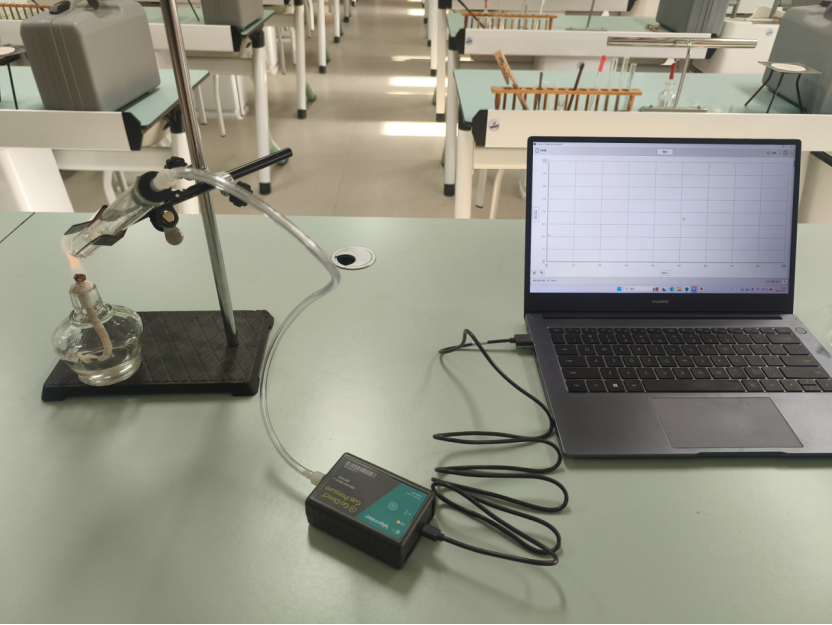
3. After the water boils, the rubber stopper is expelled.
 05Experimental Phenomena and Data
1. Experimental Phenomena
We observed that the cool water in the large test tube was heated by the combustion of fuel, gradually increasing in temperature to produce steam, and eventually boiling, causing the rubber stopper to be expelled due to increased air pressure.2. Experimental DataThe atmospheric pressure increased as the water in the test tube was heated, and finally, when the rubber stopper was expelled, the atmospheric pressure suddenly dropped to the ambient atmospheric pressure value.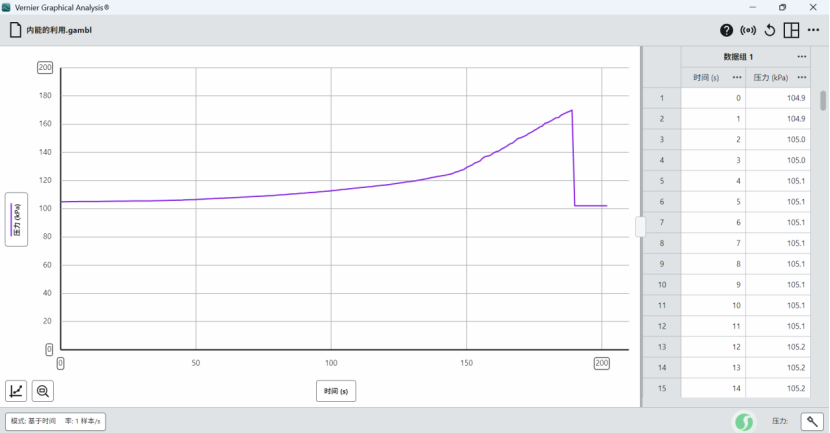
 Experimental Analysis06
The experiment of heating water through fuel combustion mainly involves the energy conversion process of chemical energy→ internal energy → mechanical energy. When fuel (such as alcohol, kerosene, etc.) burns, the chemical energy of the fuelis converted intointernal energy, which is transferred to the water through heat transfer, increasing the water’s temperature and internal energy. When the water boils and produces steam, the internal energy of the steam can do work externally, converting intomechanical energy.
Energy Conversion Analysis
1. Fuel Combustion Stage
The combustion of fuel is a chemical change process, where the chemical energy of the fuel is converted into internal energy. For example:
Combustion of Alcohol:C2H5OH + 3O2 → 2CO2 + 3H2O + Heat
2. Heat Transfer Stage
The internal energy generated from combustion is transferred to the water through heat transfer, increasing the water’s temperature and internal energy. According to the first law of thermodynamics, this energy transfer follows the law of conservation of energy.
3. Work Stage
When the water boils and produces steam, the internal energy of the steam does work externally:
The internal energy of the steam is converted into mechanical energy (kinetic energy of the small turbine)
The temperature of the steam decreases, and the internal energy reduces.