Yang Yuejing, Chen Xin
Jiangnan Experimental Primary School, Wuxi
AbstractJiangnan Experimental Primary School is located by the shores of Taihu Lake in Wuxi, Jiangsu, adjacent to the National Sensor Network Innovation Demonstration Zone. The “Taihu + IoT” is a significant feature of our school’s curriculum. The course “Research on the Micro-Ecosystem of Taihu and IoT Applications” is designed for students from grades one to six, integrating subjects such as Moral Education, Science, and Information Technology, and spans across multiple disciplines including Chinese, Mathematics, and Labor. This is a comprehensive thematic course aimed at solving real-world problems and enhancing students’ competencies, combining general education with club activities to achieve progressive learning and differentiated instruction.
KeywordsSubject Integration; Ecological Protection; IoT
Founded in 2002, Jiangnan Experimental Primary School is located in the Wuxi Economic Development Zone, near Taihu Lake and the National IoT Innovation Demonstration Zone. It is a young experimental school that has been recognized as an “Advanced Collective for Research on Tao Xingzhi’s Educational Thought in Jiangsu”, “National Quality Education Demonstration School”, “Founding School of the National Green Education Alliance”, “Jiangsu Green School”, and “Wuxi Science and Technology Education Featured School”. Our school adheres to Tao Xingzhi’s inquiry-based teaching philosophy, combining the themes of “Green” and “Technology” to actively explore school-based characteristic curriculum research. The course “Research on the Micro-Ecosystem of Taihu and IoT Applications” is the core content of our Taihu cultural thematic curriculum. This course is developed in collaboration with professors from the School of Environment and Ecology at Jiangnan University and technical experts in artificial intelligence and IoT, featuring characteristics of scientific rigor, practicality, inquiry-based learning, and interdisciplinary integration.
1. Student-Centered Approach,
Targeting Real-World Problem Solving
John Dewey’s educational philosophy emphasizes a “student-centered”, “activity-centered”, and “experience-centered” approach, requiring education to place students at the core of teaching activities, using practical activities as the main teaching method, and starting from students’ actual lives, knowledge reserves, and cognitive abilities, focusing more on knowledge construction and the connections between new and old knowledge.
(1) Students from All Walks of Life Need to Understand Taihu
Wuxi is located in the Yangtze River Delta, with a beautiful environment, developed economy, and affordable living costs attracting many builders from all over the country, who also bring their next generation. These “new Wuxi residents” enter various primary and secondary schools to begin their studies just like the “local Wuxi people”. Due to geographical reasons, our school has a particularly high number of children from migrant workers, with 1,609 students enrolled, of which 1,101 are children of new citizens, accounting for 68.43% of the total student population, as shown in Figure 1.
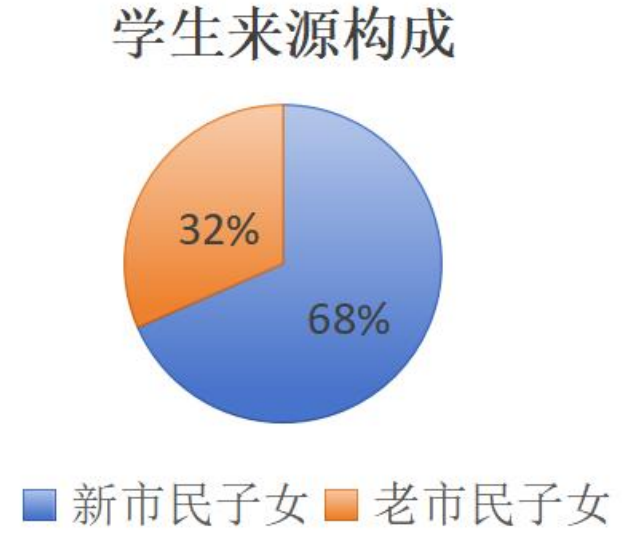
Figure 1 Composition of Student Sources in Our School
These migrant students’ understanding of Taihu is limited to tourist attractions and a narrow range of living activities, lacking both systematic and in-depth knowledge. As new Wuxi residents, they must understand and empathize with Taihu to develop a love for it and be willing to take action for a better Taihu. Therefore, it is urgent to offer a popular course themed on “Taihu Culture” to ensure that every student in our school becomes a qualified “Taihu person”.
(2) Real Problems Around Students are the Best Course Themes
Taihu is right beside us; we experience the influence of Taihu culture every day, enjoying its beautiful scenery, breathing the air from Taihu, tasting its cuisine, and appreciating its art, while contemplating Taihu’s impact on all aspects of our lives. By using “Taihu Culture” as the course theme, every student can participate and express their feelings, reflecting Dewey’s educational philosophy that “society is the school” and “life is education”.
Our school has set different sub-themes of the Taihu cultural general education course from grade one to six based on students’ life experiences and cognitive abilities, as shown in Table 1. In class, we strive to avoid one-way knowledge transmission, instead focusing on inspiring students to think and express themselves. Students first share what they see and hear, and then teachers continuously scaffold their thinking through questioning, guiding them to think systematically and deeply, maintaining the students’ position as the main learners, embodying the teaching philosophy of “not igniting without being provoked”.
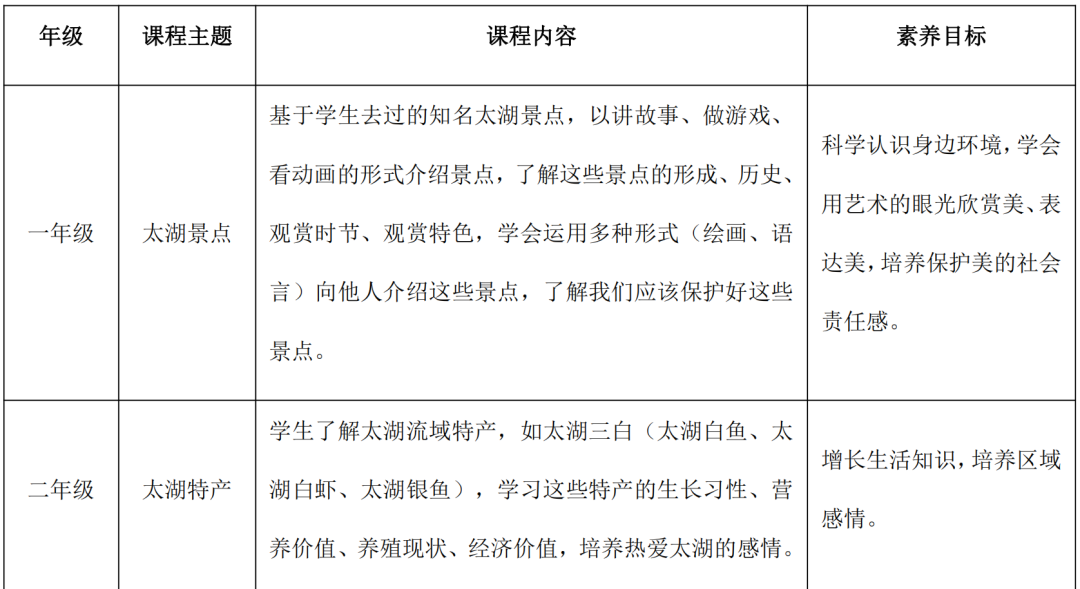
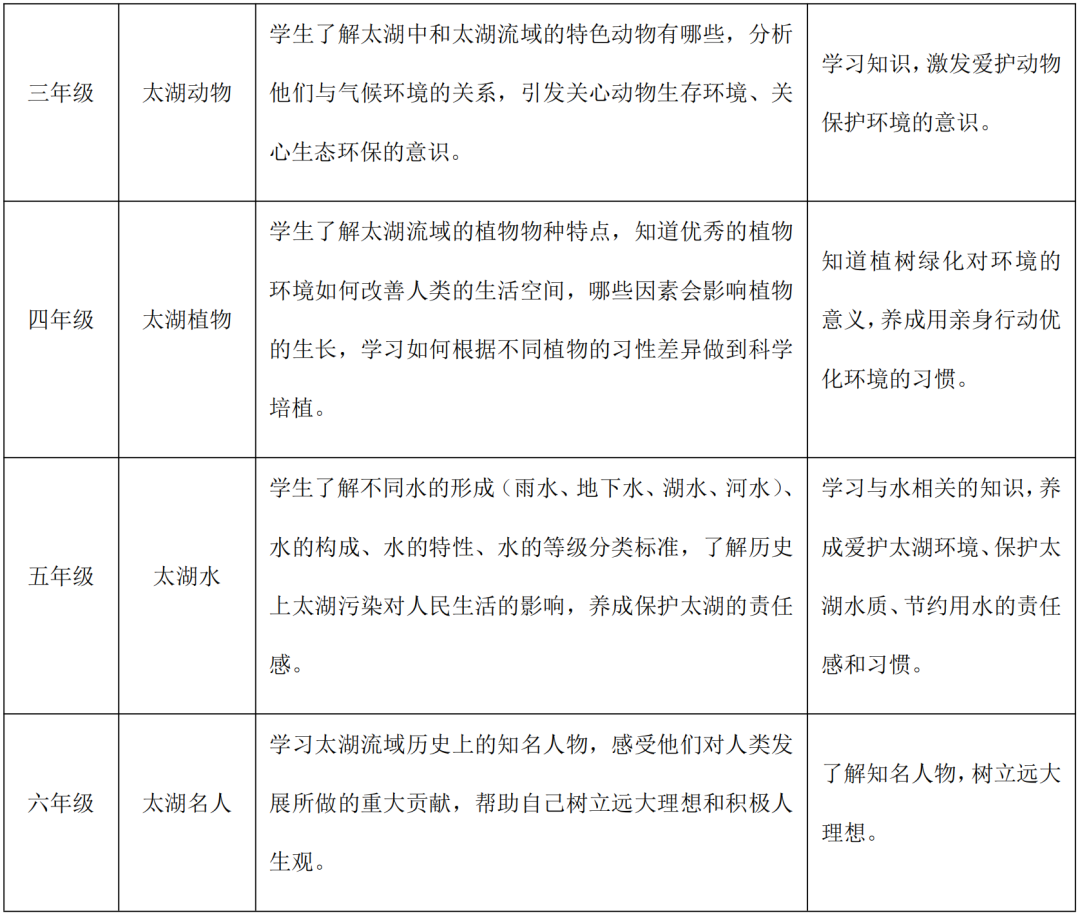
Table 1 General Education Course on “Taihu Culture” Themes
(3) Solving Real Problems Drives the Cultivation of Interdisciplinary and Innovative Practical Abilities
The new curriculum standards for compulsory education in 2022 particularly emphasize interdisciplinary learning, which has left frontline teachers accustomed to subject-based teaching feeling at a loss. Various “interdisciplinary” courses have emerged in the education sector. Our school, after multiple teaching discussions, believes that starting from the overall educational goal of “cultivating individuals who can solve real problems” actually compels students to possess the ability to integrate knowledge from multiple disciplines, teamwork skills, practical abilities, and innovative capabilities. This goal drives the transformation of teaching methods. When we are goal-oriented and recognize that both teaching evaluation and activities must revolve around the teaching objectives, we can truly achieve “integration of teaching and evaluation”.
After completing the general education course on “Taihu Water” in fifth grade, we selected students interested in programming, artificial intelligence, and IoT from seven classes to form the “Taihu Ecology Research” inquiry learning club, implementing the teaching of the course “Research on the Micro-Ecosystem of Taihu and IoT Applications”. This club course starts with understanding the dangers of ecological destruction in Taihu (identifying problems), explores the main factors affecting Taihu’s ecology and monitoring and remediation methods (analyzing problems), and ultimately uses programming and IoT technologies to achieve remote monitoring and control of Taihu’s ecology (solving problems), presenting a complete engineering education learning practice process.
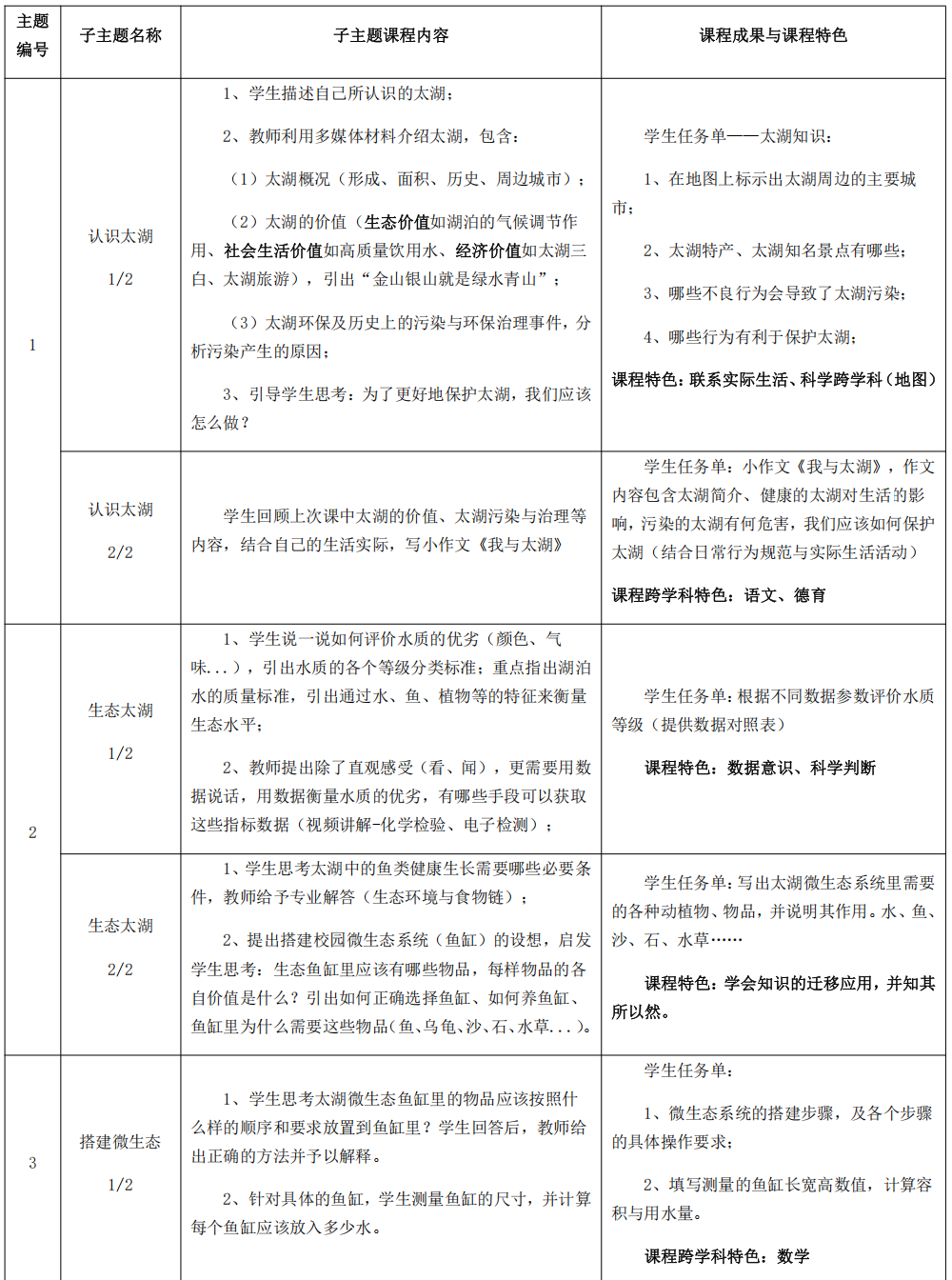
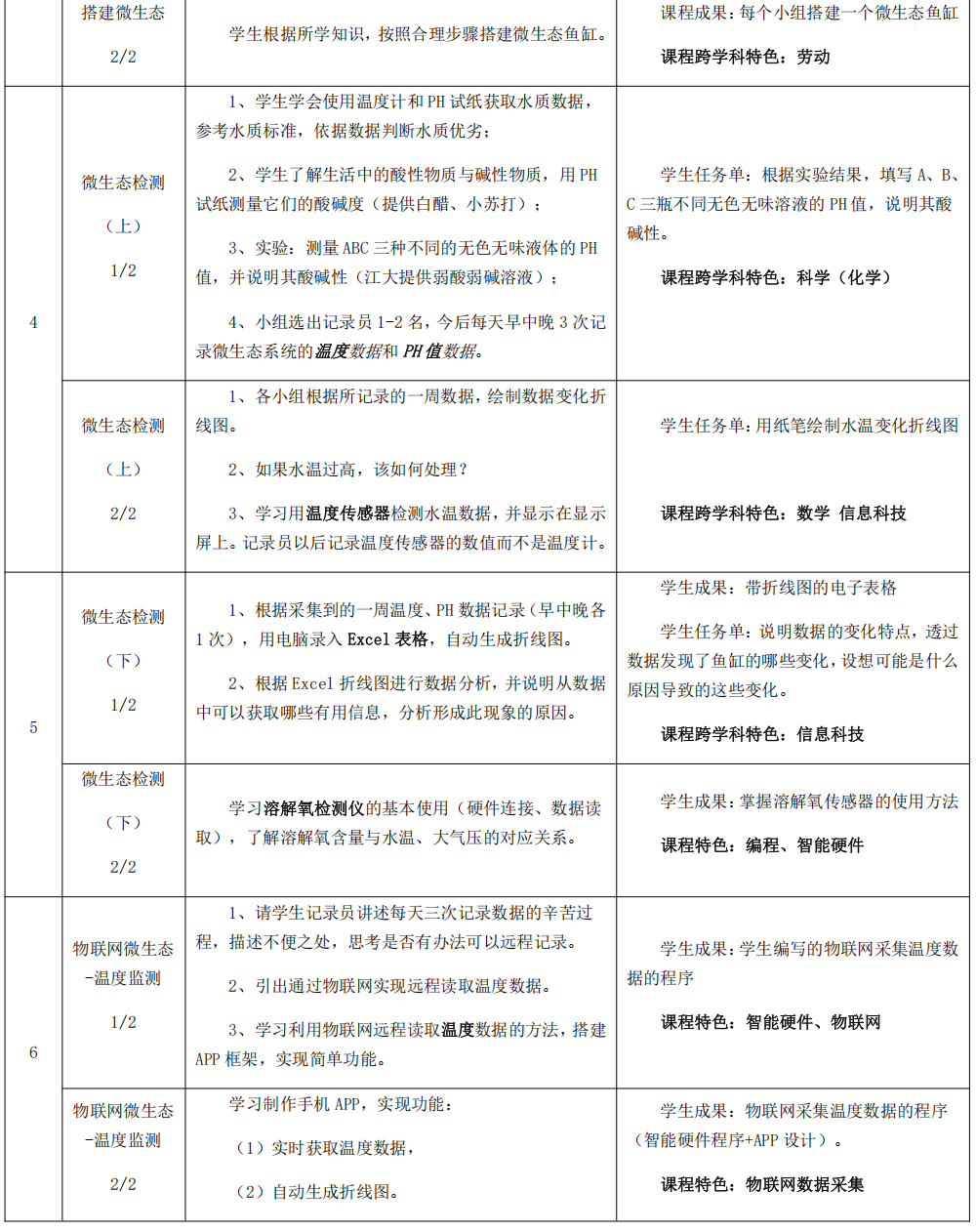
Table 2 Course Design for the Club Course “Research on the Micro-Ecosystem of Taihu and IoT Applications”
In the 16 class hours of the fifth-grade club course, the programming and IoT content comprises 7 class hours. During course design, we selected graphical programming software Mind+ and IoT app development software Blynk based on students’ cognitive abilities and knowledge reserves. The drag-and-drop graphical tools can prevent students from getting bogged down in trivial coding and syntax issues, allowing them to focus more on developing computational and engineering thinking. The quick results also help enhance students’ sense of achievement and self-efficacy, stimulating their interest in further exploring science and technology. The interfaces of the graphical programming software and the IoT monitoring app are shown in Figures 2 and 3.
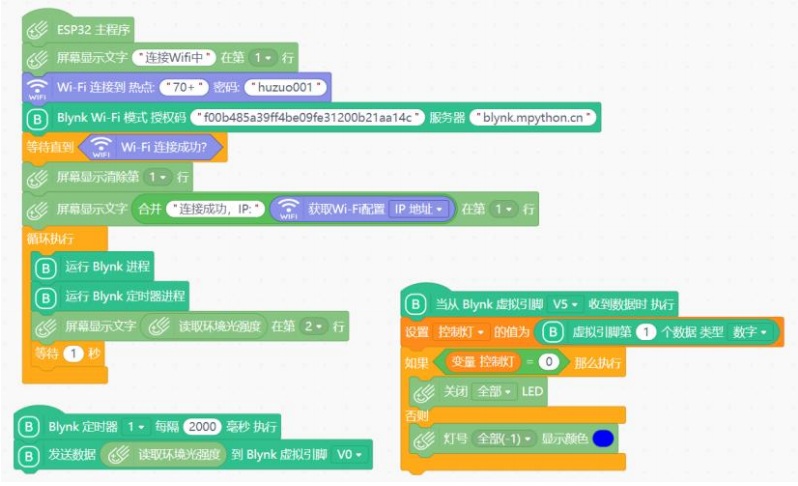
Figure 2 Graphical Programming Software Interface
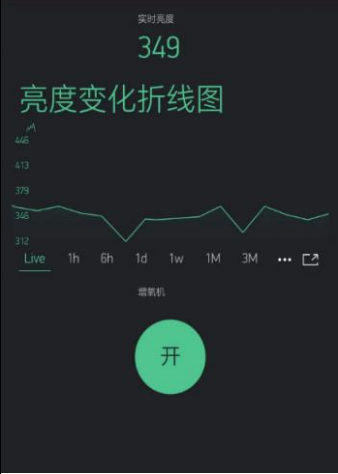
Figure 3 IoT Monitoring App Interface
2. Implementing Differentiated Instruction through “General Education + Club Courses”
Achieving Classification and Layered Teaching
The development of individual abilities in primary school students is rapid, multidimensional, and highly unbalanced, with significant differences among students. We should set different course content and teaching methods based on students’ cognitive level differences and interests to achieve differentiated instruction. At the same time, the dimensions and standards of teaching evaluation should also be adjusted, using multiple measures to assess students, adhering to the educational belief that “every student can succeed” to truly implement tailored teaching.
In the planning and teaching phase of the “Taihu Culture” thematic curriculum, our school employs a comprehensive general education course covering every student from grades one to six, achieving universal curriculum dissemination. Based on the general education course, some students with special interests and talents stand out, and we then offer a variety of distinctive club courses tailored to these students’ interests, such as “Taihu Folk Songs” and “Taihu Painting” for those with artistic potential, and project-based courses in programming, artificial intelligence, and IoT for students interested in technology, as well as practical courses like “Little Debaters” and “Campus Journalists” for those with strong language skills and social interests.
In terms of teaching evaluation, teachers focus on guiding students in peer assessments, with common evaluation methods in class such as “discovering their beauty”, “I have something to say to you”, and “1+1>2”; during practical activities, teachers encourage students to view failure rationally and learn from it, with “what I learned from failure” being a daily part of our classroom; “the result is important, but the process is even more important” is also a common phrase used by teachers in class, as we believe that even if the results are not ideal, students still gain valuable experiences.
3. Learning to Think is More Important than Mastering Knowledge
Students are not containers of knowledge but the main agents of thinking and practice; learning to think is more important than merely mastering knowledge. Repetitive physical labor is gradually being replaced by robots, and repetitive mental labor will also slowly be taken over by artificial intelligence. In the age of AI, how humans coexist with AI and robots is an unavoidable topic, which compels us to consider how education should adapt.
Team collaboration emphasizes leveraging strengths and complementing each other, and cooperation between humans and AI should be the same. AI excels in data extraction, analysis, inference, and application, suitable for solving habitual problems, but when faced with new issues, AI will be of little help, while innovation and invention are uniquely human traits. When humans encounter unprecedented problems, we need to break conventions, overcome path dependence and fixed thinking, and integrate knowledge from various disciplines; this process is the essence of innovative thinking. To meet the challenges of the new era, our teaching activities must focus on cultivating students’ innovative thinking abilities, making them lifelong thinkers. The ability to think critically is far more competitive than mere memorization.
4. Conclusion
We are in a period of rapid social change, where on one hand, the explosion of knowledge brings an overwhelming amount of content, making humanity seem increasingly ignorant relative to the total knowledge; pursuing more knowledge is no longer realistic, as the saying goes, “to follow the infinite with the finite is perilous”; on the other hand, the rise of artificial intelligence forces us to enhance our ability to solve practical problems, especially new problems. Cultivating students’ practical innovation abilities must start from their daily lives while paying attention to individual differences and emphasizing the shaping of humanistic thoughts. The “Taihu Culture” thematic course launched by our school is a pioneering attempt based on the characteristics of the times and regional features, but it also exposes various shortcomings due to resource limitations. We sincerely hope to connect with more professionals to contribute to our educational endeavors, as today’s education determines our future.
Previous Highlights
“Smart Education: Pathways to Education 2050” Released
“Global Smart Education Cooperation Alliance Declaration” Officially Released
Beijing Normal University Releases “Innovative Plan for Comprehensive Quality Assessment of Chinese Students Based on AI”
2025 Global Smart Education Conference Decodes Educational Transformation in the Digital Age
2024 Global Smart Education Conference Summary Report
2023 Global Smart Education Conference Summary Report
2022 Global Smart Education Conference Summary Report
Announcement of the List of Excellent Cases for Smart Education in 2025