For industrial Internet platforms, the core challenge is how to effectively connect, collect, store, and utilize IoT data while ensuring data accuracy and real-time performance.The Internet of Things (IoT) utilizes various technologies to achieve perception, connection, storage, and application of the physical world, providing deeper and more comprehensive data and services.Here is an analysis and introduction to the above methods:
-
Data Acquisition: In IoT, data acquisition primarily relies on sensors. Sensors can collect various physical quantities such as temperature, humidity, light intensity, and sound, and then send the data to a central server for storage and analysis. Additionally, RFID technology is often used for data acquisition; by attaching RFID tags to items, tracking and management of those items can be achieved.
-
Data Connection: The main methods of data connection in IoT are Ethernet and wireless networking. Ethernet is a fast and reliable connection method commonly used in industrial and building automation, but its wired nature presents certain design challenges. Wireless networking, on the other hand, provides high-speed and wireless connectivity, commonly found in consumer electronics.
-
Data Storage: In IoT, data storage mainly involves local file systems and distributed file systems. Local file systems are directly connected to local nodes, while distributed file systems connect several nodes through a network, providing concurrent processing and addressing issues such as I/O bottlenecks and dynamic space expansion.
-
Data Utilization: Data in IoT is widely applied in various fields such as environmental monitoring, logistics management, and supply chain management. Through data analysis, a better understanding and control of various situations in the physical world can be achieved.
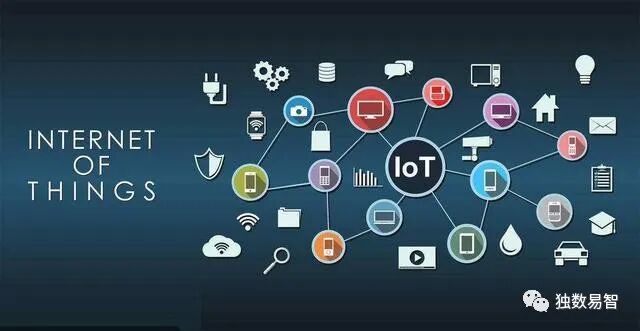
Data Acquisition Methods can be selected based on different application scenarios and requirements, enabling monitoring and management of various physical quantities. The main methods of IoT data acquisition include the following:
- Sensor Acquisition: Utilizing various sensors, such as temperature sensors, humidity sensors, and light sensors, to collect physical quantity data, which is then sent to a central server for storage and analysis.
- RFID Acquisition: Utilizing RFID technology, by attaching RFID tags to items, identification and tracking of items can be achieved, facilitating management and data acquisition.
- Image and Video Acquisition: Utilizing cameras and image sensors to collect image and video data, which is then transmitted over a network to a central server for storage and analysis.
- Audio Acquisition: Utilizing audio sensors and microphones to collect sound data, which is then transmitted over a network to a central server for storage and analysis.
- Mobile Device Acquisition: Utilizing sensors on mobile devices (such as smartphones and tablets), such as accelerometers and gyroscopes, to collect location and motion data, which is then transmitted over mobile networks to a central server for storage and analysis.
Each transmission method has its specific advantages and applicable ranges. The choice of method depends on the specific IoT application requirements and scenarios. The main data transmission methods in IoT include ZigBee, UWB, and Modbus.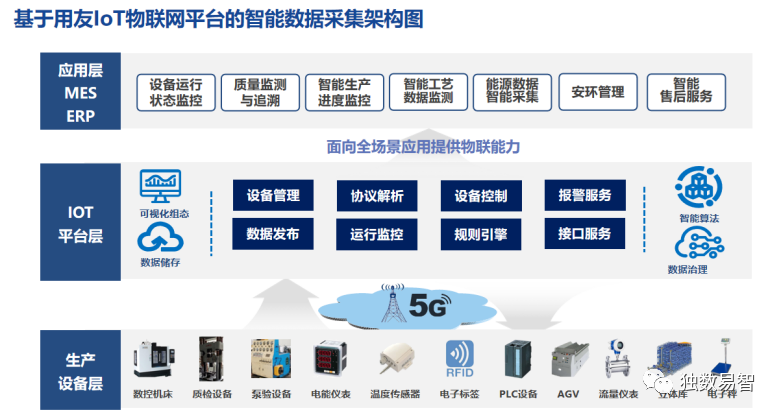
- ZigBee is a short-range wireless communication protocol suitable for network transmission over short distances. Its advantages include low power consumption, low cost, low data rate, short range, low latency, large network capacity, unlicensed frequency bands, high security, and reliable data transmission. However, ZigBee has weak diffraction and wall penetration capabilities, which diminishes its advantages in self-organizing networks in smart home applications where the positions of switches, sockets, and curtains are fixed.
- UWB is a carrier-free communication technology that uses nanosecond to microsecond non-sinusoidal narrow pulses to transmit data. UWB can send a series of very narrow low-power pulses over a wide frequency range, resulting in lower interference compared to traditional narrowband wireless solutions and providing performance comparable to wired solutions in indoor wireless environments.
- Modbus is a serial communication protocol that has become the industry standard for communication protocols in the industrial field and is now a commonly used connection method between industrial electronic devices. The Modbus protocol follows a master/slave architecture, with one master node and other nodes participating in communication as slave nodes, each with a unique address. In serial and MB+ networks, only the designated master node can initiate a command.
The storage space requirements for IoT data storage servers need to consider factors such as data type and format, data growth rate, data retention period, data access patterns, data security, data scalability, and storage costs, and should be evaluated and planned based on actual conditions. When determining the storage space requirements for IoT data storage servers, the following details need to be considered:
-
Data Type and Format: Different IoT applications involve different data types and formats, such as text, images, video, and audio. Appropriate storage methods and technologies should be selected based on data types and formats to fully utilize storage space and improve data processing efficiency.
-
Data Growth Rate: IoT systems generate large amounts of data, and the data growth rate can be rapid, necessitating planning for storage space growth strategies to avoid issues caused by insufficient storage space.
-
Data Retention Period: Different data requires different retention periods, and appropriate storage methods and backup strategies should be selected based on data retention periods to avoid issues caused by data expiration.
-
Data Access Patterns: Different applications have different data access patterns, and appropriate storage and access methods should be selected based on access patterns to improve data access efficiency.
-
Data Security: IoT systems involve communication between devices, data transmission, and user privacy protection, necessitating measures to ensure data security. Considerations should include data encryption, access control, and backup recovery to ensure data security and reliability.
-
Data Scalability: As the scale of IoT systems grows and business needs change, the volume of data will continue to increase. Server scalability should be considered, selecting servers that support fault tolerance and redundancy configurations to ensure system stability and availability.
-
Storage Costs: Storage space requirements are closely related to storage costs, and appropriate storage solutions should be evaluated and selected based on actual conditions to reduce storage costs.
The acquisition, storage, retrieval, and utilization of data in IoT platforms do not need to be overly complex; meeting user needs in the simplest and most cost-effective way is a more suitable approach. Each enterprise has different requirements, so the construction of each platform will also differ.
Recommended Previous Works:
- AI in Smart Manufacturing: Driving Innovation and Efficiency
- 180-Degree Turnaround: Microsoft’s Small Model is Here
- Data Platforms in IoT
- Case Study: SANY Heavy Industry Group’s Digital Transformation
- Is it Informatization or Digitalization?
- IoT Gateways in IoT Platforms
- DingTalk Yida Case – All-Factor Management System
PS: Follow our public account to use the GPT mini-program for free below.