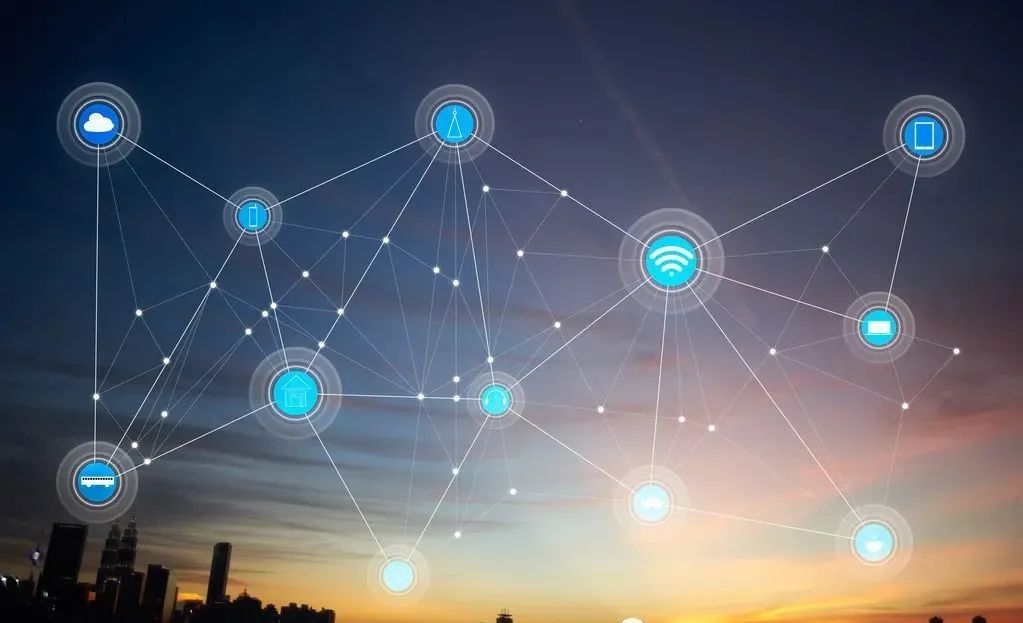
In 2019, the Internet of Things (IoT) celebrated its 10th anniversary. Although after 10 years of development, we still cannot clearly define what the IoT is, its business model, or who qualifies as an IoT company, the applications formed based on IoT technology have already permeated every aspect of our production and life. For example, shared bicycles on the roadside, smart TVs at home, automated production lines in factories, etc.
The IoT has evolved from its initial demonstration and trial phase to a fully connected practical stage. It plays a significant role in ten major areas: disaster prevention and reduction, resource control and management, new energy development and management, food safety and public health, smart healthcare and elderly care, ecological protection and energy conservation, new agricultural technology application and management, urban intelligent management, modern logistics, and national defense industry. In these areas, China has established a directory of over 420 demonstration projects including smart grids, intelligent transportation, environmental monitoring, public safety, smart homes, and smart hospitals, forming corresponding pilot and model projects. These have played a significant role in comprehensively promoting information construction, effectively preventing and suppressing corruption through technological means, establishing a national security system, and conserving energy and reducing emissions.
Smart cities are an important application scenario of IoT, and IoT is a crucial foundation for realizing smart cities.
Countries around the world, whether developed or developing, are competing to inject technology into various aspects of their cities’ daily operations. With the help of IoT technology, functions such as water management, power supply, sanitation, urban traffic, solid waste management, e-government, IT connectivity, and public transportation systems are being modernized. Xiaowan has organized the IoT industry and summarized the top ten application areas.
1. Smart Logistics
Smart logistics refers to the realization of system perception, comprehensive analysis, and processing functions in various logistics stages such as transportation, warehousing, and distribution, supported by IoT, big data, and artificial intelligence technologies. Currently, applications in the IoT field are mainly reflected in three areas: warehousing, transportation monitoring, and express delivery terminals. By using IoT technology, it is possible to monitor goods and transportation vehicles, including the location and status of goods vehicles, as well as the temperature and humidity, fuel consumption, and speed of the vehicles. The use of IoT technology can improve transportation efficiency and enhance the intelligence level of the entire logistics industry.

2. Intelligent Transportation
Intelligent transportation is an important manifestation of IoT, tightly integrating people, vehicles, and roads using information technology to improve the transportation environment, ensure traffic safety, and increase resource utilization. Specific application areas of IoT technology include smart buses, shared bicycles, vehicle networking, charging pile monitoring, smart traffic lights, and smart parking. Among these, vehicle networking has become a field that many manufacturers and internet companies are eager to enter in recent years.
3. Smart Security
Security is a major application market for IoT, as safety is always a fundamental human need. Traditional security relies heavily on personnel and is labor-intensive, while smart security can achieve intelligent judgment through devices. Currently, the core of smart security lies in the smart security system, which transmits and stores captured images and analyzes and processes them. A complete smart security system mainly includes three parts: access control, alarm, and monitoring, with a focus on video surveillance in the industry.
4. Smart Energy and Environmental Protection
Smart energy and environmental protection are part of smart cities, with IoT applications mainly concentrated on water, electricity, gas, streetlights, and environmental devices such as manhole covers and trash bins. For example, smart manhole covers can monitor water levels and their status, smart water and electricity meters can achieve remote reading, and smart trash bins can automatically sense. Applying IoT technology to traditional water, electricity, and solar energy devices enables monitoring, improves utilization efficiency, and reduces energy consumption.
5. Smart Healthcare

In the field of smart healthcare, the application of new technologies must be human-centered. IoT technology is the main means of data acquisition, effectively helping hospitals achieve intelligent management of people and objects. Intelligent management of people refers to monitoring physiological states (such as heart rate, physical consumption, blood pressure, etc.) through sensors, mainly involving medical wearable devices, and recording the acquired data in electronic health files for easy access by individuals or doctors. Additionally, through RFID technology, medical equipment and items can be monitored and managed, achieving visualization of medical equipment and supplies, primarily represented by digital hospitals.
6. Smart Buildings
Buildings are the foundation of cities, and technological advancements have promoted the intelligent development of buildings. Smart buildings, primarily based on IoT and other new technologies, are receiving increasing attention. Currently, smart buildings mainly focus on energy-saving aspects, enabling devices to perceive, transmit, and achieve remote monitoring, which not only saves energy but also reduces the operational maintenance of building personnel. According to research by Yiou Think Tank, smart buildings currently focus on lighting, fire monitoring, smart elevators, building monitoring, and termite monitoring in ancient buildings.
7. Smart Manufacturing
Smart manufacturing encompasses a broad range of concepts and involves many industries. The manufacturing sector has a huge market size and is an important application area for IoT, primarily reflected in the digital and intelligent transformation of factories, including monitoring of factory machinery and environmental conditions. By equipping devices with appropriate sensors, manufacturers can remotely monitor, upgrade, and maintain equipment anytime and anywhere, better understand product usage conditions, collect information throughout the product lifecycle, and guide product design and after-sales service; while the factory environment mainly involves collecting temperature and humidity, smoke detection, and other information.
8. Smart Home
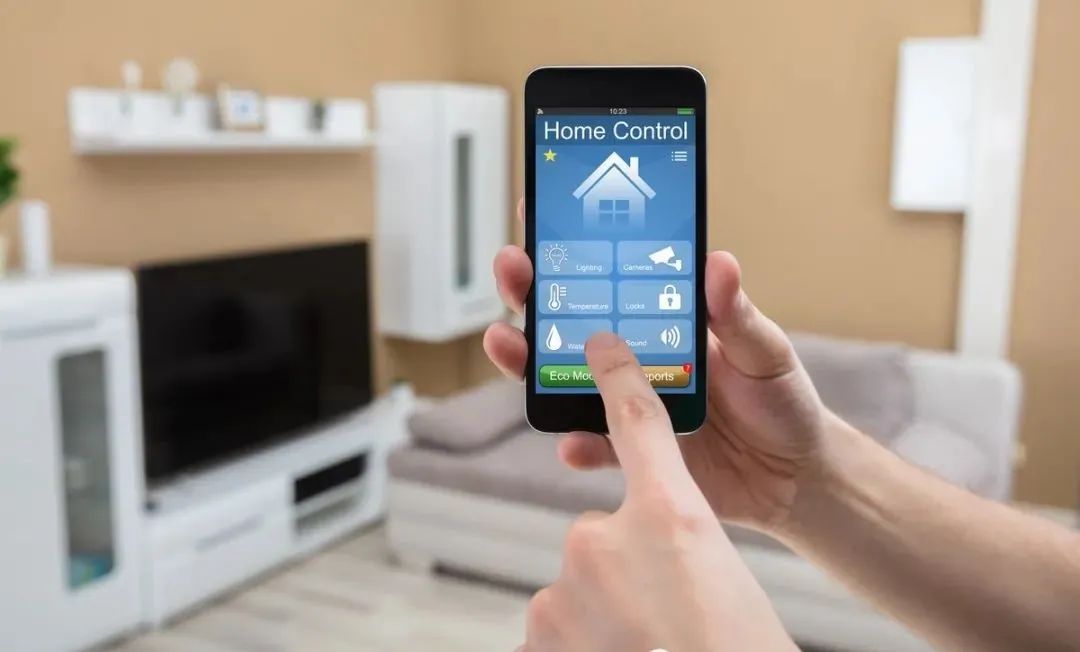
Smart home refers to using different methods and devices to enhance people’s living capabilities, making homes more comfortable, safe, and efficient. The application of IoT in smart homes can monitor the location, status, and changes of home products, analyze their change characteristics, and provide feedback based on human needs to a certain extent. The development of the smart home industry is mainly divided into three stages: single product connection, inter-product interaction, and platform integration. The direction of development is first to connect smart home products, then move towards interaction between different products, and finally develop into a smart home system platform. Currently, various smart home companies are transitioning from single product to inter-product interaction.
9. Smart Retail
Within the industry, retail is classified into three different forms based on distance: far-field retail, mid-field retail, and near-field retail, represented by e-commerce, malls/supermarkets, and convenience stores/automatic vending machines, respectively. IoT technology can be applied in near-field and mid-field retail, mainly focusing on near-field retail, such as unmanned convenience stores and automatic (unmanned) vending machines. Smart retail aims to digitally upgrade and transform traditional vending machines and convenience stores to create an unmanned retail model. By analyzing data and fully utilizing customer flow and activities within the store, better services can be provided to users, and higher operational efficiency can be offered to merchants.
10. Smart Agriculture
Smart agriculture refers to a new agricultural production method that deeply integrates IoT, artificial intelligence, big data, and agriculture, achieving information perception, precise management, and intelligent control throughout the entire agricultural production process. It can realize agricultural visualization diagnostics, remote control, and disaster early warning functions. IoT applications in agriculture mainly focus on two aspects: agricultural planting and animal husbandry.
Agricultural planting collects data through sensors, cameras, and satellites, achieving digitization of crops and mechanical equipment (mainly referring to the IoT of agricultural machinery). Animal husbandry refers to using traditional ear tags, wearable devices, and cameras to collect data on livestock and poultry products. By analyzing the collected data and using algorithms, the health status, feeding conditions, location information, and estrus prediction of livestock and poultry products can be accurately managed.
Source: Kuai News