When mobile phones can suddenly “connect directly to satellites,” when the three major operators collectively enter the fray, and when the user count skyrockets past ten million — is the “golden age” of the Internet of Things really here? With a flurry of policy dividends being released, how can enterprises take off on this wave? This article will unlock the secrets of the trillion-dollar market!
01
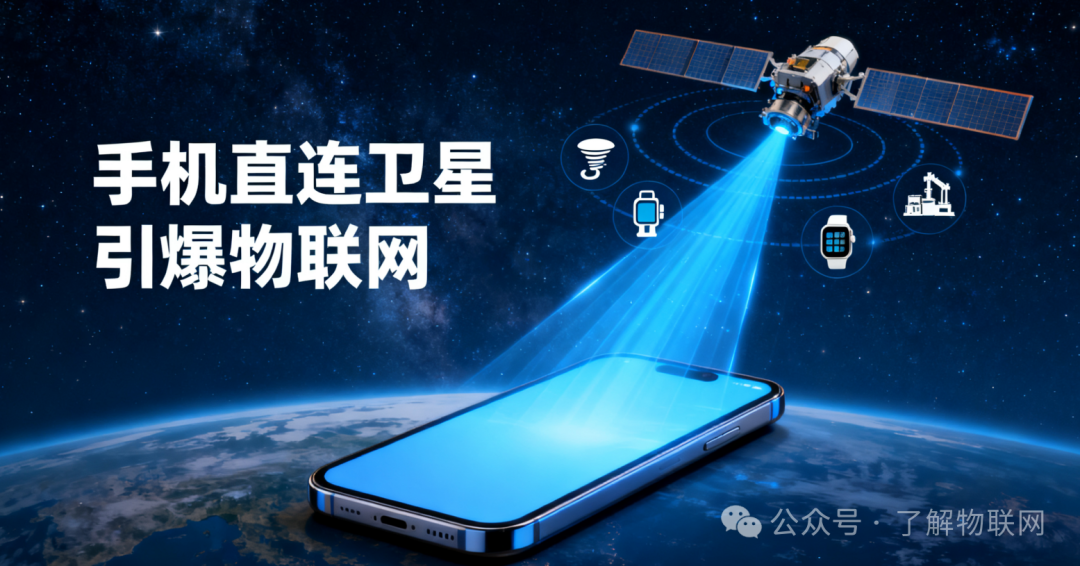
Phenomenal ExplosionDirect satellite connection for mobile phones opens a “new avenue” for the Internet of Things
- The “technological revolution” behind ten million users
The direct satellite connection technology enables “communication without ground stations,” completely breaking the application barriers of the Internet of Things in remote areas. As of Q3 2024, the number of related users from the three major operators has exceeded 12 million, with emergency communication, marine fisheries, and smart mining scenarios accounting for over 60%.
- Operators’ “arms race” escalates
|
Operator |
Core Layout |
Key Goals / Achievements for 2024 |
|
China Mobile |
Launch of the “Tiantong-1” series of satellites, introduction of “integrated communication and navigation” terminals |
IoT coverage in remote areas reaches 95% |
|
China Unicom |
Collaboration with Tesla for in-vehicle satellite communication |
Expected shipment of in-vehicle terminals exceeds 5 million |
|
China Telecom |
Focus on “satellite + 5G” integrated networking |
IoT module subsidies reach 30% |

02
Policy Dividend “Combination Punch”How to claim the “money bag” given by the state?
- A list of real financial support
National-level policy: “Three-Year Action Plan for New Infrastructure Construction of the Internet of Things” (2023-2025) with a total central government subsidy exceeding 50 billion, focusing on supporting satellite IoT, edge computing, and other technology R&D.Local supporting policies: Provinces such as Jiangsu, Guangdong, and Zhejiang provide up to 20% fixed asset investment subsidies for satellite IoT projects; Sichuan and Shaanxi offer three years of tax reductions for IoT enterprises in the central and western regions.Special subsidies: R&D subsidies for IoT terminals (up to 5 million yuan per product), funding support for cross-border IoT projects (up to 10 million yuan), and an increase in the R&D expense deduction ratio to 175%.
- Pitfall Guide: Common Misunderstandings in Enterprise Applications
Misunderstanding 1: Focusing only on central subsidies while ignoring local “case-by-case” special policies (e.g., some cities offer additional subsidies for small and micro enterprises);Misunderstanding 2: Overemphasizing hardware procurement while neglecting software platforms, which does not meet the “intelligent transformation” subsidy requirements (a data platform or AI algorithm application is required);Misunderstanding 3: Failing to pre-register cross-border data flows, leading to project acceptance failures (enterprises involving overseas terminals must apply for a “Data Exit Security Assessment” in advance);Misunderstanding 4: Missing the application window (most policies are applied quarterly, and late applications are not accepted).
|
Province/Level |
Policy Name |
Application Node |
Official Source Link |
Remarks |
|
National Level |
Collection of Typical Cases Empowering Industry Development through IoT |
Online application: Deadline August 23, 2024; Provincial recommendation: Deadline September 13, 2024 |
Ministry of Industry and Information Technology Office |
Applicable nationwide, covering satellite IoT, industry applications, and other scenarios |
|
Guangdong Province |
Application for Provincial Matching Funds for National Major Science and Technology Projects (including IoT) |
Enterprise application: Deadline April 9, 2024; City recommendation: Deadline April 16, 2024 |
Zhuhai Municipal Government (Guangdong Province Policy Forwarding) |
Applicable to enterprises undertaking national major IoT projects |
|
Guangzhou, Guangdong Province |
Special Funds for Promoting High-Quality Development of the Industrial and Information Industry (IoT Category) |
Online application: Deadline March 4, 2024; Modification submission: Deadline March 15, 2024 |
Guangzhou Municipal Bureau of Industry and Information Technology |
Local special subsidies, including IoT terminal R&D and scenario applications |
|
Zhejiang Province |
Agricultural IoT Base Subsidy Project |
First batch: Deadline July 15, 2024; Second batch: Deadline September 1, 2024 |
Yueqing Municipal Government (Zhejiang Province Policy Forwarding) |
Focusing on agricultural IoT, digital fishing grounds, and other rural revitalization scenarios |
|
Hunan Province |
Collection of Typical Cases Empowering Industry Development through IoT (Provincial Recommendation) |
Enterprise application: Deadline August 23, 2024; Provincial recommendation: Deadline August 28, 2024 |
Hunan Provincial Government |
Implementing the Ministry of Industry and Information Technology policy, with a maximum of 10 projects recommended at the provincial level |
|
National Level (Education Sector) |
Special Topic on Intelligent IoT Innovation Education |
Application deadline: December 25, 2024 |
Center for Development of Scientific Research in Higher Education, Ministry of Education |
Supporting IoT research and teaching reform in universities, with funding of 100,000 to 500,000 yuan per project |

03
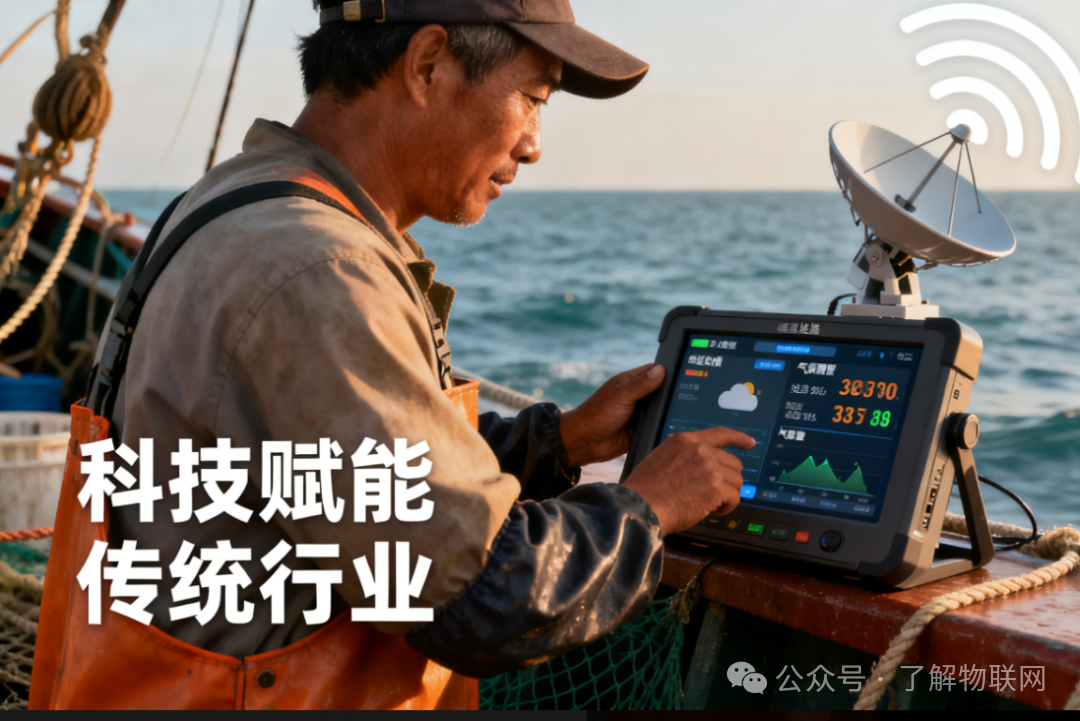
Three “Grassroots Comeback” Case StudiesCase 1: Fisherman Lao Zhang’s “Satellite +” Business — Annual Income Increase of 200,000Fisherman Lao Zhang from Zhoushan, Zhejiang, achieved through China Mobile’s “onboard satellite terminal”:
- Real-time fish price transmission: Connecting to national aquatic wholesale markets, reducing intermediate losses by 30%;
- Automatic weather warnings: Avoiding disasters such as typhoons and heavy rain in advance, reducing annual losses by over 100,000;
- Policy subsidies: Each terminal receives a government subsidy of 3,000 yuan, with the fisherman only paying 1,500 yuan;
- Extended revenue: Accessing the “smart fishery platform” through the satellite terminal, obtaining low-interest bank loans (annual interest rate of 3.8%).
Case 2: Small Factory Saves 500,000 Annually with “Policy Calculator”A certain IoT module enterprise in Shenzhen (50 employees) enjoys policy dividends through the following combination:
- Applying for “Specialized, Refined, Characteristic, and Innovative” enterprise recognition: Receiving a one-time reward of 200,000 + priority in government procurement;
- R&D expense deduction: Annual R&D investment of 1.2 million yuan, saving 300,000 in taxes;
- Participating in the “Spark Chain Network” pilot: Free use of national blockchain infrastructure, saving server costs of 100,000 yuan;
- Applying for the “Shenzhen IoT Industry Fund”: Obtaining a 1 million yuan low-interest loan (annual interest rate of 2.5%).
Case 3: Opportunities in the “Sinking Market” for County Service ProvidersAn IoT service provider in a certain county in Hubei focuses on rural security scenarios:
- Using “satellite + 4G” integrated terminals to provide remote monitoring services for township schools and nursing homes;
- Enjoying local “rural revitalization” special subsidies: Receiving 500 yuan subsidy for each deployed terminal, deploying 2,000 terminals annually, totaling 1 million yuan in subsidies;
- Profit model: Service fee (30 yuan per household per month) + data services (providing rural security data to agricultural departments).
04
Where is the next opportunity?
- Technologists: Will satellite IoT replace 5G as the mainstream? Where is the fusion point of edge computing and satellite communication?
- Entrepreneurs: Besides subsidies, what other policy supports do enterprises need? (e.g., market promotion, talent introduction, supply chain connection)
- Ordinary people: In the era of direct satellite connection for mobile phones, how will our lives change? (e.g., outdoor adventures without signal communication, emergency medical assistance in remote areas)
- Investors: In the segmented track of IoT, which fields are most worth investing in? (satellite terminals, IoT security, industry solutions)
Feel free to share your views in the comments!Previous Recommendations
Lenovo and Chongqing Bishan Strategic Cooperation to Build “AI +” City Super Intelligent Body — IoT Morning Report 20251128
2025-11-28
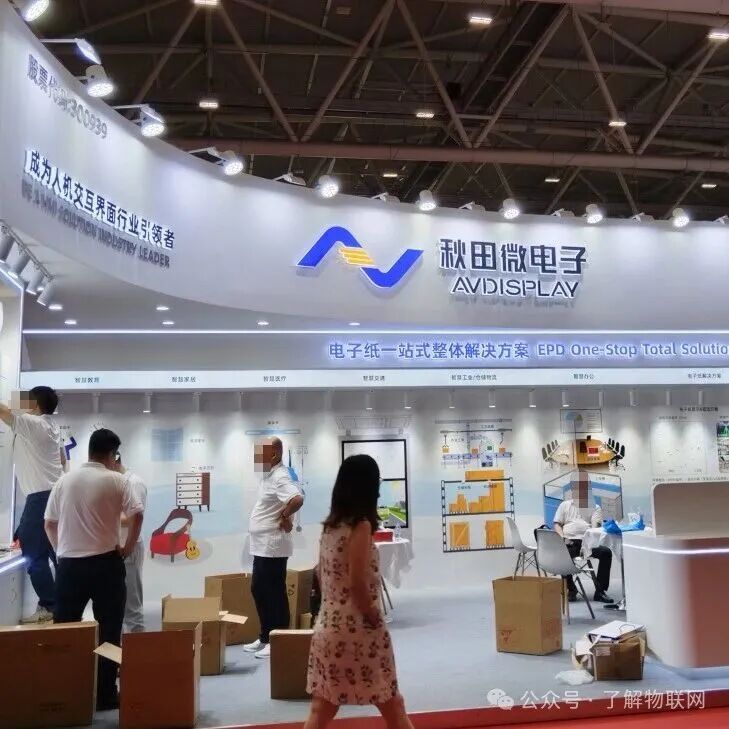
Deeply cultivating the touch display field, AVD Akita Microelectronics creates one-stop solutions for human-machine interfaces
2025-11-28
Zhuzhou Launches 5G Smart Emergency Trauma Integration Platform to Create a New Model for Emergency Treatment of Critical Illnesses
2025-11-28
Midea and BYD Strategic Cooperation to Build a “Human-Vehicle-Home” Smart Ecosystem
2025-11-28
Huawei Partners with Shandong Port Gas to Protect Urban Gas Pipeline Networks with AI Fiber Sensing Technology
2025-11-28
French Company Invests $30 Million to Expand RFID Label Production in the US, Deepening North American Market IoT Morning Report 20251127
2025-11-27
China Mobile Joins Industry to Release Vehicle-Road-Cloud Strategy and 5G+C-V2X Solution to Promote Large-Scale Commercial Use of Smart Connected Vehicles
2025-11-27
Huawei Releases WATCH Ultimate 2 for Extraordinary Exploration, Focusing on Cardiovascular Health and Extreme Safety Assurance
2025-11-27
Nanjing Zhongke Micro: Leading IC Design Enterprise in the IoT Communication Field
2025-11-26
GAC Toyota Applies RFID Solutions to Empower Lean Logistics and Unmanned Operations
2025-11-27
Feel free to like, share, and recommend