Smart factories are categorized into four levels: basic, advanced, excellent, and pioneering. We have witnessed the “breakthroughs” of basic smart factories and the “full-line integration” of advanced smart factories. Today, we turn our attention to the pinnacle of the pyramid—excellent smart factories. They are not only the culmination of automation but also the highest standard of intelligent manufacturing. What do these factories look like? What qualifies them to represent the peak level of advanced manufacturing in China? Let’s first visit a production base that uniquely achieves intelligent manufacturing of excavators across the entire process.
Reporter Visit: Collaborative Robots Manufacturing Excavators

Reporter Zhang Congjing:Manufacturing excavators may not be surprising, but have you seen robots producing excavators? In this smart factory, the main workforce consists of various types of robots. They can not only move items by themselves but also screw bolts as they enter the factory. How do these cyber workers perform their tasks? Let’s take a look inside the factory.
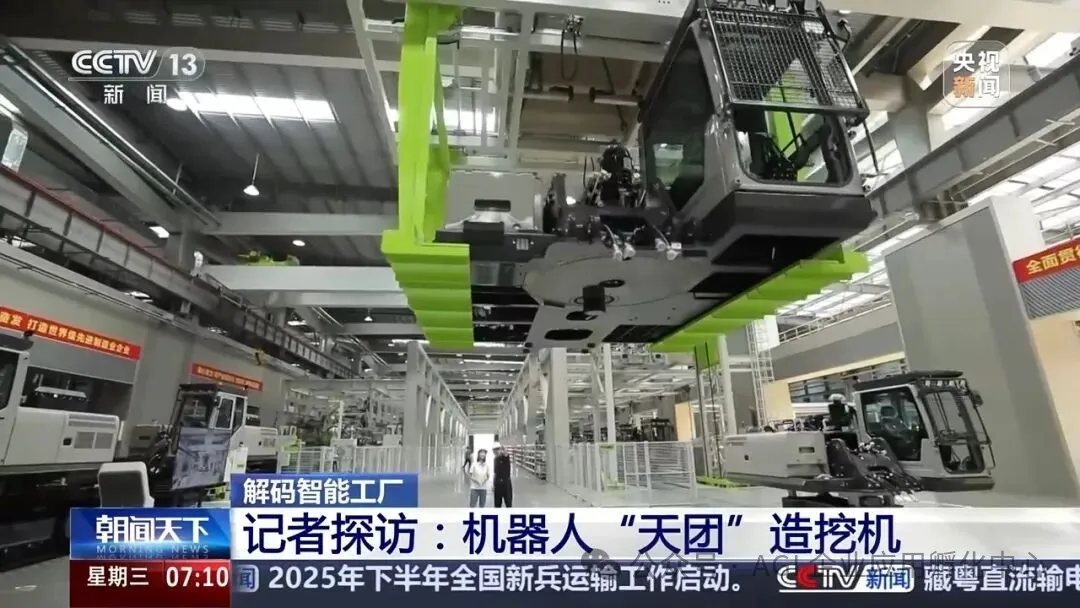
Walking into the production line, industrial robots are busy “performing their duties”. They not only have flexible “robotic arms” but also carry nine “eyes” on top, scanning the position and status of workpieces in real-time.
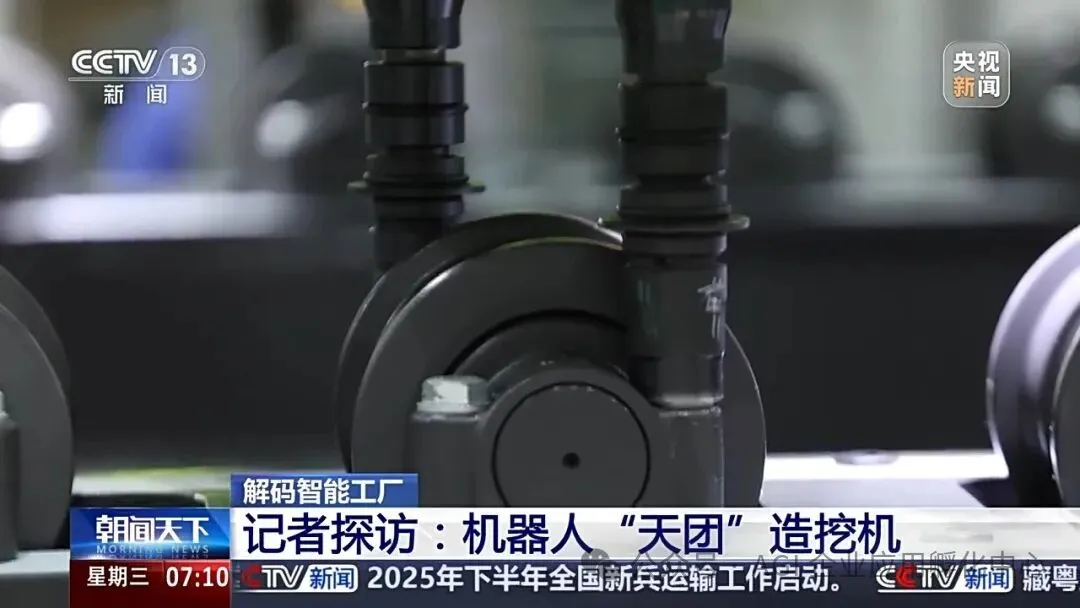
This robotic arm is securely tightening bolts onto the excavator’s body, performing the task quickly and steadily. Even when faced with complex procedures like “joining the upper and lower bodies”, it can complete the alignment accurately without human intervention.

Mao Qing, Deputy General Manager of Zoomlion Earthmoving Machinery Company:This is our intelligent assembly device, which operates without human intervention. Previously, it required five employees, but now, with our intelligent enhancements, one person can oversee the assembly process.
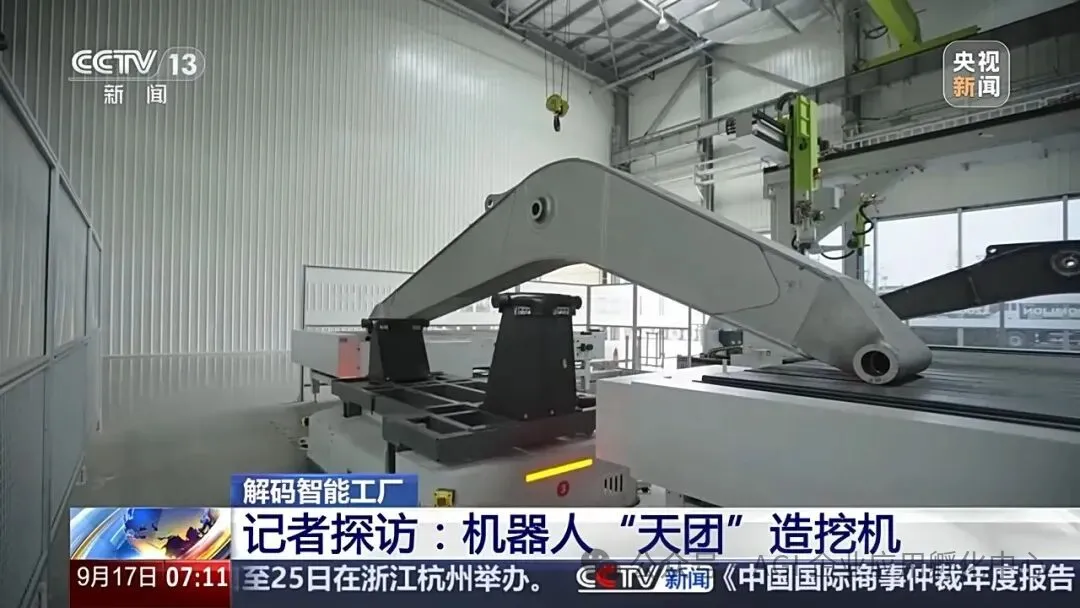
In this factory, nearly 1,000 industrial robots are distributed across 60 highly flexible intelligent production lines, handling all six core processes of excavator production—from steel plate cutting, welding, machining, to painting, assembly, and debugging. They achieve millimeter-level precision during complex bevel processing, operate 24 hours a day in a “dark factory” mode without human presence, automatically schedule materials in intelligent warehousing, and efficiently transport goods in aerial logistics systems, creating a fully automated production system.
The reason these industrial robots can work so “harmoniously” together is due to the factory’s independently developed “smart brain”.

Zeng Guang, General Manager of Zoomlion Zhongke Cloud Valley:You can think of the entire super factory as a giant symphony orchestra, with these industrial robots acting as individual musicians. The industrial internet platform performs extensive calculations, orchestrating the entire factory in an orderly manner, allowing the whole orchestra to play a symphony in unison.
Reporter Visit: Humanoid Robots as “Apprentices” in the Factory
In addition to these experienced industrial robots, the factory has recently welcomed a batch of “new apprentices”—humanoid robots.

Zhang Congjing:This “cyber worker” has just started its job and is familiarizing itself with its tasks and environment. You can see it is currently identifying and memorizing these components; its role is that of a sorter, and after training, it will be able to complete sorting tasks quickly and accurately.
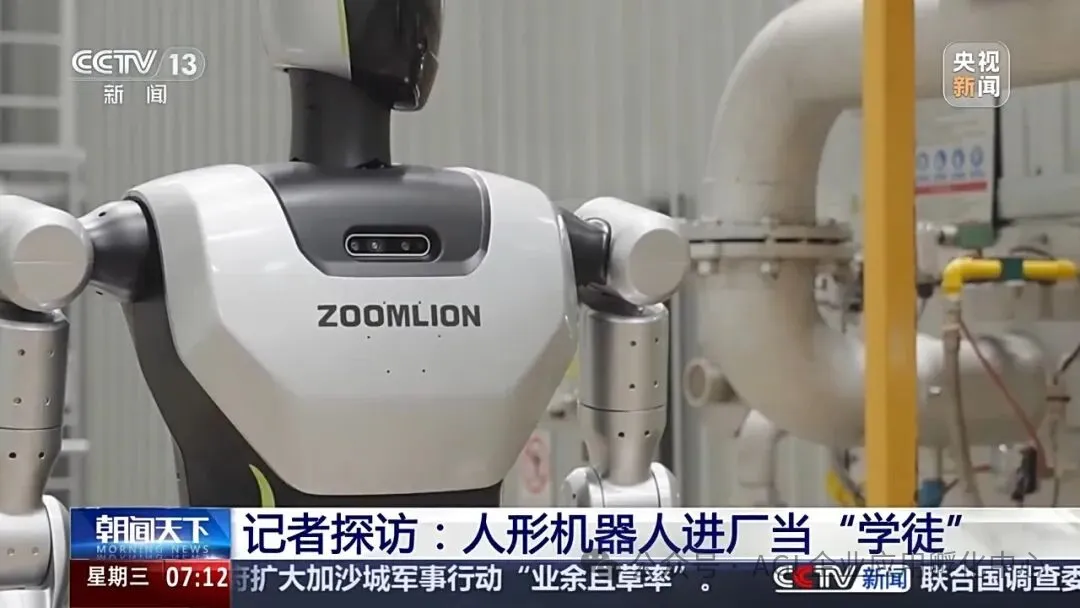
On the assembly line, a humanoid robot is focused on screwing bolts into holes; not far away, another is retrieving high-temperature stamped plates and can also adjust welding positions, taking on dangerous tasks previously handled by humans. Currently, there are over ten “cyber workers” stationed at different positions, while more humanoid robot “apprentices” are waiting for their opportunity in the back of the production line.
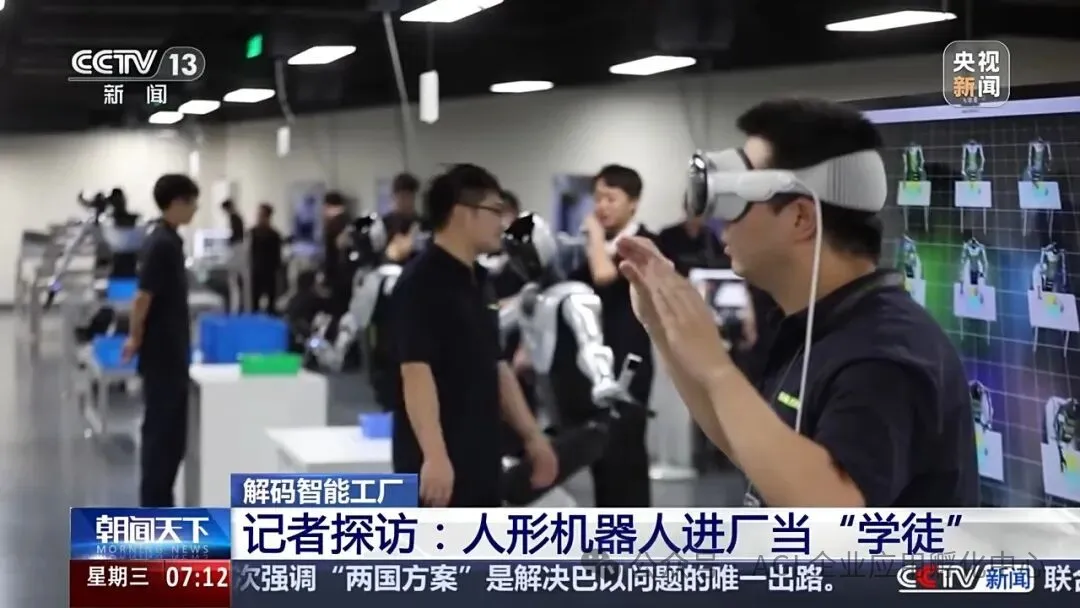

Zhang Congjing:As you can see, the robots are undergoing pre-job training here. Through continuous training, their speed, precision, and accuracy can be improved. In the future, these robots will be better adapted to different work environments and capable of handling more job types.
To expedite the training of humanoid robots, the factory has built a training ground with nearly a hundred stations, continuously conducting large-scale data collection and skill training. Additionally, a platform for embodied intelligence has been developed, which includes cloud-based super brains, end-to-end algorithm models, and a complete toolchain from data collection, processing, labeling, to model training, evaluation, and inference deployment. Through this platform, all industrial robots and humanoid robots achieve interconnectivity, ensuring autonomous evolution and closed-loop production, laying a solid foundation for future higher-level intelligent production.
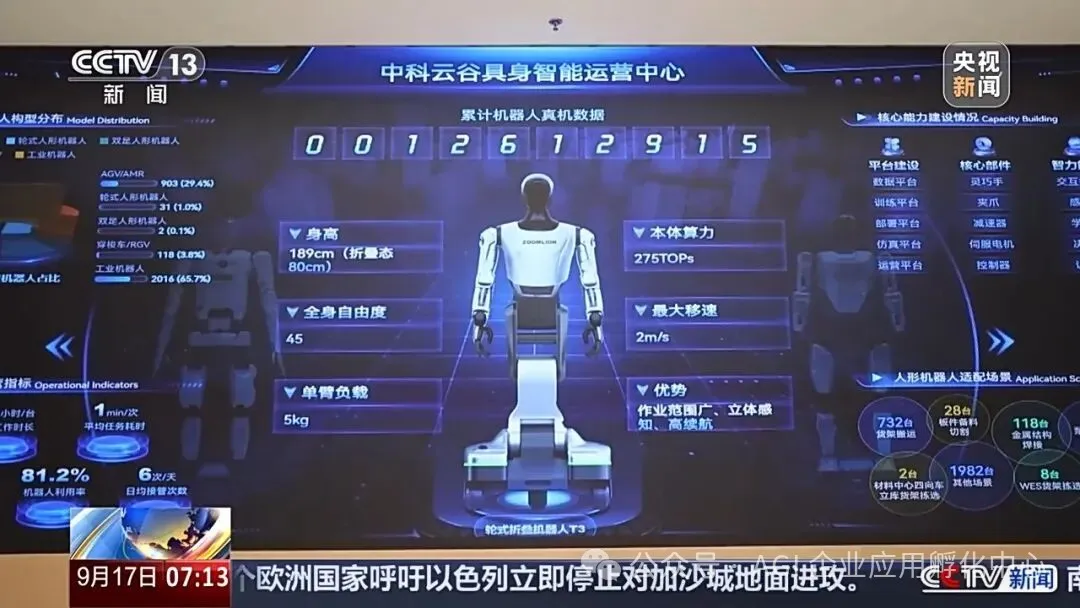

Mao Qing:By evolving the collaboration between software and hardware, we are forming a new production model where clusters of industrial robots and humanoid robots work together, evolving from the current agile manufacturing of multi-variety, small-batch production to future personalized customization of single items, creating a new type of intelligent factory that is self-aware, adaptive, and self-decision-making.
Reporter Observation: How Data Drives High-Speed Rail Manufacturing?
The top-tier capabilities of excellent smart factories are not only reflected in the robotic production of heavy equipment but also in the precision and reliability required in manufacturing fields. Its core lies in the integration of “full-process intelligent decision-making”, driven by data to enhance quality and efficiency, leading the manufacturing industry towards high-end and refined development.
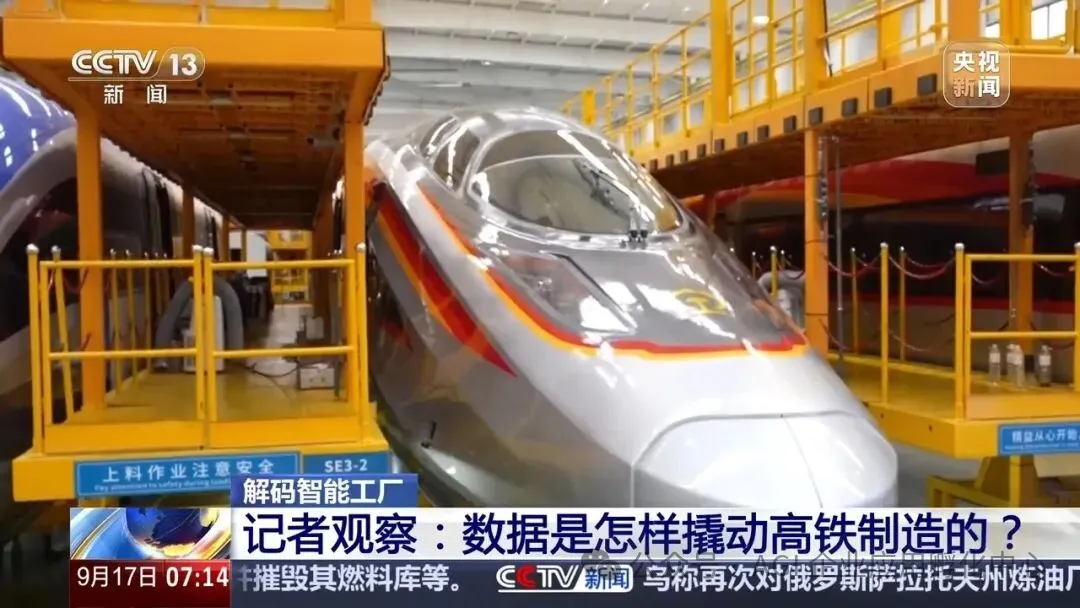
This automated workshop produces train wheels weighing 800 pounds. Here, five high-speed train wheels and four subway wheels can be produced in a day. According to quality requirements, new wheels must be able to run 1.2 million kilometers without issues. How is such a stringent standard achieved?
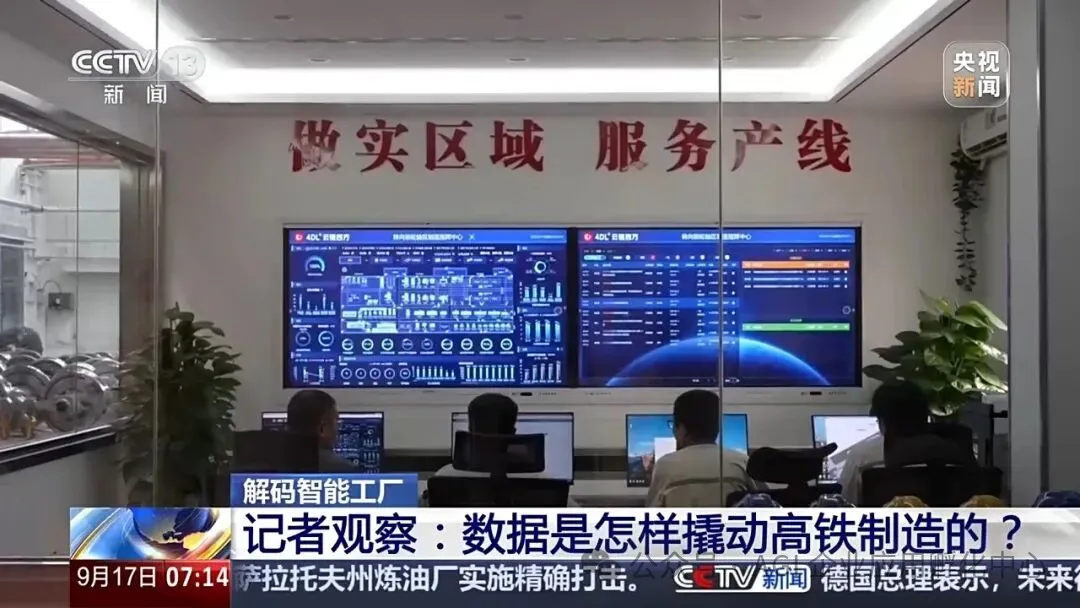
In the production command center, reporters saw various production data displayed in real-time on a large screen. Technicians explained that unlike typical industrial internet systems, the data here not only synchronously displays the human-machine interaction status at each stage but also directly undertakes command and scheduling functions.
At this moment, a warning event appears on the screen, indicating that there is “idling” at the axle box electrical assembly station.
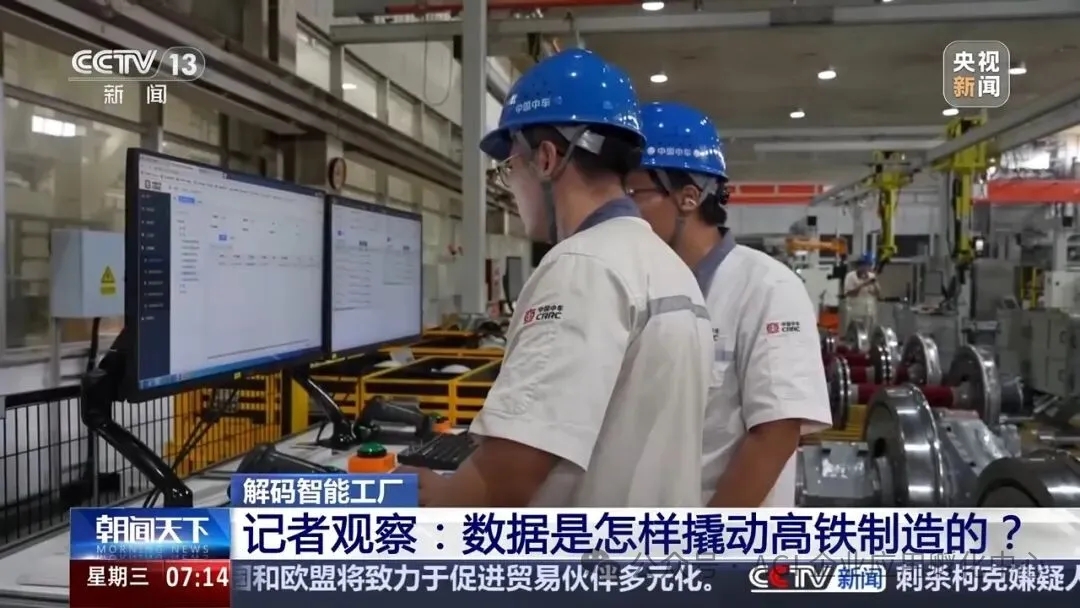

Sun Jinfang, Process Manager of CRRC Qingdao Sifang Locomotive Wheel Axle Intelligent Manufacturing Workshop:We discovered an anomaly in personnel information collection, which needs to be resolved within four hours.
Staff informed reporters that data-driven approaches ensure that every operational detail in the automated workshop is under strict standard supervision: from raw material specification testing, to processing parameter settings, and finally to finished product precision verification, every step has data records and verifications, leaving no room for violations or product defects.
More importantly, data empowerment has also solved the “precision challenge” in high-speed rail manufacturing. In the “press-fitting” process between wheels and axles, the inner diameter of the wheel is slightly smaller than the outer diameter of the axle, requiring over 80 tons of pressing force to achieve the “small ring fitting over the large axle”. Each wheel’s inner diameter and each axle’s outer diameter have minute errors, which previously made precise matching impossible by hand, often leading to uneven bonding strength. Now, intelligent algorithms automatically collect the size data of each pair of parts, calculating the “golden matching ratio” to ensure that the bonding strength of each wheel and axle pair is completely consistent, meeting the safety requirements for high-speed rail operation.
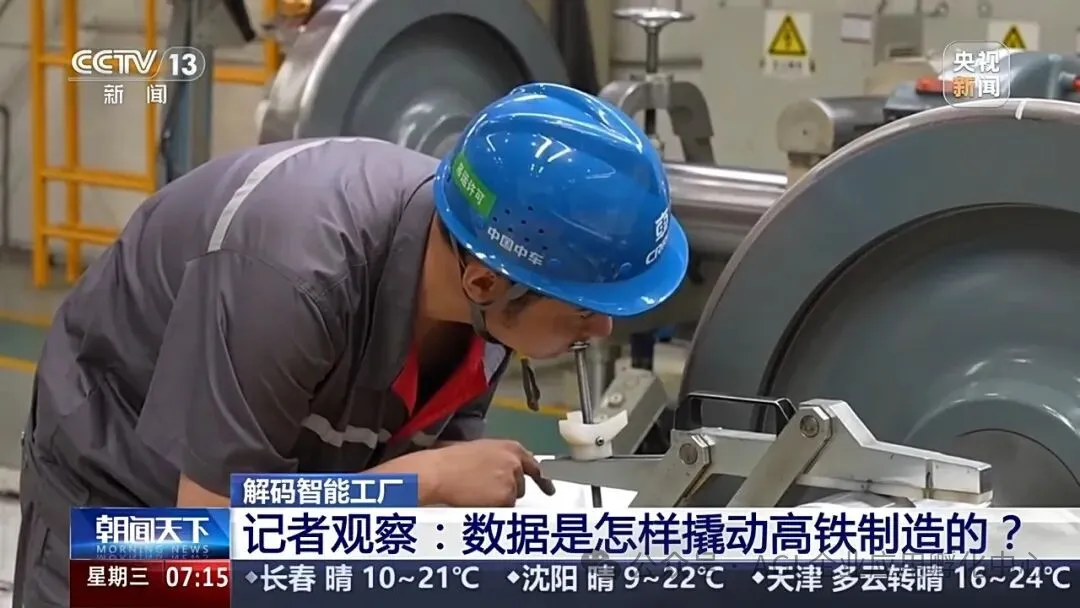

Xu Feng, Deputy Director of the Technical Engineering Department of CRRC Sifang Co., Ltd:We have achieved a full-process intelligent closed loop from process to manufacturing, to on-site information execution, and finally to information collection, judgment, and feedback, allowing data to run through the entire process, driving quality and efficiency improvements through intelligent decision-making.
Currently, this high-speed rail production factory has improved production efficiency by 20%, reduced personnel input by 30%, and compressed the average manufacturing cycle of complete vehicles by five days. This “efficient, flexible, agile response, human-machine collaboration, dynamic scheduling, and data-driven” excellent intelligent factory has become an industry benchmark—today, 43% of domestic high-speed trains, 90% of intercity trains, and 30% of subways are produced here, providing solid support for the development of China’s rail transit industry.
Excellent Smart Factories as a Benchmark for “Made in China”
From robotic cluster operations in heavy machinery to precise data control in high-speed rail manufacturing, excellent smart factories demonstrate the core capability of “full-process intelligent decision-making” across different fields. How does this capability drive the upgrade of the manufacturing industry? Let’s hear the experts’ interpretations.
Currently, over 230 excellent smart factories cover 31 provinces (regions, cities), encompassing more than 80% of major manufacturing industry categories, representing the highest level of intelligent manufacturing in China today.

Li Muzhai, Assistant Researcher at the Institute of Electronic Information Industry Development:Excellent smart factories have achieved real-time data collection and analysis applications in research and development, production, and operational management, enabling intelligent control and online optimization throughout the entire product lifecycle and supply chain.
Experts point out that the most significant highlight of excellent smart factories lies in the deep penetration of artificial intelligence technology throughout all business processes—from intelligent assistance in product research and development, intelligent production scheduling, to intelligent operational decision-making and supply chain optimization, achieving “data-driven” and “intelligent decision-making”, allowing factories to upgrade from “automated production” to “intelligent operation”.

Li Muzhai:Excellent smart factories emphasize the comprehensive application of artificial intelligence, achieving intelligent decision-making across all business processes. This comprehensive intelligent control not only enhances the competitiveness of enterprises but also sets a transformation example for the industry.
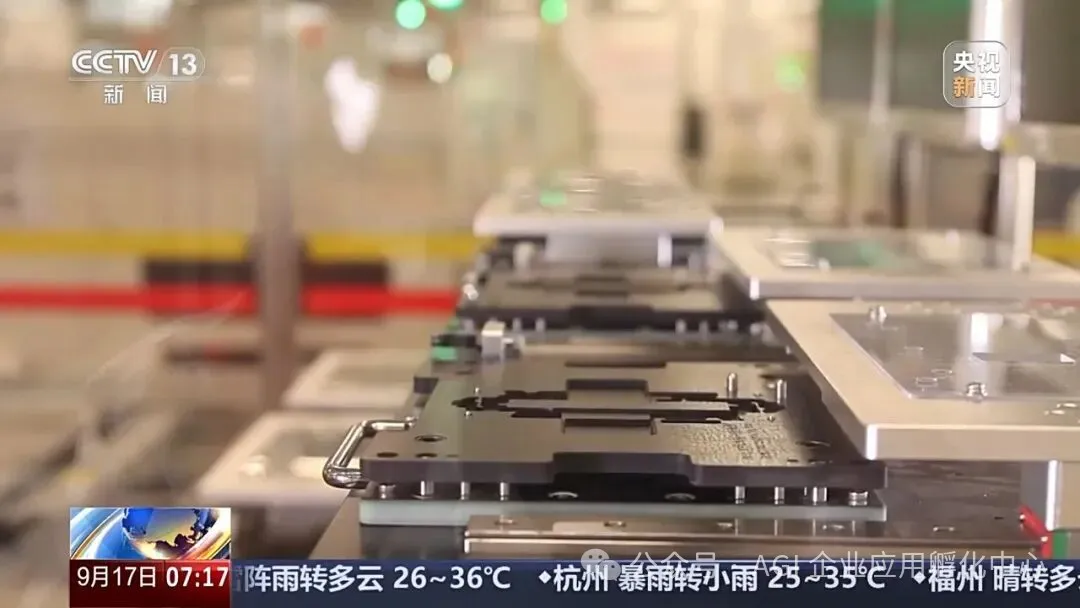
Data shows that among the more than 230 excellent smart factories cultivated in China, the average product development cycle has been shortened by 28.4%, production efficiency has increased by 22.3%, the defect rate has decreased by 50.2%, and carbon emissions have been reduced by 20.4%, achieving significant results in quality improvement, efficiency enhancement, cost reduction, and carbon reduction.

Wang Jian, Academician of the Chinese Academy of Engineering:Artificial intelligence can detect flaws and curves in the entire production process that are invisible to the naked eye, potentially changing the entire production process and improving efficiency in ways that are not visible to the human eye, which is very promising.
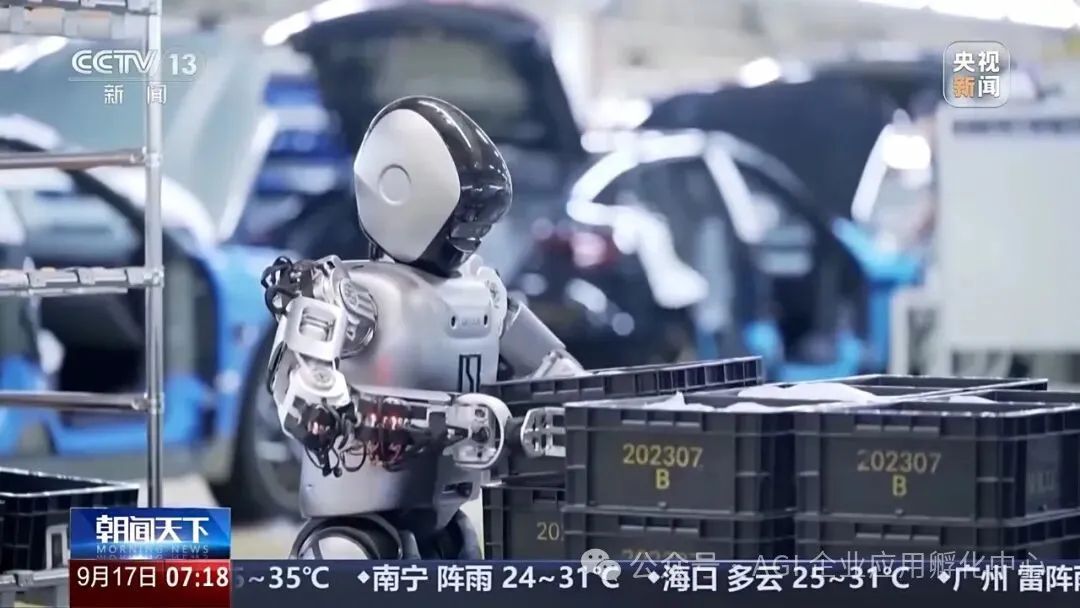
According to statistics, the current density of robots in China’s manufacturing industry has reached 470 units per ten thousand people, far exceeding the global average. The manufacturing industry is undergoing comprehensive innovation and upgrade, with flexible adjustments in production line switching, autonomous optimization; precise prediction of equipment failures, remote intervention; and on-demand generation and personalized definition of product functions, marking a new stage of intelligentization in China’s manufacturing industry characterized by full-factor collaboration.
Source: CCTV News