Author | Mai Lin
As the undisputed leader in consumer drones, DJI Innovation is not only a pioneer in bringing China’s smart hardware industry to the global stage but also a fertile ground for nurturing countless talents and brands.
Founded over a decade ago, DJI has built a vast ecosystem centered around flight platforms, covering handheld imaging, industrial applications, smart robotics, and more. Its deep technical accumulation and talent reserve not only drive DJI to maintain a leading position in various niche markets but also supply numerous top entrepreneurs to various industries.
These entrepreneurs who have left DJI to start their own ventures have branched out into fields such as 3D printing, mobile energy storage, and lawn-mowing robots, giving rise to a series of DJI-affiliated brands—Tuozhu Technology, Zhenghao Innovation, Songling Robotics, and more.
However, as industry competition intensifies, DJI finds itself under pressure for growth and talent anxiety, eager to tap into new growth points while struggling with the increasing scarcity of core talent.
Now, as DJI ventures into new territories, a commercial cold war is quietly unfolding…
Tuozhu’s Founder Accuses DJI
The 3D printing arena, which is gaining momentum, welcomes a heavyweight player—DJI Innovation.
Recently, industry insiders revealed that the consumer drone giant DJI has invested in a 3D printing company. The latest news indicates that DJI confirmed the investment in the 3D printing company, stating that this investment is based on its optimism about the development potential of consumer-grade 3D printing technology and the industry’s growth potential, aligning with DJI’s consistent philosophy of innovative technology and forward-looking layout.
Of course, this insider is not just anyone but the founder of Tuozhu Technology, Tao Ye. The 3D printing company that received investment from DJI is suspected to be its competitor—Smart派.
As a leader in China’s smart hardware industry, it is entirely reasonable for DJI to enter the booming 3D printing market. However, this also means that once DJI officially enters the field, it will inevitably face a direct confrontation with Tuozhu Technology, which currently holds the top position.
A commercial cold war is thus brewing.
Just last weekend, a lengthy article by Tuozhu Technology’s founder Tao Ye attracted widespread attention in the industry. He revealed that DJI had added special clauses targeting Tuozhu in the investment agreement, explicitly stating that he is 99.9% sure this is due to talent moving towards touching the reverse scale of their former employer.
“The competition in technology is essentially a competition for talent. Ten years ago, the boss said, ‘We cannot let competitors find gaps to make money; once they have money, they will compete for talent, and that will be the biggest trouble.’ This thing he feared the most has not happened, but DJI’s talent has left the drone industry for other developments for various reasons.”
As a “talent cradle” in the smart hardware industry, DJI has supplied countless entrepreneurial leaders to various sectors, giving rise to brands like Zhenghao Innovation, Zongguan Innovation, and Songling Robotics, successfully establishing the name “DJI System” in the industry.
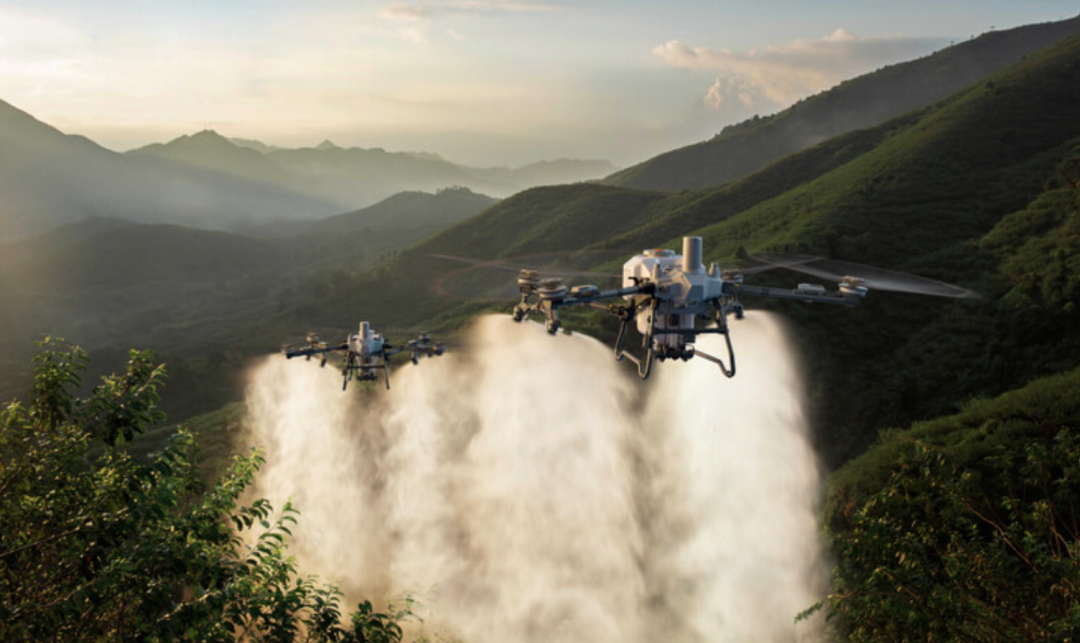
Image Source: DJI
Now, leading the 3D printing market, Tuozhu Technology’s founding team also has deep ties with DJI. Public information shows that Tuozhu Technology’s founder and CEO Tao Ye was previously the head of DJI’s consumer drone division, leading the development of star products like the Mavic Pro, while the CTO, COO, and chief engineer also held important positions at DJI.
As the “DJI System” represented by Tuozhu Technology continues to branch out and grow, the competitive pressure they bring as rivals in various sectors is also escalating. In response, Tao Ye stated, “The capital market is now somewhat afraid of missing out on the ‘DJI System,’ giving projects high premiums, leading to a trend where DJI’s people go out to start businesses, and entrepreneurs each take a group of core members with them.”
It is evident that Tao Ye’s lengthy article releases a significant signal: the loss of talent and the accelerated rise of the “DJI System” are bringing increasing growth anxiety to this smart hardware giant.
The “DJI System” Closing In
As a top player with both strength and popularity, why is DJI being publicly named by its “younger generation”?
Regarding the special clauses set by Tuozhu in the investment agreement, the core logic lies in the competition for core talent, a fundamental strategic resource.
Brand Ark believes that the essence of the market’s recognition of the “DJI System” is that entrepreneurs have spent years crawling and rolling in this smart hardware “Huangpu Military Academy,” inheriting DJI’s product philosophy, technical methodology, and unique organizational culture, which have been tested by the market. This includes the brand philosophy of product supremacy, the ability to strike down through technical reuse, and a global strategic vision.
With this set of business logic and approach derived from DJI, countless “DJI System” brands have emerged in various niche markets of the smart hardware industry, achieving deep global penetration and forming a hot phenomenon of high evaluations and high premiums in the capital market. Now, as DJI’s business landscape expands, it inevitably encounters these rivals, using the “DJI approach” to counter DJI.
Looking at Tuozhu Technology, its core founding team comes from DJI. These former employees rely on their technical experience to thrive in the 3D printing market, quickly growing into a formidable competitor that DJI cannot ignore.
From the perspective of Tuozhu Technology’s founder, if the outflow of talent from DJI is an “export” issue, then in the current “import” recruitment phase, some excellent candidates are choosing to join Tuozhu rather than DJI under the same conditions, which undoubtedly poses a direct impact on DJI’s talent attraction.
Image Source: DJI
DJI’s investment in this 3D printing company is a strategic defensive posture in the face of the growing competitive threat from Tuozhu Technology, using capital means to restrain Tuozhu’s development momentum.
It is understood that the 3D printing company invested by DJI is suspected to be Smart派 ELEGOO. Once officially entering the market, it may help ELEGOO fill the gaps in channels and technology, thus stirring the competitive landscape of the consumer-grade 3D printing industry.
From Tuozhu Technology’s perspective, it actually foresaw the trend of industry involution as early as the end of 2022 and took precautions by securing financing. The lengthy product development cycles of competitors have given Tuozhu more time to grow. Therefore, from the founder’s viewpoint, regardless of how capital plays out, the 3D printing industry ultimately relies on products to speak, returning to the essence of technological innovation and user experience.
It must be said that Tuozhu’s success largely depends on replicating the “DJI methodology”—transforming professional technology into consumer-grade explosive products through innovative research and development and systematic engineering capabilities. DJI’s entry is not only a recognition of the success of this methodology in the 3D printing field but also, in a sense, a challenge to its former “students” using the same rules of the game.
DJI’s Transformation Troubles
In the face of this undercurrent of commercial sniper warfare, many may still have questions: Why is DJI, as a “talent cradle,” experiencing anxiety over talent loss?
In fact, this is largely due to the fact that, as the growth ceiling of its main business becomes apparent, DJI is inevitably entering a period of growing pains.
Public information shows that DJI’s revenue in 2024 is expected to be around 80 billion yuan, with a net profit margin approaching 40%. However, behind the glamorous performance data, the slowdown in growth is an undeniable fact.
In the consumer drone sector, DJI still holds the top position, occupying over 70% of the market share. However, it is undeniable that the main track is becoming increasingly crowded, and the industry dividend is gradually reaching its peak.
During the recent Double Eleven shopping festival, DJI caused a stir in the consumer market due to unprecedented large-scale price cuts, leading to a collective consumer rights protection movement. Behind this lies DJI’s necessity to stimulate sales and recover funds through price reductions due to intensified competition and sluggish growth in its core business.
Moreover, in the international market, DJI is also facing severe regulatory challenges. Reports indicate that the U.S. Fiscal Year 2025 National Defense Authorization Act has included the “Counter China Drone Act,” proposing to ban Chinese drones represented by DJI from entering the U.S. market due to unacceptable risks to national security.
As a result, the DJI Neo 2, which has already been listed globally, has chosen not to officially launch in the U.S. due to the comprehensive ban expected to take effect in December. For DJI, if it has to give up the lucrative U.S. market, it would also be a significant blow to its drone business.
It is evident that DJI’s main business is facing complex challenges both internally and externally, making the search for new business growth points inevitable.
Image Source: DJI
In fact, DJI has long begun to expand its business landscape, cross-border layout in new fields such as panoramic cameras and robotic vacuum cleaners, and investing in 3D printing and eBikes, attempting to open up new growth curves.
However, this also means that while its competitors previously came mainly from the drone sector, it now needs to face strong opponents across multiple tracks, testing its capabilities across the entire chain in terms of talent, technology, channels, and supply chains.
In the smart imaging field, DJI and Yingshi Innovation are locked in a fierce competition, each invading the other’s core territory: DJI releases a panoramic camera, while Yingshi announces the launch of a panoramic drone, presenting a competitive situation akin to mutual “home invasion.”
As the battlefield continues to expand, DJI is increasingly facing direct confrontations with “DJI System” rivals, such as the imminent encounter with Tuozhu Technology in the 3D printing market.
Whether these new businesses can grow into a solid second curve remains to be seen in the market. However, it is clear that the “DJI System” represented by Tuozhu is closing in, competing for talent and resources to seize the future dominance of the industry.
At this stage, DJI is in a critical transformation period. It is attempting to evolve from a disruptor primarily relying on drone hardware and technical barriers to an ecosystem builder fighting on multiple fronts, a process that will inevitably involve growing pains.
For DJI, how to flexibly apply this “DJI methodology” of product supremacy, technology first, and user orientation to more fields is the key breakthrough point for completing its profound transformation.

Selected Past Articles
Global Shortage! Yiwu’s Original Car Toys Sold 2 Million Units in Half a Month, Overseas Prices Soar Several Times
Countdown to Thailand’s Tax Reform! Starting January 1, 2026, All Imported Goods Will Be Subject to Tariffs
TikTok’s E-commerce Battle in Southeast Asia, Thailand Accelerates Its Rise
Anker Innovations’ New Products Sell Out Again, Crowdfunding Amount Exceeds $6 Million
TikTok Shop’s Global GMV Target Shrinks, Reducing in the U.S. but Increasing in Southeast Asia