In this wave of humanoid robot excitement, what is most thrilling is not whether robots can walk faster, but rather the extent to which their hands can perform tasks. Ultimately, whether a robot can truly enter the real world does not depend on how human-like it runs, but on its ability to grasp objects, tighten screws, use tools, fold clothes, open doors, and perform household chores—these actions all rely on the hands. And the hands are precisely the most challenging part of the entire mechanical structure.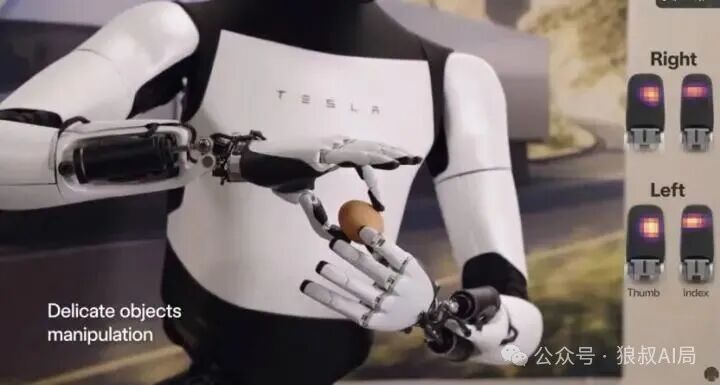 The human hand is incredibly versatile; hundreds of thousands of years of evolution have enabled it to both lift heavy objects and gently pinch a flower petal. This range of capabilities relies on lightweight structures, high degrees of freedom, and complex tendon systems. Traditional robot hands mostly adopt a “one motor per joint” approach, which is simple and straightforward, allowing for quick development and easy control. However, the problems are significant: they are heavy, have high inertia, and generate considerable heat. While they may appear to move, they struggle to achieve the dexterity of a human hand.Tesla’s approach is quite unique; instead of placing motors in the joints, it positions the main actuators in the forearm and uses tendon-like cables to pull the fingers. This transmission method is much more complex than it sounds, requiring management of tension, friction, path planning, fatigue life, and dynamic response—all of which are more complicated than joint motors. However, the benefits are direct: the hand is lighter, more flexible, and less prone to overheating, making its movements appear more human-like. More importantly, this structure significantly increases the degrees of freedom, making complex operations feel much more natural compared to traditional solutions.This is why more and more people in the industry are beginning to reassess the “bionic” approach. Previously, many thought it was too complex, too intricate, and too biological to be feasible or mass-producible. However, Tesla has boldly brought this approach to the forefront, making people realize that to create a truly functional humanoid robot, the hands must evolve in this way; otherwise, they will forever be limited to performing simple tasks at exhibitions.Of course, creating a beautiful prototype is one thing; mass production is another. The precision requirements for the hand’s structural components are extremely high. Even slight assembly errors can lead to uneven tension, unstable movements, and cable wear, making longevity testing particularly challenging. It is easy to have it perform delicate tasks for an hour in a lab, but having it work continuously for ten hours, a day, or a month is an entirely different level of challenge. Not to mention that a single hand may contain hundreds of small parts, making it very difficult to control costs and ensure consistent quality, placing immense pressure on the supply chain.
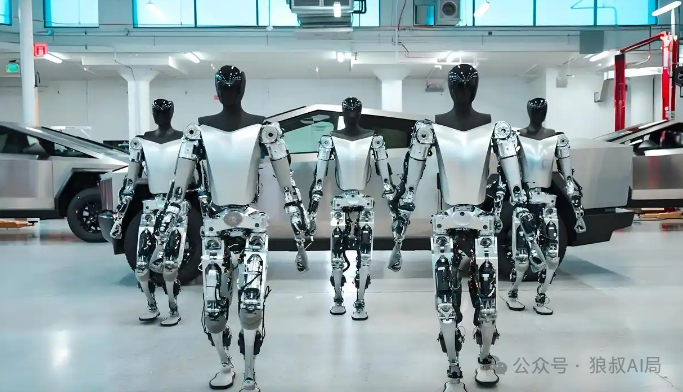 However, Tesla’s confidence lies in its superior experience in scaling production. Its ambition for “a million robots” and “low-cost mass production” is not because the hands are already perfect, but because it knows how to transform a complex product into a repeatable industrial product. The experience accumulated in motors, reducers, materials, processes, and automated production lines makes it more likely than typical robotics companies to scale this endeavor. For the robotics industry, this is more important than the technological breakthroughs themselves, as only by reducing costs and increasing production capacity can robots truly enter factories, warehouses, hospitals, and homes.If this bionic dexterous hand ultimately matures, the boundaries of humanoid robots will be completely expanded. It will be able to operate tools that humans have used for hundreds of years without needing to create a new set of devices specifically for robots; it will be able to complete tasks in the same space as humans without modifying the environment; and it will truly connect perception, decision-making, and action, allowing intelligent agents to step out of the simulated world and into the real world. At that time, people may realize that the so-called “robot revolution” is not a grand slogan, but rather begins with a more human-like “five-finger action”.Indeed, we are still in the early stages, mass production has not yet truly arrived, and maturity will require time to validate, but the direction is already very clear. If the development of the robotics industry over the past few decades has been paving the way, then the bionic dexterous hand is the key to unlocking the next journey. Once this key is fully polished, the world will quietly enter a new era of automation, and we are standing at its threshold.Welcome to follow the “Wolf Uncle AI Bureau” video account for discussions!