Empowering Livelihoods with Smart Cooking: Commercial AI Cooking Robots Leading New Practices in the Restaurant Industry

The restaurant industry is facing a severe labor crisis. Research by the China Hotel Association shows that 78% of restaurant businesses face a labor shortage of over 30% during peak seasons, with recruitment cycles lasting 15-20 days and labor costs surging by 40%. Data from the National Bureau of Statistics indicates that the annual turnover rate of employees in the restaurant industry will reach 65% in 2024, with training costs for new employees accounting for 40% of total recruitment costs. It is estimated that by 2025, the shortage of chefs will reach 3 million, and the shortage of service personnel will reach 4 million.
At the same time, labor costs continue to rise. Following the implementation of new social security regulations, labor costs for restaurant businesses have increased by approximately 27.45%, with the annual cost per employee rising by about 24,000 yuan. Labor costs account for 14%-20% of revenue, with full-service restaurants seeing figures as high as 18%, far exceeding rent and ingredient costs.
01
Commercial AI Cooking Robots: Necessity and Value Analysis
01
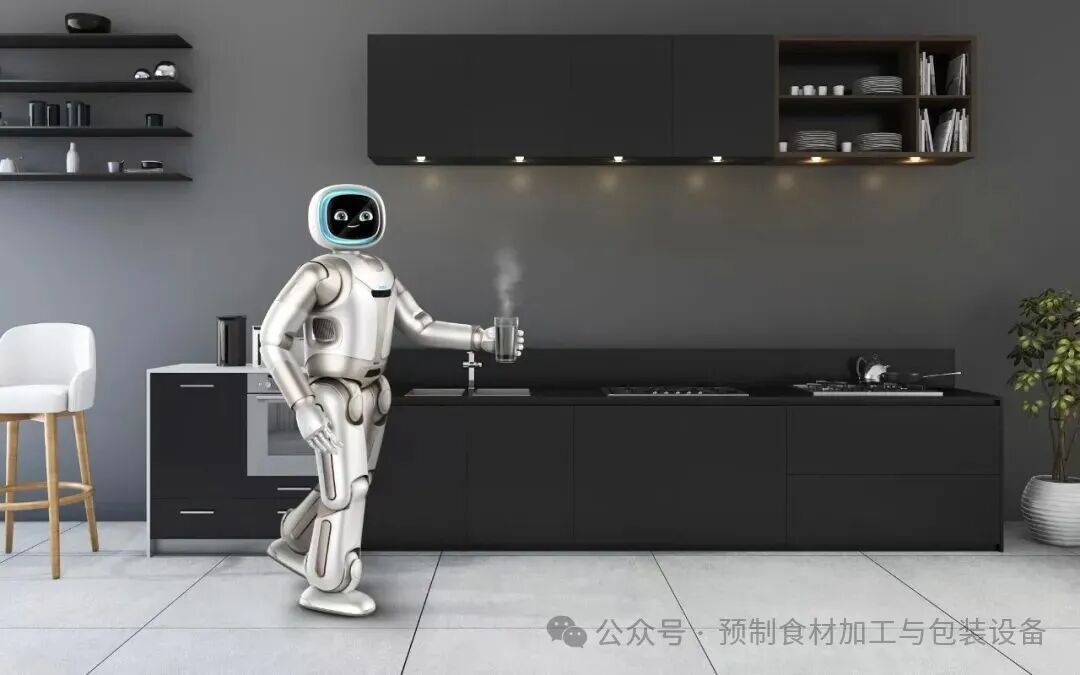
The “Smart Key” to Solving Labor Issues

Labor Replacement: A single AI cooking robot can replace 2-3 chefs (with an average monthly salary of 8,000-15,000 yuan), significantly alleviating recruitment difficulties.
Efficiency Improvement: One person can manage 3-4 AI cooking robots, and the model of “one person coordinating multiple devices” increases kitchen efficiency by 30% and reduces labor costs by 60%.
Training Revolution: Operational training only takes 2 hours, while training a qualified chef takes 2-3 years, reducing training costs by over 95%.
02
The “Digital Engine” for Enhancing Operational Efficiency

Cooking Speed: After using AI cooking robots, cooking time for dishes is compressed by 40%-60%, from 5-10 minutes down to 2-3 minutes, with a maximum cooking capacity of 5 kg per session, and each device can handle 20-60 dishes per hour.
Consistency of Output: AI cooking robots rely on AI temperature control algorithms and stable equipment precision to achieve ±1℃ precise temperature control and 0.1-gram level precise ingredient dosing, ensuring consistent flavors across different stores and times, with the standardization rate for chain brands increasing to 90%.
Space Optimization: Kitchen areas are generally reduced by 20-30%, improving restaurant space efficiency.
03
The “Catalyst” for Industry Upgrade

Standardized Production: Utilizing AI technology to convert chef skills into digital models, achieving “one flavor across a thousand stores” to support chain expansion.
Ingredient Savings: Intelligent dosing and precise cooking reduce ingredient waste by 25%.
24-Hour Operation: AI cooking robots can work continuously around the clock, effectively responding to peak demand while avoiding fluctuations in output quality caused by chefs’ personal conditions.
02
Favorable Conditions for the Development of Commercial AI Cooking Robots
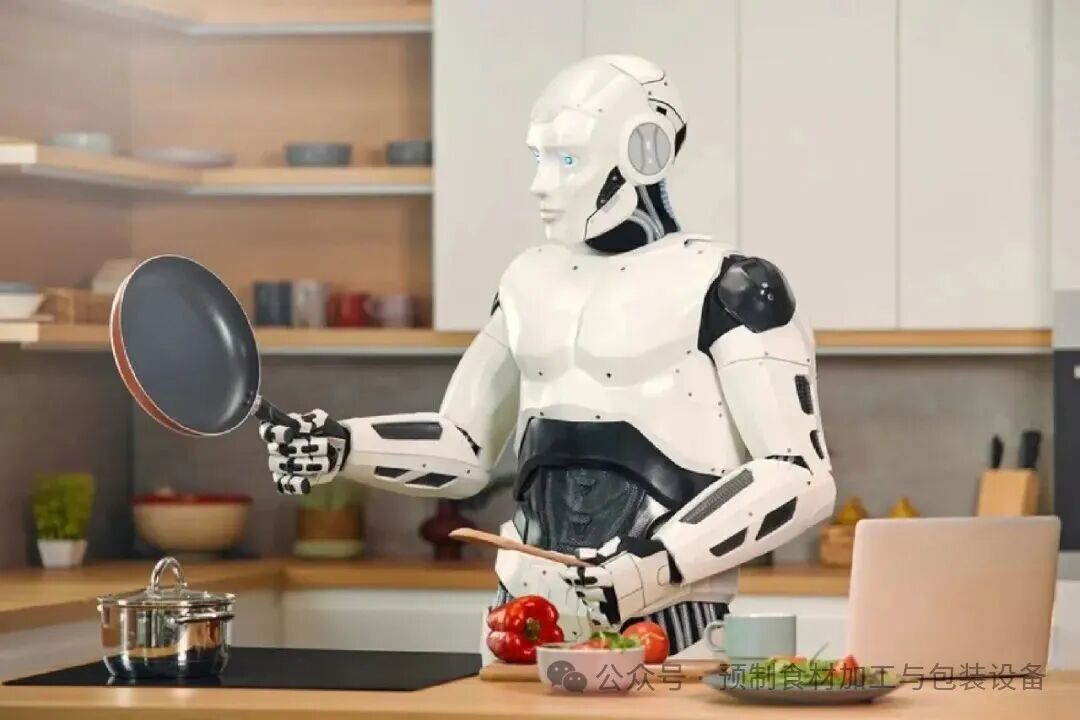
Technological Breakthrough: From “Mechanical Imitation” to “Intelligent Cooking”
Precise Heat Control: The unique AI temperature curve approximation algorithm of AI cooking robots can sense environmental changes in real-time, controlling pot temperature fluctuations within ±1℃, perfectly replicating “high-heat stir-frying” and “low-heat slow cooking”.
Intelligent Stirring System: The AI cooking robot’s unique three-axis asynchronous planetary stirring technology simulates chef stirring with a torque of 30.76N·M, ensuring even heating and intact food shapes.
Flavor Restoration Technology: Self-developed rapid heating stir-frying algorithm (heating to 300℃ in 15 seconds) promotes the Maillard reaction and preserves ingredient moisture, retaining the “wok aroma”.
Policy Support: Comprehensive National Strategy Empowerment
The 14th Five-Year Plan clearly proposes to “fully implement the ‘Artificial Intelligence+’ initiative” to promote the deep integration of artificial intelligence and industrial development.
The “Robot+” application action implementation plan includes restaurant robots as a key promotion area, proposing to promote over 200 typical application scenarios for robots by 2025.
The national standard for “Commercial Intelligent Cooking Machines” (GB/T 46718-2025) has been officially released, providing a unified specification for the industry.
Subsidy policies have been introduced in many regions, with subsidies for purchasing intelligent cooking equipment up to 50%, significantly reducing procurement costs for enterprises.
Market Validation: Explosive Demand and Value Recognition
The market size for Chinese cooking robots is expected to reach 3.17 billion yuan in 2024, with projections to exceed 3.7-5.98 billion yuan by 2025, and reach 11.7 billion yuan by 2030, with a compound annual growth rate of 38%.
Global market size: Expected to exceed 8-30 billion USD by 2025, with China contributing over 40% of the share, becoming the largest market globally.
Rapid expansion of application scenarios: From group meals and fast food to chain restaurants, hot pot, elderly meal assistance, and campus cafeterias across all formats.
03
AI Cooking Robots: Industry Benchmark Technology
And Practical Applications
01
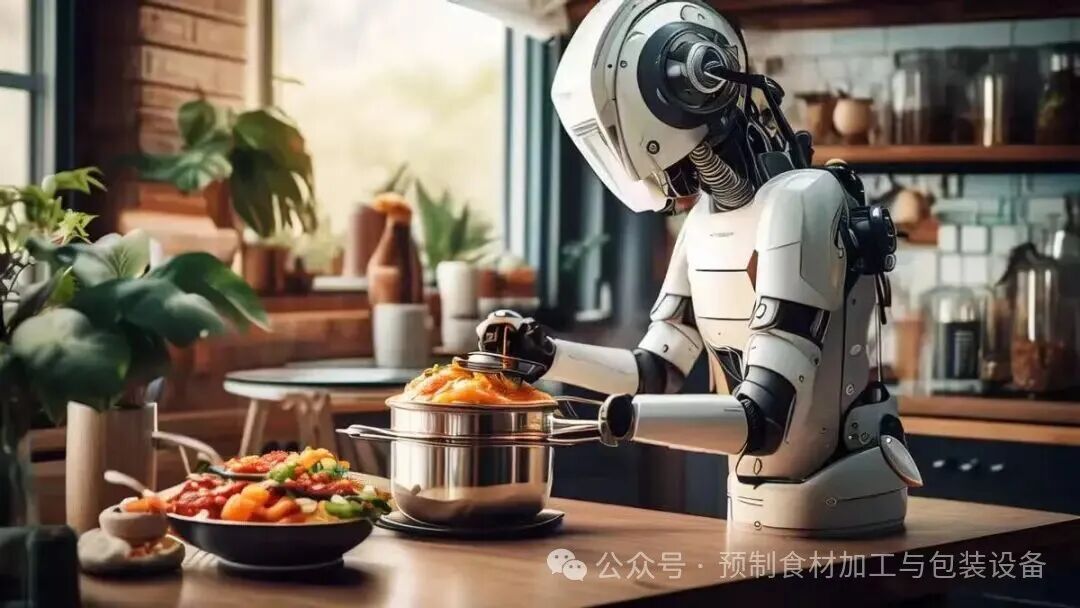
Core Technological Advantages: AI Empowering Traditional Cooking Wisdom
The AI cooking robot is developed by Changsha Control Fire Monkey Technology Co., Ltd., led by experts from the robotics field of the Chinese Academy of Sciences, gathering top talents from various fields such as AI large models and image algorithms. The product has three core advantages: technical dimension, leading edge, and application value.
Precise Temperature Control System
12kW electromagnetic induction heating, heating to 300℃ in 15 seconds, temperature control accuracy ±1℃
Perfectly replicates the “hot pan, cold oil” aroma-enhancing technique, enhancing dish flavor.
Intelligent Seasoning System
Four-in-one intelligent controller + molecular-level seasoning system, dynamically adjusting a thousand times per second.
Achieves “0.1-gram level” precise dosing, ensuring flavor consistency.
Chef Skill Replication
Over 1,000 digital recipe library + 100,000+ cooking parameters, supporting “chef teaching” mode.
Transforms chef experience into digital models, achieving standardized production.
02
Scenario Applications: Comprehensive Empowerment from Chain Fast Food to Group Meals
Chain Fast Food: A well-known chain fast food restaurant in Changsha introduced AI chefs, reducing cooking time per dish by 40%, decreasing back kitchen staff from 12 to 8, and lowering labor costs by 33%, with peak meal efficiency increasing by 2.3 times.
Campus Cafeteria: An AI chef deployed in a university cafeteria in Changsha served 800 people for lunch with minimal staff, reducing labor costs by 58%, and increasing dish qualification rates from 72% to 96%.
Elderly Meal Assistance: An elderly care center using AI chefs provides over 300 nutritious dishes, increasing elderly dining satisfaction from 82% to 96%, while solving issues of “difficulty in hiring chefs and unstable flavors”.
Hot Pot Base Production: A hot pot brand introduced AI chefs for base production, achieving a 100% standardization rate, saving an average of 3,000 yuan in seasoning costs per store per month, while reducing chefs’ labor intensity and risks associated with high-temperature operations.
Hunan Cuisine Chain: A Hunan cuisine brand utilized AI chefs to solidify cooking parameters for 20 classic Hunan dishes, reducing the training period for new chefs from 3 months to 7 days, achieving a flavor consistency rate of 98%, supporting rapid cross-province expansion.
03
Industry Leadership: From Equipment Manufacturer to Ecosystem Builder
Participation in Standard Setting: As a major drafting unit, participated in the formulation of the national standard for “Commercial Intelligent Cooking Machines”, transforming advanced enterprise technology into industry norms, demonstrating technical authority in the field of intelligent cooking.
Full-Chain Solutions: Building a “hardware + software + service” integrated model, providing one-stop services including equipment, cloud recipe platforms, remote monitoring, and data analysis.
New Human-Machine Collaboration Model: Advocating for “equipment replacing basic labor + human resources shifting to high-value positions”, with a single device replacing 2-3 chefs, and operators managing 3-4 devices after just one day of training, promoting chefs’ transition from “cooking workers” to “research and development chefs”.
03
Implementing the “Artificial Intelligence+” Strategy:
A New Paradigm for Digital Transformation in the Restaurant Industry
01
Reconstructing Restaurant Productivity: Efficiency Revolution and Value Restructuring
Labor Structure Transformation: AI applications reduce traditional chef positions by 30%, but creative research and development positions increase by 45%, promoting an optimized employment structure of “reducing low-skill positions and increasing high-skill positions”.
Cost Structure Optimization: Data from pilot restaurants in Beijing shows that investment in AI equipment reduces labor cost ratios from 38% to 21%, while improving dish quality stability and customer satisfaction.
Innovative Business Models: The “unmanned kitchen + minimal operators” model reduces restaurant operating costs by 40%-60%, increasing table turnover rates by 20%-70%, providing a low-threshold, high-return new model for restaurant entrepreneurship.
02
Building an “Intelligent Cooking Ecosystem”: Collaborative Upgrading of the Industry Chain
Upstream: Driving the development of sensors, AI chips, special materials, etc., promoting the localization of core components.
Midstream: Promoting the transformation of the restaurant equipment manufacturing industry towards intelligent manufacturing, nurturing a batch of specialized and innovative “little giant” enterprises.
Downstream: Empowering restaurant businesses’ digital transformation, providing small and micro restaurants with standardized capabilities equivalent to large chains, assisting in the differentiated development of “thousand stores with thousand flavors + thousand stores with one flavor”.
03
Promoting the Deep Integration of “Artificial Intelligence + Livelihood Services”
Food Safety Assurance: Full-process data monitoring, achieving “traceable sources, monitorable processes, verifiable results”, reducing food safety risks.
Nutrition and Health Management: Precise control of oil, salt, and sugar usage, providing customized healthy meals for special populations (diabetes, hypertension, etc.).
Cultural Heritage Innovation: Digitally preserving and disseminating traditional cooking techniques, achieving the integration and innovation of “traditional skills + modern technology”.
Future Outlook: Moving Towards a New Era of “Human-Machine Collaboration” in the Restaurant Industry
With the implementation of the 14th Five-Year Plan and continuous breakthroughs in AI technology, commercial AI cooking robots will usher in broader development space:
1. Technological Evolution: Deep integration with large models, possessing autonomous learning and recipe innovation capabilities, achieving a leap from “executing commands” to “creative cooking”.
2. Application Popularization: Penetration rates will increase from the current 18.7% to over 50% by 2030, becoming standard equipment in the restaurant industry.
3. New Employment Patterns: Giving rise to new professions such as “intelligent cooking engineers” and “digital recipe designers”, with average salaries for related positions 28% higher than traditional kitchen roles, included in the vocational training subsidy directory in many regions.
As pointed out by the Global Times and People’s Forum, AI is not the enemy of employment, but a catalyst for career upgrading. Commercial AI cooking robots will liberate chefs from tedious repetitive labor, allowing them to focus on high-value tasks such as dish innovation and cultural heritage, achieving a virtuous division of labor where “machines do the standard work, and humans create art”.
Conclusion:
The development of commercial AI cooking robots is not only a technological revolution in the restaurant industry but also an important practice in implementing the national “Artificial Intelligence+” strategy and cultivating new productive forces. As an industry leader, Chip Chef is reshaping the production methods and talent structure of the restaurant industry through technological innovation and practical applications, contributing the wisdom and strength of the “Intelligent Manufacturing Hunan Army” to China’s transition from a “cooking power” to a “cooking strong power”.
The future is here; it is not a question of “whether to adopt” AI, but “how to better embrace AI”. Restaurant businesses should seize this historic opportunity, actively embrace change, and take the lead in this “technological revolution on the tip of the tongue” to achieve high-quality development.
Source: China Food Safety Network