This is a recent report released on November 24 by the Carnegie Endowment for International Peace, a U.S.-based think tank. It argues that compared to the West, which mainly focuses on large language models and digital AI applications, China places greater emphasis on “embodied AI”—the integration of AI algorithms with robotic hardware to create systems capable of independent perception, action, and operation in the real physical world.https://carnegieendowment.org/research/2025/11/embodied-ai-china-smart-robots?lang=en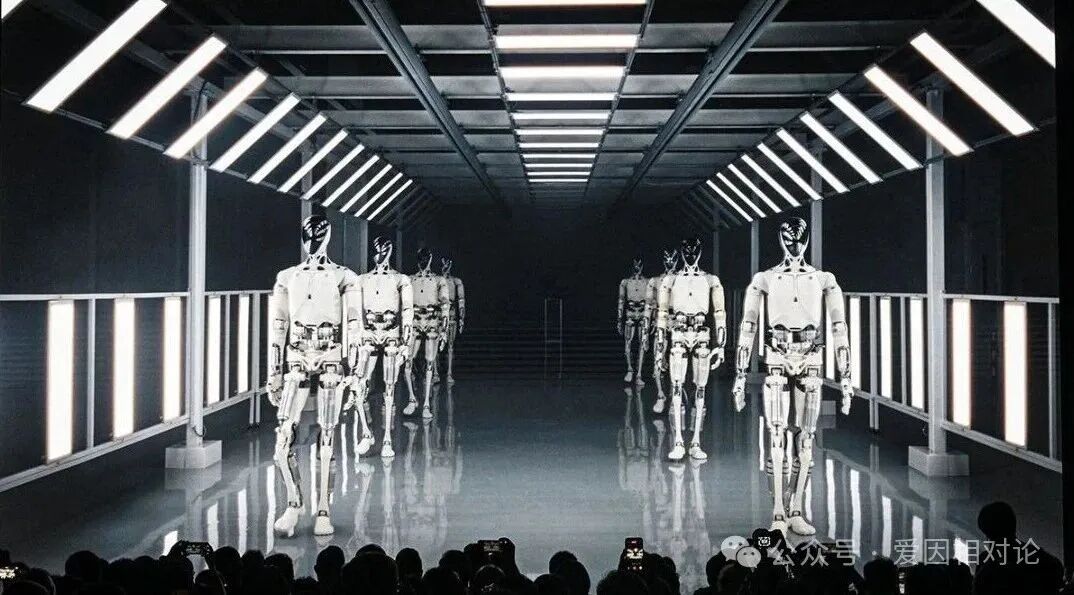
In March of this year, at the factory of Zeekr, a leading electric vehicle manufacturer in China, it appeared to be an ordinary workday as a small team of workers completed their daily tasks: lifting boxes, assembling car parts, and conducting quality checks. However, unlike any typical shift, none of them stopped to take a break or even to drink water. The reason—none of them were human. These UBTech robots, powered by the multimodal reasoning model based on DeepSeek R1, are among the first publicly known humanoid robot groups deployed as a coordinated team to perform a wide range of tasks in complex real-world industrial environments.。[1] Just a few months later, UBTech launched the Walker S2, the world’s first humanoid robot capable of autonomously changing its own batteries—able to operate continuously for 24 hours in a factory workshop without any human assistance.。[2]
These demonstrations showcase the ability of leading Chinese companies to translate cutting-edge artificial intelligence into practical industrial applications. More importantly, these achievements in the private sector have become central to China’s evolving national AI strategy, which aims to leverage China’s comprehensive advantages in AI software and robotic hardware to achieve a unique technological edge. While much of Washington and Silicon Valley focuses primarily on scaling large language models (LLMs) like ChatGPT and digital AI applications, Beijing has made fundamentally different investments. It believes that true AI dominance will come from systems capable of operating autonomously in the physical world—AI-driven robots, often referred to as embodied AI.
To realize its ambitions in embodied AI, the Chinese government is launching a familiar technology development path: encouraging local governments to experiment with different approaches to develop and scale the technology. In response to Beijing’s call, provinces are investing in local companies engaged in AI systems that can learn from human workers in factory workshops, navigate complex physical environments, and bridge the gap between digital reasoning and real-world action.
To achieve its ambitions in embodied AI, the Chinese government is launching a commonly used technology development path: encouraging local governments to experiment with different methods to develop and scale the technology. In response to Beijing’s call, provinces are investing in local companies dedicated to AI systems that can learn from human workers in factory workshops, navigate complex physical environments, and bridge the gap between digital reasoning and real-world action.
If China can realize its vision, embodied AI could address some of the country’s most pressing domestic challenges, including boosting its sluggish economy and tackling social challenges such as an aging population. It could also yield a range of strategic advantages. Theoretically, establishing a mature AI ecosystem and ensuring lasting global leadership in this field could become a key pillar of China’s future economic and military strength, positioning it ahead in the global race for general artificial intelligence. But how does China plan to achieve this, and what obstacles remain?
This article addresses these questions by examining how the Chinese government views embodied AI, the measures it is taking to advance it, and the strengths and weaknesses of the ecosystem. It also reveals how advancements in embodied AI are reshaping the Chinese economy, enhancing its national competitiveness, and impacting the world.
What is Embodied AI?
In both the West and China, embodied AI is generally understood as AI-driven hardware systems that can perceive and interpret multimodal inputs from the physical environment, including visual, auditory, and tactile information. They make autonomous decisions, perform physical actions in the real world, and learn from these interactions.[3]
Embodied AI is typically understood as AI-driven hardware systems that can perceive and interpret multimodal inputs from the physical environment, including visual, auditory, and tactile information.
Importantly, while embodied AI is often associated with humanoid robots that mimic human appearance and function, the two are not synonymous. Humanoid robots are defined by their human-like physical appearance, but their functional capabilities vary based on software, sensing, and control systems. In practice, many humanoid robots remain limited-use systems that can only perform narrow tasks, such as waving to visitors at a reception desk. In contrast, the defining characteristic of embodied AI systems is not their physical form (see Figure 1). These systems can take various physical forms, with humanoid robots being just one example; others include quadrupeds, drones, autonomous vehicles, industrial robotic arms, and micro-robots. For instance, even without generative AI, industrial robots have long automated repetitive tasks on assembly lines.
Conversely, what defines embodied AI systems is their capabilities. They integrate advanced software, complex sensors, and sophisticated control systems that enable high levels of autonomous decision-making, adaptability to dynamic environments, and the ability to perform a variety of tasks—such as completing all stages of automotive production lines traditionally handled by human workers.
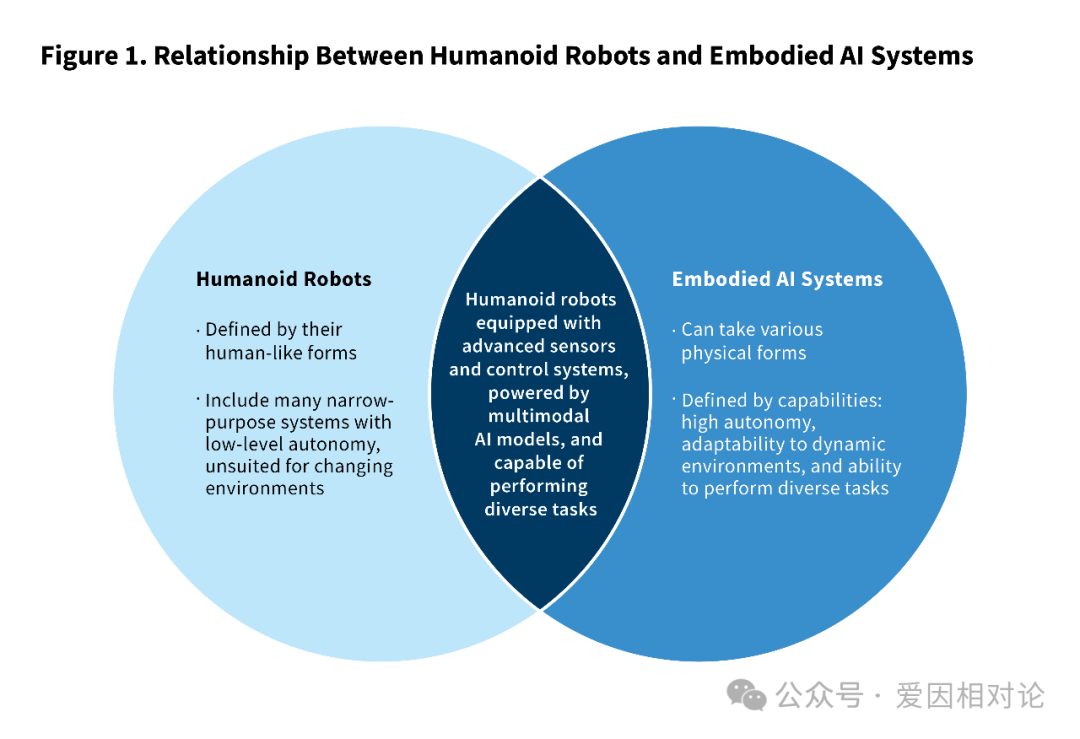
Embodied AI systems are typically equipped with a rich set of sensors and are powered by multimodal AI models that support perception, reasoning, and action. These models often leverage the capabilities of large language models (LLMs), using them as the language and reasoning core for adding visual and action modules. Embodied AI systems not only interpret data but also interact with and adapt to different physical environments. This distinguishes them from traditional applications, where AI primarily enhances single-purpose tools and services, such as CT diagnostic assistants or weather forecasting models. It also sets them apart from purely software-based “agents” that operate solely in digital environments.
In practice, embodied AI has fuzzy boundaries; rather than being an easily identifiable single threshold, it is more of a spectrum. The lower end of this spectrum includes systems capable of performing a limited range of real-world tasks, such as UBTech’s Walker S2, which has already been developed. However, neither China nor the West has achieved fully autonomous systems based on continuously updated world models, which some consider the foundation of embodied AGI.There are differences in the attention and resources allocated to embodied AI research between the West and China. In the U.S., most interest in embodied AI seems limited to the private sector. Large tech companies like Tesla, which has autonomous vehicles and the intelligent robot Optimus, are making significant investments in embodied AI.[5] Meanwhile, emerging companies like Figure AI, which produce general-purpose humanoid robots, are also gaining traction and securing substantial external funding.[6] In contrast, in China, enthusiasm for embodied AI far exceeds that of the private sector. Since the beginning of this year, the country’s expert community has rapidly increased its interest in embodied AI, and the topic has quickly gained prominence in policy and academic discussions.[7]Embodied AI: The Extension of the Physical World into the Real Economy The rise of embodied AI in Chinese policy discourse has not emerged from a vacuum. China’s push for AI reflects the government’s intention to translate advancements in generative AI from the purely digital realm into what Beijing often refers to as the real economy: sectors that produce tangible goods and essential services that underpin real-world economic activity. By doing so, China hopes to revitalize its economy amid recent slow growth.[8] The real economy forms the foundation of China’s economic strength and must be a primary focus for domestic AI adoption, a view deeply rooted in Chinese economic thought. Therefore, when the DeepSeek R1 model is released in January 2025, clearly indicating that China’s AI capabilities are becoming increasingly mature,[12] China believes it is time for AI to transition into the real economy. In light of the crisis in the real estate market, sluggish domestic consumption, and a declining population, this conclusion may be reinforced.[13] Building on China’s early advancements in hardware systems such as robotics, autonomous vehicles, and drones, Beijing seeks to leverage embodied AI as one of the key tools to facilitate this transformation. Following the DeepSeek moment, the government’s emerging focus on embodied AI has been reflected in several important reports and speeches. The annual government work report in March 2025 identified embodied AI as a core tool for building future industries alongside biomanufacturing, quantum technology, and 6G.[14] While embodied AI has become a new focus, LLMs remain an important complementary element of Beijing’s AI agenda. For example, Premier Li Qiang’s keynote speech at the World Artificial Intelligence Conference in July 2025 emphasized that embodied AI and LLMs are currently experiencing significant breakthroughs in the field of AI. Recently, the conference suggested incorporating embodied AI into China’s upcoming 15th Five-Year Plan as one of the new drivers of economic growth. This decision clearly indicates that China intends to make a long-term strategic investment in embodied AI, expecting it to play a decisive role in shaping China’s future.China hopes to achieve through embodied AI Embodied AI can help China achieve five specific goals across three key dimensions: domestic, strategic, and cross-cutting (see Figure 2). Domestically, embodied AI can help address structural economic and demographic challenges. Strategically, it can strengthen China’s position in global technology and geopolitical competition. Its third goal is cross-cutting: to achieve the most authentic AGI by creating systems capable of autonomously interacting in the physical world.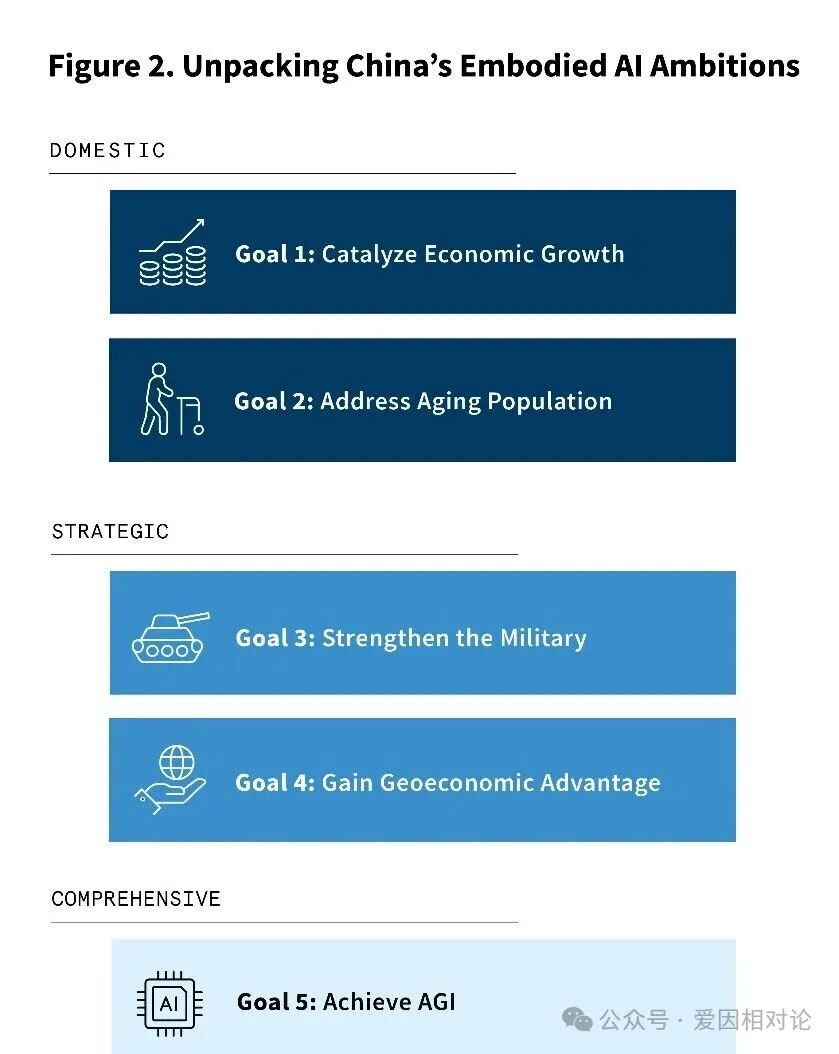
Goal 1: Promote Economic Growth
Domestically, the development and deployment of embodied AI seek to significantly enhance productivity in key industries such as manufacturing and logistics, which is crucial for revitalizing China’s slowing economic growth. This goal is clearly outlined in the 2024 “Embodied AI Development Report” co-authored by the China Academy of Information and Communications Technology (CAICT), which is under the Ministry of Industry and Information Technology.[17] The authors of the report point out that embodied AI can revolutionize human-machine collaboration, enabling autonomous hardware systems to learn from human colleagues through natural language interfaces, gestures, and actions. CAICT envisions potential transformative economic impacts, claiming that over time, these systems could replace humans as the most flexible units on industrial production lines, significantly boosting productivity.
Goal 2: Address the Aging Population Issue
Additionally, the CAICT report identifies embodied AI as a means to address China’s rapidly aging population. For example, tasks that may expose individuals to extreme temperatures, which are undesirable or dangerous, can be handled by embodied AI systems in situations typically affected by labor shortages. They can also provide elderly care services, alleviating the burden on younger individuals.
Goal 3: Enhance Military Strength
In addition to its role in advancing AI frontiers, China views embodied AI as a technology that can significantly enhance national military capabilities. The official media of the People’s Liberation Army, the PLA Daily, assesses that embodied AI can help overcome human physiological limitations, redefine the boundaries of unmanned warfare, and create a more agile and efficient combat system.。[18] It envisions embodied AI systems integrating multimodal sensors (such as visual, auditory, tactile, and even olfactory) with large multimodal models to autonomously observe environments, make decisions, and take action on the battlefield. Unlike current unmanned systems, which still require varying degrees of human involvement, these embodied AI systems will provide a higher degree of real-time tactical autonomy, greatly enhancing their resilience to electronic warfare interference. They will no longer be mere order executors but commanders-fighters capable of adjusting to changing battlefield conditions.
Goal 4: Gain Geoeconomic Advantages
In addition to addressing economic and social challenges, embodied AI can also provide the Chinese government with significant geoeconomic advantages. If Beijing effectively leverages its vast manufacturing capabilities, it could become the world’s leading supplier of AI systems—creating a level of dependency on Chinese technology that may exceed earlier global dependencies on emerging technologies like 5G networks or solar panels. Unlike these technologies, embodied AI has the potential to become a foundational tool for automating a wide range of physical tasks in the global economy, meaning such systems could ultimately determine a country’s future economic competitiveness.
Recognizing these stakes, Beijing has begun laying the institutional groundwork for the global dissemination of embodied AI. Through its recent Global AI Governance Action Plan and AI+ International Cooperation Initiative,[19] China seeks to position itself as the most suitable partner for providing practical AI applications that meet the developmental needs of other countries. It has also announced the creation of a new platform for sharing these applications, the World AI Cooperation Organization (WAICO).。[20] While China currently focuses on exporting more general AI applications, once AI matures, it can leverage these established dissemination channels to spread the technology globally.
Goal 5: Achieve AGI
In addition to addressing domestic challenges, some prominent Chinese scholars view embodied AI as a means to accelerate the country’s cutting-edge AI capabilities. For example, the CAICT report argues that embodied AI can help advance the ambition of achieving AGI. Influential Chinese scholars, such as Zhang Bo, an academician of the Chinese Academy of Sciences and a professor at Tsinghua University, also support this view, asserting that embodied AI provides the most promising path to AGI.[21] Zhang Bo believes that while LLMs enable machines to understand and generate human language, laying a critical foundation for AGI, it is embodied AI that will ultimately allow AI to replicate the full range of human capabilities. He attributes this to the ability of AI to interact with and learn from the physical world, which he believes is crucial for achieving true general intelligence.。[22]
What is China doing to achieve it?
In this year’s government work report, embodied AI has been listed as a key priority. The government hopes to encourage academia and localities to explore and pilot potential development strategies that can later be scaled nationwide. This “pilot first, scale later” approach is not new—it has long been an important tool for implementing Beijing’s innovation policies. Just as during the reform and opening-up period in the 1980s, when special economic zones were established in cities like Shenzhen to allow local governments to experiment with market-oriented reforms before scaling the most successful policies nationwide.。[23] Recently, the People’s Bank of China has adopted a similar approach to promote digital currency, launching pilot projects in cities like Hangzhou and Shenzhen to test the use of the digital yuan, with the aim of promoting it nationwide in the future.。[24]
Encouraged by the government, embodied AI has become the subject of increasing academic discussions, exhibitions, and conferences in China. A notable example is the annual China Embodied AI Conference, co-hosted by the Chinese Association for Artificial Intelligence and major Chinese universities (such as Tsinghua University and Tongji University).。[25] Its second annual meeting will be held in 2025, focusing on the release of “Fifteen Key Research Directions for Embodied Intelligence,” which emphasizes priorities such as multimodal embodied perception, embodied world model building, and embodied AI safety.。[26] Reportedly, this document is the first systematic roadmap for the development of embodied AI in China, aimed at providing clearer priorities for government funding allocation in the future.
Meanwhile, local governments across provinces and cities are trying to position themselves as pioneers of future national policies. In particular, Beijing, Shanghai, Guangdong, Zhejiang, and Hubei。[27] have adopted various approaches to promote the development of embodied AI, differing in their emphasis on different parts of the production chain and strategies used to incentivize and support local industries. They are also seeking to allocate resources more strategically, focusing on areas of embodied AI development where local companies already have relative advantages.
For example, Beijing is home to one of China’s leading AI chip developers, Cambricon,[28] prioritizing high-performance chips tailored for embodied AI applications.。[29] Shanghai, the headquarters of Hesai Technology,[30] is a national leader in autonomous vehicle sensor technology—focusing on core hardware components.。[31] Meanwhile, Guangdong and Zhejiang are focusing on complete embodied AI platforms, particularly multipurpose humanoid robots. These regions already have competitive advantages, with companies like UBTech, headquartered in Shenzhen, and Yushu Technology, headquartered in Hangzhou, leading the development in embodied AI. Meanwhile, Hubei Province is concentrating on another niche market for embodied AI platforms: smart vehicles. It leverages resources from Dongfeng Motor (one of China’s largest automotive manufacturers) and has established an automotive intelligent technology laboratory.。[32] To support these efforts, provincial governments are committing varying levels of funding. For example, Beijing has launched a 100 billion yuan (approximately $14.3 billion) investment fund with a 15-year term to support AI and robotics technologies.。[33] Meanwhile, Shanghai has established an embodied AI fund with an initial amount of 560 million yuan (approximately $7.7 million).。[34]
However, this largely decentralized, locally driven strategy is not without drawbacks. While provinces seem to be trying to focus on different parts of embodied AI, the lack of detailed central guidance may lead to duplication of efforts and misallocation of resources. A comparative analysis can be made with the electric vehicle industry. Intense inter-provincial competition and excessive investment in local manufacturers have resulted in astonishing economic waste and industrial overcapacity.。[35] However, the evolution of China’s world-leading electric vehicle industry also suggests that, over time, this seemingly wasteful competition can yield genuine technological breakthroughs. Like electric vehicles, local government efforts in embodied AI can foster the rise of competitive winners and provide Beijing with clearer models for how to scale emerging technologies that can later be replicated at the national level.
Ultimately, whether the approach of devolving the development of embodied AI to local governments will succeed will depend on several factors. First, the nation’s success may hinge on local governments effectively allocating responsibilities across different parts of the embodied AI supply chain and avoiding excessive duplication. Second, success will also depend on whether there is sufficient and sustainable financing to support the long-term growth of local embodied AI companies. Given that many local governments have accumulated significant debt over the past decade, this may prove challenging. This debt has been driven by provincial governments responding to Beijing’s national growth targets, encouraging massive borrowing to invest in infrastructure and manufacturing, including electric vehicles, regardless of returns.。[36] Third, technological progress may stagnate, and fundamental breakthroughs may be limited. Whether embodied AI systems will ultimately match the dexterity, adaptability, and efficiency of human workers remains uncertain and may take longer than many current industrial plans assume.。[37]
Where the Industry Stands and Its Direction
While the roles of academia and local governments are crucial, Beijing’s investment in embodied AI ultimately depends on the industry’s ability to deliver breakthroughs that will make the technology cost-effective and scalable. This work is already progressing smoothly.
Key areas of China’s AI industry have seen the emergence of outstanding companies: Yushu and UBTech in humanoid robotics,[38] DJI in drones,[39] and Baidu Apollo and Xpeng in autonomous vehicles.。[40] In these cases, the industry-driven capabilities in robotics, manufacturing, and electric vehicles form the foundation for integrating AI into existing company infrastructures.
Compared to other regions of the world, China’s advantage in realizing AI lies in its strong hardware manufacturing base and supply chain, allowing it to rapidly scale production once the technology matures.。[41] This includes cost-effective manufacturing of hardware platforms for AI, such as robots and drones, as well as some key components necessary for AI systems, namely lidar, which is essential for 3D mapping and environmental navigation sensor technology.。[42] As the world’s largest manufacturer, China also has a competitive advantage in the diversity and richness of real-world application scenarios that generate the rich datasets critical for training embodied AI systems—many of which are intended for production lines.。[43] However, Chinese developers often struggle to access this data, prompting some industry leaders to call for the government to grant companies access to datasets held by government agencies and state-owned enterprises.。[44]
Like other regions of the world, China’s AI technology is still in a relatively early stage, and the industry still lacks a complete commercial cycle. It remains largely confined to R&D, small-scale production, and pilot applications in specific scenarios, with key components such as balancing and motion control software still under development.。[45] However, major industry players are increasingly pushing to accelerate large-scale production and deployment. For example, UBTech recently secured a 250 million yuan (approximately $35 million) order for its Walker S2 industrial humanoid robot from an undisclosed domestic company.。[46]
On the other hand, China’s relative disadvantages include limited access to advanced AI chips and computing power used in training and reasoning for embodied AI systems. It still lags behind the West, although it is making steady progress.。[47] Another key limitation is the reliance on imports from the West for multidimensional sensors, such as torque sensors and six-axis force sensors, used for high-precision force measurement and perception in embodied AI systems.。[48]
Despite these limitations, most Chinese experts and industry leaders believe that China’s existing advantages, combined with steady development in lagging areas and ongoing government support, can lead to steady technological progress in AI over the next five to ten years.。[49] This progress will ultimately lead to the development and deployment of AI systems capable of performing physical labor in real economic environments, advancing China’s conceptual goal of using AI in the real economy. Some believe that by 2045,[51] embodied AI may completely surpass human capabilities.
Conclusion
Beijing is making long-term strategic investments in embodied AI, viewing it as a potential solution to many of China’s economic, social, and geopolitical challenges. However, whether this strategy will succeed, and in what manner, remains uncertain. Technological breakthroughs may be elusive, and high local debt may limit ongoing investment. Nevertheless, China’s leadership appears determined to move forward, committing significant political will and financial resources to make embodied AI a viable and scalable technology.
If Beijing leads the development of fully commercially viable embodied AI systems ahead of other countries, it could leverage its relative advantages—a strong manufacturing base, a comprehensive supply chain, and potentially hundreds of thousands of factories ready to deploy robots—to rapidly scale production and position itself as the dominant player in the global embodied AI systems market. In this scenario, the world could rely on Chinese embodied AI technology across key economic sectors, including manufacturing, logistics, healthcare, and services. It would also significantly enhance China’s military capabilities, potentially affecting the balance of power in the Indo-Pacific and beyond—especially if China chooses to export embodied AI to countries like Russia. If embodied AI ultimately holds the key to unlocking true AGI, Beijing could gain a decisive advantage in the competitive landscape of advanced AI with Washington. How the U.S. responds to this challenge will not only determine the trajectory of AI development but also shape the balance of economic and military power for decades to come.
References
1 Coco Feng, “Future of Made-in-China: UBTech Robotics deploys first humanoid ‘team’ in car factory,” South China Morning Post, March 3, 2025, https://www.scmp.com/tech/tech-trends/article/3300872/future-made-china-ubtech-robotics-deploys-first-humanoid-team-car-factory.
2 He Huifeng, “China unveils world’s first humanoid robot that changes its own batteries,” South China Morning Post, July 18, 2025, https://www.scmp.com/economy/china-economy/article/3318756/china-unveils-worlds-first-humanoid-robot-changes-its-own-batteries.
3 “Embodied AI,” NVIDIA Glossary, NVIDIA, accessed July 2, 2025, https://www.nvidia.com/en-us/glossary/embodied-ai/.“Embodied AI Is About to Complete the Final Piece of the Puzzle for General-Purpose Robots,” Agibot, accessed September 18, 2025, https://www.agibot.com/article/188/detail/7.html.
4 George Lawton, “What is embodied AI? How it powers autonomous systems,” TechTarget, September 25, 2024, https://www.techtarget.com/searchenterpriseai/definition/embodied-AI. “Still Confused About the Differences Between Embodied AI, Intelligent Robots, and Humanoid Robots? This Article Explains It All,” reposted by 中华中控网, April 14, 2025, https://www.gkong.com/news/121095.html.
5 Pratyush Thakur, “Tesla’s role in the increasingly embodied AI world,” Investing.com, January 18, 2025, https://www.investing.com/news/stock-market-news/teslas-role-in-the-increasingly-embodied-ai-world-3819502.
6“Figure Exceeds $1B in Series C Funding at $39B Post-Money Valuation,” Figure AI, September 16, 2025, https://www.figure.ai/news/series-c.
7 People’s Daily, “Three Questions on Embodied AI,” reposted by Xinhua, March 24, 2025, http://www.news.cn/tech/20250324/304fce2317bf4683bf68156c5a3980c2/c.html.
8 Scott Singer, “China Wants to Integrate AI Into 90 Percent of Its Economy by 2030. It Won’t Work.,” Carnegie Endowment for International Peace, September 2, 2025, https://carnegieendowment.org/emissary/2025/09/ai-china-90-percent-economy-why-wont-work?lang=en.
9 Xu Xianchun, “Xi Jinping’s Strategic Thinking on Developing China’s Digital Economy,” The Institute of Party History and Literature of the Central Committee of the Chinese Communist Party, August 2, 2022, https://www.dswxyjy.org.cn/n1/2022/0802/c427152-32491961.html.
10 网络传播杂志, “General Secretary Xi Jinping on Accelerating the Development of the Digital Economy,” reposted by the Cyberspace Administration of China, January 19, 2020, https://www.cac.gov.cn/2020-01/19/c_1580982285394823.htm.
11 People’s Daily overseas edition, “Xi Jinping: The Real Economy Is the Foundation of China’s Economic Development,” reposted by 人民论坛网, March 8, 2017, https://www.rmlt.com.cn/2017/0308/463234.shtml.
12 IT之家, “DeepSeek-R1 Model Released, Its Performance Benchmarking Against OpenAI’s o1 Official Version,” posted on Baidu.com, January 20, 2025, https://baijiahao.baidu.com/s?id=1821775242356587266&wfr=spider&for=pc.
13 Alicia García-Herrero, “Ten challenges facing China’s economy,” Bruegel, June 12, 2025, https://www.bruegel.org/analysis/ten-challenges-facing-chinas-economy.
14 Xinhua, “The Government Work Report,” reposted by the State Council of China, March 12, 2025, https://www.gov.cn/yaowen/liebiao/202503/content_7013163.htm.
15 Li Qiang, “Li Qiang Attends and Delivers a Speech at the Opening Ceremony of the 2025 World Artificial Intelligence Conference and the High-Level Meeting on Global AI Governance,” Ministry of Foreign Affairs of the People’s Republic of China, July 26, 2025, https://www.mfa.gov.cn/wjdt_674879/gjldrhd_674881/202507/t20250726_11677829.shtml.
16 “Authorized Release: Proposals of the CPC Central Committee on Formulating the 15th Five-Year Plan for National Economic and Social Development,” Xinhua, October 28, 2025, http://www.news.cn/20251028/337438370029449296539148a206bdd1/c.html.
17 “Embodied AI Development Report (2024),” China Academy of Information and Communications Technology, Beijing Humanoid Robotics Innovation Center Co., Ltd., August 2024, https://www.caict.ac.cn/kxyj/qwfb/bps/202408/P020240830312499650772.pdf.
18 Dong Shengli, Zhang Haiyong, and Zhao Hu, “Embodied Intelligence Drives New Advances in Intelligent Warfare,” PLA Daily, April 5, 2025, https://rmt-static-publish.81.cn/file/20250405/aa9899302136bd20710fcaa85b5ab08a.pdf.
19 “Global AI Governance Action Plan,” Ministry of Foreign Affairs of the People’s Republic of China, July 26, 2025, https://www.fmprc.gov.cn/eng./xw/zyxw/202507/t20250729_11679232.html. “AI+ International Cooperation Initiative,” Ministry of Foreign Affairs of the People’s Republic of China, September 24, 2025, https://www.fmprc.gov.cn/eng/xw/zyjh/202509/t20250924_11715960.html.
20 “Chinese government proposes creation of global AI cooperation organization,” Xinhua, July 26, 2025, https://english.news.cn/20250726/0eccf4a342374c269dce1f7806ee3766/c.html.
21 Zhang Bo, “Embodied AI Promotes the Realization of Artificial General Intelligence (Essays by Leading Science and Technology Experts),” People’s Daily overseas edition, reposted on People’s Daily Online, June 9, 2025, https://paper.people.com.cn/rmrbhwb/pc/content/202506/09/content_30077910.html.22Ibid.
22 Ibid.
23 Sebastian Heilmann, “From Local Experiments to National Policy: The Origins of China’s Distinctive Policy Process,” China Journal 59 (2008), https://www.researchgate.net/publication/228369078_From_Local_Experiments_to_National_Policy_The_Origins_of_China’s_Distinctive_Policy_Process.
24 Winni Zhou and Ryan Woo; editing by Mike Harrison, “China central bank expands digital yuan pilot scheme to more cities,” Reuters, April 2, 2022, https://www.reuters.com/world/china/china-central-bank-expands-digital-yuan-pilot-scheme-more-cities-2022-04-02/.
25 “The 2nd China Embodied AI Conference (CEAI 2025),” Chinese Association for Artificial Intelligence, accessed July 9, 2025, https://ceai.caai.cn/#about.
26 Ye Hongmei, “Fifteen Key Directions for Embodied AI Released, Including Embodied Autonomous Learning and Embodied Foundation Models,” 新京报, March 20, 2025, https://www.bjnews.com.cn/detail/1743333279129207.html.
27 Hua Xia, “Chinese provinces plan to support emerging, future industries in 2024,” Xinhua, February 8, 2024, https://english.news.cn/20240208/ce4dd217a00b42a38c895e271f69cadc/c.html; “3Q 2025 Gross Regional Product, Accumulated (100 million yuan),” National Bureau of Statistics of China, accessed November 13, 2025, https://data.stats.gov.cn/english/easyquery.htm?cn=E0102.
28 Hugh Chen, “Cambricon to raise $700 million in race to build a Chinese AI chip leader,” Bamboo Works, June 10, 2025, https://thebambooworks.com/cambricon-to-raise-700-million-in-race-to-build-a-chinese-ai-chip-leader/.
29 “Notice by the Beijing Municipal Science and Technology Commission, the Zhongguancun Science Park Administrative Committee, and Other Departments on Issuing the “Beijing Action Plan for Technological Innovation and Industrial Development in Embodied Intelligence (2025–2027),” Beijing Municipal People’s Government, February 28, 2025, https://www.beijing.gov.cn/zhengce/zhengcefagui/202503/t20250304_4024579.html.
30 Pei Li and Yiqin Shen, “Hesai Raises $190 Million in Biggest Chinese US IPO Since Didi,” Bloomberg, February 9, 2023, https://www.bloomberg.com/news/articles/2023-02-09/hesai-raises-190-million-in-biggest-chinese-us-ipo-since-didi.
31 上海市国有资产监督管理委员会, “Shanghai Embodied Intelligence Fund Unveiled: Shanghai State-owned Capital Investment Company Accelerates Efforts to Build a Strategic Hub for Next-Generation Artificial Intelligence,” Shanghai Municipal People’s Government, April 25, 2025, https://www.shanghai.gov.cn/nw31406/20250427/d3073f0c18e34863af4fc4fa01f86fc9.html.
32 “Establishment of the Hubei Provincial Key Laboratory for Automotive Embodied Intelligence Technology,” Hubei Provincial Department of Science and Technology, July 3, 2025, https://kjt.hubei.gov.cn/kjdt/sxkj/wh/202507/t20250703_5712396.shtml.
33 Beijing Daily, “Beijing Unveils a Three-Year ‘Blueprint’ for Developing Embodied AI and Cultivating an Industrial Cluster Worth Hundreds of Billions,” reposted by Beijing Municipal People’s Government, March 1, 2025, https://www.beijing.gov.cn/ywdt/gzdt/202503/t20250301_4022474.html.
34 Shanghai State-owned Assets Supervision and Administration Commission, “Shanghai Embodied Intelligence Fund Unveiled: Shanghai State-owned Capital Investment Company Accelerates Efforts to Build a Strategic Hub for Next-Generation Artificial Intelligence,” reposted by Shanghai Municipal People’s Government, April 25, 2025, https://www.shanghai.gov.cn/nw31406/20250427/d3073f0c18e34863af4fc4fa01f86fc9.html.
35 Zhuoran Li, “China’s EV Overcapacity Is Inevitable,” The Diplomat, August 06, 2024, https://thediplomat.com/2024/08/chinas-ev-overcapacity-is-inevitable/.
36 Michael Pettis, “Using China’s Central Government Balance Sheet to ‘Clean up’ Local Government Debt Is a Bad Idea,” Carnegie Endowment for International Peace, August 6, 2025, https://carnegieendowment.org/posts/2025/08/using-chinas-central-government-balance-sheet-to-clean-up-local-government-debt-is-a-bad-idea?lang=en.
37 Rodney Brooks, “Why Today’s Humanoids Won’t Learn Dexterity,” Rodney Brooks(blog), September 26, 2025, https://rodneybrooks.com/why-todays-humanoids-wont-learn-dexterity/.
38 Ann Cao, “China’s industrial robot output soars, as start-ups Unitree and UBTech take lead,” South China Morning Post, May 19, 2025, https://www.scmp.com/tech/tech-trends/article/3310908/chinas-industrial-robot-output-soars-start-ups-unitree-and-ubtech-take-lead.
39 Zeyi Yang, “Why China’s dominance in commercial drones has become a global security matter,” MIT Technology Review, June 26, 2024, https://www.technologyreview.com/2024/06/26/1094249/china-commercial-drone-dji-security/.
40 “China, the Global Leader in Autonomous Vehicles – how did that happen?,” Intertraffic, April 9, 2025, https://www.intertraffic.com/news/autonomous-driving/china-the-global-leader-in-autonomous-vehicles.
Edwin Foster, “XPeng’s AI-Driven Surge: A Rare EV Gem in a Crowded Field,” AInvest, July 7, 2025, https://www.ainvest.com/news/xpeng-ai-driven-surge-rare-ev-gem-crowded-field-2507/.
41 Song Yajuan, Xiao Chunfang, and Cai Lin, “Experts: China Has Three Major Advantages in Embodied AI Research and Development,” 光明网, May 11, 2024, https://kepu.gmw.cn/2024-05/11/content_37318005.htm.
42 Mark Montgomery, “Lidar: Another emerging technology brought to you by China,” DefenseNews, April 25, 2024, https://www.defensenews.com/opinion/2024/04/25/lidar-another-emerging-technology-brought-to-you-by-china/.
43 “Embodied AI: The Key to China’s Strategy for Overtaking Competitors,” SenseTime News Center, April 25, 2025, https://www.sensetime.com/cn/news-detail/51169503?categoryId=72.
44 Guo Fangda, “Embodied AI: Breakthroughs and Challenges in Moving from the Virtual to the Physical,” Economic Information Daily, April 24, 2025, http://dz.jjckb.cn/www/pages/webpage2009/html/2025-04/24/node_5.htm.
45 Wang Peng, “Embodied AI: Current Challenges and Future Prospects,” 大众新闻, May 22, 2025, https://m.dzplus.dzng.com/share/general/0/NEWS2413081BWPKGMNXKMRAV.
46 Chen Hong, “UBTech secures large humanoid robots order,” China Daily, September 9, 2025, https://www.chinadaily.com.cn/a/202509/09/WS68bf7e39a3108622abc9f971.html.
47 “Embodied AI: The Key to China’s Strategy for Overtaking Competitors,” SenseTime News Center, April 25, 2025, https://www.sensetime.com/cn/news-detail/51169503?categoryId=72.
48 Sunny Cheung, “The PRC’s Robotics Industry—Sunny Cheung’s Testimony Before the U.S.-China Economic and Security Review Commission,” The Jamestown Foundation, March 19, 2025, https://jamestown.org/program/testimony-before-the-u-s-china-economic-and-security-review-commissions-hearing-made-in-china-2025-who-is-winning/.
49 Lu Jian and Ning Di, “How Long Until Embodied AI Knocks on Our Door?,” China Youth Daily, April 15, 2025, https://zqb.cyol.com/pc/content/202504/15/content_409793.html.
50 “The Rise of Robots: A Roadmap for the Technological, Commercial, and Societal Implementation of Embodied AI,” Tencent Research Institute, July 24, 2024, https://www.tisi.org/28277/?utm.
51 “Huang Tiejun: Building Physical Agents—Embodied AI’s Goal Is the Universe,” Beijing Academy of Artificial Intelligence, June 8, 2025, https://hub.baai.ac.cn/view/46319.
– END –