In today’s rapidly evolving technological landscape, AI has transformed from a distant science fiction concept into an indispensable partner in our daily lives and work. With its astonishing learning and creative capabilities, it shines in various fields, continuously expanding the boundaries of human cognition and innovation. This raises an intriguing and forward-thinking question: if AI were allowed to apply for patents, would the title of the first ‘inventor’ fall to a robot?
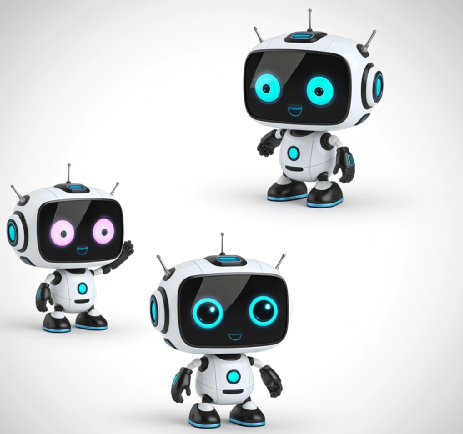
The future AI as imagined by people
From a technical perspective, AI undoubtedly possesses the robust capabilities to compete for the title of ‘inventor.’ At the forefront of scientific research, AI acts like a tireless data explorer, capable of swiftly and accurately processing vast amounts of data, deeply analyzing complex molecular structures, and paving unprecedented paths and solutions for new drug development. In the vast realm of art, AI resembles a talented creative master, generating unique paintings, music, and literary works by learning from a multitude of artistic creations and skillfully blending different styles and elements. These outcomes are not only novel and unique but also exhibit a certain degree of creativity, fully aligning with the stringent requirements of ‘novelty’ and ‘creativity’ in patent applications. Therefore, if AI were allowed to apply for patents, robots would logically emerge as strong contenders for the title of the first ‘inventor.’
However, as we delve deeper into the core of the patent system, we find that the complexity of this issue far exceeds our imagination. Since its inception, the patent system has carried the sacred mission of encouraging human innovation and protecting the fruits of human intellect. The innovation process of AI is fundamentally different from that of humans; it operates like a sophisticated machine, learning and computing based on algorithms meticulously set by humans and vast amounts of data. Its so-called ‘creativity’ is, in fact, an extension and expansion of human intelligence in the digital realm. Simply categorizing robots as ‘inventors’ could blur the clear boundaries between human innovation and machine assistance, potentially undermining the foundation of the patent system.
Moreover, allowing AI to apply for patents would trigger a series of intricate legal and ethical dilemmas. How should the ownership of patent rights be defined? Should it belong to the research team that created the AI, the company that uses AI for innovation, or the AI itself? How can we ensure fair and reasonable distribution of benefits? These questions not only involve a maze of legal complexities but also touch upon sensitive ethical issues.
In reality, AI is more like a capable assistant and close ally on the path of human innovation. Humans, with their rich imagination, profound insights, and unique creativity, set the direction and goals for innovation; while AI, with its powerful data processing capabilities and efficient computing speed, is responsible for realizing human ideas. In the process of innovation, humans and AI are interdependent and mutually reinforcing, together composing a magnificent symphony of innovation.
Therefore, even if AI does gain the qualification to apply for patents in the future, the first ‘inventor’ is unlikely to be a mere robot, but rather the intelligent product of collaboration between humans and AI. In the journey ahead, we should encourage the vigorous development of AI while accelerating the improvement of relevant laws and regulations, constructing a patent system that adapts to the times, ensuring that the results of innovation are fairly and justly attributed and utilized, allowing humans and AI to jointly create a better tomorrow.
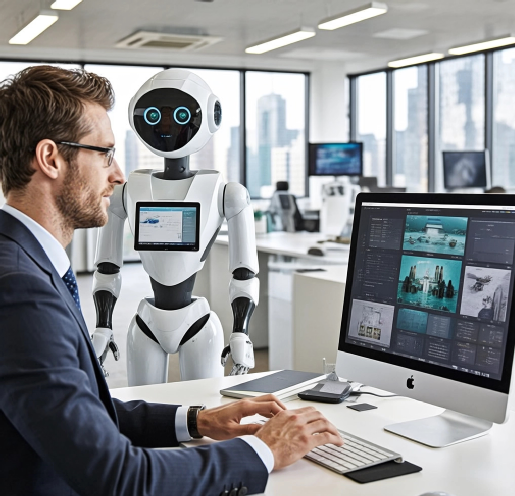
The future of human and AI collaboration