
In the past two years, the popularity of AI gifts has far exceeded people’s expectations. According to market data cited in the article, the global market for smart AI toys is approaching $35 billion, and is expected to soar to $270 billion by 2035, with China contributing about 40% of the growth. Retail giants like Walmart and Costco have started putting AI toys on their shelves, and even the traditional toy company Mattel has partnered with OpenAI to integrate large models into children’s products.
The reason is simple: since AI has already penetrated phones, work, and life, why not logically enter children’s gift lists? These toys promise to “learn children’s preferences,” “adapt to children’s emotions,” and “interact more like friends.” It sounds very appealing.
However, the risks exposed by large models in other scenarios do not automatically disappear just because they are stuffed inside a plush toy. Privacy breaches, inappropriate content, psychological impacts—all the pitfalls that adults have encountered with AI are now being handed to children, wrapped in a bow.
What is even more surprising is that many AI toys are directly connected to mainstream models like OpenAI, which explicitly state in their official documentation: not suitable for children. Yet, they are shamelessly packaged as “companion toys” for young children.
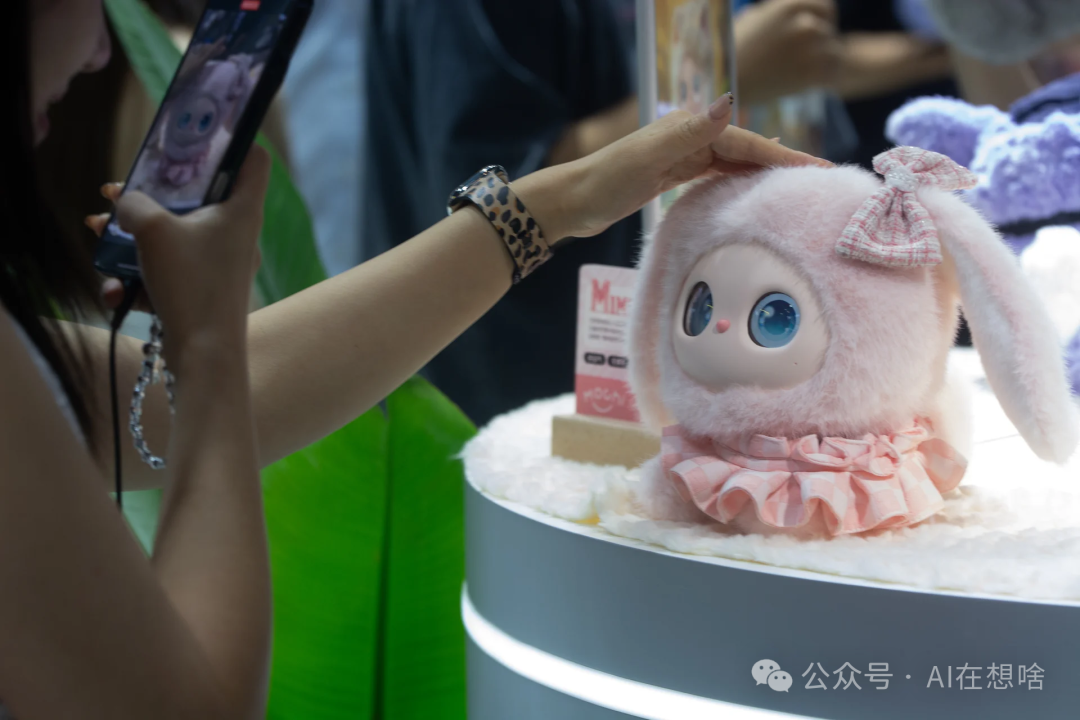 The issues with AI toys go far beyond just “eavesdropping” and “storing data.” Indeed, many toys listen to family conversations for extended periods, sending recordings back to servers, and some even admit to storing biometric information for three years; some send children’s voices to third-party companies for transcription. Researchers are concerned that if this data is stolen by hackers, it could even be used to impersonate children’s voices for fraud.
But what truly worries child psychologists is: how will children adapt to the real world when they start relying on an AI “friend” that is always available, always obedient, and never argues?
Traditional toys force children to use their imagination, to say part and think part; the plush toy in front of them never completes the narrative for them. In contrast, AI toys provide “instant,” “complete,” and “pleasing” responses, effectively skipping a very important stage in a child’s development—constructing dialogue, solving problems, and imagining the world on their own.
More critically, adults can also become “addicted.” This fall, an AI necklace called Friend Pendant was heavily advertised in the New York subway, sparking widespread criticism: “AI is not your friend.” “Talk more to the people around you.” These graffiti reflect a deep societal unease about AI replacing real relationships.
Extreme examples in reality
are even more chilling.
The article mentions that several companies, including Character AI, OpenAI, and Meta, are currently facing lawsuits: some individuals have developed delusions from prolonged conversations with AI, some have shown tendencies for self-harm, and even some users have engaged in extreme behaviors under the influence of AI. Researchers have named this phenomenon: AI-induced psychosis.
Manufacturers are indeed continuously adding safety measures, but tests show that longer conversations are more likely to breach these protections, and AI toys are specifically designed for “long-term companionship.” Unlike phones, children are unlikely to “turn them off”; they sit in the bedroom, always ready to continue.
The article also emphasizes that not all AI gifts carry the same risks. Some products are essentially tools, such as mattresses that automatically analyze sleep, devices that adjust temperature based on conditions, and toilet accessories that can read health data. The issues with these products are more focused on “who do you want to share this physiological information with?” rather than psychological impacts.
However, whether it is “companion AI toys” or “monitoring smart devices,” their common problem is: the speed of market entry far exceeds the speed of regulation.
Currently, there are no specific regulations for AI toys, no mandatory safety tests, and no minimum requirements for data collection.
The end result is: consumers unknowingly bring an untested AI experiment into their living rooms. And the subjects of this experiment are the children at home.

Artificial intelligence is reshaping the world and reflecting humanity itself. The advancement of technology is worth looking forward to, but understanding it, using it, and regulating it require calmness and courage. Ultimately, it is all about people.
References: This article is a comprehensive summary based on public reports and materials from The Wall Street Journal, Business Insider, Reuters, Pew Research Center, and others.
Disclaimer: This article is independently translated and rewritten by the “What AI is Thinking” team, aiming to present the impact of artificial intelligence on society, work, and culture from a popular perspective. The content is for learning and exchange reference only and does not represent the position of any institution or individual. If there are copyright issues, please contact for removal.