Spring recruitment data for 2025 shows that the demand for embedded development positions has surged by 47.8%. Salary increases exceed those in traditional software development by 15%. However, the number of qualified candidates is less than one-third of the demand.
Why is there such a mismatch between supply and demand? The core issue lies in the fact that most students perceive embedded systems as merely “hardware programming.” In reality, it is a complex professional field that requires cross-disciplinary integrated thinking.
The underlying logic of interdisciplinary integration
Electronic information, automation, and computer science may seem independent, but they form a perfect knowledge loop in embedded development.
Students in electronic information understand hardware principles and how chips work, but often lack a system-level software architecture mindset. Automation students excel in control algorithms and system integration but have relatively weak programming skills. Computer science students are proficient in coding but lack deep understanding of underlying hardware. True embedded experts must break down the knowledge barriers between these three fields.
For example, developing intelligent vehicle systems requires understanding the CAN bus protocol (electronic information), designing PID control algorithms (automation), and using Linux systems for application development (computer science). Students with a single background find it challenging to cope with this complexity.
What kind of embedded engineers do companies prefer? First, the technology stack must be broad enough. They should be able to touch on everything from low-level drivers to high-level applications. Second, project experience must be substantial. It should not be limited to small course designs but involve real-world engineering projects.
Reconstructing the 2025 learning path
The traditional learning route for embedded systems is outdated. Previously, it started with the 51 microcontroller, but now even jumping straight to STM32 is considered slow. Phase One: Strengthening Fundamentals. Mastery of C language to the extent of being able to write an operating system is essential. Proficiency in Linux system programming is required. Data structures and algorithms must not be vague. This is basic skill; there is no negotiation. Phase Two: Hardware Advancement. A deep understanding of the ARM architecture is necessary. It’s not enough to just use the HAL library; one must understand the logic of register-level operations and the principles and applications of RTOS. Many people get stuck at this stage because it requires a combination of software and hardware thinking. Phase Three: System Integration. This is a watershed moment. Whether one can upgrade from a “coder” to an “architect” depends on this step. Linux driver development, network programming, and multithreading concurrency control are all complex tasks.
However, there is a new trend emerging: the integration of AI and embedded systems. Edge computing, machine learning inference, and intelligent sensors are all hot directions. Mastering these can elevate annual salaries significantly.
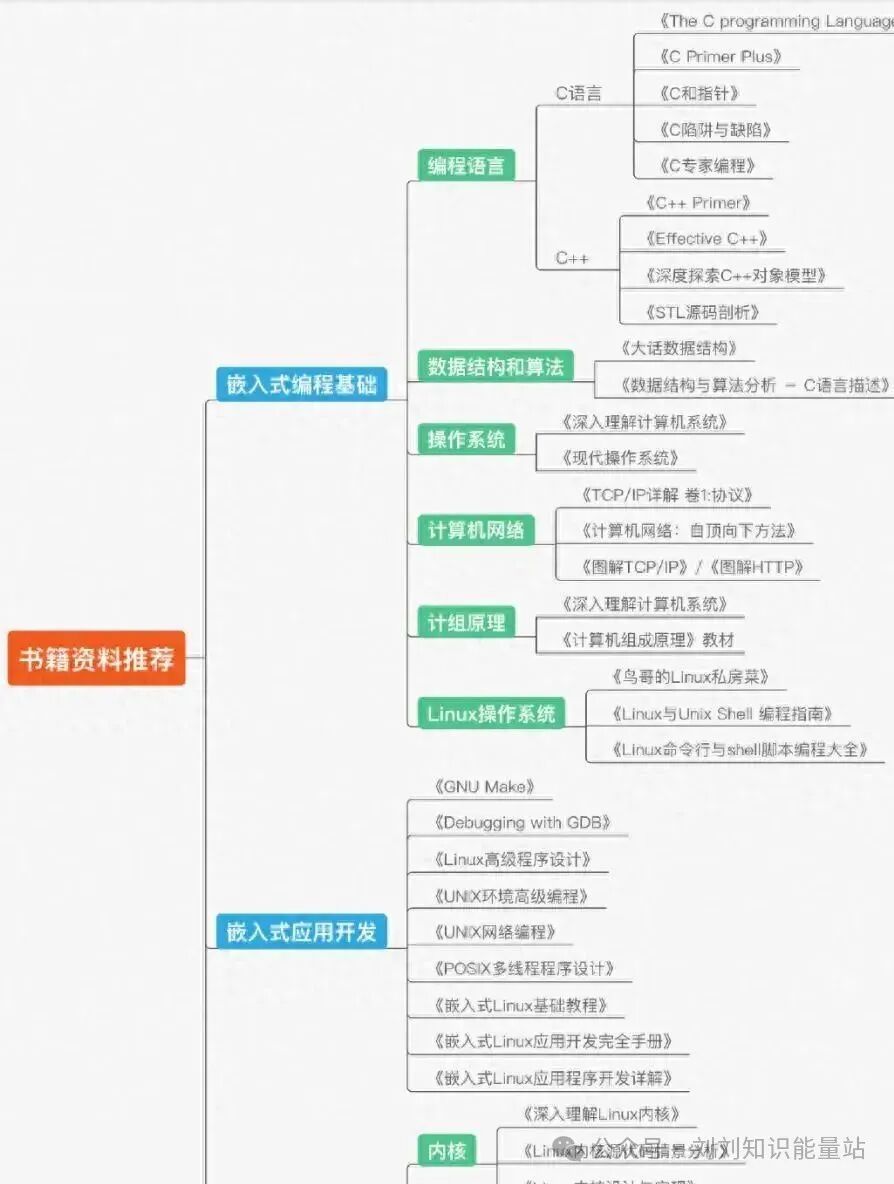
Regarding specific technology selection, I recommend the following arrangement: prioritize programming languages C/C++. However, knowledge of Python is also necessary for prototype validation and data processing. Recommended development environments include Keil and IAR, but familiarity with the open-source toolchain of VSCode + GCC is also important. Project practice is particularly important. Avoid only doing textbook examples like LED blinking. Engage in more challenging projects, such as IoT gateways based on ESP32, motor control systems using STM32, or visual recognition projects with Raspberry Pi.
What do companies value most? First is the ability to solve problems. Second is the speed of learning new technologies. The embedded industry changes rapidly. The chip learned today may be replaced by a new architecture tomorrow.
A realistic picture of the job market
Opportunities for undergraduates are mainly concentrated in application layer development. This involves implementing product functions and debugging hardware interfaces, with salary ranges from 8K to 18K, depending on the company and individual capabilities.
Master’s graduates can aim for algorithm positions or system architects, with starting salaries generally above 15K, and experienced individuals can earn over 30K.
However, there is a reality check: the threshold for embedded development is indeed high. It is not as easy to get started as web development. It requires continuous technical accumulation and sensitivity to new technologies.
In terms of geographical distribution, opportunities are most abundant in Shenzhen, Shanghai, and Beijing, but emerging cities like Chengdu, Xi’an, and Suzhou are also developing rapidly, especially in the fields of automotive electronics and industrial control.
A long-term perspective on career development
Embedded development is not just a job for the young. The 35-year crisis is virtually non-existent in this field. The more experience one has, the more valuable they become, as the complexity of hardware systems cannot be solved merely by young people staying up late.
In the next decade, the Internet of Things, intelligent manufacturing, and new energy vehicles will all rely on embedded technology. Market demand will only continue to grow. The key is to keep pace with technological evolution.
During school, I recommend participating in electronic design competitions and applying for patents. These are all plus points on a resume, as companies particularly value practical technical accumulation.
Finally, I want to say that embedded development is a professional direction that requires lifelong learning. However, it is also one of the most technically demanding and least easily replaceable jobs. If you choose this path, be prepared for continuous investment, as the rewards are substantial.