▲Click the above Leifeng Network to follow


The Internet of Things (IoT) connects people and everything, and the fusion of data and processes is changing our lives, with everything lying between the two.
Written by | Bao Yonggang
The Internet of Things (IoT) represents a shift in how we interact with the world. Just as the internet connected computers to the network, the next step is to connect people to the internet. The IoT seems to interconnect people, environments, machines, and virtual objects in the way imagined by science fiction writers.
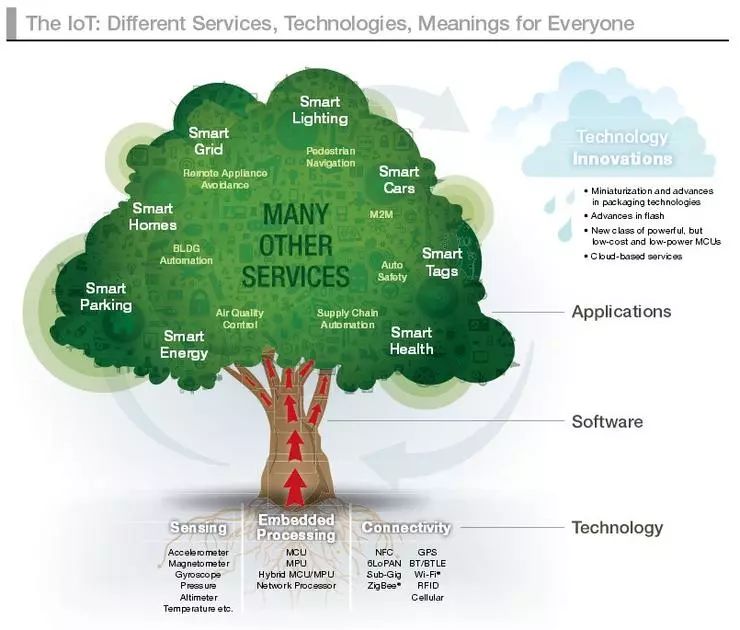
In short, the Internet of Things connects people and everything, and the fusion of data and processes is changing our lives, with everything lying between the two.
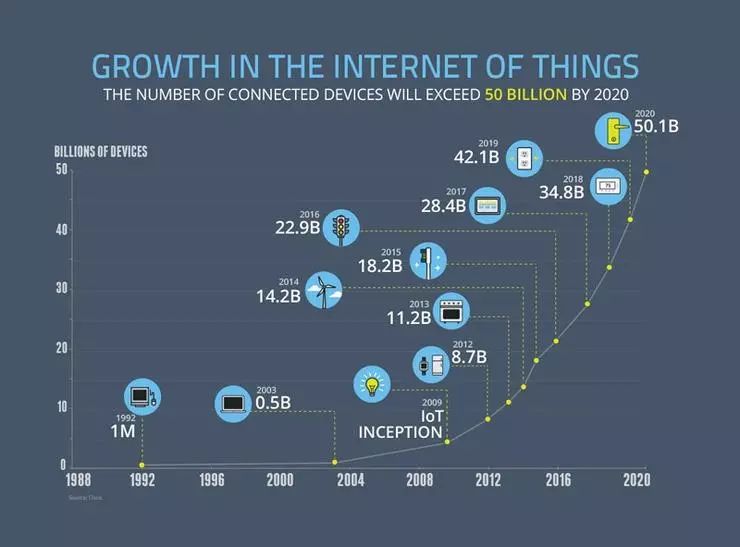
The Internet of Things is a very important trend. Cisco optimistically predicts that the IoT market will reach $19 trillion in profit, with 50 billion smart devices connected by 2020. Clearly, this is a significant motivation for companies wanting a piece of the IoT market.
The fog computing mentioned here can also be referred to as “edge computing.” Unlike cloud computing, which is centrally managed and operated, fog systems operate at the network edge. This means that data can be processed locally within smart devices without needing to be sent to the cloud, which is a method of processing in the IoT. Like many IT developments, fog computing needs to address some growing issues, such as the ability to process incoming data in real-time within the available bandwidth.
Today, sensors are generating 2 exabytes (EB) of data (Note: 1EB = 1,000,000 (10^6) TB, and it is estimated that the total capacity of the entire internet in 2011 was no more than 525EB). There is too much data to send to the cloud; not only is there insufficient bandwidth, but the costs are too high. Fog computing places some processing and resources at the edge of the cloud, not to establish channels for cloud storage and computation, but to reduce the information sent and lower the demand for bandwidth, aggregating at certain access points. By using this distributed strategy, costs can be reduced and efficiency improved.
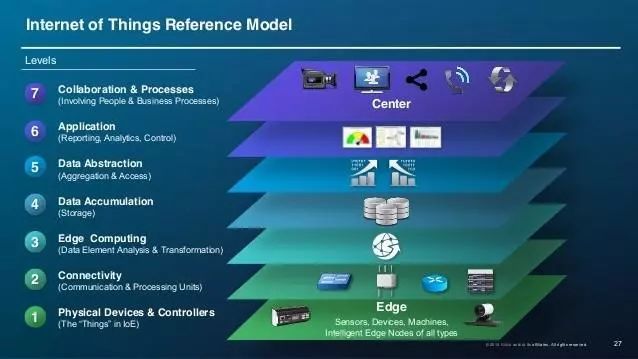
Fog computing extends cloud computing to the network edge to address applications and services that are unsuitable for cloud forms, including:
-
Applications requiring very low and predictable latency
-
Geographically dispersed applications
-
Fast-moving applications
-
Large distributed control systems (smart grids, connected tracks, smart traffic light systems).
The characteristics defined by fog are low latency and location awareness; broad geographic distribution; mobility; a very large number of nodes; major wireless access points; fluidity and real-time applicability, and strong heterogeneity.
These characteristics make fog an excellent platform for many critical IoT services and applications, including connected cars, smart grids, smart cities, and common wireless sensor and actuator networks (WSAN).
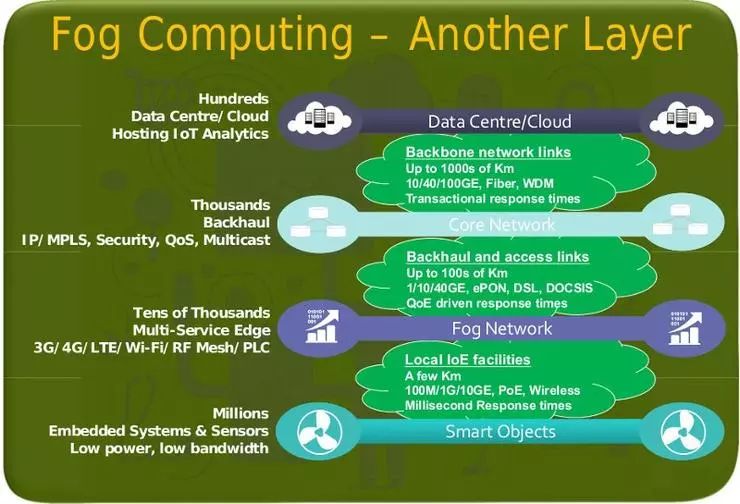
Another way to understand fog computing is to see it as a virtualization platform that typically sits between end users and cloud data centers. Therefore, fog computing can provide better services in terms of latency, power consumption, etc. Fog computing systems are deployed in a widely distributed manner close to end users, making this capability possible. Fog computing nodes must have sufficient computing power and storage capacity to handle higher performance user requests.
How Fog Computing Works
How does all this work in practice? For example, Chicago’s traffic system is equipped with smart sensors. On Tuesday morning, the day of the large parade for the Chicago Cubs’ first appearance in the World Series in over 100 years, a large influx of vehicles and people is expected to celebrate their team’s victory. At this time, data can be collected through various traffic lights.
An open-source program for traffic light adjustment and timing control runs on each edge device, automatically adjusting patterns in real-time at the edge as traffic congestion appears and decreases. This minimizes traffic congestion, allowing fans to spend less time in their cars.
In the traffic light example, sending the daily traffic sensor data stream to the cloud for storage and analysis is nearly worthless. Engineers can handle normal traffic well. What needs to be uploaded is more valuable data, such as the data from parade day. This data will be sent to the cloud for analysis, aiding predictive analysis and allowing the city to adjust and improve its traffic applications in response to future traffic anomalies.
What is the Relationship Between Fog, Cloud, and IoT?
The Internet of Things extends the advantages of cloud computing to the edge, penetrating every home, vehicle, and workplace through smart internet devices. As technology matures and convenience increases, our reliance on new connected devices will grow, but the reliability of the IoT must increase.
Strengthening the entire IoT infrastructure can be achieved by using stable edge gateways before passing processing tasks to the cloud. Fog computing can meet the demands for reliable low-latency responses through edge processing and can cope with high traffic through smart filtering and selective transmission. In this way, smart edge gateways can handle or intelligently redirect millions of tasks from countless sensors and monitors in the IoT, transmitting only summaries and anomaly data to the cloud.
The success of fog computing directly depends on the flexibility of those smart gateways, which influence countless IoT devices on the network. IT resilience will become a necessary condition for IoT continuity, requiring redundant power and cooling monitoring and failover solutions to ensure maximum uptime. According to Gartner, every hour of downtime can cost organizations up to $300,000. Deployment speed, efficient scalability, and ease of management of limited resources are also major issues.
This evolution from cloud to fog is significant. When mobile devices like smartphones and tablets became popular, cloud computing also surged. At that time, these devices had weak computing power, and mobile networks were slow and unreliable. Therefore, using a centrally radiated cloud architecture for communication was also reasonable. But now most of us rely on reliable 4G technology, and the computing power of mobile devices can rival PCs in some respects. Transitioning from a centrally radiated model to a model similar to mesh or edge computing data architecture makes sense. Doing so can address bandwidth bottlenecks and latency issues, which will undoubtedly facilitate the development of IoT in the long run.
So, if you think cloud computing is the pinnacle of infrastructure for the foreseeable future, think again. If we are talking about billions of devices and instant communication, the current cloud model will not be able to handle the load. Fortunately, advances in mobile processing power and wireless bandwidth allow many to design more powerful architectures to get us out of this predicament.
Translated by Leifeng Network, via btimes Leifeng Network
– END –
◆ ◆ ◆
Recommended Reading