Chip Information Security – Secure Boot
Chip Information Security - Secure Boot

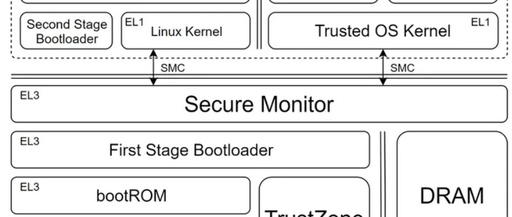
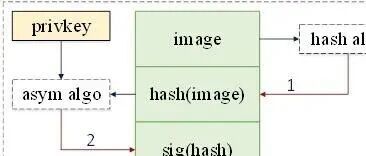
Click the blue text aboveTalk Think Lab Get more automotive cybersecurity information 01 Why Secure Boot is Necessary Secure boot, also known as secure boot, is a technology that achieves trusted firmware loading by progressively verifying the boot image. The following is the basic boot process of an embedded system: The process starts with the … Read more
Embedded AI Security: How Embedded System Manufacturers Enhance Protection Through Secure Boot Key Management

Embedded AI Security: How Embedded System Manufacturers Enhance Protection Through Secure Boot Key Management

Embedded systems are widely used across numerous industries, facilitating transformation in areas ranging from consumer technology to medical devices and the automotive industry. Today, these systems perform complex functions that impact safety, operational efficiency, and user confidence. While enhanced functionality has brought breakthrough advancements to many industries, it has also expanded the attack surface, making … Read more

Automotive Cybersecurity – Explanation and Implementation of AES Encryption Algorithm

Automotive Cybersecurity - Explanation and Implementation of AES Encryption Algorithm

Click the blue text aboveTanshi Laboratory Get more information on automotive cybersecurity In automotive cybersecurity, many encryption and signature verification algorithms are often used. Today, we will discuss the principles of encryption algorithms and their implementations, which can help in understanding encryption algorithms and ensuring the correctness of their implementation. 01 Application Scenarios of Encryption … Read more

BMC Chip Architecture

BMC Chip Architecture

AST2600 is the seventh generation Integrated Remote Management Processor (IRMP) launched by ASPEED.AST2600 is a highly integrated SoC chip that serves as a service processor, supporting various functions required for highly manageable server platforms. This generation of processors has significantly improved CPU performance, integrating a dual-core ARM Cortex-A7 32-bit processor with a clock speed of … Read more

ESP32 Hardware Security Mechanisms: Secure Boot and Firmware Encryption

ESP32 Hardware Security Mechanisms: Secure Boot and Firmware Encryption

The ESP32 series chips (such as ESP32-C6, ESP32-S2, etc.) ensure the full link security of devices from boot to operation through **Secure Boot** and **Flash Encryption** hardware security mechanisms. Below are the core mechanisms and implementation details: 1. Secure Boot 1. Core Functions Prevention of Unauthorized Firmware Execution by verifying the integrity of the firmware … Read more

Vehicle Electronic Architecture – MCU Information Security Measures

Vehicle Electronic Architecture - MCU Information Security Measures

I am a man in flip-flops, a long-term automotive electronics engineer in the magic city. As usual, I will share a piece of text I like to avoid becoming an engineer with high knowledge but low culture: After taking a shower on the weekend and changing into a new outfit, I went out but didn’t … Read more

Detailed Explanation of Fault Injection (Part 2)

Detailed Explanation of Fault Injection (Part 2)

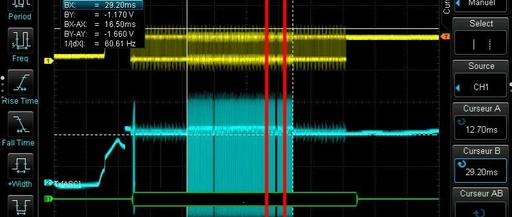
Detailed Explanation of Fault Injection (Part 1) Bypassing Secure Boot One of the security measures that can be compromised through fault injection attacks is secure boot. This will be illustrated using the ESP32 v1 as an example. First, configure a secure boot environment. After installing the ESP SDK, set up a reprogrammable bootloader in case … Read more

Preview: Discussing Privilege Modes, Boot Strategies, and Security Isolation in ARMv8-A and RISC-V CPU Architectures

Preview: Discussing Privilege Modes, Boot Strategies, and Security Isolation in ARMv8-A and RISC-V CPU Architectures

Preview PreviewIn the coming weeks, we will spend several weeks or even a couple of months discussing the differences in privilege modes, secure boot, and sleep/wake strategies between the two CPU architectures: ARMv8-A and RISC-V. RISC-V

Why Does U-Boot Typically Lack Password Protection?

Why Does U-Boot Typically Lack Password Protection?

Hello everyone, I am the Intelligence Guy~When you are debugging a development board late at night and your fingers habitually type <span>printenv</span>, have you ever wondered: As the gatekeeper of the hardware world, why does U-Boot lack even basic password protection? This is not an oversight by developers, but a carefully considered design choice. Today, … Read more

Enabling Secure Boot Functionality on TI AM62 with Yocto meta-toradex-security Layer

Enabling Secure Boot Functionality on TI AM62 with Yocto meta-toradex-security Layer

Introduction The #SecureBoot functionality of Arm processors effectively prevents unauthorized or maliciously modified firmware from running on devices. The Secure Boot system uses the keys burned into the processor to verify the Bootloader at startup, which in turn verifies the kernel FIT image, and the kernel continues to validate the rootfs’s integrity. This step-by-step verification … Read more