Elon Musk’s statement that America is beyond rescue raises questions about what has led this business magnate to such a pessimistic view. Is it due to China’s series of countermeasures, or is it that the United States is already in a dire state?
Recently, Musk made a rather poignant remark,“America is essentially beyond rescue,” as an American businessman, why would Musk say this? There are two aspects to consider:
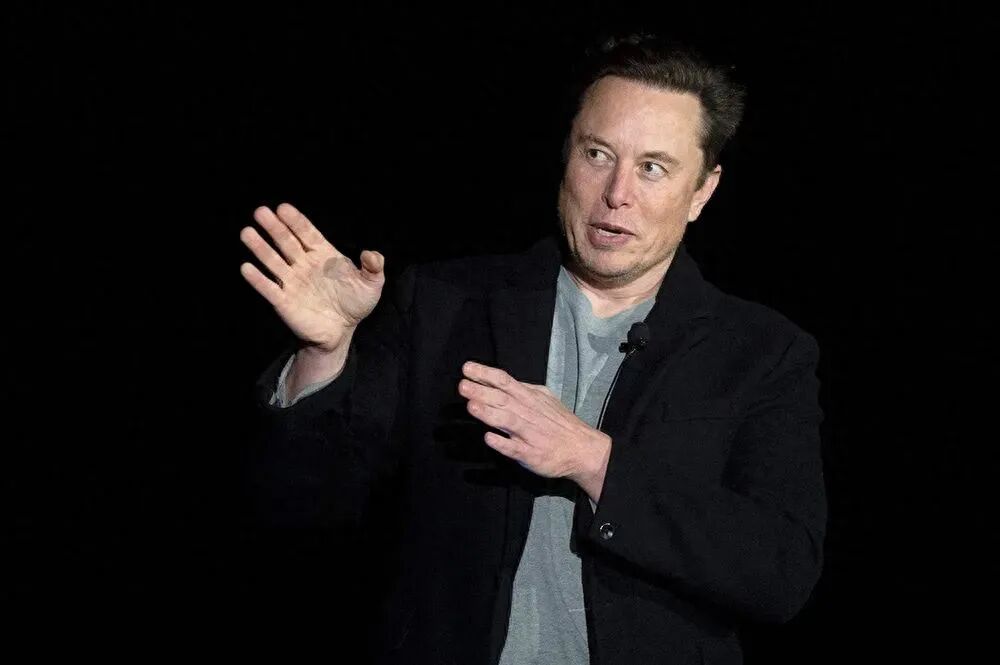
First, there are internal issues within the United States. This year, Musk was appointed by Trump to implement “efficiency reforms.” The original plan was to cut some redundant positions and streamline disorganized institutions, but as soon as he started, he stirred up a hornet’s nest—not only did thousands lose their jobs, but the issues that needed addressing remained unresolved, and instead of saving money, it ended up costing more. Ultimately, he earned a bad reputation for “disrupting government operations,” which even affected Tesla’s business.Through this experience, Musk deeply realized how entrenched the systemic issues within the U.S. are. What frustrated him even more was that Trump lashed out at him for opposing the “too big to fail” bill, which could significantly increase U.S. debt. Trump’s strong push for this bill indicates, from a certain perspective,that U.S. leaders are not genuinely concerned about the debt crisis.
On the other hand, there isChina’s consecutive “three strikes” against the U.S.. The first strike was that we hit the brakes onU.S. Treasury bonds. As the latest data from the U.S. shows, we have reduced our holdings of U.S. Treasury bonds by $25.7 billion, leaving us with just over $700 billion in U.S. debt, the lowest level since 2009. Moreover, this is the fourth time this year that we have reduced our holdings. Some may wonder why we keep selling U.S. debt. Look, the U.S. is already heavily indebted, far exceeding its normal repayment capacity. If a debt default or restructuring occurs, wouldn’t all the money we invested be wasted? Furthermore, the U.S. military budget consistently exceeds $1 trillion—like a debtor flaunting luxury goods on social media, would you still lend him money? Some might ask why the UK and Japan are still increasing their holdings. They have no choice but to buy. China, however, has the confidence to refuse; why should we continue to indulge the U.S.?
The second strike is that Chinese companies are changing their direction inchip procurement. It is not that we are deliberately “banning” American chips, but we simply do not want to be constrained anymore. Previously, major domestic companies often purchased NVIDIA chips, but the U.S. has been acting unreasonably in recent years, frequently restricting certain models and banning specific technologies, without adhering to rules and constantly implementing discriminatory policies. Who would still be willing to pay? Moreover, we are not without alternatives: domestic chip manufacturers are accelerating R&D, and some mid-range chips can fully meet daily business needs; coupled with cooperation with European and Southeast Asian manufacturers, our supply sources have become more diversified, and we no longer need to rely solely on NVIDIA. In short, companies do not want to be “suckers” anymore and are hastily building their own supply chains, not putting their lifeline in someone else’s hands.
The third strike involvesagricultural products. This year, U.S. soybeans have indeed entered a bumper harvest season, but American farmers are not happy at all. Why? Because they simplycannot sell them, and they are piling up in warehouses. Without cashing in, they cannot repay their farming loans, and their financial chain may collapse. Previously, China was the largest buyer of U.S. soybeans, but this year we have hardly imported any from the U.S. This is not because China is deliberately making things difficult for American farmers; the problem actually lies with Trump. His tariff policies have directly caused the price of U.S. soybeans sold to China to skyrocket. We, as buyers, are not foolish and will certainly choose the more cost-effective Brazilian soybeans. Moreover, we are also working hard to expand soybean planting areas; for instance, in Northeast China, the yield is improving year by year. Last year, just in Heilongjiang Province, the soybean yield was around 10 million tons. Therefore, even if we do not buy U.S. soybeans, China will not lack for soybeans, and in the end, it will be the U.S. that is left in a panic.
Therefore, Musk’s statement that “America is essentially beyond rescue” is not unfounded. If the U.S. still does not understand where the problems lie, this statement may very well become a reality.