



Edge AI and TinyML:
Empowering Intelligent Connectivity


In response to the four major challenges of cloud AI regarding latency, bandwidth, power consumption, and privacy, the AI field is undergoing a profound transformation from “cloud” to “edge”.
Edge AI and TinyML, as the core driving forces of this transformation, are liberating intelligence from data centers and embedding it directly into ultra-low-power, memory-constrained microcontrollers (MCUs), opening a new chapter in intelligent connectivity.


Overview of Edge AI and TinyML


Traditional AI relies on cloud computing, requiring data to be transmitted long distances to data centers for processing. The core idea of Edge AI is: “Bring the model to the data, rather than bringing the data to the model.” This transformation brings advantages such as immediate response, lower power consumption, and absolute privacy protection.
1. Edge AI
A broad concept that refers to the technology of performing AI computations on edge devices (such as smartphones, smart cameras, and in-vehicle computing units).
2. TinyML
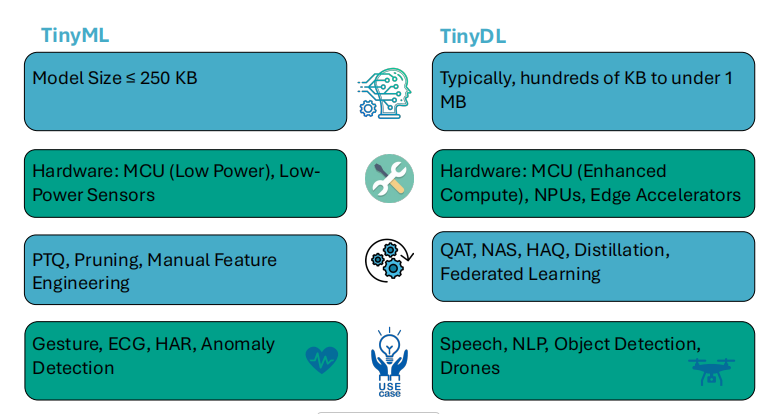
As the extreme branch of Edge AI, TinyML aims to run AI models on microcontrollers with power consumption as low as milliwatts, serving as the foundation for achieving “intelligent connectivity” by enabling even the smallest, most power-efficient chips to possess cognitive capabilities.
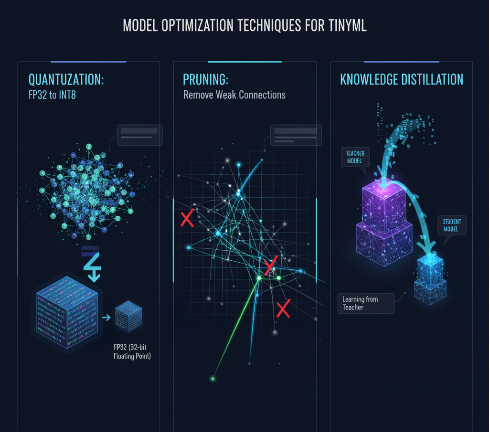
In terms of implementation, TinyML successfully “fits” complex AI models into hardware with extremely limited resources through extreme compression techniques such as model quantization, pruning, and knowledge distillation.
3. Core Trade-offs
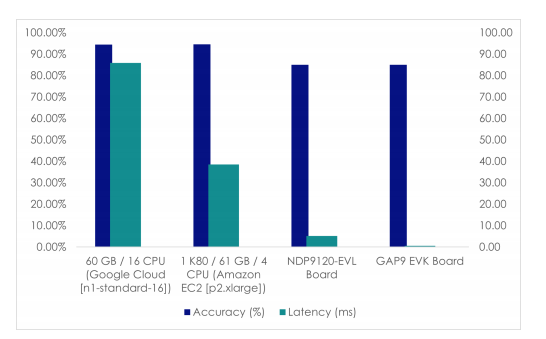
In comparison, TinyML/DL achieves significant advantages in latency, privacy, and power consumption at the cost of slight accuracy loss.


Technical Implementation


To “fit” large AI models into small MCUs, it relies on the co-evolution of software and hardware.

Path 1: Model Optimization
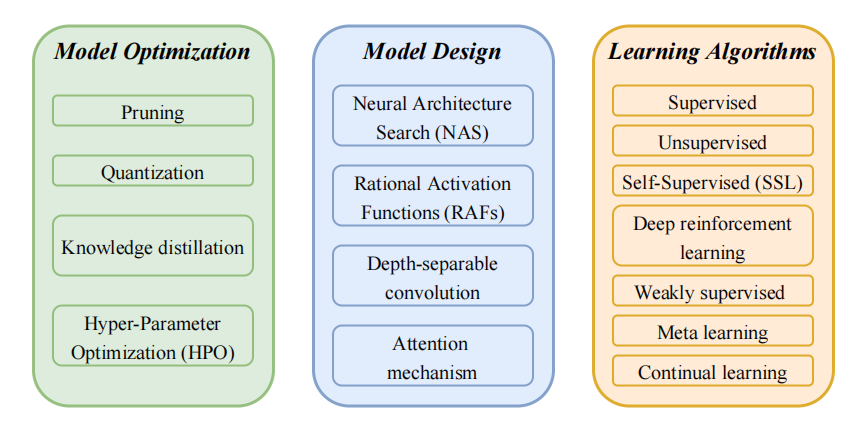
Quantization is the core compression technique that reduces model parameters from 32-bit floating point (FP32) to 8-bit integer (INT8) or even lower, significantly reducing memory usage and accelerating computation. Quantization includes post-training quantization (PTQ) and quantization-aware training (QAT). Pruning removes unimportant connections or weights in the neural network to slim down the model. Knowledge distillation uses a powerful teacher model to train a simplified student model. Additionally, techniques such as low-rank factorization and hyperparameter optimization are also employed.

Path 2: Lightweight Architecture Design
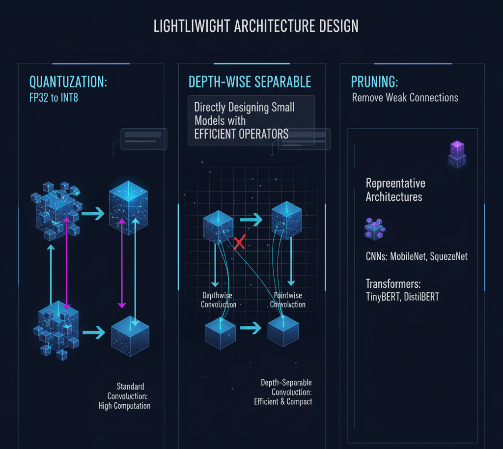
AI researchers are no longer limited to compressing large models but are directly designing small models. In key architecture aspects, efficient operators such as depthwise separable convolutions are widely adopted. Representative models include MobileNet and SqueezeNet in the CNN domain, and TinyBERT and DistilBERT in the Transformer domain.

Path 3: Neural Architecture Search (NAS)
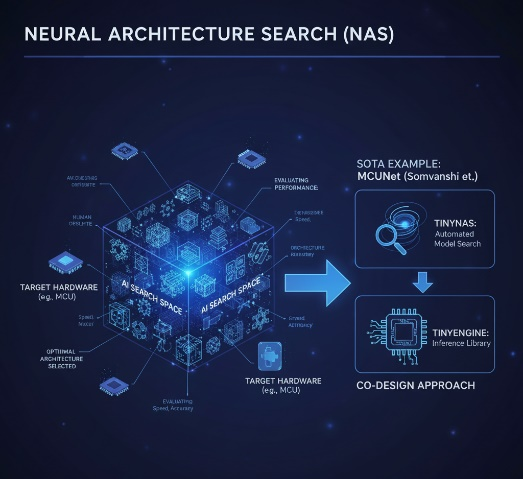
This is defined as no longer manually designing models but allowing AI to automatically search for the neural network structure that performs best in terms of speed and accuracy on specific hardware, such as a particular MCU. A state-of-the-art example is MCUNet, which innovatively adopts a collaborative design method of TinyNAS automatic model search and TinyEngine adaptation inference library.


Application Scenarios


Scenario 1: Smart Home and Voice Assistants
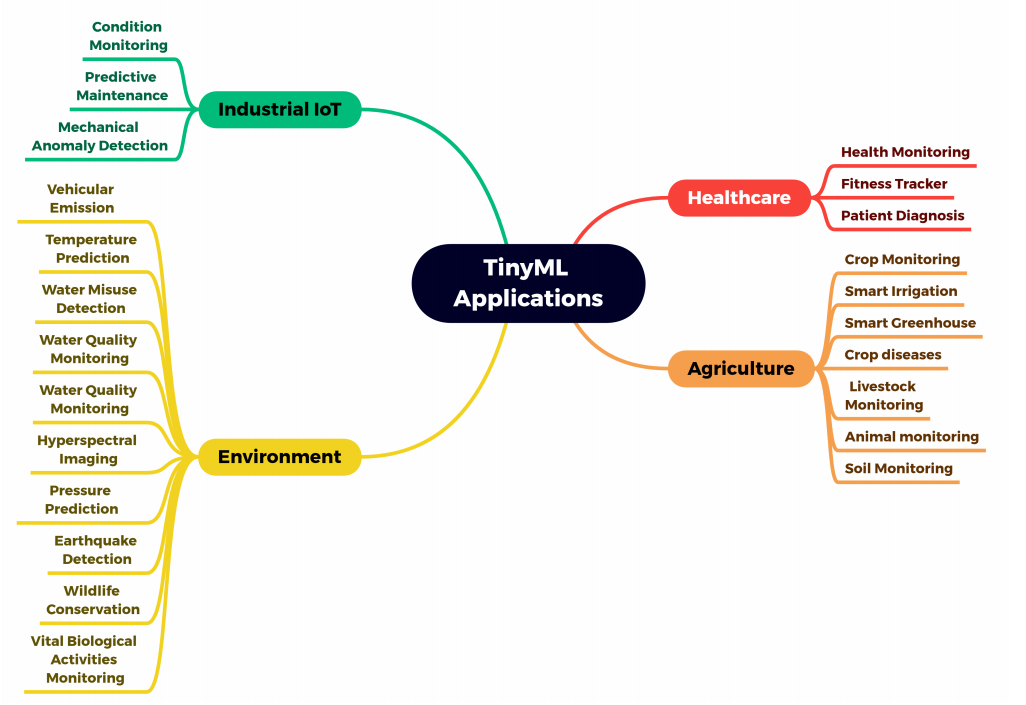
Leveraging Edge Intelligence technology, smart home terminals can deploy lightweight deep neural networks on local hardware. This On-device Inference architecture not only supports devices to maintain a 7×24 hour “Always-on” listening mode in resource-constrained environments, significantly reducing system power consumption and standby current; at the same time, by blocking the audio data upload link, it physically eliminates the risk of leaking private household conversations during transmission and cloud storage.

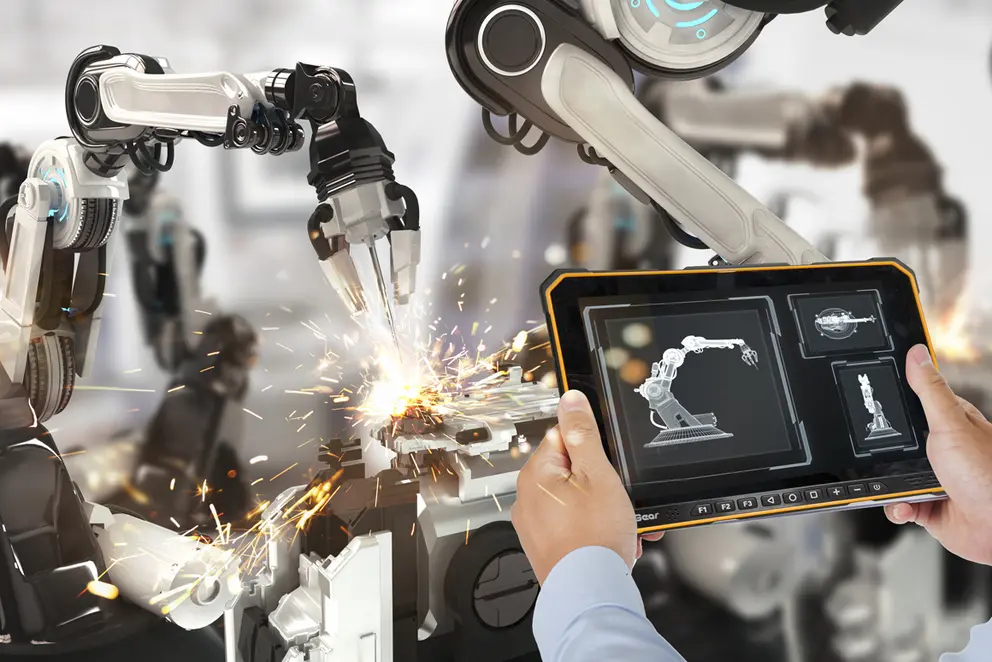
Scenario 2: Industry and Predictive Maintenance
Deploying smart sensors integrated with TinyML on core equipment such as industrial motors enables real-time analysis of vibration data at the edge. The system accurately captures early fault characteristics through local inference, completing predictive maintenance alerts before physical failures occur. This effectively avoids costly unplanned downtime risks, significantly reduces operational costs, and ensures the continuity and safety of production lines.
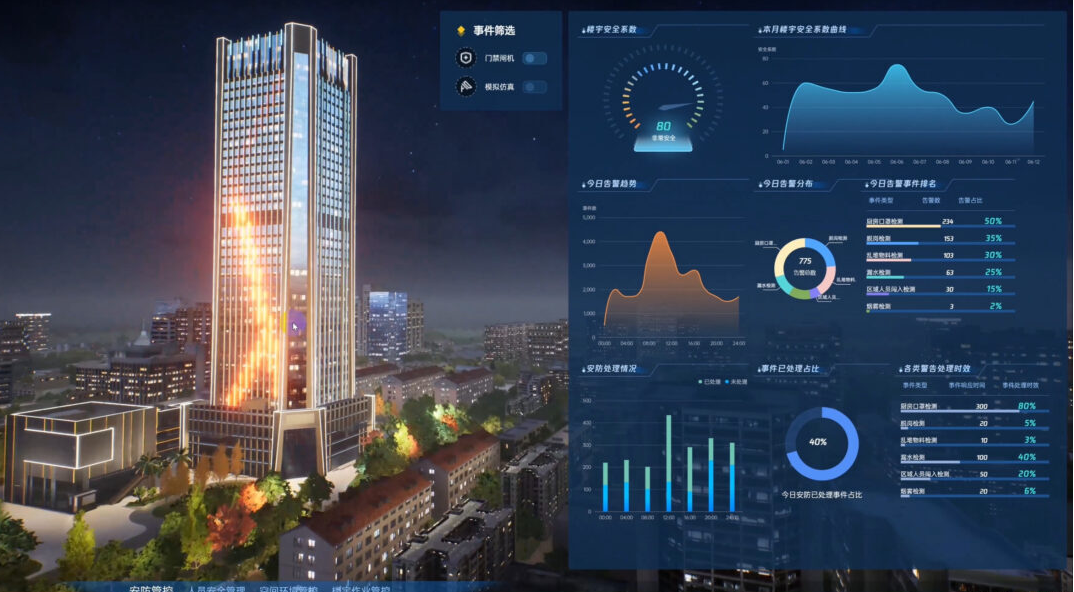
Scenario 3: Smart Security and Buildings
Integrating computer vision (CV) algorithms into monitoring terminals enables cameras to have edge-side video structured analysis capabilities. It can locally identify key anomalies such as “person falling” and trigger alarms instantly. By adopting an “edge-side analysis, on-demand upload” mechanism, it avoids the cloud transmission of all ineffective video streams, significantly optimizing bandwidth usage while greatly improving the response speed of security events.
Scenario 4: Wearable Health and Agriculture
In healthcare, wearable devices utilize edge-side inference to analyze ECG signals in real-time, accurately capturing pathological features such as arrhythmias and providing instant alerts. In agricultural scenarios, terminal nodes use local vision algorithms to identify pests and diseases, employing an “event-driven” mechanism to only transmit alerts through low-power networks when anomalies are detected. This model significantly reduces communication frequency and greatly extends device battery life.



Conclusion


In the future, from powerful Edge AI to tiny TinyML, AI technology will break the limitations of large servers and exist in a more ubiquitous and embedded form. With the continuous innovation and deep integration of software and hardware technologies, AI will seamlessly and omnipresently integrate into every sensor, device, and system, becoming the core driving force and key support for the arrival of the “intelligent connectivity” era.
Copywriter: Cui Jinhao
Editor: Zhang Xinqi