In the era of the Internet of Things (IoT) and edge computing, TinyML technology is becoming increasingly important. TinyML aims to deploy machine learning (ML) models on resource-constrained devices, making it possible to perform ML inference on microcontrollers. Next, we introduce TinyML-CAM, an efficient image recognition system based on the ESP32 platform. By using TinyML-CAM, you can build your own real-time image classification application and achieve a processing speed of 80 frames per second with only 1KB of RAM.
Introduction to TinyML-CAM
TinyML-CAM is an open-source project dedicated to efficient image recognition on low-power devices. The project utilizes the ESP32 microcontroller to quickly recognize images captured from a camera by implementing HOG (Histogram of Oriented Gradients) feature extraction and a random forest classifier. The goal of the project is to apply machine learning technology to embedded devices while maintaining low resource consumption, which is crucial for most IoT devices.
Project Features
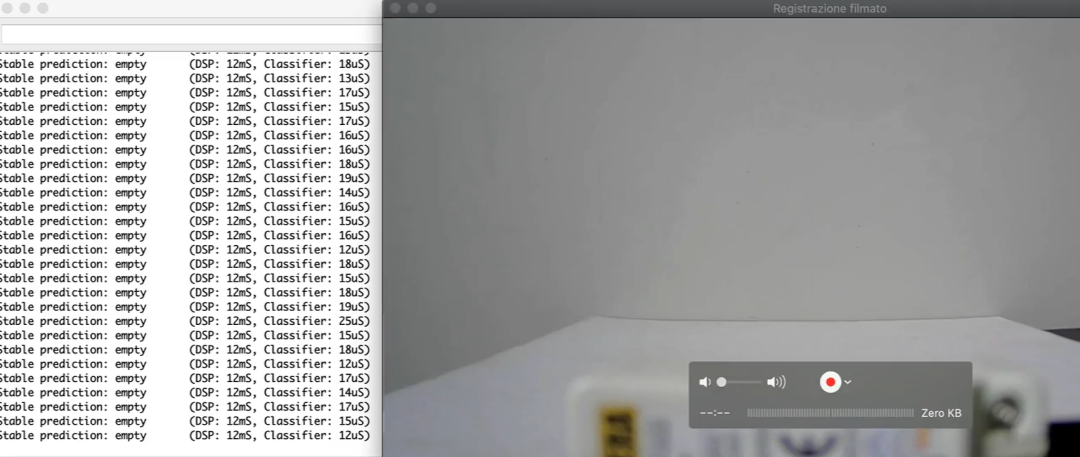
- • Real-Time Processing: TinyML-CAM extracts DSP (Digital Signal Processing) features from image frames in about 12 milliseconds, with classification time under 20 microseconds. This means TinyML-CAM can process images in real-time at a speed of 83.3 frames per second, with almost no impact on the ESP32’s 30 FPS frame rate.
- • Low Memory Consumption: The system consumes only 1KB of RAM, which is an extremely small memory footprint for most microcontrollers. This allows developers to implement complex image recognition functions while maintaining low power consumption.
- • User-Friendly Toolchain: The project provides detailed code examples and necessary library installation instructions, making it easy for users to capture images and train machine learning models on their ESP32 devices.
Project Components
- 1. Image Dataset Collection: Using
<span>CameraWebServer.ino</span>, users can easily capture images from the ESP32 and create a dataset. After uploading, the ESP32 will connect to the Wi-Fi network, start an HTTP video streaming server, and users can access it via any web browser. - 2. Feature Extraction and Classification: The
<span>HogClassifier.h</span>file contains a random forest classifier trained using the collected image data, while the<span>HogPipeline.h</span>file provides functionality for extracting HOG features from image frames. - 3. Complete Code Example: The project also provides
<span>TinyML-CAM-full-code-with-markdown.ipynb</span>, which includes the complete code and sample outputs for each step, making it easier for users to understand and extend.
Application Scenarios
TinyML-CAM has a wide range of application potential, especially in scenarios requiring low-power, high-performance image recognition systems. Here are some possible application areas:
- • Smart Home: In home automation, TinyML-CAM can be used to recognize family members, enhance security, or improve interactions with smart devices.
- • Industrial Monitoring: The system can quickly identify items on production lines, thereby improving production efficiency and reducing errors.
- • Agricultural Monitoring: In agricultural environments, TinyML-CAM can be used to monitor crop health and identify pests, helping farmers achieve precision agriculture.
Conclusion
TinyML-CAM demonstrates the possibility of achieving efficient image recognition under low memory conditions. This open-source project provides developers with a powerful tool to apply machine learning technology in resource-constrained environments. Whether in smart homes, industrial monitoring, or agricultural intelligence, TinyML-CAM has broad application prospects. Try this project now and see how it can change your embedded application development.
Project Address: https://github.com/bharathsudharsan/TinyML-CAM