Introduction: In 2013, I worked on a project that implemented a decentralized, self-organizing, multi-hop routing wireless network product based on Ad-Hoc wireless network technology, which operates without a central infrastructure.
Project Requirements: The goal was to achieve a decentralized frequency-hopping network among 6 nodes using Ad-Hoc wireless mode.
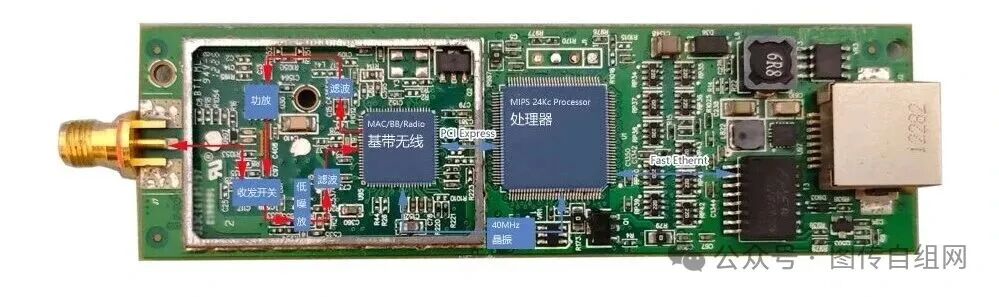
Hardware Selection: At that time, the market only offered wireless products such as wireless bridges, wireless APs, and wireless routers, with no Ad-Hoc related products available. Some manufacturers claimed to have mesh or MESH bridge products, but their prices were extremely high, with each node costing over 10,000 yuan, far exceeding the target cost. After reviewing a large amount of information and making comprehensive comparisons, the target was set on the UBNT AirMax series products, ultimately selecting the Bullet M2HP model, which required some simple modifications. The modified module is shown below:
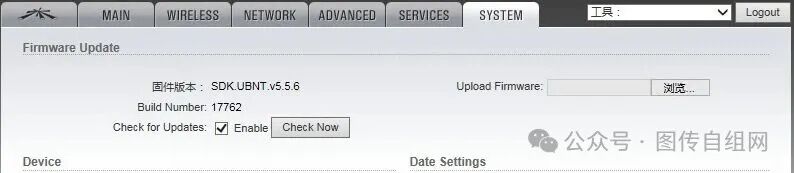
Software Development: UBNT provides an SDK development package that allows for direct secondary development and porting. The system software uses the original factory SDK.UBNT.V5.5 development package for secondary development, ensuring the original system functions while porting the Ad-Hoc software package to support Ad-Hoc wireless mode. The SDK development package can be upgraded directly from the factory’s lower version system, and it is recommended to upgrade from the original firmware below V5.4 to SDK.UBNT.V5.5.6 as shown in the figure below:
 After the upgrade, set the wireless mode on the wireless page. In Ad-Hoc wireless mode, a maximum of 6 nodes can be supported. You need to manually enter the wireless MAC addresses of the 6 nodes in the “peer” field to achieve self-organization, as shown in the figure below: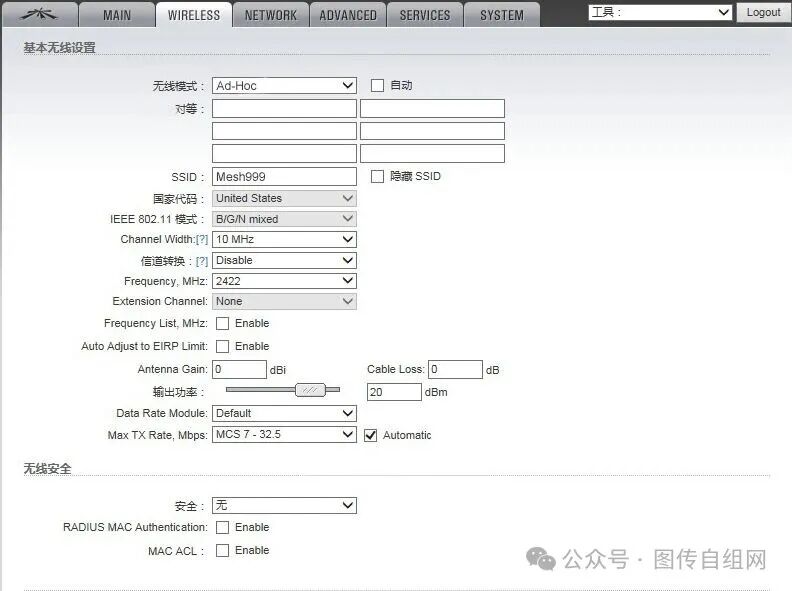
Once the settings are complete, all nodes can operate in the same SSID, frequency, and bandwidth to achieve a decentralized frequency-hopping network. The operational status is shown in the figure below:
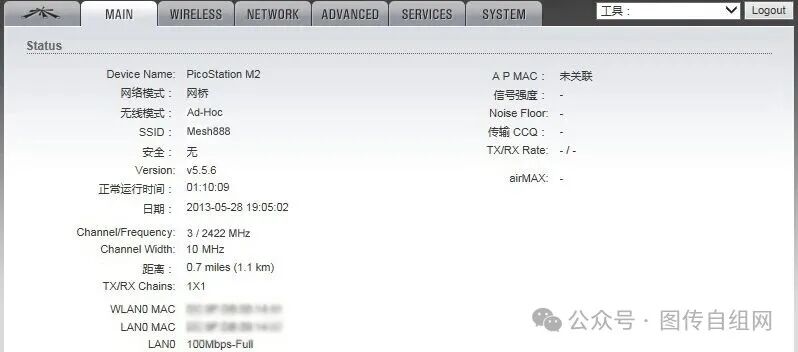
Project Validation: All modules operate at a frequency of 2422MHz, bandwidth of 10MHz, mode of Ad-Hoc, and SSID:Mesh999. Adjacent nodes communicate wirelessly in a peer-to-peer manner (multi-hop routing). If any 2 nodes are powered on, they can PING each other after about 90 seconds, with a wireless network latency of 5ms (for 2 nodes). If any 1 node is powered on, it can PING after about 90 seconds, with a wireless network latency of 8ms (for 3 nodes). If any 1 node is powered on, it can PING after about 90 seconds, with a wireless network latency of 12ms (for 4 nodes). If any 1 node is powered on, it can PING after about 90 seconds, with a wireless network latency of 18ms (for 5 nodes). Finally, if the last 1 node is powered on, it can PING after about 90 seconds, with a wireless network latency of 25ms (for 6 nodes). The maximum point-to-point rate between any two nodes can reach approximately 18Mbps under full signal conditions.
In summary, the project can have 6 nodes powered on simultaneously without interference, with wireless network latency for PING packets ranging from 5~25ms, and a maximum point-to-point wireless rate of up to 18Mbps, fully meeting the project requirements.
Follow-up: This wireless network product solution, with excellent wireless performance and high cost-effectiveness (the cheapest on the market, smallest in size, and most powerful), became a best-selling decentralized frequency-hopping wireless module from 2013~2015, with modules widely used in drone data link wireless transmission. However, after 2015, UBNT began to incorporate genuine product verification into their products, making it impossible to directly upgrade all SDK development package firmware. Even forced upgrades could not pass the genuine product verification, leading to the project’s forced discontinuation and withdrawal from the market.