
In the context of technology, what often creates a “buzz” is not the news itself, but how people interpret it.
Recently, the news of DJI investing in Smart派 has created significant ripples in the calm waters of the 3D printing industry.
Among the many ripples, the most eye-catching is undoubtedly a “short essay” by Tao Ye, the founder of TuoZhu. His remarks suddenly gave this relatively quiet track a sense of urgency.
Amidst the hype, it seems as if the narrative of “the wolf is coming” is about to unfold.
However, if we detach the emotions, the story is far less dramatic—it’s not about someone being targeted or devoured, but rather that an industry has finally reached a point where it deserves serious attention from more players.
And when the usually cautious DJI is willing to pause and invest, the “coming-of-age ceremony” for the 3D printing track is no longer far off.

A Value Confirmation for 3D Printing
In the consumer hardware industry, what truly causes anxiety and unease is not the entry of giants, but rather their persistent disinterest.
If a track is bustling internally, with players excited and stories emerging, while external giants remain inactive and uninterested, it actually feels colder.
Silence is the most direct form of rejection.
Similarly, a transformative moment for a track is often not marked by a single round of financing or a product iteration, but rather by the moment when giants start hiring and seriously looking at it.
After all, giants are generally more stingy than generous, rarely betting on a whim, and certainly not uplifting an industry without a growth curve.
In the first half of the XR industry, Tencent, having lost PICO, once intended to acquire Black Shark to counter ByteDance. But in the end, rationality triumphed over impulse, and they hit the brakes at the last moment.
The reason is simple: at that time, the XR track seemed to be thriving, but in reality, there were no signs of “growing up”. DJI’s initial hesitation to enter the 3D printing space likely stemmed from similar reasons.
Thus, when Apple announced it would release a headset, manufacturers initially viewed it as a “savior”, eagerly hoping that this consumer electronics giant would enter the industry soon.
The arrival of giants is not a threat, but a form of endorsement.
From this perspective, DJI’s foray into consumer-level 3D printing is not a targeted move against any specific company, but a response to the industry’s cycle.
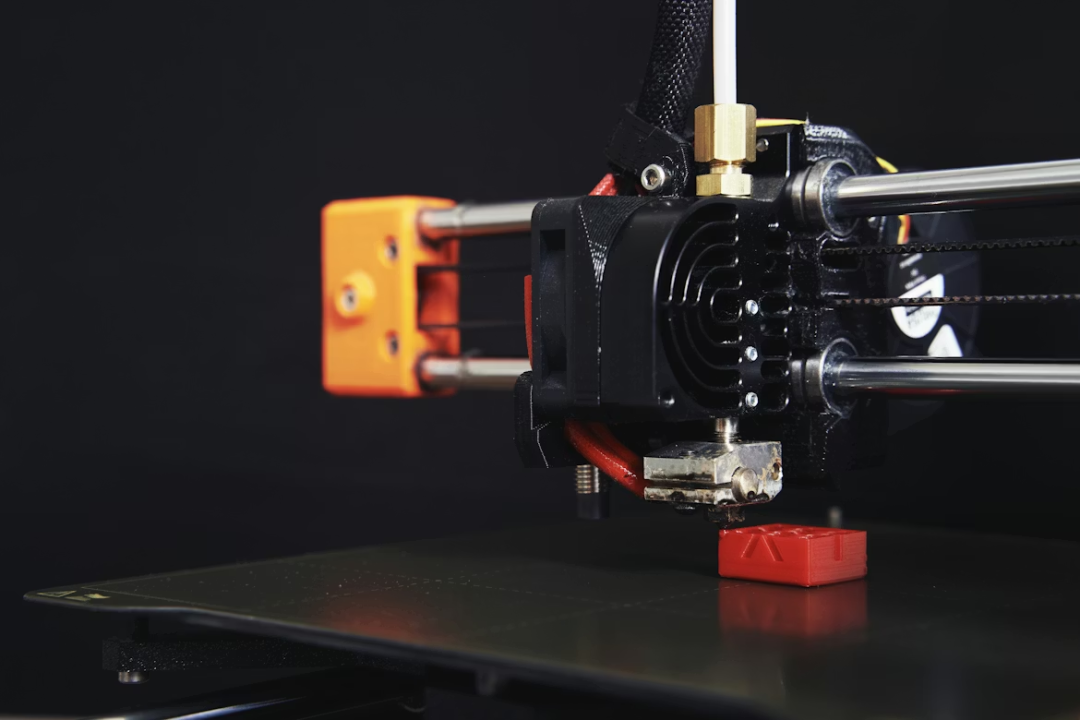
According to authoritative data, by 2024, the consumer-level 3D printing market is expected to reach a scale of $4 billion, with a compound annual growth rate approaching 30%. In the current slightly sluggish consumer electronics track, consumer-level 3D printing is one of the few directions still worth heavy investment.
More critically, beyond the data, there are industry changes.
As the maturity of the supply chain increases, the costs of key components for 3D printing continue to decline, making consumer-level 3D printing devices increasingly affordable, with entry-level products now priced below 2000 yuan; at the same time, the accelerated involvement of AI tools has significantly lowered the barriers to modeling.
When hardware becomes cheaper and software more user-friendly, and the creative barriers are cut down by AI, a circle that originally belonged to a niche field will naturally expand to a broader sky.
Currently, this is true for XR, and it is also true for consumer-level 3D printing.
With increased certainty, giants like Alibaba, ByteDance, Xiaomi, and vivo are no longer hesitating and are ramping up their investments; even before DJI took action, giants and institutions like Tencent, Hillhouse, and Meituan had already sensed the certainty and made their moves. Over time, more heavyweight players will inevitably converge here.
A track that can attract giants to enter often indicates that it has the potential to move beyond the “self-indulgent phase” and towards a mature industry. Therefore, this collective shift is essentially a value confirmation for the consumer-level 3D printing track.

The Cost of the “Coming-of-Age Ceremony”
As an industry matures from its grassroots beginnings, the intensity of competition naturally tightens. This is both a basic business principle and an inevitable cost of growth.
In recent years, the narrative of consumer-level 3D printing has carried a sense of “lonely bravery”—startups leading the charge, rapid technological iterations, a rich community culture, making the entire industry both light and imbued with a raw freedom and vitality.
TuoZhu exemplifies this. In its grassroots phase, it was like the bamboo in its name, patiently gathering strength until it burst forth with the Bambu Lab X1, suddenly overshadowing some industrial-grade products.
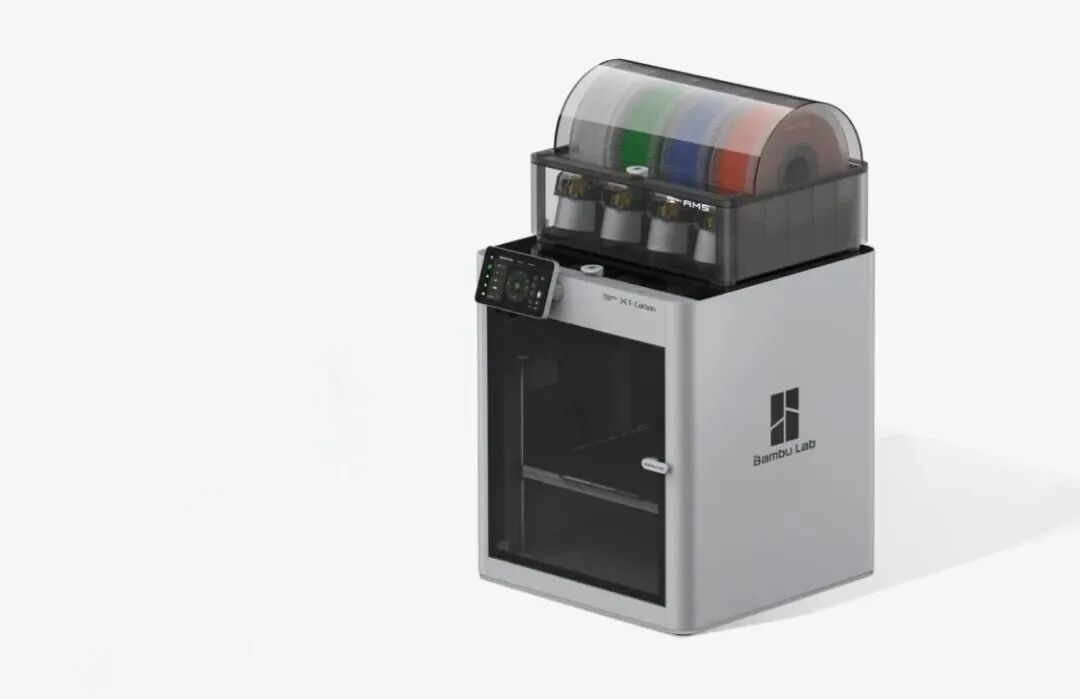
These stories have been repeatedly revisited by the industry over the years, supporting its current standing. Data shows that by 2024, TuoZhu’s revenue is expected to approach 6 billion yuan, with a net profit margin maintained at a high level of 30%.
A 30% net profit margin reflects a profitability level surpassing that of Apple. Even with the strongest supply chain bargaining power, scale advantages, and brand premium, Apple’s net profit margin hovers around 25%-27%.
In any industry, as long as there are excess profits and no sufficiently wide moat, it is difficult to remain isolated; players will inevitably rush in, leading to higher competition until profits are pulled back to a reasonable range—this is an iron law of the industry, not a denial of any specific company.
When the comfort zone is no longer comfortable, it is common for players to complain about the “intense competition”. This precisely indicates one thing—the industry has finally matured.
And growth inevitably comes with some growing pains.
In the early days of smartphones, companies like NiCai relied on low-cost supply chains and “borrowed ideas” to race ahead, briefly creating a “shanzhai phone era”. However, when smartphones entered systematic competition, these players quickly faded away.
The reason is that any track capable of sustaining a long journey cannot escape the repeated reshaping and elevation of industry barriers.
In this process, the players’ unease fundamentally stems from themselves, not their competitors.
If an industry feels uncomfortable simply because DJI has entered, it indicates that the industry was still in a “greenhouse” state, with barriers not high enough.
Based on this, from the recent影石 to the current TuoZhu, the recurring narrative of “the wolf is coming” fundamentally reflects a kind of underlying anxiety—not fear of DJI as a company, but fear of not being able to surpass DJI’s higher industry standards.
However, in reality, DJI’s “sharpness” is not to be feared.
Currently, the consumer-level 3D printing track has two mainstream paths: light curing and fused deposition modeling (FDM). TuoZhu has always stood on the FDM side, pushing ease of use to the extreme; while DJI’s investment in Smart派, in terms of technology, leans towards light curing, which is actually a “minority” in the industry.
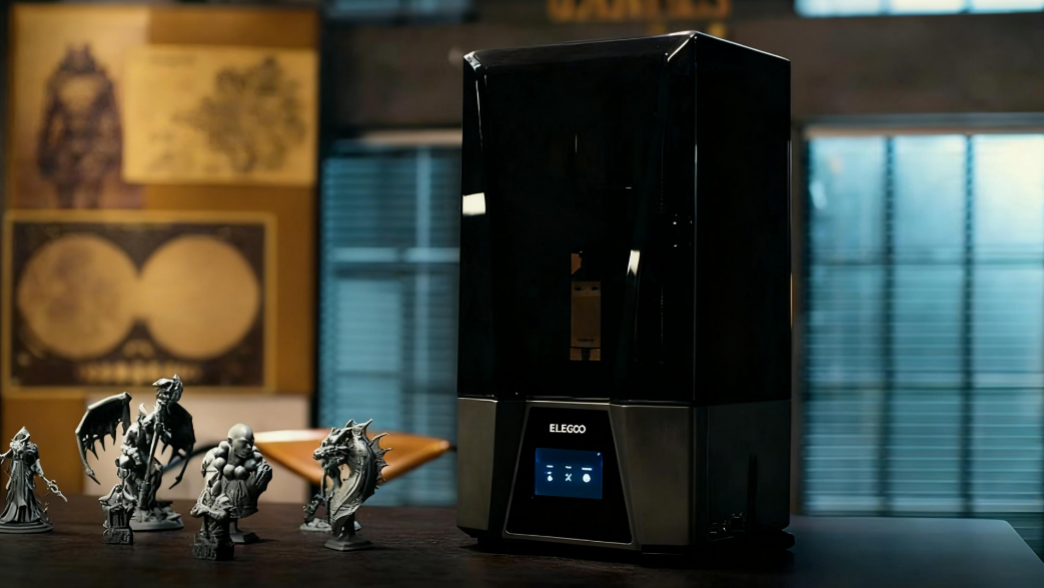
In simple terms, FDM is more “user-friendly”, quick to learn, and has a higher tolerance for errors, making it more appealing to the general public; while light curing has a higher entry threshold but offers greater detail precision, thus being favored by hardcore users like “figurine enthusiasts”.
An emerging industry should not have only one solution; this track requires the parallel, collision, and complementarity of different technological paths, as well as higher levels of competition.
Therefore, DJI is not a “wolf” but rather a mirror—reflecting illusions and filtering out truly quality players.
For players with solid fundamentals, the existence of this mirror is clearly not a bad thing. Thus, before this inevitable “coming-of-age ceremony”, TuoZhu, as a representative of the “DJI system”, might be able to be a bit more confident than it is now.
Years ago, after the exit of shanzhai phones, smartphone manufacturers faced systematic competition, forcing them to solidify their foundations and refine their offerings, ultimately unlocking the golden age of smartphones.
Consumer-level 3D printing will be the same. An industry shedding its immaturity and truly coming of age does not rely on complaints about newcomers, but on everyone competing vigorously to raise the industry’s standards.

The “Growing Pains” of DJI System Entrepreneurs
“Shouting across the air” can stir up temporary public opinion, but it cannot determine the outcome of business.
The “short essay” by the founder of TuoZhu stirred waves in the industry not because of the amount of information it contained, but because emotions are always easier to spread than facts.
Emotions typically stem from two sources.
One is genuine feelings—like the complex emotions of an excellent graduate from DJI’s “Huangpu Military Academy” facing a “mentor-student showdown”, filled with reluctance, stubbornness, and nostalgia.
The other is the need for narrative—deliberately pushing emotions to the forefront, appealing to public opinion for condemnation, and using the fermentation of public opinion to shift focus, thereby obscuring one’s own anxieties. This is a common narrative technique in business.
This recent uproar seems more like the latter.
The reason is that the over-thousand-word “short essay” is permeated with a narrative of imagined enemies—from “reverse scales” to “settling accounts”, to those “childish” associations, with key judgments almost entirely based on subjective speculation rather than facts.
While temporary emotions can express individual sentiments, they do not explain a company’s strategy, nor do they clarify the direction of an industry.
After all, the business world is not a martial arts world; while there may occasionally be flashes of swords, players are neither heroes nor are there any entanglements of love and hate, nor swift vengeance.
Ultimately, a company’s business choices are bets on products and cycles, and should not be bound by emotions or public opinion.
Individuals can certainly feel emotional and indignant, but if personal emotions are used to coerce corporate decisions, it not only betrays that emotion itself but also deviates from the clarity that the business world should have—what belongs to God should go to God, and what belongs to Caesar should go to Caesar.
And this, is perhaps another form of “coming-of-age ceremony”.
In the face of changing competitive landscapes and industry growth, the new generation of entrepreneurs must learn to shift from “short essay-style” outbursts and appeals to public opinion, to a more mature industrial mindset, facing competition with greater composure.
This is the “growing pain” that entrepreneurs in the “DJI system” will inevitably experience. But they will eventually understand that whether they can uphold DJI’s most precious product-oriented belief is the challenge and topic they will face on their developmental path. And DJI has long provided the answer.
After all, the consumer-level 3D printing track is ultimately a product-oriented industry—while the uproar may be loud, it ultimately must be backed by product strength. DJI’s journey has already proven this point.
This may be the true “adult quality” that a maturing industry and entrepreneurs need.
Reprinted from Photon Planet
-END-
Disclaimer
This article represents the author’s personal views.
Some images are sourced from the internet and have not been verified for copyright ownership; they are not for commercial use. If there is any infringement, please contact the author.
Previous Recommendations
PREVIOUS RECOMMENDATION
After several Weibo posts, did Lei Jun just “get angry”?

Is Alibaba no longer hungry after taking the “C position” on Taobao flash sales?

Alibaba aims to become “super intelligent”, and Wu Yongming’s ambitions are no longer hidden.


Long press the QR code to follow
Discover new technology news together