01
Peel 3D Handheld Scanner
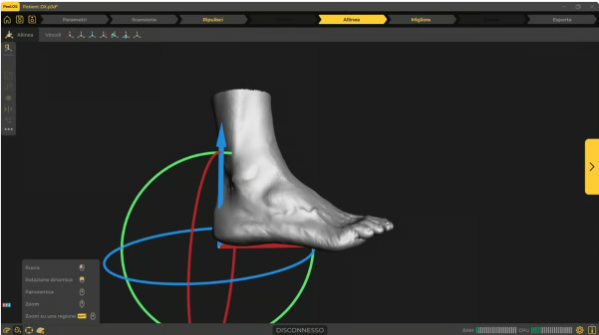
After completing a human scan, the Peel 3D software supports refining the mesh model, filling holes, and exporting files in formats such as STL, OBJ, PLY, FBX, STEP, and IGES. These files can easily interface with CAD design tools and 3D printing slicing software, meaning professionals can complete the entire process from scanning to finished product without complex conversions.
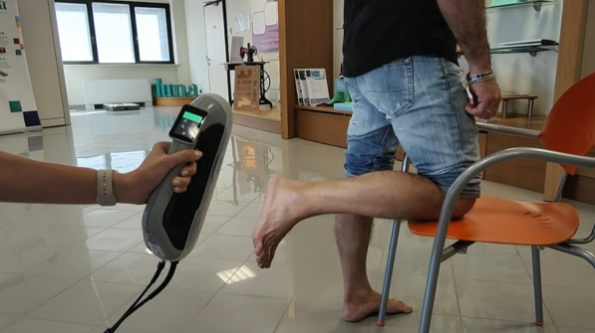
The Peel 3D scanner emphasizes ease of use while ensuring accuracy, capable of precisely capturing limb, foot, or full-body scan data even in complex environments. Coupled with proprietary software, users can clean up scan imperfections and optimize surface topology to prepare files for subsequent processes. This smooth workflow supports a wide range of application scenarios while controlling costs and complexity.
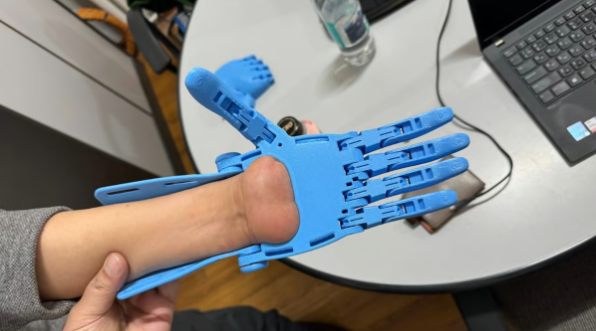
In some regions of Mongolia, limited advanced medical resources make prosthetic production difficult. Peel 3D technology helps local teams accurately scan residual limb shapes to design comfortable and fitting sockets. These designs, 3D printed with lightweight polymers, reduce weight while ensuring strength. The final result is high-quality prosthetics delivered quickly and at a cost-effective price, restoring mobility and dignity to patients who previously had few options.
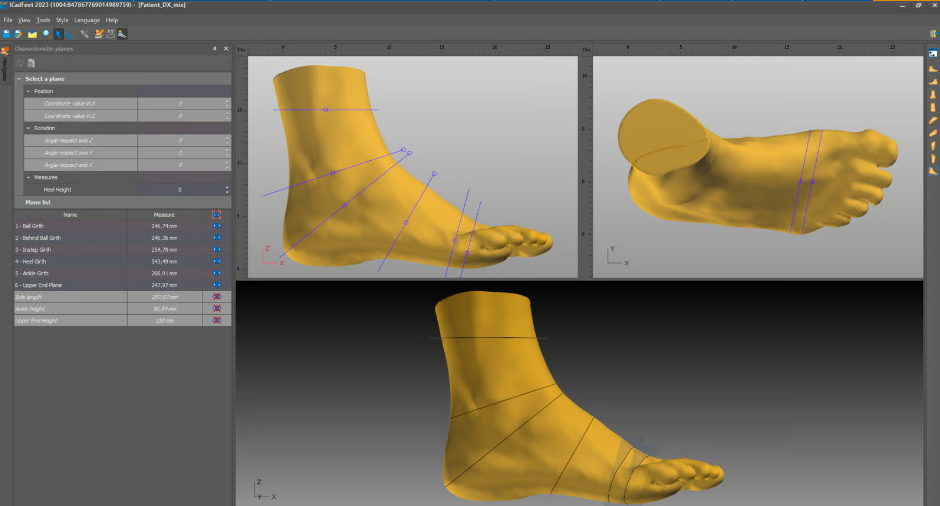
The Italian company Duna uses the Peel 3D scanner to create custom orthopedic shoes for patients. The process begins with detailed foot scans that capture every contour and asymmetrical detail. This data is used for CAD modeling and 3D printing components such as insoles and support structures. By combining scanning and additive manufacturing technology, Duna achieves customization precision that traditional methods cannot reach, while enhancing medical outcomes and daily comfort.
02
Signature Oak Printer
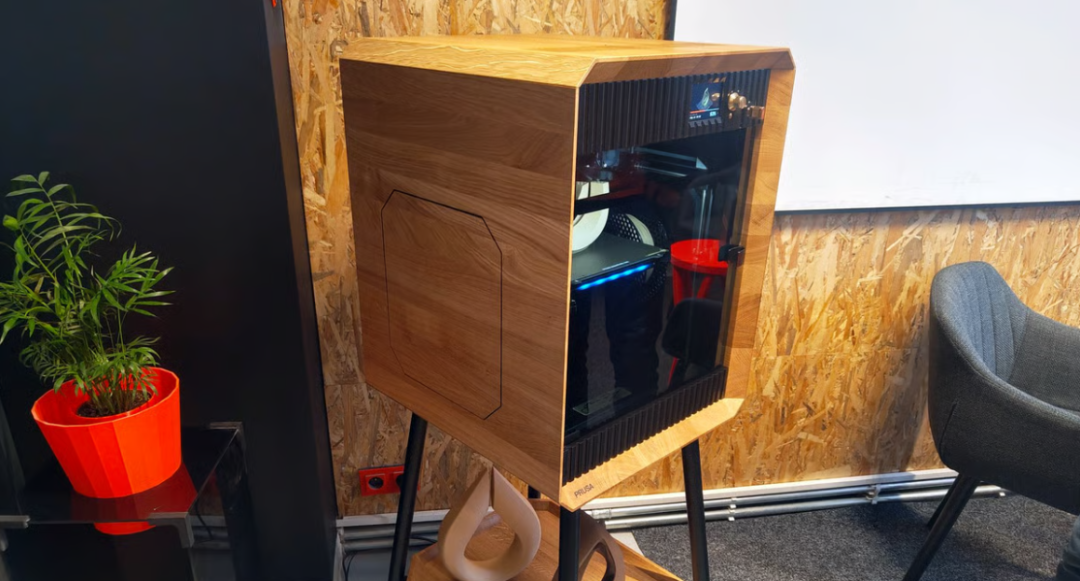
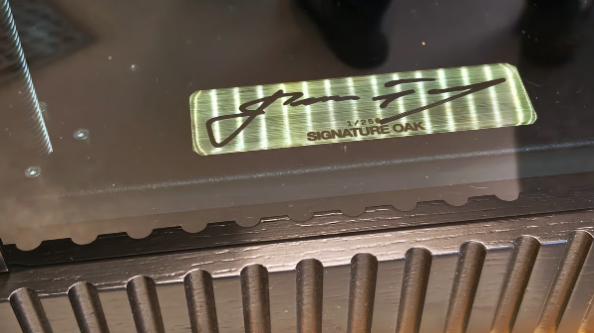
This Signature Oak printer, crafted from Czech oak, supports customization, features the founder’s signature, and boasts exceptional performance. It is a labor of love from Prusa.
All Prusa printers are hand-assembled, but the Signature Oak is a true handcrafted masterpiece. Only 250 units are available worldwide.
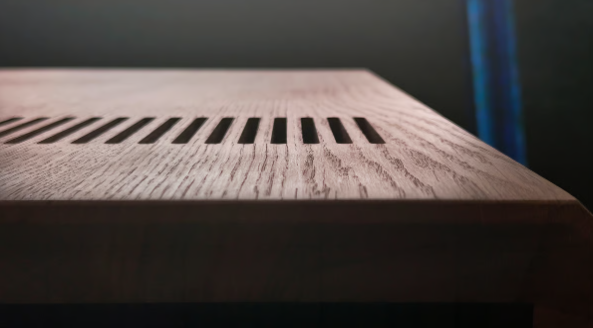
Unlike the black DLC-coated metal panels commonly used in the company’s Core One printer, the Signature Oak is built on the Core One platform, with a body made from century-old handcrafted oak. These thick wooden panels come from the Jelinek family woodworking shop in the Czech Republic, which has a long-standing relationship with founder Josef Průša.
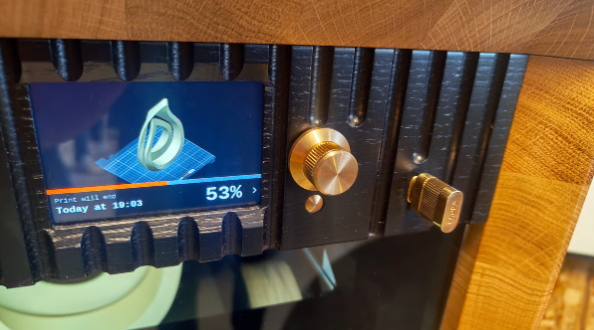
After planing, carving, sanding, and partial dark dyeing, the final printer presents a pure, traditional aesthetic, perfectly suited for display in a living room. An optional independent wooden base is available: the lower level provides storage space, while the top platform can hold decorative items, enhanced by brass fittings, creating a natural overall elegance.
These printers are fully functional works of art—beyond aesthetic design, their core remains the standard Core One. Since each unit is custom-made, users can make slight personalized modifications.
03
Allonic
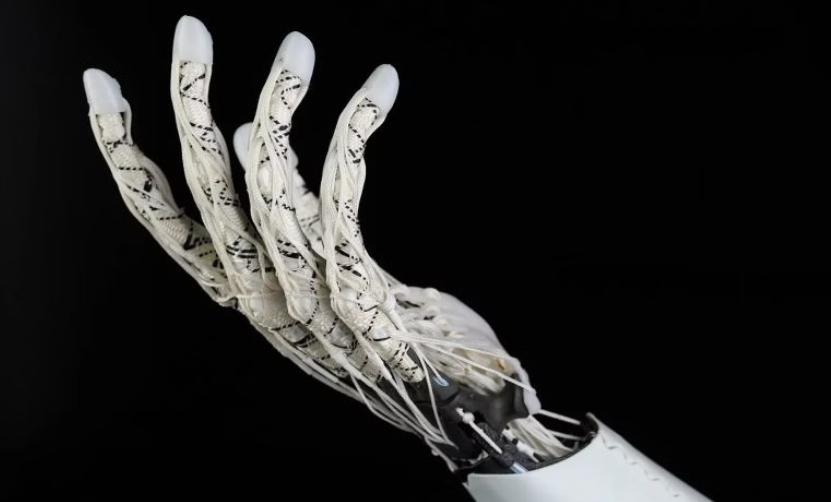
The Hungarian startup Allonic is developing a highly innovative process that combines 3D printing with its proprietary technology—3D tissue weaving—to manufacture complex robotic systems with compliant motion characteristics. This breakthrough has successfully placed the young company on the shortlist for the startup category of the 2025 Formnext Awards.
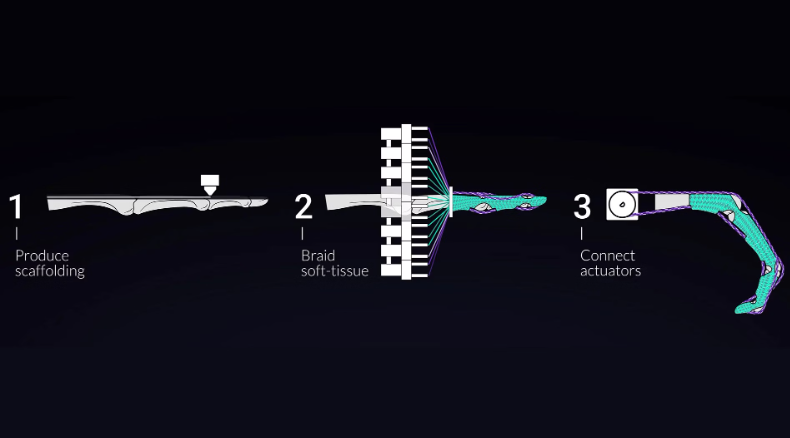
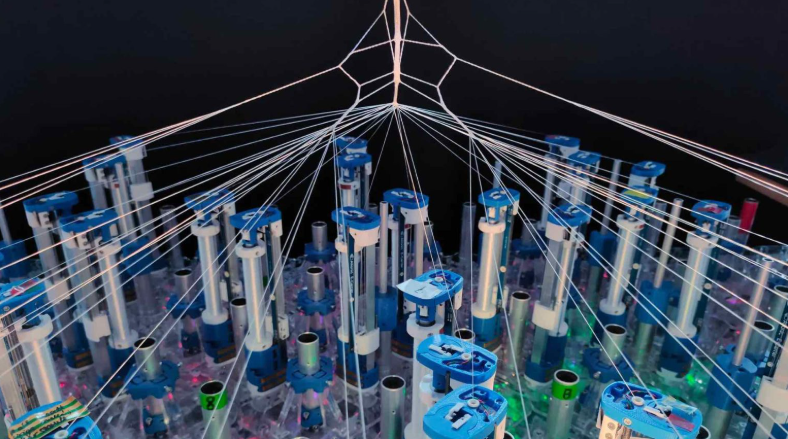
According to Allonic, 3D tissue weaving is a technology that “can automatically grow complex movable robotic bodies directly from functional fabrics.” More precisely, users can first 3D print a robotic skeleton base, and then use Allonic’s automated hardware and software solutions to implement robotic fiber weaving around the prefabricated components. The weaving design is crucial for the robot’s functionality—it integrates a reinforced textile layer with uniform stress distribution and embeds pulleys and guiding mechanisms that connect to the drive system for natural-like movement. It is easy to see that these 3D woven fibers resemble the muscles and tendons attached to the skeletal structure of a hand.
This technology offers multiple advantages: the prototyping cycle for complex robots is reduced from weeks to hours; the streamlined automation platform lowers production costs; and it creates lighter, softer, stronger, and safer robotic systems for humans. The process can also produce multi-material 3D structures that integrate elastomers, sensing elements, and wires, enhancing functional integration. At this stage of technological development, Allonic has developed a second-generation system, reportedly increasing weaving speed by five times, reducing size by half, and achieving three times the yarn count resolution of previous products.
04
Wallabee Shoes
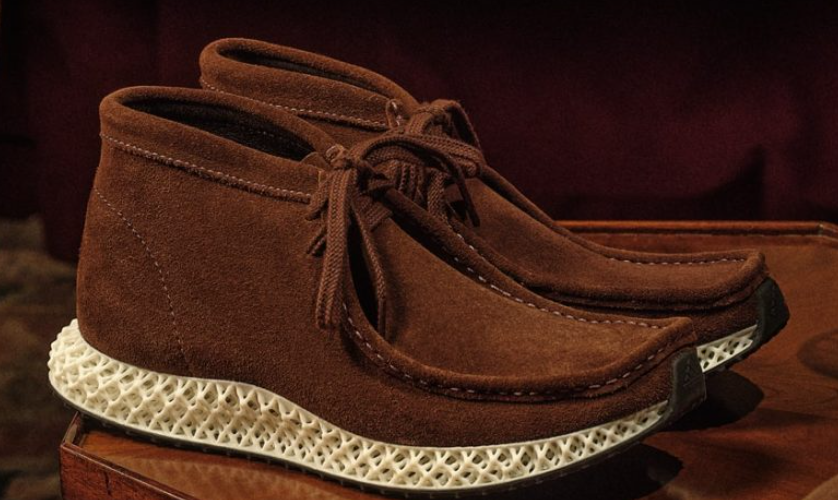
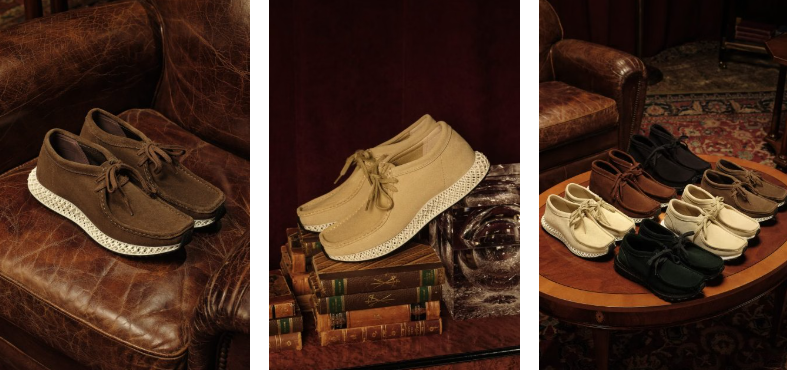
Adidas Originals and Clarks Originals have once again collaborated with designer Ronnie Fieg to expand the Eighth Street footwear series—injecting high-performance sole technology into a classic shoe model. The new Eighth Street Wallabee combines Clarks’ suede upper with Adidas’ 4D midsole (and Ultraboost) technology, officially released through Kith channels on October 27.
According to an exclusive report from Hypebeast, the Eighth Street Wallabee 4D features a moccasin-style upper paired with a 3D-printed midsole made using Adidas’ Carbon DLS technology. This design offers various earthy color schemes, with the reddish-brown being exclusive to the mid-top version.
Launched simultaneously, the Eighth Street Wallabee Ultraboost incorporates Adidas BOOST cushioning technology and a color-matched heel support piece, adorned with the exclusive “Fiegboost” branding. The Ultraboost version is available in both low-top and mid-top styles, with color schemes ranging from all-black gradients to maple-colored uppers paired with white BOOST midsoles.

05
Vision Miner 22 IDEX V4
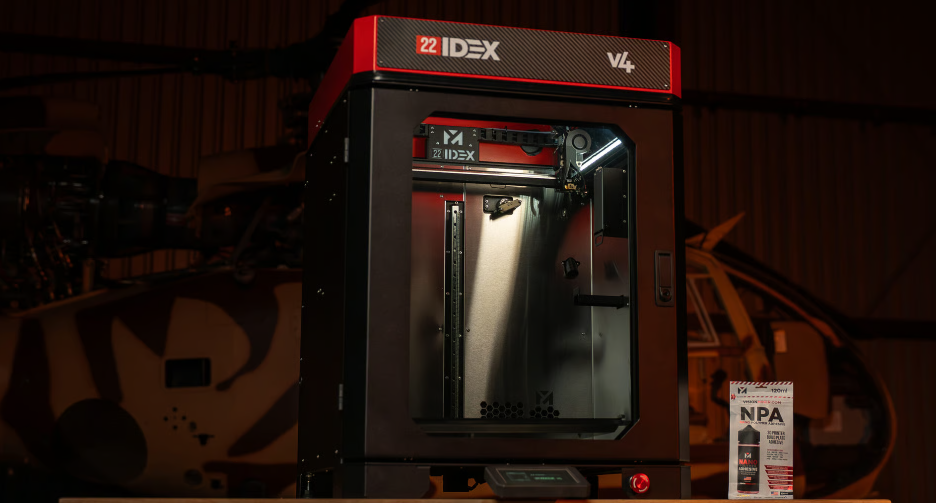
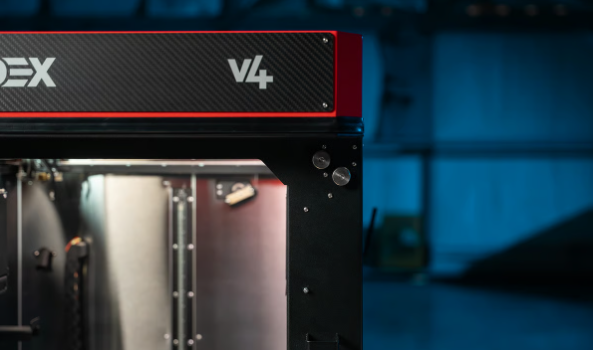
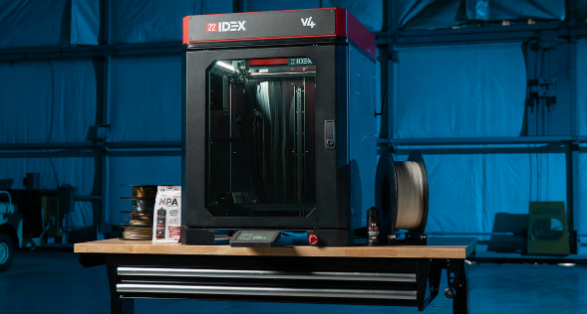
This machine is equipped with a 500°C nozzle, fully automatic calibration, and is designed for easy maintenance, with the mission of producing high-performance parts rather than just printing prototypes.
This is a high-temperature, independent dual-extruder 3D printer specifically designed for parts that need to withstand high temperatures, chemicals, and heavy loads—and its price ($14,900) is affordable even for small teams.
It provides the high temperature, chamber temperature, and throughput required for printing materials such as PEEK, PEKK, ULTEM™, PPSU, polycarbonate, nylon, and carbon fiber composites.
Each tool head can reach 500°C, enabling dual-material printing, soluble supports, replication, and mirroring modes—effectively combining two printers into one. Users can even mix different nozzle sizes within the same task.
06
ValCun
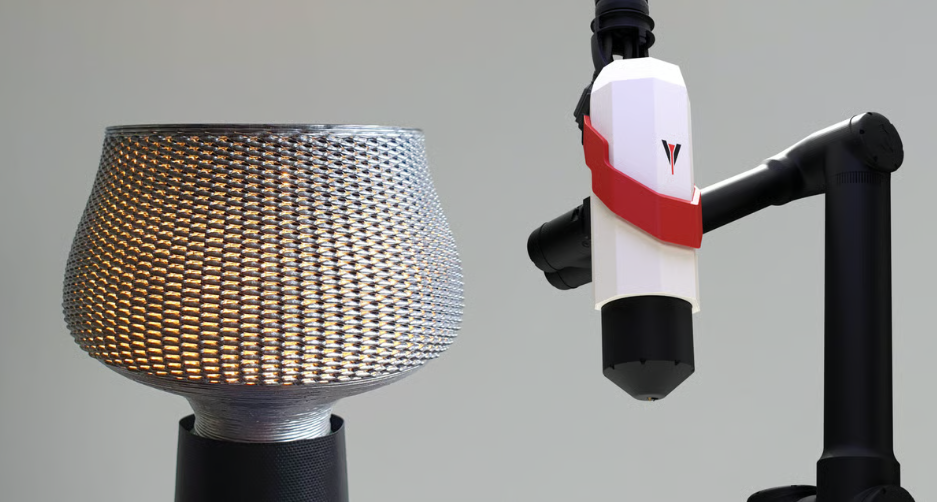
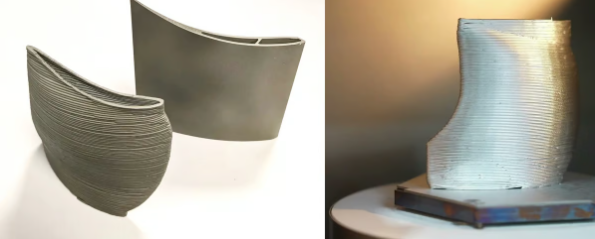
The Belgian startup ValCun points out that there are indeed various ways to 3D print aluminum—from laser powder bed fusion, electron beam melting, to arc additive and cold spraying—but none provide a fast, cost-effective, and directly applicable solution for factories. Their new industrial print head, Remus 1.0, is based on a molten metal deposition process that promises the ease of FDM, the material freedom of welding, and the long-awaited cost structure for the aluminum market.
Launched this week, Remus 1.0 is touted as the “next-generation industrial print head,” differing from the company’s previous Minerva print head in that it “is designed to scale MMD technology in factories with higher throughput, reliability, and deployment capabilities.”
Because REMUS does not rely on fixed molding cylinders or closed chambers, it can print parts at meter-scale dimensions—or perform welding-sized feature processing—without redesigning the entire production environment.
 END
END

 Welcome to add the editor’s WeChatto learn about the latest trends in the 3D printing industry
 About 3D Printing Technology
We integrate insights, technological trends, application scenarios, competitive strategies, and in-depth dynamics from the industry in China, the US, and globally for professionals in 3D printing and artificial intelligence, providing high-value information. We are passionate about 3D printing and welcome contributors from around the world.The English website 3DPTimes is also launched, focusing on the 3D printing field, producing a wealth of high-quality cutting-edge information and technical content.
Disclaimer:3D Printing Technology has no commercial cooperation, sponsorship, employment, or other interests with the companies mentioned in this article.3D Printing TechnologyImages and videos are sourced from the internet and are for auxiliary reading purposes only, with no commercial intent.All rights belong to the original authors. If there are any infringement issues, please contact the rights holders, and we will delete them promptly. The copyright of the images in this article belongs to the copyright holders,3D Printing Technologywatermarks are automatically added for auxiliary reading and do not represent ownership of the images. For image usage, please consult the relevant copyright parties.3D Printing TechnologyThe article does not constitute any investment advice,3D Printing Technologyis not responsible for any direct or indirect losses caused by the use of this information.For more exciting content, please follow us